Malaysia's HS 3915 Import Data 2025: Who Sends Plastic Scrap, What Kinds, and Why It Matters
- Mar 02, 2026
Malaysia's HS 3915 Import Data 2025: Who Sends Plastic Scrap, What Kinds, and Why It Matters
HS Code 3915 addresses plastic waste, parings, and scrap. This is the commerce stream that falls between global recycling economics and environmental enforcement.
Introduction: What Makes Hs 3915 "High-stakes" Trading All of a Sudden?
HS 3915 is not merely "recyclables trade" for Malaysia; it is also a test case for (1) the country's need for recycled feedstock in industry, (2) following Basel-linked laws on plastic waste shipments, and (3) stopping Malaysia from becoming a dumping ground. As per Malaysia Export Data by Import Globals, the price and policy tightening are both important factors in the discourse over Malaysia's plastic scrap imports in 2025–2026. More and more, new rules and enforcement actions are deciding who can ship, what quality can enter, and which routes are open.
What is HS 3915 (and Which Subtypes Are the Most Important)
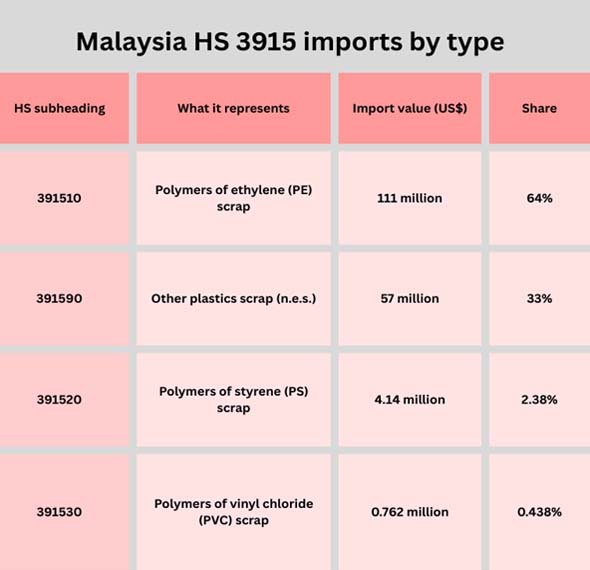
HS 3915 has a lot of subcategories that customs, recyclers, and traders use to set prices and keep track of shipments. For example, 391510 is for waste and scrap of polymers of ethylene (such PE sheets, packaging, etc.).
- 391520 - styrene polymer waste or scrap (PS)
- 391530 - is the waste or trash of polymers made from vinyl chloride (PVC).
- 391590 - other plastics waste/scrap n.e.s. (mixed or other polymers)
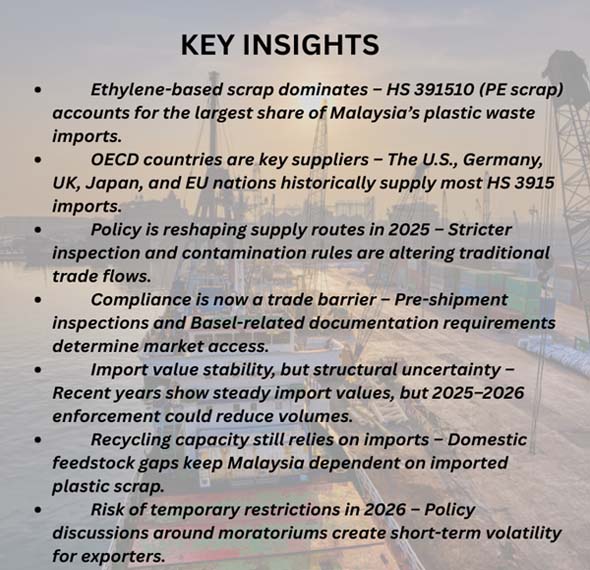
As per Malaysia Import Export Trade Data by Import Globals, the most recent comprehensive annual breakdown shows that Malaysia's imports are mostly made up of ethylene-based scrap.
This mix is important since PE scrap is often a high-volume, high-demand recycling input. However, if sorting isn't done well, it can also be the stream where contamination disputes and "mixed waste" claims come up.
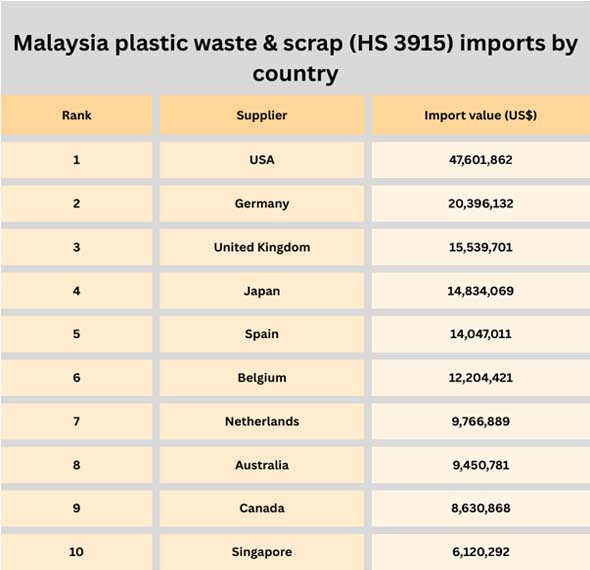
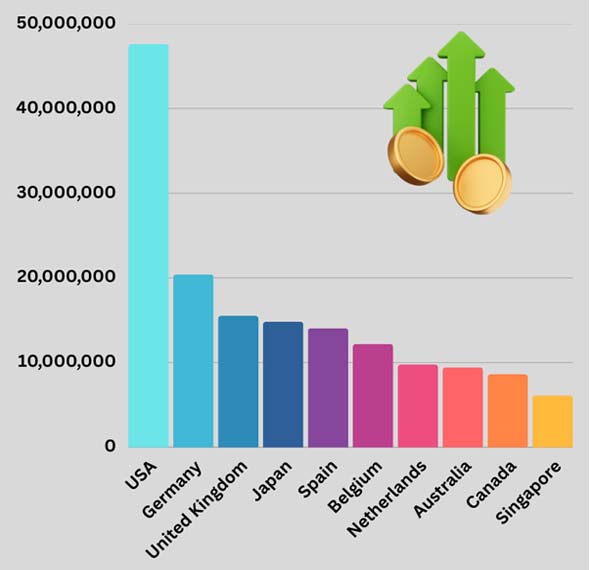
Public annual partner-country breakdowns (again, most visible in open datasets for the latest fully available year) show Malaysia sourcing HS 3915 from a wide OECD-heavy supplier set, led by the United States, Germany, the United Kingdom, Japan, Spain, Belgium, and the Netherlands.
Who Sends Goods to Malaysia: The "Traditional Exporters" and What Might Change in 2025
The 2025 Twist: "Supply" is More and More Determined by Policy
In the middle of 2025, Malaysia's import rules got more stricter. Changes that have been reported include harsher restrictions for HS 3915 shipments, such as pre-shipment inspection and lower contamination standards. As per Malaysia Import Custom Data by Import Globals, there are also constraints for approvals that are tied to Basel Convention party status. At the same time, reports from the sector said that Malaysia would stop importing scrap plastic from the U.S. on July 1, 2025. Traders said that the flow of goods had already slowed down before that date.
If your inquiry for 2025 is "Who supplies Malaysia?" the data story becomes:
- Historically, there have been a lot of strong OECD suppliers from the U.S., EU, UK, and Japan.
- In 2025, compliance requirements and targeted limitations might change the flow of goods (or lower it), moving trade toward places that can fulfill standards for paperwork, inspections, and contamination.
Why the Years 2025–2026 Are Important: Enforcement and "Waste Governance"
For a few years now, Malaysia's policy has been moving toward greater supervision, but the signs for enforcement are especially strong in 2025–2026. More attention is being paid to garbage imports. In early February 2026, reports said that e-waste imports would be banned right away. As per Malaysia Import Trade Analysis by Import Globals, they also said that Malaysia was thinking about a temporary ban on plastic waste imports while investigations into corruption and enforcement were going on.
Exporter-Country Dynamics: Independent reports showed that UK plastic trash exports to developing countries rose sharply in the first half of 2025, with more tons exported to Malaysia. This led to public outcry and requests for stricter rules.
In short, HS 3915 is now politically visible, which makes the "trade-as-usual" assumptions (steady sourcing, stable access) riskier in 2025–2026.
The Economics: Why Malaysia Buys Plastic Trash From Other Countries
There are still structural reasons for HS 3915 imports, even when there is more scrutiny:
- Recycling and making plastics downstream need feedstock
- For some uses, clean, well-sorted debris can be cheaper than new resin.
- Re-routing around the world since China put up barriers
- As per Malaysia Exporter Data by Import Globals, after major import restrictions in China, global plastic waste trade shifted, and Southeast Asia became more prominent in supply chains (while also facing backlash and new controls).
Quality Segmentation is Important
Countries and businesses compete with each other to see who can ship sorted, low-contamination material the best. As Malaysia gets tougher, the market encourages traceability and checking shipments before they leave.
What to Watch Next: 2025 Supplier Shifts and Polymer Shifts
The easiest approach to read 2025–2026 is through leading indicators, because policy changes faster than annual trade numbers come out.
- Supplier Churn: As per Malaysia Importer Data by Import Globals, if a significant origin route is blocked (like U.S. route reporting), share can go to EU/UK/Japan/Australia/other Basel-party-compliant exporters or to alternative processing centers.
- Polymer Mix Stress-Test: tighter requirements about contamination frequently hurt "mixed" streams more than cleaner mono-polymer bales. This can lower 391590 ("other/mixed") compared to cleaner categories, or it can make traders reclassify and enhance sorting discipline.
- Enforcement Speed: If the 2026 moratorium plan becomes a reality, import volumes and values could drop dramatically, even if demand for recycling in the US is strong.
Trends At the Port and Shipping Routes in 2025
The plastic scrap that Malaysia imports under HS 3915 is not evenly spread out across the country. As per Malaysia Import Trade Statistics by Import Globals, a lot of exports come through big container ports including Port Klang (Selangor), Tanjung Pelepas (Johor), and Penang Port. These ports are also where recycling clusters and plastic reprocessing facilities are located.
Why Port Concentration Is Important
- Screening for Compliance: Port-level scrutiny has gone up because there are stricter inspection rules in 2025. Larger ports have better tools for scanning and inspecting.
- Containerized Trade: Most shipments of plastic scrap are in containers, therefore Malaysia's place in global shipping networks has a big effect on how much plastic scrap comes into the country.
- Transshipment Risk: Malaysia is a regional hub, thus some cargo may go through Singapore or other ASEAN ports before they reach their final destination.
Traders say that logistical expenses have gone up a little bit since clearance periods are lengthier and there are more paperwork checks required. As per Malaysia Import Data by Import Globals, compliance gets stricter, importers prefer direct shipping channels from OECD exporters with clean paperwork to avoid having their shipments turned down and having to pay for return freight.
The Capacity of the Domestic Recycling Industry Compared to Its Reliance on Imports
In the previous ten years, Malaysia's domestic plastic recycling business has developed a lot. But scrap that comes from other countries still adds to what is gathered in the country.
Important Structural Elements
- Gap in Feedstock: As per Malaysia Import Shipment Data by Import Globals, there is still not enough plastic waste from consumers in the area to fill the recycling plants' capacity. Some recyclers in Malaysia make pellets out of imported scrap that can be sold anew, mostly for use in packaging and industrial plastics.
- Price Sensitivity: Recyclers don't want to buy as much scrap when the price of virgin resin goes down around the world since they make less money.
- Because of stricter import rules in 2025, recyclers have had to make their sorting and verification processes better. Larger, licensed companies are making improvements, while smaller ones are having problems keeping up. As per Malaysia Import Export Trade Analysis by Import Globals, this might slowly pull the industry together, which would be excellent for recyclers who follow the laws and use the newest technology.
Environmental and Regulatory Risk Forecast (2026 and Beyond)
In the future, governance will likely have a stronger effect on Malaysia's HS 3915 imports than trade economics alone.
New Risk Themes
- Enforcement of the Basel Convention: a stricter interpretation of plastic waste categories means that mixed or contaminated debris may be turned down more often.
- There is a chance of a temporary suspension. Talks in early 2026 about probable short-term limits on some rubbish imports make things murky.
- Re-Export Scrutiny: Officials are keeping a closer eye on whether scrap that comes into the country is really being recycled here or sent somewhere else.
What Exporters Need to Know About Strategy
Exporters who want to sell to Malaysia must:
- Make sure that all paperwork is in order and that the package is checked before it leaves.
- Keep a watchful eye on changing policy announcements
- It's apparent that the time of loosely regulated plastic scrap trade into Southeast Asia is over. The policy orientation for Malaysia from 2025 to 2026 points to a change in trade flows under HS 3915 that are more focused on quality, compliance, and environmental responsibility.
Conclusion
Malaysia's HS 3915 imports are at the intersection of industry demand and the validity of enforcement. The most recent available partner and product breakdowns show that the supplier base has historically been made up of a lot of OECD countries, and the polymer mix is mostly made up of ethylene-based waste.
But the most important thing to remember about 2025 is that policy is now the main price signal. Stricter limits on contamination, requirements for inspections before shipping, and targeted limitations can quickly change who supplies Malaysia and what kinds and quality of goods can enter. Import Globals is a leading data provider of Malaysia Import Export Trade Data.
FAQs
Que. What does HS code 3915 mean?
Ans. As per Malaysia Export Import Global Trade Data by Import Globals, the Harmonized System code for plastic trash, parings, and scrap, such as PE, PS, PVC, and other plastic scrap streams.
Que. Who are the biggest providers of HS 3915 to Malaysia (based on the most recent full-year published breakdowns)?
Ans. The USA, Germany, the UK, Japan, Spain, Belgium, and the Netherlands are some of the best providers.
Que. What type of plastic scrap dominates Malaysia’s HS 3915 imports?
Ans. The most recent breakdown shows that ethylene-based scrap (391510) makes up the biggest share.
Que. What makes Malaysia's plastic trash imports so essential in 2025–2026?
Ans. Because controls tightened (inspection/contamination rules), some origin routes faced restrictions, and early 2026 reporting mentioned consideration of a temporary moratorium on plastic waste imports.
Que. Where to get detailed Malaysia Import Export Global Data?
Ans. Visit www.importglobals.com.