Mexico's Automotive Export Powerhouse in 2026: How the Country Became North America's Car Factory
- Mar 28, 2026
Mexico's Automotive Export Powerhouse in 2026: How the Country Became North America's Car Factory
Mexico has become one of the most important countries in the world to make cars in the previous 20 years. The country will have firmly established itself as North America's automotive manufacturing by 2026, delivering millions of cars to markets all over the world every year. Automobiles built in Mexico are being sent all around the world, from American SUVs and pickup trucks to European luxury automobiles.
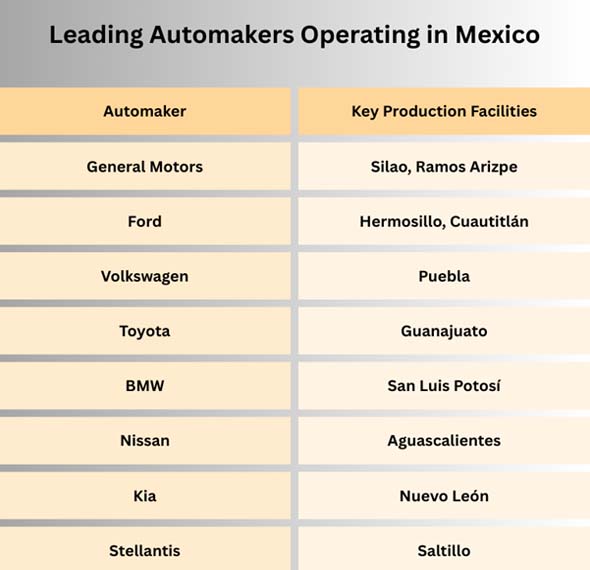
Not only is the car industry a huge element of Mexico's economy, but it also makes a lot of money for the country. Based on Mexico Import Data by Import Globals, the industry is a key element of manufacturing output, jobs, and foreign investment. General Motors, Ford, Toyota, Volkswagen, BMW, and Nissan are all big automotive firms that have big factories all around the country.
Mexico's car sector is still doing well, even though the economy is unstable and trade restrictions are changing. Even if the number of cars exported declined slightly in 2025, the country still exported more than 3.38 million cars, making it one of the major car exporters in the globe. This blog talks about how Mexico became a big role in the global car business, how well it did at exporting automobiles in 2025–2026, and the things about its structure that make it a major manufacturing center for North America.
How Mexico's Car Industry Has Changed Over the Years
Since the middle of the 20th century, the automotive industry in Mexico has changed a lot. The first assembly plants were developed in the 1960s to suit demand in the US. But the sector flourished significantly after free trade agreements were inked in the 1990s.
The North American Free Trade Agreement (NAFTA), which began in 1994, had a big impact on the country's manufacturing sector. Cheap tariffs made it easy for cars and car parts to move from one country to another. This made it easier for businesses around the world to build factories in Mexico.
Because of its low labor costs, good trade conditions, and growing network of suppliers, multinational automotive firms swiftly set up shop in Mexico. As per Mexico Export Data by Import Globals, companies were able to create more goods throughout time by developing assembly plants, engine factories, and supply chains for parts.
By the middle of the 2020s, Mexico had reached a big goal: it had become one of the top five automobile makers in the world, beating out numerous countries that had been building vehicles for a long time.
There are thousands of suppliers, dozens of assembly plants, and a logistics network that connects the country's automobile makers to markets in North America and around the world.
Mexico's Car Production and Export Performance From 2025 to 2026
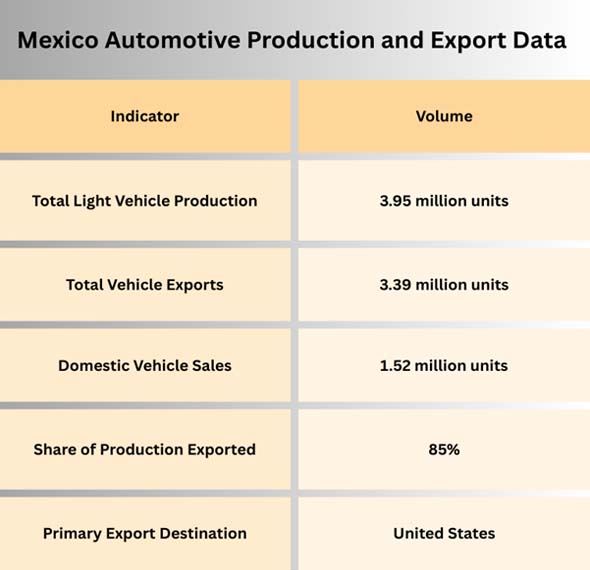
Every year, Mexico's car industry still makes millions of cars. Manufacturing maintains close to four million cars a year, even though the supply chain has altered and there are worries about tariffs. Mexico made more than 3.95 million light automobiles in 2025. This was a small drop from the year before, but it was still one of the highest levels of output in the country's history.
According to Mexico Import Export Trade Data by Import Globals, exports were roughly 3.38 million cars, which is only a slight drop from 2024. Even with these slight improvements, the number of cars Mexico exports is still one of the highest ever.
Meanwhile, sales of cars in the US reached over 1.52 million units in 2025. This shows that consumer demand is stable and the national automotive sector is still growing. These numbers show the basic nature of Mexico's auto industry: majority of the cars made in the country are meant to be sold abroad, not in Mexico.
Main Places Where Mexican Cars Are Sold
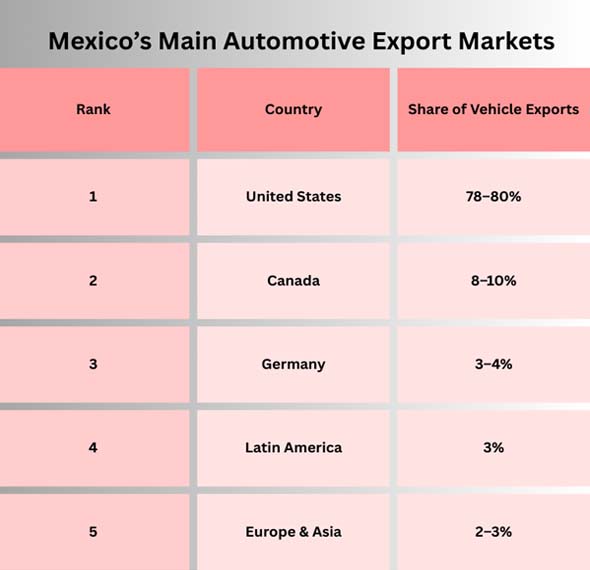
Most of the cars made in Mexico are sent to North America, especially the US. The United States is Mexico's biggest export market, getting over four-fifths of all automobiles that leave the country.
As per Mexico Import Custom Data by Import Globals, this profound integration shows how businesses have worked together across borders for decades. A lot of the parts that go into cars made in Mexico come from the US and Canada. This makes for a very integrated supply chain.
Canada and Europe are smaller but nonetheless important places where Mexican cars go. In the last several years, car producers have also increased their exports to South America and other parts of the world to spread out their trade risk.
Why Mexico Became North America’s Car Factory
Mexico has become one of the most competitive places in the world to make cars because to a number of structural advantages.
Location that is Good for Business
Mexico is just next to the United States, which is the second largest automotive market in the world. Cars built in Mexican manufacturing can reach to U.S. dealerships quickly thanks to the interconnected highway and rail systems.
North American manufacturing is best done in Mexico because it's close to the US, which makes shipping and delivery cheaper and faster than making items in other nations.
Workers get Paid Very Little
Another huge benefit is that you may compete on labor prices. workers who put together vehicles in Mexico make a lot less money than workers who do the same thing in the US or Canada. Based on Mexico Import Trade Analysis by Import Globals, this allows vehicle makers stay in business while making cars for the North American market. Because it's cheaper there, automakers have relocated the production of labor-intensive vehicle models to Mexico.
Good Trade Deals
Mexico has a variety of trade deals that make it easier for it to sell things to other countries. The USMCA replaced NAFTA in 2020. It still permits cars be traded between the US, Mexico, and Canada without tariffs as long as certain regional content requirements are met. These trade rules make it more probable that automobile makers will build cars in the area instead of bringing them in from other parts of the world.
Made a Supply Chain Ecosystem
Mexico has dozens of enterprises that sell automobile parts, including global corporations that create engines, transmissions, electronics, and other equipment. This network of suppliers keeps production costs down and makes sure that everything goes properly.
The automotive cluster includes important manufacturing centers in states like
- Guanajuato
- Nuevo León
- Puebla
- Aguascalientes
- Coahuila
- San Luis Potosí
These areas have become important manufacturing hubs that bring in billions of dollars in international investment. As per Mexico Exporter Data by Import Globals, these corporations run contemporary factories that make a variety of vehicles, such as SUVs, pickup trucks, passenger cars, and electric cars. Mexico is a major supplier to the North American automotive market, and many of these firms send most of their products to the United States.
How Nearshoring Has Helped Mexico's Car Industry Grow
Nearshoring has become a crucial factor in Mexico's industrial growth in recent years. Nearshoring means moving manufacturing operations closer to the market where the goods will be sold. As per Mexico Importer Data by Import Globals, Mexico is a good choice for North American corporations that want to move production away from Asia.
There are a number of things that have sped up this trend:
- Problems with the global supply chain
- Shipping expenses are going up.
- Tensions with China in the world of politics
- Rising need for production in the area
Automakers are putting more money into facilities in Mexico to make their supply chains shorter and less reliant on factories in other countries. Because of this, Mexico is now the best place in North America for car companies to invest.
Electric Cars and the Future of Mexico's Car Exports
The global car industry is quickly moving toward electric vehicles, and Mexico is slowly getting used to this change. Electric and hybrid cars are becoming more popular in the country. By 2025, about 9.5% of new vehicle sales in Mexico were for hybrid and electric vehicles. This shows that people are becoming more interested in cleaner ways to get around.
As per Mexico Import Shipment Data by Import Globals, several car companies have said they will put money into making electric vehicles in factories all throughout the country, with a focus on making batteries and electric powertrains.
But Mexico's switch to electric vehicles is likely to happen slowly. Many plants still make internal-combustion vehicles and hybrid versions that are meant to be sold in other countries. Still, the country's robust industrial base and talented workforce make it a good place for the next generation of automotive innovations.
Problems with Mexico's Car Export Business
Even while Mexico's automotive industry is doing well, it still has a number of problems that could affect its growth.
Not Sure What to Do About Trade Policy
Changes in trade policies, notably in the US, can affect the export of cars. Changes to tariffs and rules could make supply chains less stable and make it more expensive to create items.
Problems with the Supply Chain
As per Mexico Import Export Trade Analysis by Import Globals, global shortages of semiconductors and car parts have messed up production schedules at times. More and more competition China, South Korea, and India are also getting better at exporting automobiles, which makes competition in international markets much tougher.
Switch to Electric Cars
A lot of money will need to be spent on creating batteries and finding new ways to create them in order to switch to electric vehicles (EVs). Mexico will have to adapt its automotive infrastructure in order to be competitive in the global market as it develops.
What will happen to Mexico's car business after 2026?
For years to come, Mexico's car sector will probably remain one of the most important in the Americas. Some major trends that are likely to have an impact on the sector are:
- More making of batteries and electric cars
- Increase in investments in nearshoring
- More parts for cars that are sent abroad
- Opening up new export markets outside of North America
As per Mexico Export Import Global Trade Data by Import Globals, Mexico has a strong industrial base, a trained workforce, and a good location, which makes it a good place to continue being a major exporter of cars. Even when the economy is shaky, the car sector in the country is still robust and able to change.
In conclusion
After decades of wise investments, trade integration, and industrial progress, Mexico is now North America's top car maker.
The country has become one of the most important places in the world for making cars, making around four million cars a year and sending more than three million of them to other countries. Mexico has become North America's car factory because it is well-connected to the U.S. and Canadian markets, has low production costs, and has a large network of suppliers.
Mexico's role in making cars around the world is likely to be robust as the auto industry moves toward electrified vehicles and regional supply chains. In the next ten years, we'll see how well the country adjusts to new technologies while still being one of the world's top car exporters. Import Globals is a leading data provider of Mexico Import Export Trade Data.
FAQs
Que. Why do people say that Mexico is North America's "car factory"?
Ans. Every year, Mexico creates millions of cars, and most of them go to the US and other places. This means that Mexico is one of the best areas in North America to build autos.
Que. How many cars does Mexico ship to foreign countries per year?
Ans. Mexico was one of the world's major vehicle exporters in 2025, sending over 3.38 million cars to other countries.
Que. Which country buys the most cars from Mexico?
Ans. The United States is the biggest destination for Mexico's car exports, taking in between 78–80% of them.
Que. Is Mexico putting money into making electric cars?
Ans. Yes. More and more car companies are putting money into factories that build electric and hybrid cars, but the switch is projected to happen slowly over the next ten years.
Que. Where to get detailed Mexico Import Export Global Data?
Ans. Visit www.importglobals.com.