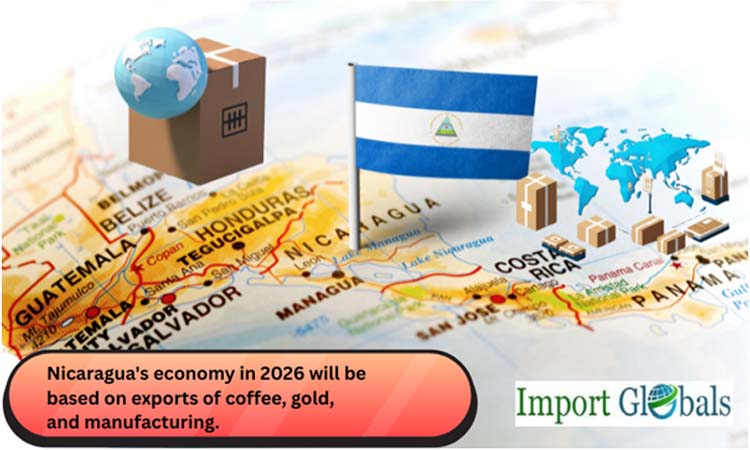
Nicaragua's Economy in 2026 Will Be Based on Exports of Coffee, Gold, and Manufacturing
- Mar 30, 2026
Nicaragua's Economy in 2026 Will Be Based on Exports of Coffee, Gold, and Manufacturing
One of the most important components of Nicaragua's economy is its export sector. The country's trade has been strong even though the world economy is unpredictable and there are political problems in the region.
In recent years, exports have been continuously expanding. As per Nicaragua Export Data by Import Globals, this is because there is a lot of demand for goods throughout the world, manufacturing is competitive in free trade zones, and business ties with the US and other nations in the region are strong. By 2026, Nicaragua's export economy will be shaped by coffee, gold, and manufacturing. These businesses not only bring in money from other countries, but they also assist the country's industries grow, generate jobs, and attract investment. Nicaragua's role in world trade is shifting because it now exports both conventional agricultural goods and new industrial goods.
Overview of Nicaragua’s Export Economy
Nicaragua is one of the Central American countries that exports the most. Exports of goods have been worth more than $7 billion a year in the last few years. This is a steady rise from the early 2020s. As per Nicaragua Import Export Trade Data by Import Globals, the country sends out agricultural goods, mining goods, and goods created in export processing zones.
There are a variety of structural variables that help Nicaragua's export economy:
- Good weather for farming
- Costs of labor that are competitive
- Free trade agreements like CAFTA-DR
- Strong commercial links with the US and surrounding countries.
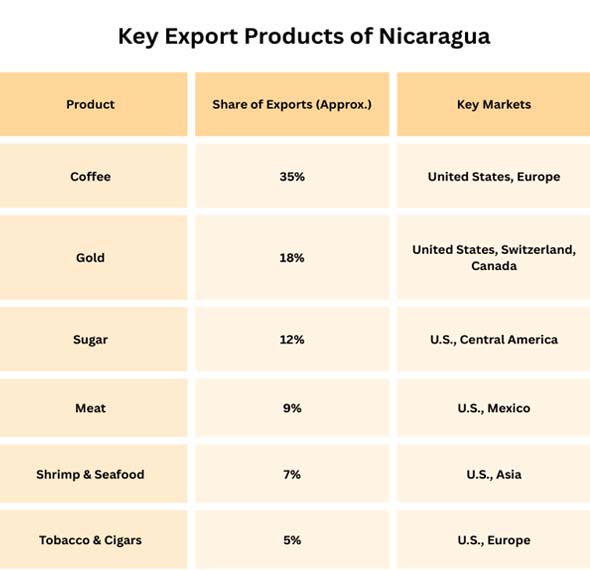
Coffee, meat, gold, and textiles are still some of the most essential things that the country sends to other countries. These industries together bring quite a lot of money and jobs for the country through exports. As per Nicaragua Import Data by Import Globals, exports kept growing up in 2025 because demand throughout the world was going up and the prices of goods were going higher. There was a big increase in total exports compared to previous years. This is an indication of growth in both the commodities and industrial sectors.
Coffee: The Most Important Thing Nicaragua Exports
Coffee has been one of Nicaragua's most famous exports for a long time. The country's high-altitude climate, fertile volcanic soil, and experienced agricultural communities make it possible for it to grow high-quality Arabica coffee beans that are in high demand on the world market. As per Nicaragua Import Trade Analysis by Import Globals, the coffee industry is very important for rural development and jobs. It makes a big difference to the agricultural GDP and supports hundreds of thousands of employment all around the country.
Future of Production and Export
Nicaragua is predicted to make about 2.5 to 2.6 million bags of coffee in the 2025–2026 marketing year. This is a good level of output that has stayed high since the sector started to revive a few years ago.
There are a number of things that are helping the coffee business:
- High costs for coffee around the world
- Better conditions for rain
- More money put into plantations
- Opening up new markets for exports
The United States and Europe are the main places where Nicaraguan coffee is exported. Demand for specialty coffee has been rising in these places. Because of problems with supply in other coffee-producing countries, the global coffee market is still tight. This gives Nicaragua a chance to boost its export income.
Coffee: The Most Important Thing Nicaragua Exports
Coffee has been one of Nicaragua's most famous exports for a long time. The country's high-altitude climate, fertile volcanic soil, and experienced agricultural communities make it possible for it to grow high-quality Arabica coffee beans that are in high demand on the world market. As per Nicaragua Import Trade Analysis by Import Globals, the coffee industry is very important for rural development and jobs. It makes a big difference to the agricultural GDP and supports hundreds of thousands of employment all around the country.
Future of Production and Export
Nicaragua is predicted to make about 2.5 to 2.6 million bags of coffee in the 2025–2026 marketing year. This is a good level of output that has stayed high since the sector started to revive a few years ago.
There are a number of things that are helping the coffee business:
- High costs for coffee around the world
- Better conditions for rain
- More money put into plantations
- Opening up new markets for exports
The United States and Europe are the main places where Nicaraguan coffee is exported. Demand for specialty coffee has been rising in these places. Because of problems with supply in other coffee-producing countries, the global coffee market is still tight. This gives Nicaragua a chance to boost its export income.
Effect on the Economy
As per Nicaragua Exporter Data by Import Globals, the coffee industry helps people in rural areas of northern Nicaragua, such Jinotega and Matagalpa, make a living. Smallholder farmers make most of the crops, and the sector hires people seasonally at harvest time.
As more and more people across the world want specialty and responsibly sourced coffee, Nicaragua's growers are putting more money into initiatives that improve quality, make it easier to trace coffee, and give it a stamp of approval. By 2026, these changes could make the country more competitive in international markets.
Gold Mining is a Big Reason Why Exports Are Growing
Agriculture has always been Nicaragua's biggest export, but mining, notably gold, has become one of the fastest-growing parts of the country's trading economy. As per Nicaragua Importer Data by Import Globals, Gold is currently one of the most valuable things that countries sell to other countries, and in certain years it has even outdone traditional agricultural exports.
Increasing Demand Around the World
The world's need for gold has grown because of:
- Uncertainty in the financial markets
- Buying by the central bank
- Uses in industry and technology
- These changes have helped Nicaragua's mining industry. Mining exports went up a lot in 2025, mostly because more gold was being mined and prices were going up around the world.
Trade Contribution
As per Nicaragua Shipment Data by Import Globals, Gold makes up a large part of Nicaragua's export income and is now one of the most important sources of foreign exchange profits.
Foreign corporations and investors have come to Nicaragua's mineral-rich areas because of the growth of mining activities. This has brought in more money from exports, but it has also raised worries about how it impacts the community and the environment.
Free Trade Zones and Manufacturing
Nicaragua's export economy depends more and more on manufacturing. Maquiladoras, often known as export processing zones, create garments, textiles, and electrical parts that are sold in other nations. As per Nicaragua Import Export Trade Analysis by Import Globals, manufacturing exports make up a lot of business activity, and they are especially important for exports to the United States.
Main Things That Manufacturing Exports
Some of the most essential items that are made include:
- Knit shirts and other clothes
- Wiring harnesses for cars
- Electrical wires
- Tobacco products
For example, the country sells other countries a lot of knit garments and electrical wires.
Why Trade Agreements Are Important
As per Nicaragua Export Import Global Trade Data by Import Globals, Nicaragua gets unique access to big markets through agreements like CAFTA-DR. These deals cut tariffs on goods that are made in other countries and sold in the U.S. This makes the U.S. a good site for manufacturing that focuses on exports.
But changes to tariffs and rules in the previous few years have made things less certain for some export sectors. Even though there are problems, the business maintains making jobs and growing Nicaragua's export base beyond only raw materials.
Markets for Exports and Trade Partners
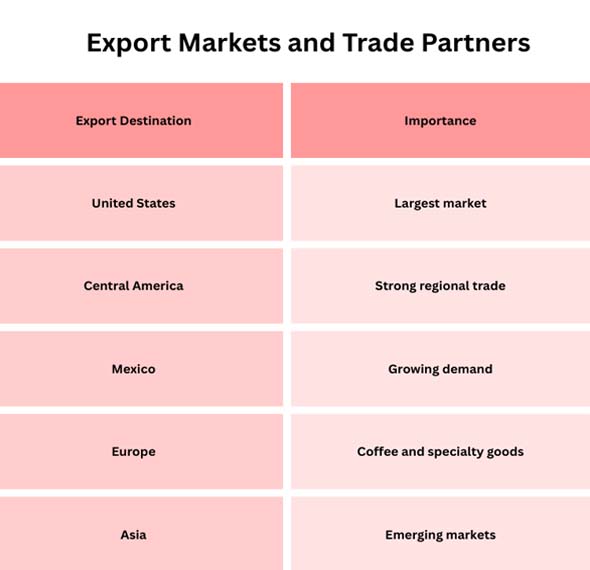
Nicaragua's export economy is greatly affected by the global market. The US is remains the country's biggest trading partner and buys a lot of its goods. The United States is in charge because it has had strong trade links with other countries in the past and free trade agreements are excellent for business. A lot of Nicaragua's exports, such clothes, food, and gold, go to the United States.
Nicaragua is also quietly growing trade with Asian and Latin American partners so that it doesn't have to rely on just one market. Exports are becoming more and more crucial for Nicaragua's economic growth, as seen by this long-term trend. Even if mining and industry are getting more important every year, agricultural exports are still the most important portion of trade.
Issues with Nicaragua's Export Economy
Nicaragua's export sector has a lot of space to grow, but it also has a lot of issues.
Risks in Politics and Business
Trade could suffer and investors could be less secure of their investments if there are political difficulties and sanctions from other countries.
Issues with Infrastructure
Export costs can go up since there aren't enough ports or logistics facilities.
Climate Threats
Changes in the weather and the climate can harm farming, especially coffee cultivation.
Having Faith in Key Markets
Nicaragua depends a lot on the United States, therefore changes in policy and standards could have an influence on the country. The country is always holding on by making things better, increasing trade, and bringing in money for enterprises that export.
Looking Ahead to 2026 and Beyond
According to Import Globals, which looks at exports, Nicaragua's imports will do well in the future. People all throughout the world want things like gold and coffee, which keeps the money coming in from exports. When free trade zones are good for making things, they are also good for enterprises.
Nicaragua's trade picture is anticipated to shift in a few ways:
- A lot of people want coffee that has a different flavor.
- Kept pouring money into mining.
- The textile and manufacturing industries are getting bigger.
- New trade deals with markets that are getting bigger.
- If these trends continue, Nicaragua might become an even bigger exporter in Central America.
- In the long run, policies that encourage sustainability, build infrastructure, and make the economy more diverse will also help exports flourish.
Last Thoughts
Nicaragua's economy will be based on both old and new industries that export commodities by 2026. Coffee is still an important element of farming since it helps people in the country make money and there is a lot of demand for high-quality beans around the world. Mining for gold is becoming a key way to make money and help the country's export income. Free trade zones and manufacturing are also making the economy more diverse and offering business owners more opportunity to do well.
These businesses are working together to find out what Nicaragua's place is in the world economy. If the country can find a solid balance between growing domestic industries and exporting goods, its economy will do well in the long run as international markets shift and new chances come up. Import Globals is a leading data provider of Nicaragua Import Export Trade Data.
FAQs
Que. What do people in Nicaragua send to other countries?
Ans. Coffee, gold, sugar, meat, textiles, shellfish, and tobacco products are some of Nicaragua's most important exports.
Que. How does coffee fit into Nicaragua's economy?
Ans. Coffee is a large element of farming, makes a lot of money from exports, and gives people in rural areas jobs.
Que. How has gold mining changed what Nicaragua sells to other countries?
Ans. Gold mining is one of the businesses that is growing the fastest. It makes a lot of money from exports and gets a lot of foreign investment.
Que. Which countries does Nicaragua trade with the most?
Ans. The US is Nicaragua's major market for exports. After that, there are partners in Central America, and trade with Europe and Asia is growing.
Ans. Where to get detailed Nicaragua Export Import Global Trade Data?
Ans. Visit www.importglobals.com.