How India's Export Basket Is Changing (2025–2026): From Oil to Electronics
- Mar 16, 2026
How India's Export Basket Is Changing (2025–2026): From Oil to Electronics
For an extended period, the nation's primary exports were hydrocarbon products, raw materials, and conventional manufacturing. However, a novel pattern is beginning to emerge today. India's exports are evolving as a result of the use of technology in industries, pharmaceuticals, electronics, and engineering products. The transformation was most evident in 2025 and 2026, when India's exports experienced a significant increase despite the global economic downturn.
As per India Import Data by Import Globals, people no longer associate the nation solely with the refining of crude oil and the transportation of fuels. People are starting to see it as a center for making electronics and other high-tech goods around the world. This development is a sign of bigger changes in the economy, such as changes in government policy, more foreign investment, changes in the supply chain, and better manufacturing capabilities in the US. As global corporations look for new places to build factories, India is slowly getting a bigger share of international trade.
When Oil Was the Main Export From India
For a long time, India's greatest exports were refined petroleum products. It buys crude oil from other countries, refines it in massive refineries, and then sells items like diesel, gasoline, aviation fuel, and petrochemical feedstocks. This method helped India become one of the world's biggest exporters of refined fuels. Asia, Africa, and parts of Europe were some of the biggest markets. As per India Export Data by Import Globals, Oil exports brought in a lot of money from trade and were very important for keeping the country's import bill in check. But depending too much on oil also made things less safe.
The prices of oil on the world market change a lot, which means that export revenues can change a lot too. Also, the shift toward cleaner energy around the world has slowly lowered the long-term rise in demand for traditional fuels. These things made policymakers and businesses want to diversify their exports and put more money into manufacturing and technology-driven industries.
Electronics: The Industry That Changed Everything
The emergence of electronics manufacturing is probably the most interesting thing to happen in India's export story. India was one of the biggest buyers of smartphones and electrical parts in the world just ten years ago. It is quickly becoming a big exporter these days. As per India Import Export Trade Data by Import Globals, smartphones have become the most important export item. Big IT companies from around the world have grown their manufacturing operations in India, making devices for both the Indian market and customers around the world. Shipments of smartphones from India have shot up, making electronics one of the fastest-growing export industries. Government programs that promote large-scale manufacturing are intimately related to the performance of this industry. India has become a good place for global electronics companies to set up shop because of incentive schemes, better infrastructure, and strong domestic demand. As output continues to grow, electronics may soon outpace a number of conventional export categories.
Engineering Goods Boosting India's Export Profile
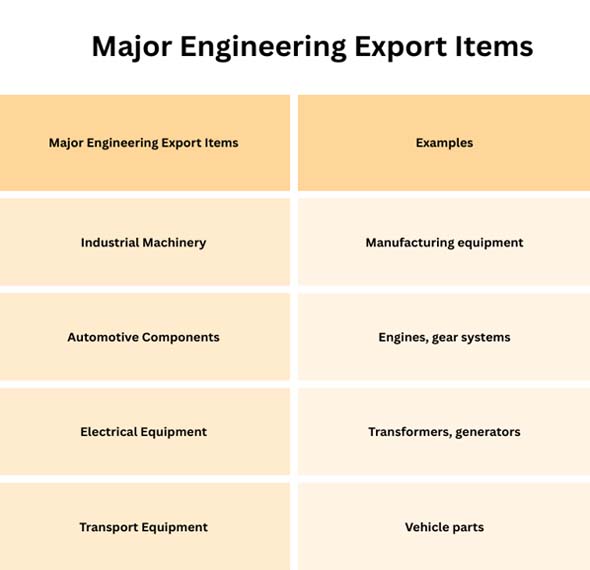
Engineering goods are another major part of India's changing export basket. This group comprises a lot of different things, like machines, car parts, electrical equipment, industrial tools, and transportation equipment. As global industrial and infrastructure projects grow, the need for engineering products has also grown. India's low production costs and competent workers have enabled exporters reach customers in Europe, North America, Africa, and Southeast Asia. As per India Import Custom Data by Import Globals, exports of engineering items have always been one of India's most important trade areas. Their growth shows how far the country has come in industrial manufacturing.
The Export of Drugs Keeps Growing
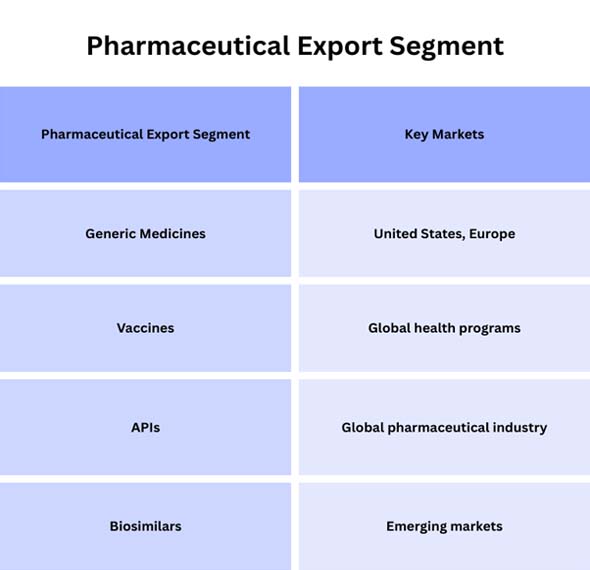
Electronics and technical items are fresh areas of growth, although pharmaceuticals are still one of India's strongest exports. As per India Import Trade Analysis by Import Globals, a lot of the world's generic medicines and vaccines come from Indian pharmaceutical businesses. As the demand for healthcare grows around the world, pharmaceutical exports have consistently grown in recent years. India is a trusted supplier to both developed and emerging markets because it has excellent manufacturing skills, regulatory experience, and cost benefits. The sector's sustained growth is a big help to India's ambitions to diversify its exports beyond only commodities and energy.
Changes in the Global Supply Chain Are Good for India
The reconfiguration of global supply chains is one of the main reasons why India's exports have changed so much. As per India Exporter Data by Import Globals, to lower risks and make themselves more resilient, firms have been moving production to different places over the past few years. This change has been good for India. Big international companies are putting money into factories, supplier networks, and logistics infrastructure all around the country. Because of this, exports of made items have expanded faster. India's growing export sectors have found important markets in the United States, the United Arab Emirates, and the European Union. These links are become even stronger because of trade agreements and economic alliances. This situation has opened up new chances for Indian firms to join global industrial networks.
The Function of Government Policy
Several important policy changes have helped change India's export basket. Reforms that make it easier to trade, incentives for manufacturing, and investments in infrastructure have all made it easier for both Indian and international enterprises to increase output in India.It is highly important to have programs that will help manufacture more devices, autos, and semiconductors. As per India Importer Data by Import Globals, exporters are also observing a decrease in the time and effort required to access markets in other countries as a result of improved digital trade systems, logistics, and ports, according to India import data from Import Globals. These advancements are causing India to gradually shift from the primary exportation of fundamental materials to the production of high-tech items.
Exports of Services Help With the Shift
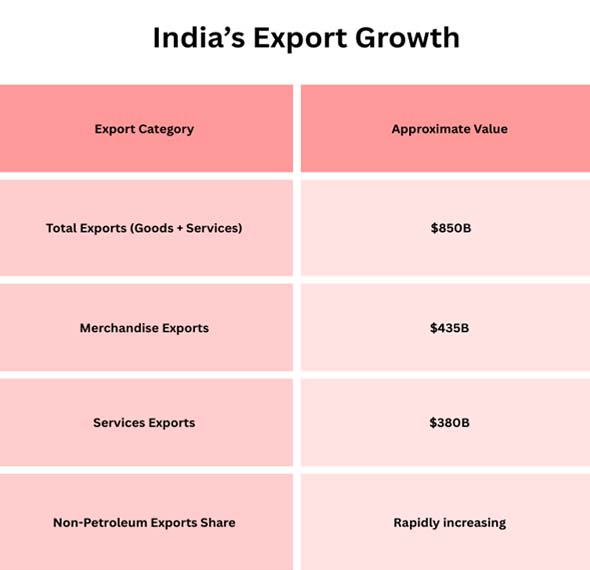
It is not uncommon for individuals to use the term "products" when discussing exports. But India's service exports are just as important. Consulting, financial services, information technology, and digital platforms are just a few examples of services that bring in a lot of foreign currency for the country. As per India Import Shipment Data by Import Globals, the trade balance changes a lot when service exports go up by a little bit. This strength, along with the rise in industrial exports, helps keep India's trade balance stable.
Problems with the Transition
India's export transition has come a long way, but there are still problems. The state of global trade is still unclear, and exporters are having a hard time keeping up with changing rules, tariffs, and slowdowns in the economies of major countries. Another problem is that some high-tech devices need parts that are made in other nations. As per India Import Export Trade Analysis by Import Globals, to stay ahead of the competition in the long run, it will be important to set up local supply chains for semiconductors and electronics. Even though infrastructure is getting better all the time, logistics expenses are still greater than in other manufacturing regions. Ports and transportation will require more money to keep exports rising. But even with these challenges, the fundamental trend toward diversification is still going strong.
What India's Exports Will Look Like in the Future
India's exports are likely to keep changing in the future. It is projected that making electronics, renewable energy equipment, sophisticated technical stuff, and digital services would become increasingly important. As per India Export Import Global Trade Data by Import Globals, if India keeps obtaining backing and investment from all across the world, it could get a far higher share of world trade in the next ten years.
Final Thoughts
India's exports are changing a lot. Much of the country's trade used to be in oil products. But this is slowly changing as electronics, engineering items, drugs, and tech services become more popular.
Smartphones are now India's most important export. This indicates how much the country's manufacturing economy has expanded. The country is moving toward a more stable and diverse export economy because to changes in the law, the global supply chain, and the abilities of workers in the industrial sector.
India will still need to sell oil, but in the future, its economy will rely more on high-value manufacturing and knowledge-based enterprises. India's influence in global trade is anticipated to get increasingly bigger as this change goes on. Import Globals is a leading data provider of India Import Export Trade Data.
FAQs
Que. Which sectors of the Indian economy are experiencing the most rapid growth?
Ans. Pharmaceuticals, electronics, technical items, and digital services are among the industries that are expanding at a rapid pace.
Que. What is the reason for the increased export of smartphones from India?
Ans. The incentives, a broader supply chain, and a robust domestic infrastructure are the reasons why global companies are producing a greater volume of products in India.
Que. Is oil still a significant export for India?
Ans. Certainly, petroleum products remain significant; however, their proportion is gradually decreasing as the number of manufactured commodities exported increases.
Que. In 2030, what will be the state of India's exports?
Ans. The most significant items that we will export in the future, according to experts, are electronics, advanced manufacturing, renewable energy technology, and services.
Que. Where to get detailed India Import Export Global Data?
Ans. Visit www.importglobals.com.