Made in Vietnam, Engineered in China: How Supply Chain Detectives Unmask Hidden Players Using Trade Data?
- Oct 03, 2026
- 60 Views
Made in Vietnam, Engineered in China: How Supply Chain Detectives Unmask Hidden Players Using Trade Data?
The Vietnam and China trade relations have been continuously progressing, while making China a significant trade partner of Vietnam, with highlighting the integrity of both the economies as a massive region, supporting the effective bilateral trade.
Vietnam Trade Data reported the exports of the country at 475 billion U.S. dollars, while the imports are at a staggering rate of 455 billion U.S. dollars in 2025. This resulted in an overall trade turnover of US$930.05 billion and a positive trade balance of US$20.03 billion. The turnover of China’s trade with the world reached about US$6.35 trillion, with the country’s exports amounting to around US$3.77 trillion while the imports totalled approximately US$2.58 trillion.
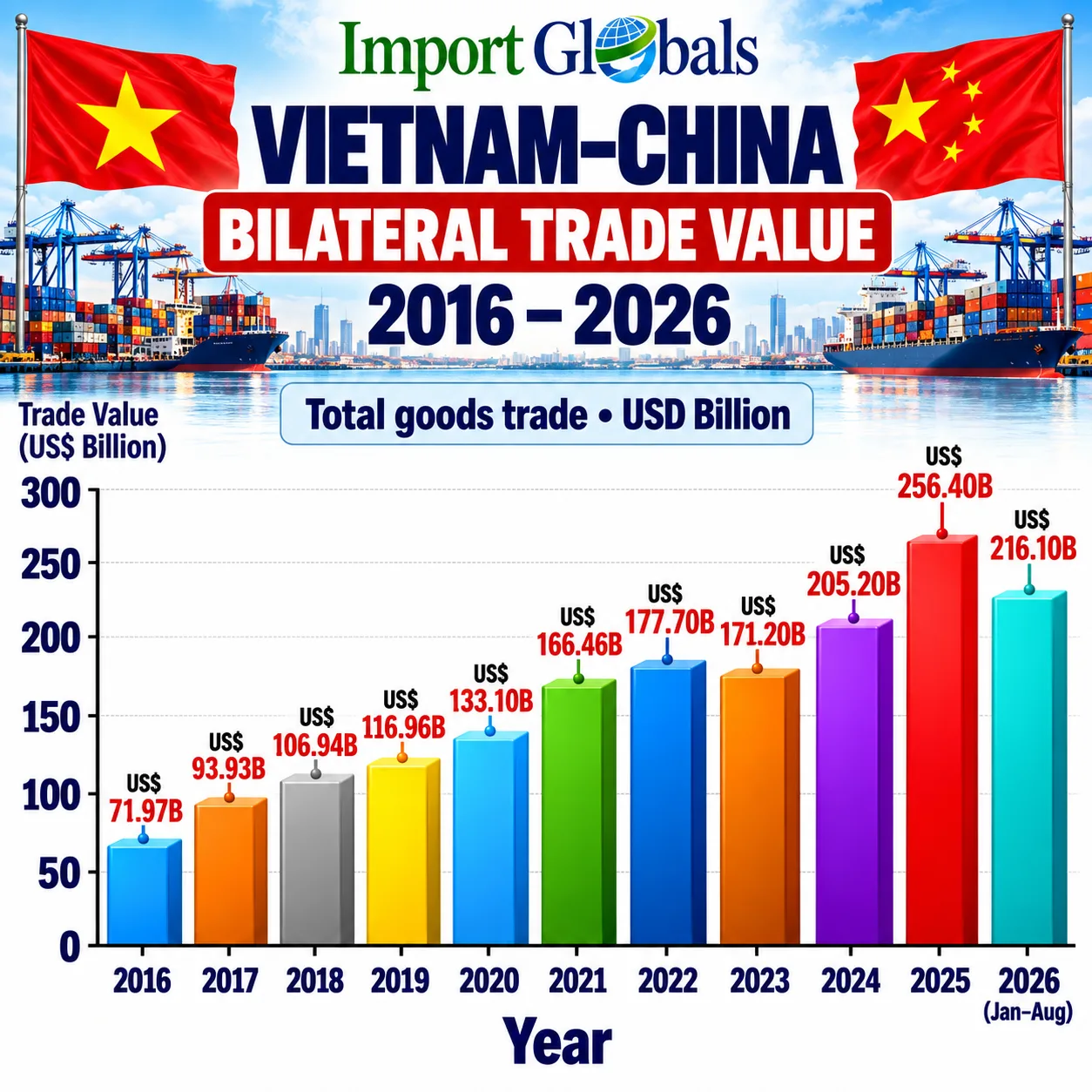
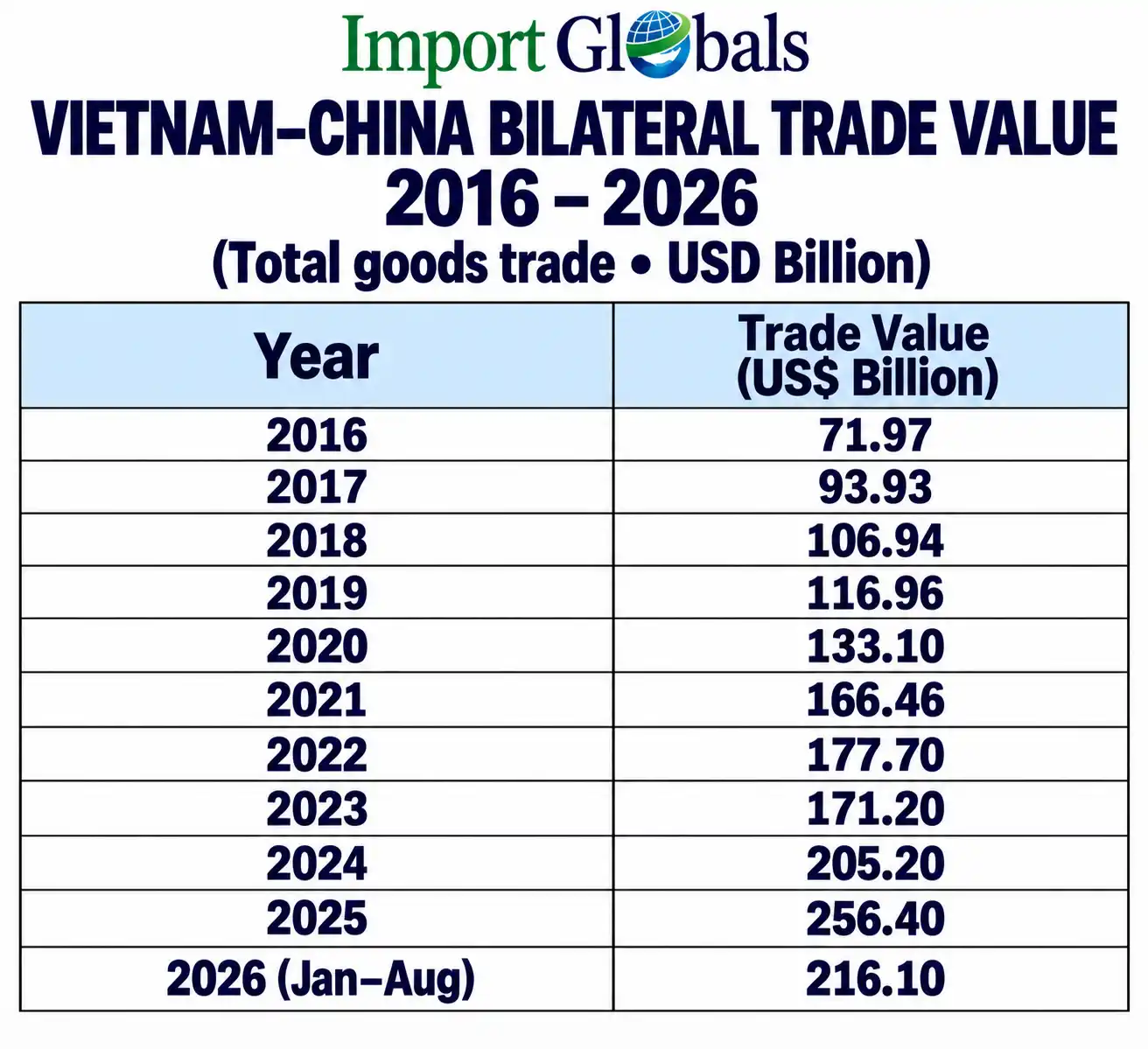
The amount of trade between Vietnam and China was also expected to reach US$256.4 billion in 2025, representing a 24.8% growth. Vietnam exported goods worth around US$70.4 billion to China and imported products with a total value of about US$186.0 billion, resulting in a trade deficit of US$115.6 billion for Vietnam in the market with China. The list of Vietnam’s imports from China included industrial equipment, machinery, electronic parts, raw materials, and consumer goods, whereas the country’s exports to China included agricultural products, seafood, electronics, textiles, rubber, and oil.
Vietnam China Trade Summary
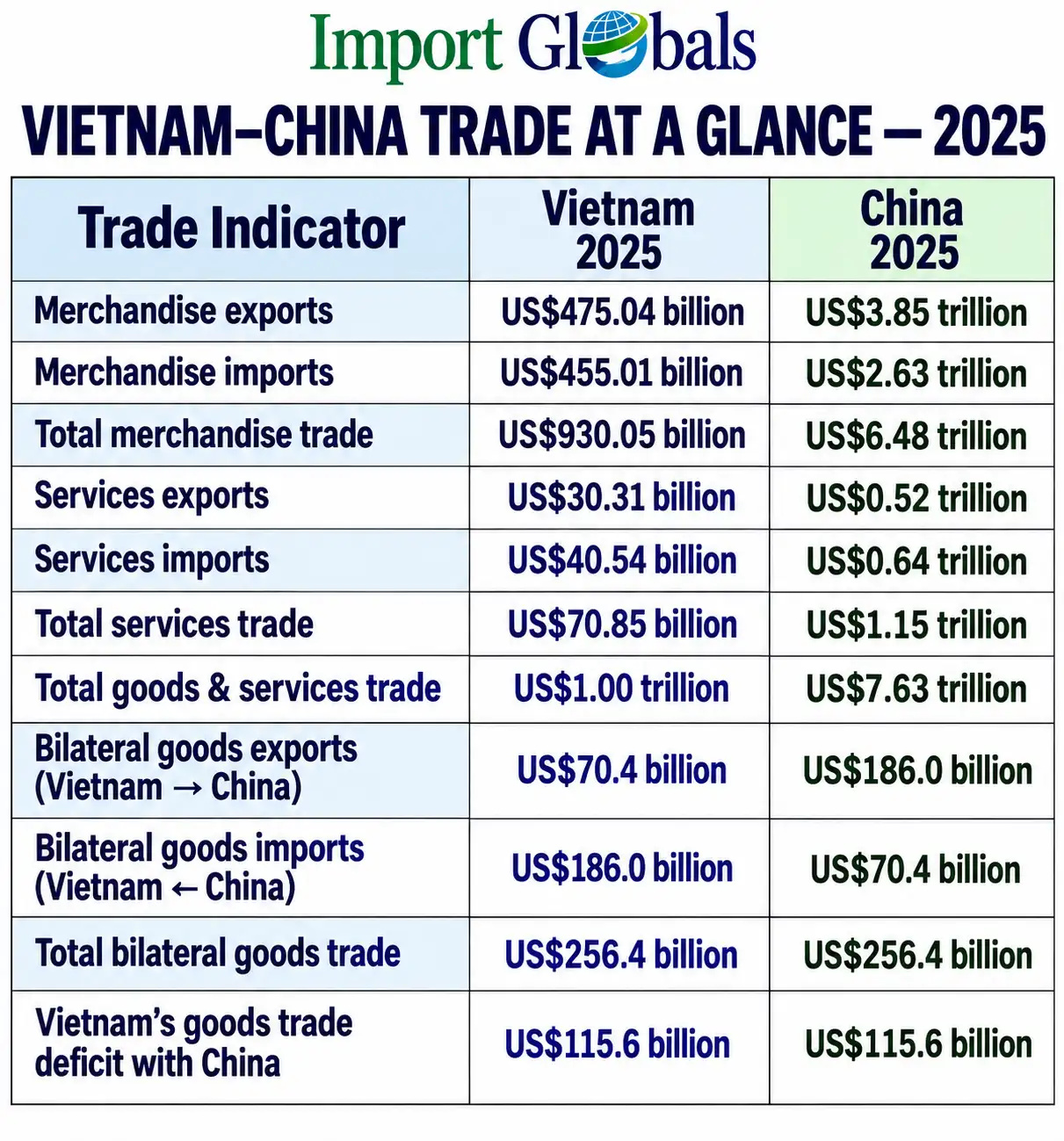
In 2025, the trade ties between Vietnam and China developed rapidly and economically. According to reports of Vietnam Export Data, the country exported goods worth $475.04 billion while importing goods worth $455.01 billion, with an overall commodity trade volume of $930.05 billion. In 2025, Vietnam’s exports of services accounted for $30.31 billion, while its imports for services stood at $40.54 billion and generated an overall services trade volume of $70.85 billion. When combined, the total trade volume for both goods and services reached approximately $1.00 trillion.
When looking at China’s Trade Statistics, the figures are much larger, with $3.85 trillion worth of exports and $2.63 trillion worth of imports of goods, resulting in a total amount of $6.48 trillion in overall goods trade. Regarding services, China reported $1.15 trillion in services trade, which brings the total value to $7.63 trillion. Regarding commerce with China, Vietnam has been able to engage in commodity trade of $256.4 billion, including $70.4 billion worth of exports from and $186.0 billion worth of imports into Vietnam from China, which resulted in a trade deficit of $115.6 billion.
Top Goods Vietnam Imports From China
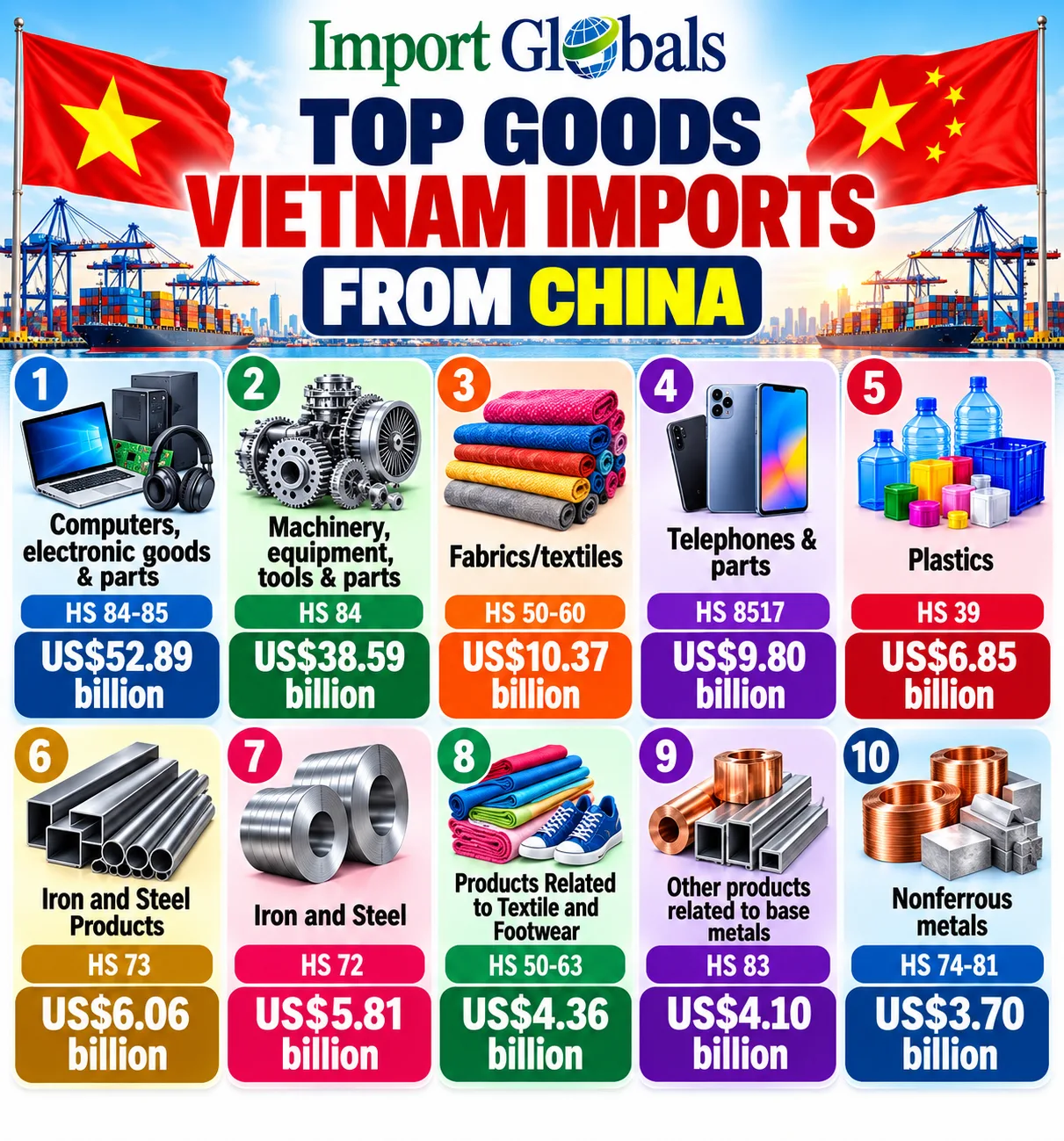
Computers, Electronic Goods & Parts - HS 84-85
USD 52.89 Billion - The largest item in the import list of Vietnam from China is electronics comprising parts, computers and electronic materials; widely utilized in the manufacturing and technology export industries of Vietnam.
Machinery, Equipment, Tools & Parts - HS 84
USD 38.59 Billion - Machinery originating from China is the backbone of Vietnam’s factories, infrastructure, and manufacturing processes, as there is considerable demand for industrial machinery, tools, equipment, and spare parts.
Fabrics/Textiles - HS 50-60
USD 10.37 Billion - The fabrics from China provide vital inputs for Vietnam’s garment industry. Vietnam Customs Data says that hey provide woven and knitted materials necessary in domestic production for exports.
Telephones & Parts - HS 8517
USD 9.80 Billion - Telephones or devices serve as an important segment of technology imports, as they signify the contribution of Vietnam to electronics manufacturing and regional supply chains.
Plastics - HS 39
USD 6.85 Billion - The plastic materials imported by the Vietnamese authorities from China are mainly for the purpose of providing assistance to the manufacturing, construction and consumer sectors.
Iron and Steel Products — HS 73
US$ 6.06 Billion - The iron and steel goods are actively imported from the Chinese authorities mainly because it plays an essential role in the construction, machinery and manufacturing industry. Iron and steel products are supplied by China in significant quantities.
Iron and Steel — HS 72
US$ 5.81 Billion - In 2025, China provided iron and steel products to Vietnam worth an approximate sum of US$5.81 billion despite the 22.5% decline in demand and price, reported Vietnam Trade Statistics.
Products Related to Textile and Footwear — HS 50-63
US$ 4.36 Billion - The various textile products related to accessories and shoes made in China allow Vietnam to have bulk supplies in the textile and footwear markets.
Other products related to base metals — HS 83
US$ 4.10 Billion - The base metals fabricated in China enjoy great demand in different sectors, construction, manufacturing, and even machinery sectors.
Nonferrous metals — HS 74-81
US$ 3.70 Billion - The non-ferrous metals, such as copper, aluminum, nickel, and zinc, serve as basic industrial elements used in the manufacturing process in Vietnam
Top Goods Vietnam Exports to China
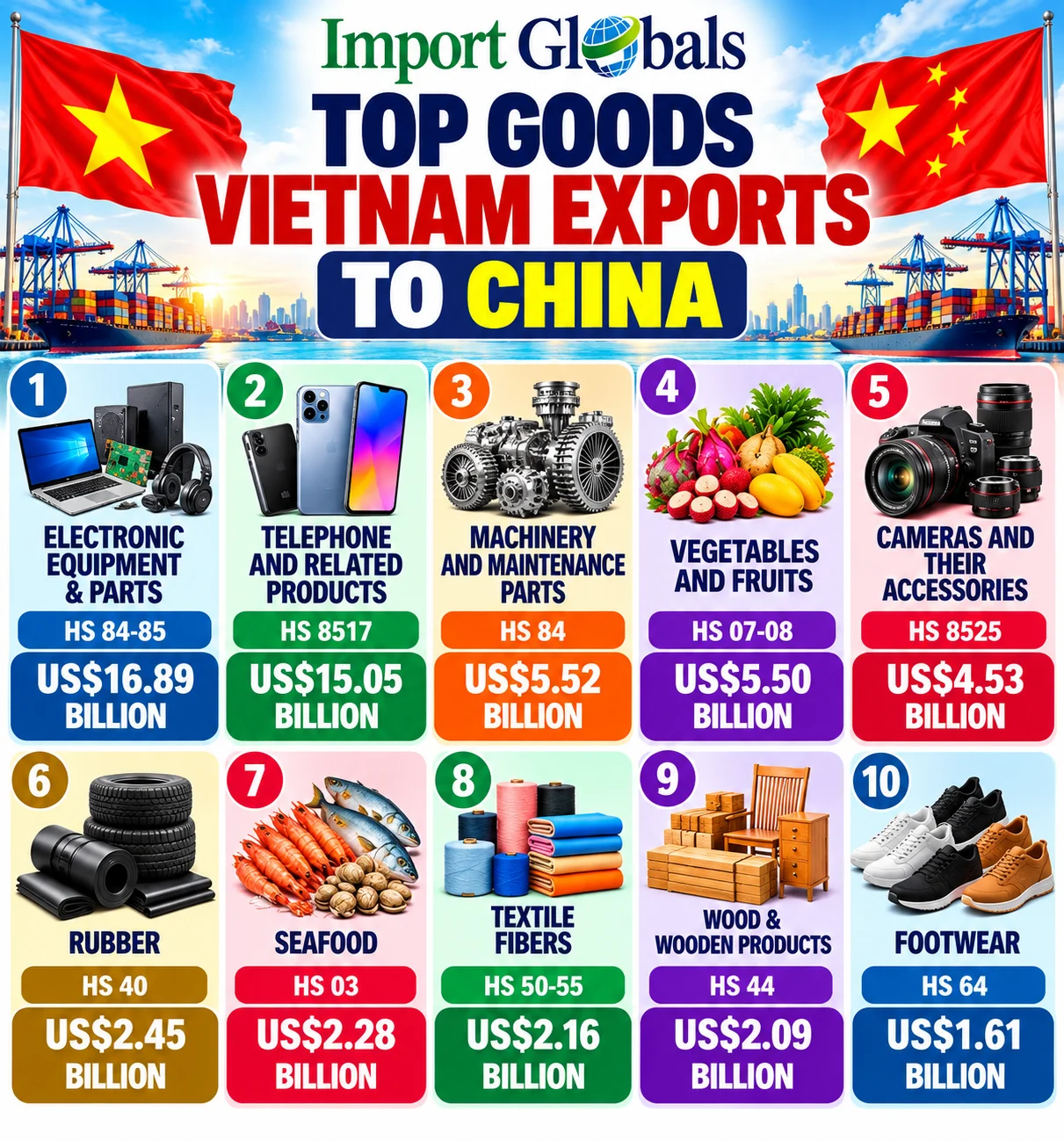
Electronic Equipment & Parts
HS Code: 84-85 | 2025 Export Value: US$16.89 Billion
With electronics being Vietnam’s leading export area, electronics benefited from increased manufacturing capability, semiconductor support, computing equipment manufacturing, and intense demand for electronic parts.
Telephone and Related Products
HS Code: 8517 | 2025 Export Value: US$15.05 Billion
The telephone and its accessory export sector was Vietnam’s second-largest export segment, benefiting from big electronics companies, cell phone manufacturing, telecommunications devices, and the highly developed Asian technological chain, reported China Customs Data.
Machinery and Maintenance Parts
HS Code: 84 | 2025 Export Value: US$5.52 Billion
Machinery export performance sharply increased in 2025, showing the development of Vietnam’s industry and equipment-making.
Vegetables and Fruits
HS Code: 07-08 | 2025 Export Value: US$5.50 Billion
Vegetables and fruits continued to represent one of the significant agricultural exports of Vietnam to China due to their geographical proximity, cross-border logistics, customer demand, and rising prospects for Vietnamese fresh and processed fruits.
Cameras and Their Accessories
HS Code: 8525 | 2025 Export Value: US$4.53 Billion
Vietnam exported many cameras, imaging devices, and their spare parts, which indicates the growing electronics manufacturing sector of Vietnam as well as the country’s development in the context of regional technological manufacturers’ network.
Rubber
HS Code: 40 | 2025 Export Value: US$2.45 Billion
Rubber exports from Vietnam cater to the automotive, tire, industrial, and manufacturing industries in China, says Vietnam Export Data. Proximity and established logistics networks continue driving strong bilateral demand for both raw and processed rubber.
Seafood
HS Code: 03 | 2025 Export Value: US$2.28 Billion
Seafood exports to China mainly encompasses shrimp, fish, molluscs, and other aquatic products. Strong consumer demand and Vietnam’s well-established fishing industry turn China into a significant destination for seafood.
Textile Fibers
HS Code: 50–55 | 2025 Export Value: US$2.16 Billion
Vietnam exports different types of textile fibres to China. This contributes to the development of the Chinese sectors of spinning and weaving, textile manufacturing, and garment making while further enhancing the integration of Vietnamese and Chinese textile supply chains.
Wood & Wooden Products
HS Code: 44 | 2025 Export Value: US$2.09 Billion
Wood and wooden products are used in the furniture, construction, interior decoration, and manufacturing industries in China. Vietnam’s established wood-processing industry supplies more and more materials to Chinese partners.
Footwear
HS CODE: 64 | 2025 Export Value: $1.61 Billion
The footwear export category of Vietnam is a strong demonstration of the manufacturing capacities and the global supply chain. The specific product has been advantageous because of its efficient productivity in the manufacturing units of the Vietnamese authorities.
Vietnam China Trade Data of the Last 10 Years: The Bilateral
 Reasons Why Chinese Industries Relocate to Vietnam for Cost-Effective Manufacturing
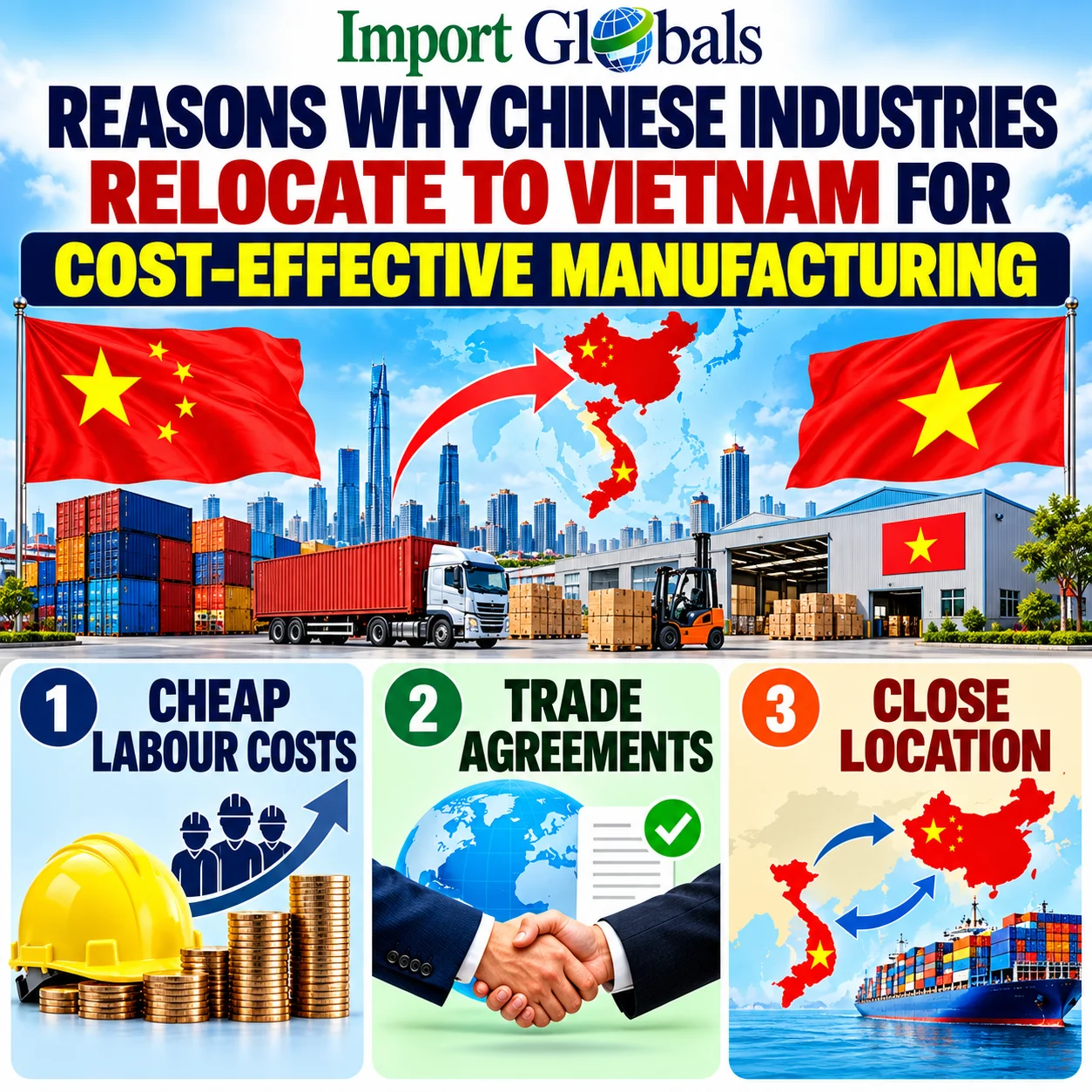
Vietnam, the fast-growing centre for companies, has been now currently looking for efficient production processes to come in the radar of the Chinese firms. Reduced production expenses, the ability to export goods, and establishing a diversified supply chain are only a few benefits offered by Vietnam; its fantastic workforce, numerous agreements on trade exchange, and closeness to China are significant advantages.
- Cheap Labour Costs: Vietnam stands out as a country with lower rates of manufacturing labour when compared to many regions of China. Thus, plant owners pay less for such kinds of labour in textiles, footwear, furniture, consumer goods, etc.
- Trade Agreements: The country is a party to many international trade agreements, such as CPTPP, EVFTA, and RCEP, which create possibilities to clear goods bought in Vietnam from high tariffs.
- Close Location: The geographical location of Vietnam gives Chinese suppliers more opportunities to move goods between China and their area.
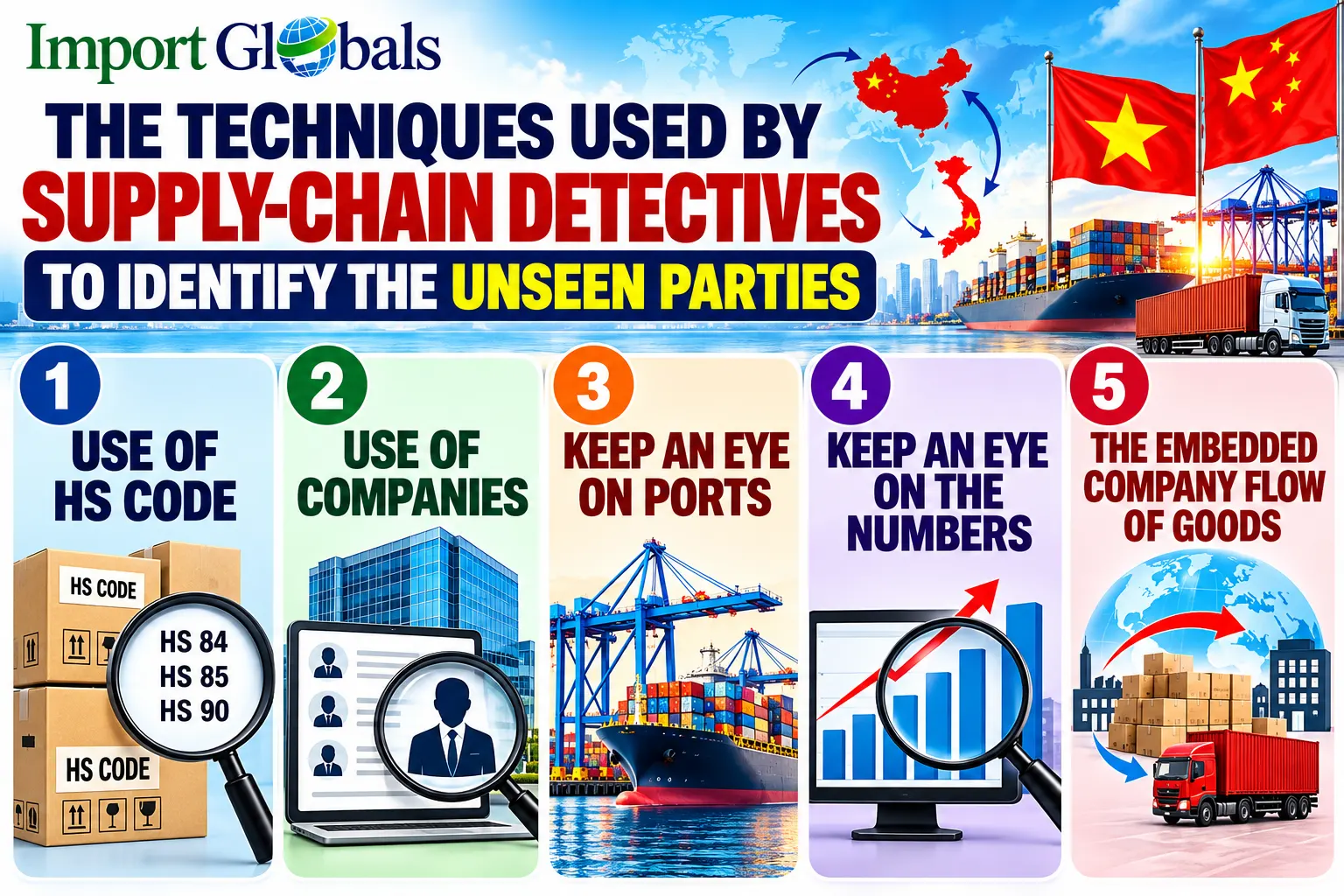
The Techniques Used by Supply-Chain Detectives to Identify the Unseen Parties
Vietnam Import Export Data is of great value as it gives detailed information regarding the actions associated with imports and exports. The national trade data indicate the amount of product being imported or exported by a certain country, but it does not give any hints about the companies taking part in the supply chain. Supply shipment data provides information on the importer, exporter, HS code, quantity, value, date of shipment, and port of shipment.
1.Use of HS Code
HS codes are crucial for understanding what kind of products cross the borders. Instead of just noting that Vietnam’s imports from China grew, trade experts may figure out what kind of products are involved in the trade.
2.Use of Companies
While interpreting importer and exporter names, analysts get the opportunity to learn what companies take part in the supply chain. For example, they will be able to track whether a particular Vietnamese producer is getting components from one supplier consistently or whether it is shifting its sourcing to other suppliers.
3. Keep an Eye on Ports
By looking at port data, one could know how the routes and logistics strategies have changed over time. The growth of volumes for one port while other ports are declining could imply that the firms are redirecting their logistics operations.
4. Keep an Eye on the Numbers
The values and volumes of shipments make it possible for the analysts to see sharp increases, decreases, or changes in unit values. Such changes can act as an early environmental factor for changes in demand or the production processes.
5. The Embedded Company Flow of Goods
If most of the commodity inputs come from one supplier or one country, it could be a risky situation for a firm. Shipment logs would reveal the real concentration of goods in trade rather than just the information in purchase orders, reported Vietnam Trade Statistics.
Top 5 Companies Driving Vietnam–China Trade in 2025
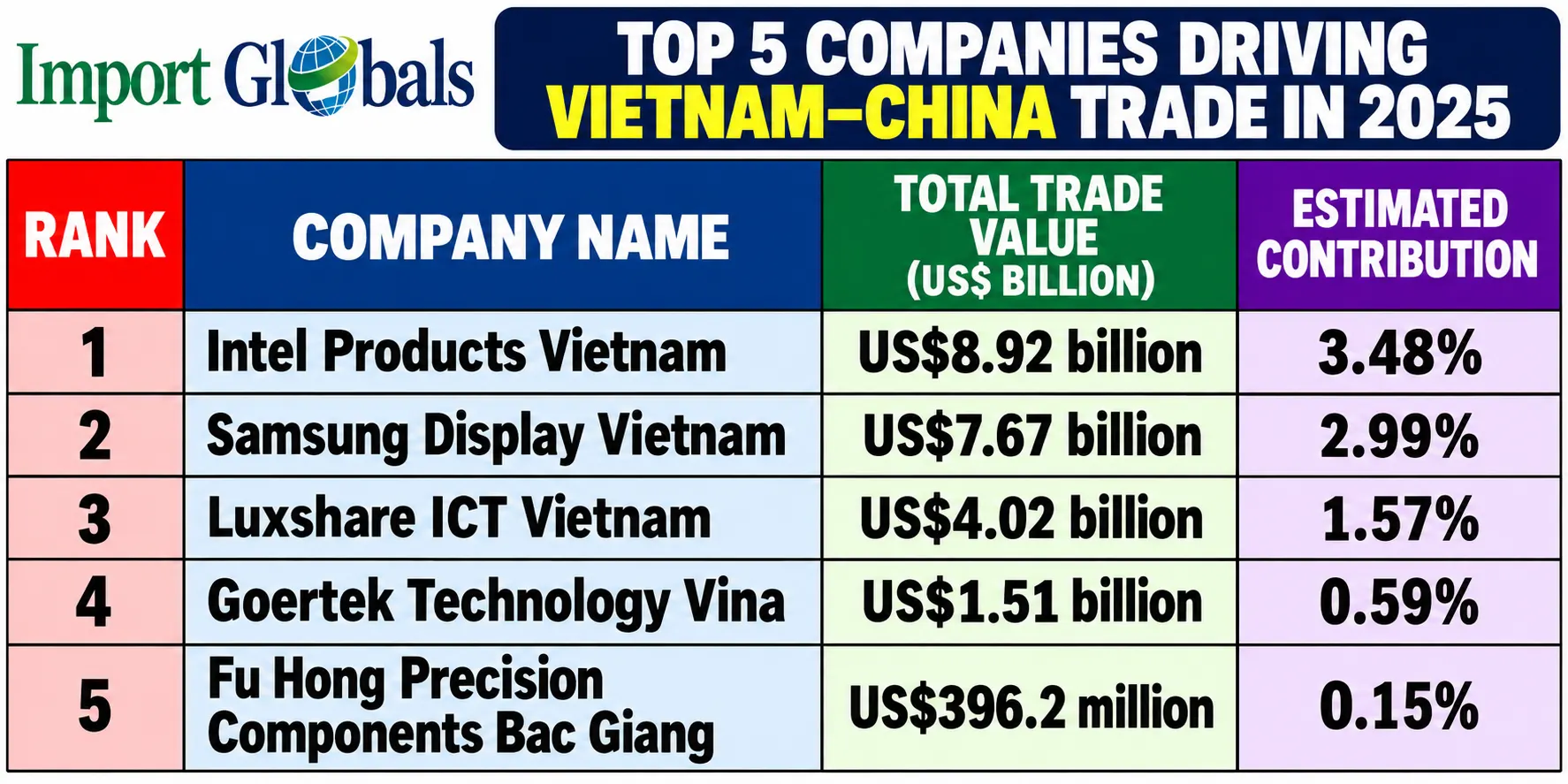
1. Intel Products Vietnam — US$8.92 billion
Estimated Contribution: 3.48%
Intel Products Vietnam presented itself as a key player in global trade, with imports from China reaching approximately US$6.06 billion and exports to China amounting to US$2.86 billion in 2025. Their total trade with China thus stands at around US$8.92 billion.
Description: Intel Products Vietnam functions as a major semiconductor assembly and testing hub, connecting the subcomponents from China with Vietnam and fulfilling the demands of high-tech supply chains.
2. Samsung Display Vietnam — US$7.67 billion
Estimated Contribution: 2.99%
The data shared by Samsung Display Vietnam show approximately US$48.5 million in imports from China and US$7.62 billion in exports to this country.
Description: Samsung is one of the top manufacturers of display products. The contribution of the specific company in the bilateral trade is of around 2.99%. The utilization of key components from China and export display products worldwide has been supporting the overall trade.
3. Luxshare ICT Vietnam — US$4.02 billion
Estimated Contribution: 1.57%
Luxshare ICT Vietnam is another large precision electronic manufacturer that is mainly reliant on China for its sourcing of components. The shipment-level data show the firm received around US$3.56 billion in imports from China and exported approximately US$468 million of goods to this country.
4. Goertek Technology Vina — US$1.51 billion
Estimated Contribution: 0.59%
Goertek Tech Vina is said to import goods from China amounting to 681.5 million dollars and is also estimated to export almost 833 million dollars’ worth of products to China. Therefore, overall trade with China sums to 1.51 billion dollars.
Description: A Vietnam-incorporated Chinese electronics company producing a variety of components for audio devices, wearable devices, smartphones, and other electronics.
5. Fu Hong Precision Components Bac Giang — US$396.2 million
Estimated Contribution: 0.15%
Fu Hong Precision Components Bac Giang is reported to import goods from China worth around 277.2 million dollars and to export electronic parts to China amounting to 119 million dollars.
Description: Fu Hong Precision Components Bac Giang is a manufacturer of precision components related to the Foxconn supplier chain of electronics goods produced in the north of Vietnam.
Significance of Vietnam China Trade Insights
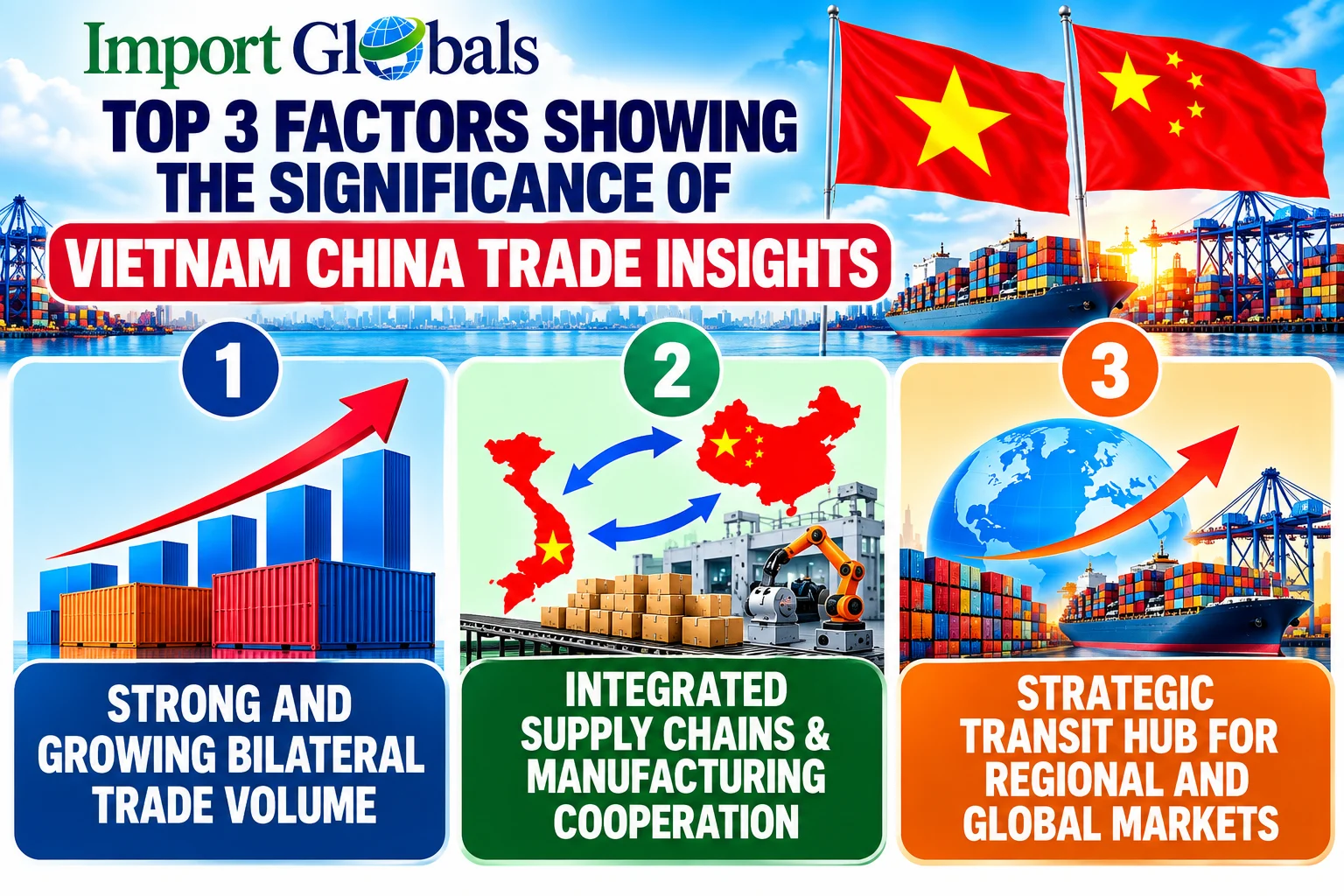
For procurement teams, shipment data helps discover new vendor opportunities and reduce reliance on limited sourcing. For manufacturers, it opens up the value of information regarding rivals’ manufacturing activities. For logistics firms, it reveals the details of transport routes and volumes. For market researchers, it indicates new buyers and suppliers. The cases presented are aligned with the overarching role of shipment data mentioned in the source material, says Vietnam Import Data.
The mentioned approach can be applied universally in different sectors of industry. Agriculture can be studied through the analysis of sales and purchase operations such as quantities and prices; chemicals – through production and regulation processes; pharmaceuticals – through raw materials sourcing; automotive – through components supply; aerospace – through special materials and necessary supplier qualifications.
Conclusion
The relationship between Vietnam and China shows the need to go beyond the traditional analysis of trade in terms of aggregate exports and imports at the country level. Today, Vietnam is not only an exporter but also an importer, producer, manufacturer, and a very important link in the Asian supply chains.
China is firmly anchored in this chain by supplying different types of machinery, electronics, fabrics, metal products, plastics, and other intermediate goods. At the same time, factories in Vietnam are engaged in domestic production, as well as exporting manufactured and agricultural products to China and other countries.
For companies trying to keep pace with these changes in trade, the main question to ask would be not whether a product was manufactured in Vietnam. The production process involves various stakeholders, and their relationships might change over time.
CTA
Looking to convert your China and Vietnam trade data into actionable market intelligence? Import Globals is here to provide all the detailed information regarding the products traded within both economies. The shipment-level trade intelligence helps businesses identify potential buyers and explore new sourcing opportunities. Subscribe to www.importglobals.com or drop an email at info@importglobals.com for detailed updates on Vietnam-China trade to transform your international business growth.
FAQ’s
Que. What is the total amount of Vietnam-China trade value in 2025?
Ans. The total valuation of Vietnam-China bilateral trade in 2025 is 256.4 billion US dollars.
Que. What is the trade value of Vietnam in 2025?
Ans. The overall trade value of Vietnam in 2025 is 75 billion US dollars in exports and 456 billion US dollars in imports.
Que. Name the top products imported by Vietnam from China in 2025.
Ans. Computers and electronic components are the top products imported by Vietnam from China in 2025.
Que. What are the top products exported from Vietnam to China in 2025?
Ans. Electronic equipment and parts are the top products exported from Vietnam to China in 2025.
Que. Why are Chinese companies currently expanding their manufacturing operations in Vietnam?
Ans. Chinese companies are currently establishing and expanding their manufacturing operations in Vietnam because of the lower manufacturing labour cost and the reliable access to international trade agreements.
Que. How does shipment-level trade data help businesses looking for supply chain players?
Ans. The shipment-level data helps businesses with active identification of importers, exporters, HS codes, and shipment quantities.
Que. How does Vietnam-China import-export data support business growth?
Ans. China and Vietnam import-export data support business growth via proper identification of buyers, suppliers, analysis of market demand, and development of effective market expansion strategies.
Que. What information is available in China and Vietnam trade data?
Ans. China and Vietnam trade data covers importer names, exporter names, shipment dates, HS code, product details, quantity, values, pricing information, origin country, importing country, and port details.
Que. How frequently is the China and Vietnam trade data updated?
Ans. China and Vietnam trade data is updated on a monthly basis.
Que. Where can you obtain detailed information on China and Vietnam trade data?
Ans. Visit www.importglobals.com or email info@importglobals.com for detailed updates on China and Vietnam trade data.
You Can Also Visit :-