The UK Textile and Apparel Trade of 2025: The Market Analysis, Key Products, and the Top Destination Markets
- Aug 19, 2026
- 23 Views
The UK Textile and Apparel Trade of 2025: The Market Analysis, Key Products, and the Top Destination Markets
The textile and apparel trade sector of the United Kingdom is one of the important contributors to the global manufacturing sector.
The fashion and textile ecosystem has been maintaining international compliance and sales, as shown by UK Customs Shipment Data. The fashion and textile association and the broader UK fashion and textile industry have contributed to the employment rate, with around 1.3 million jobs. The market is mainly operating because of the major consumer demand rate and the global representation as the fashion and sourcing hub. Clothing, fabrics, yarns, home textiles, technical textiles, and footwear are the main variants traded from the United Kingdom. Clothing is one of the major imported goods categories, according to UK Import Data.
The market is going through several challenges, mainly because of external trade pressures. Sustainability in circular fashion, digital retail, and supply chain diversification has influenced the direction of the UK textile and apparel industry. The combination of a strong domestic fashion market has supported trade growth. Competitive pricing, consistent quality, traceability, and sustainable product standards have supported the overall trade.
Why is the UK an Important Textile and Apparel Market?
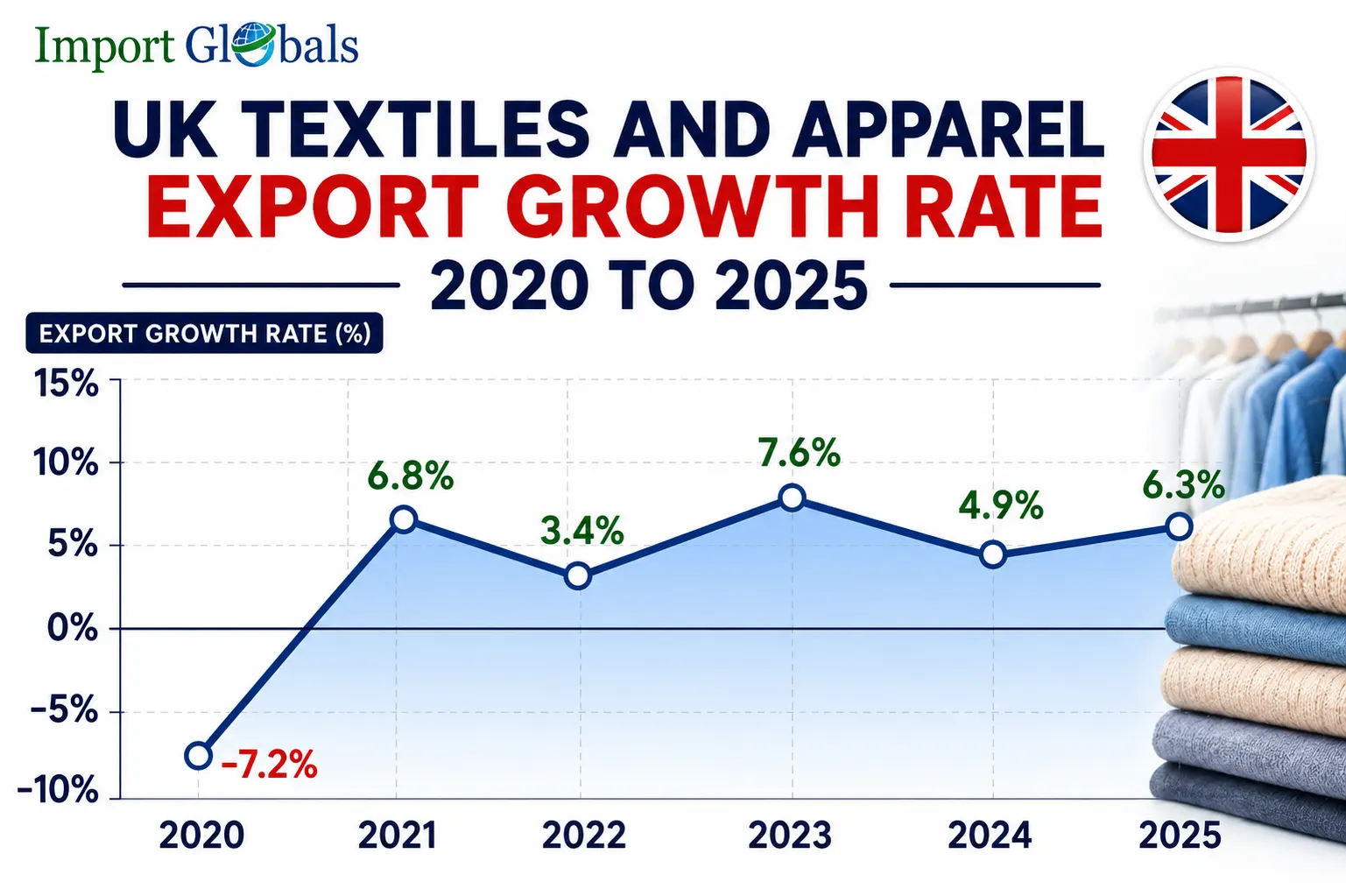
The United Kingdom is an important textile and apparel market because of the large consumer base and the international recognition. London has been one of the major fashion centres, with British brands developing strong international recognition. The textile industry is broader than conventional clothing. Apparel manufacturing, textile fabrics, and technical textiles have maintained effective trade. The UKFT reported the sector as one of the top authorities supporting designer clothing to medical products trade support.
The dependence of the UK on international sourcing, as reported by the UK Trade Data, has maintained the country's position as an important destination for textile and apparel exporters. The logistics infrastructure, distribution centres, and e-commerce platforms have been strengthening the international textile trade. European countries are considered significant sources of providers because of the geographic proximity and the establishment of commercial relationships.
What Information is Available in UK Textile and Apparel Trade Data?
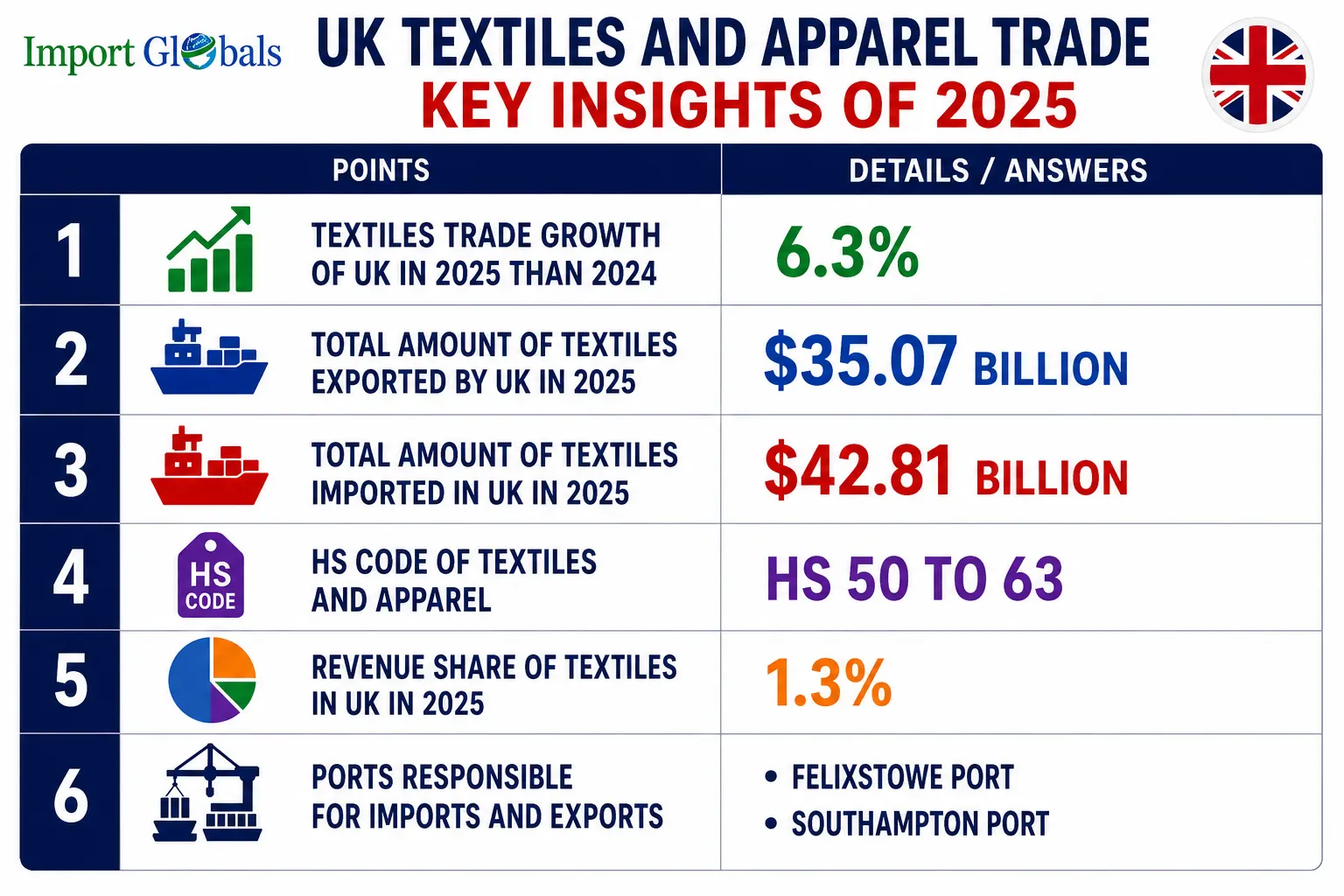
UK Textile and Apparel Trade Data is a comprehensive evaluation of the product information traded from the nation. It helps businesses understand the movement of clothing fabrics, yarns, textiles, home textiles, and other apparel-related products. The dependency on the database helps the authorities with shipment-level textile and apparel trade intelligence. The destination country reports information, supplier details, buying information, and product specifications to craft the overall business strategies.
The information helps manufacturers and traders move beyond market statistics to expand their trade growth. The dataset helps businesses study competitor activities, identify emerging demand rates, and evaluate supplier networks. The textile companies can craft their marketing regions with sourcing patterns that change rapidly as per the seasonal demand rates.
The Latest Textile and Apparel Products Exported From the UK
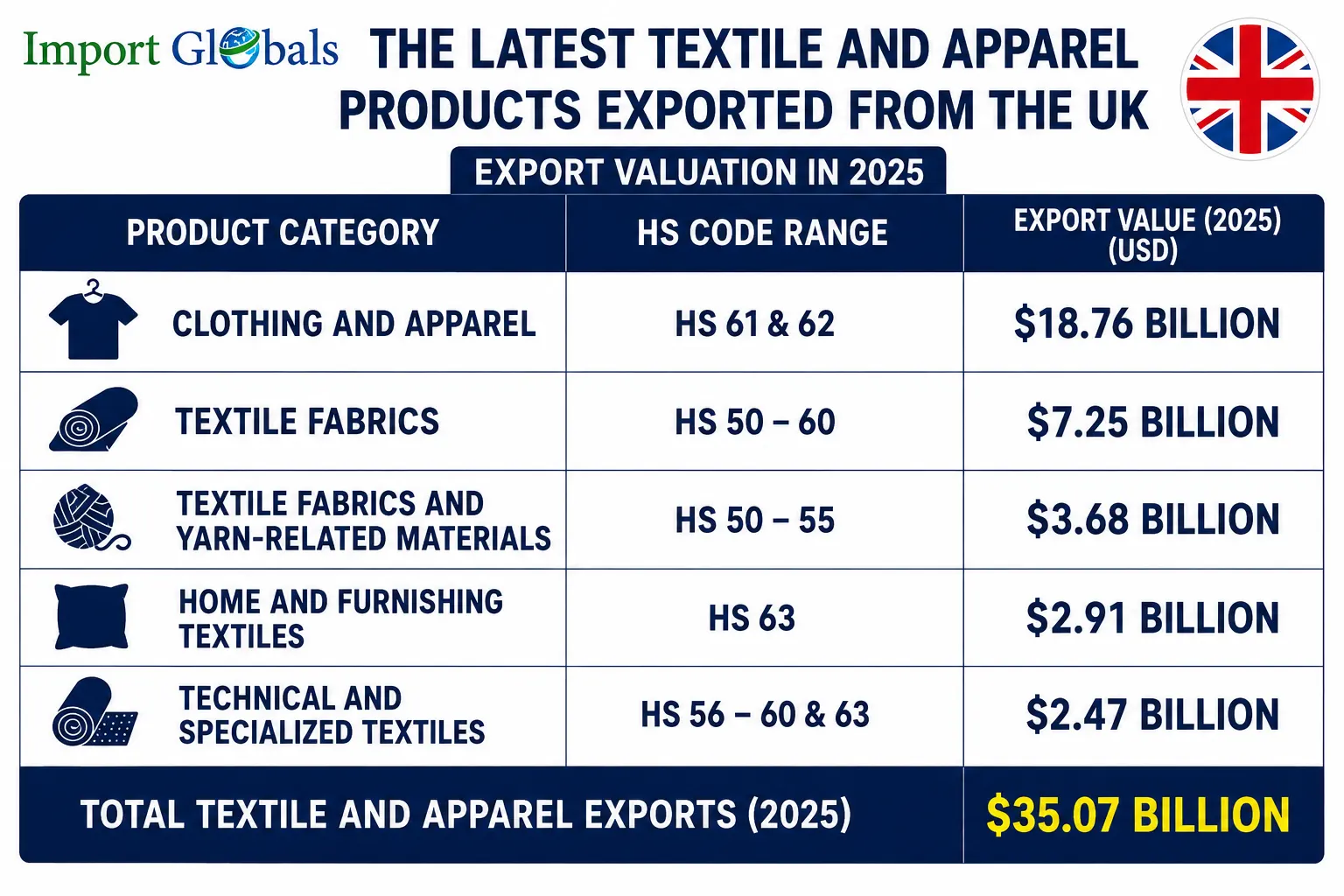
- Clothing and Apparel - Clothing and apparel is one of the top traded variants of textiles from the United Kingdom. UK Export Trade Data reported the broad range of garments, including dresses and shirts, traded from the nation as the main factor solidifying the export ranking. The clothing and apparel trade has gained a 6% hike from the previous year, which demonstrates the strong dependence of the economy on international apparel sourcing.
- Textile Fabrics - Textile fabrics are also a significant category of apparel exported from the United Kingdom. UK Import Export Data listed apparel manufacturers, furnishing companies, and technical textile producers as the main factors supporting domestic manufacturing and international trade. The businesses importing fabrics can properly support garment production along with interior furnishings.
- Textile Fabrics and Yarn-Related Materials - The UK has also solidified its position as a reliable trader of textile fibres and yarn-related materials. The natural and synthetic fibres used by spinning mills, textile manufacturers, and apparel producers are mainly traded. The increasing demand rate for fibres has influenced the country to promote fashion trends with sustainability requirements and recycled material adoption.
- Home and Furnishing Textiles - Home and furnishing textiles hold a massive share in the textiles and apparel exports of the United Kingdom. The demand for home textiles is basically backed up by housing activity, hospitality, consumer spending, renovation, and commercial property development. The manufacturers are offering sustainable fibres for recycling of materials, including innovative finishes and customized products.
- Technical and Specialized Textiles - Technical textiles are traded to support conventional fashion demand rates. Medical textiles, protective clothing, and automotive fabrics are examples of specialized applications trade. The research capabilities reported by the UK Export Data have listed engineering expertise and an advanced manufacturing base as opportunities, creating a trade forum for technical textile development.
Top Sourcing Destinations for the UK Textile and Apparel Market
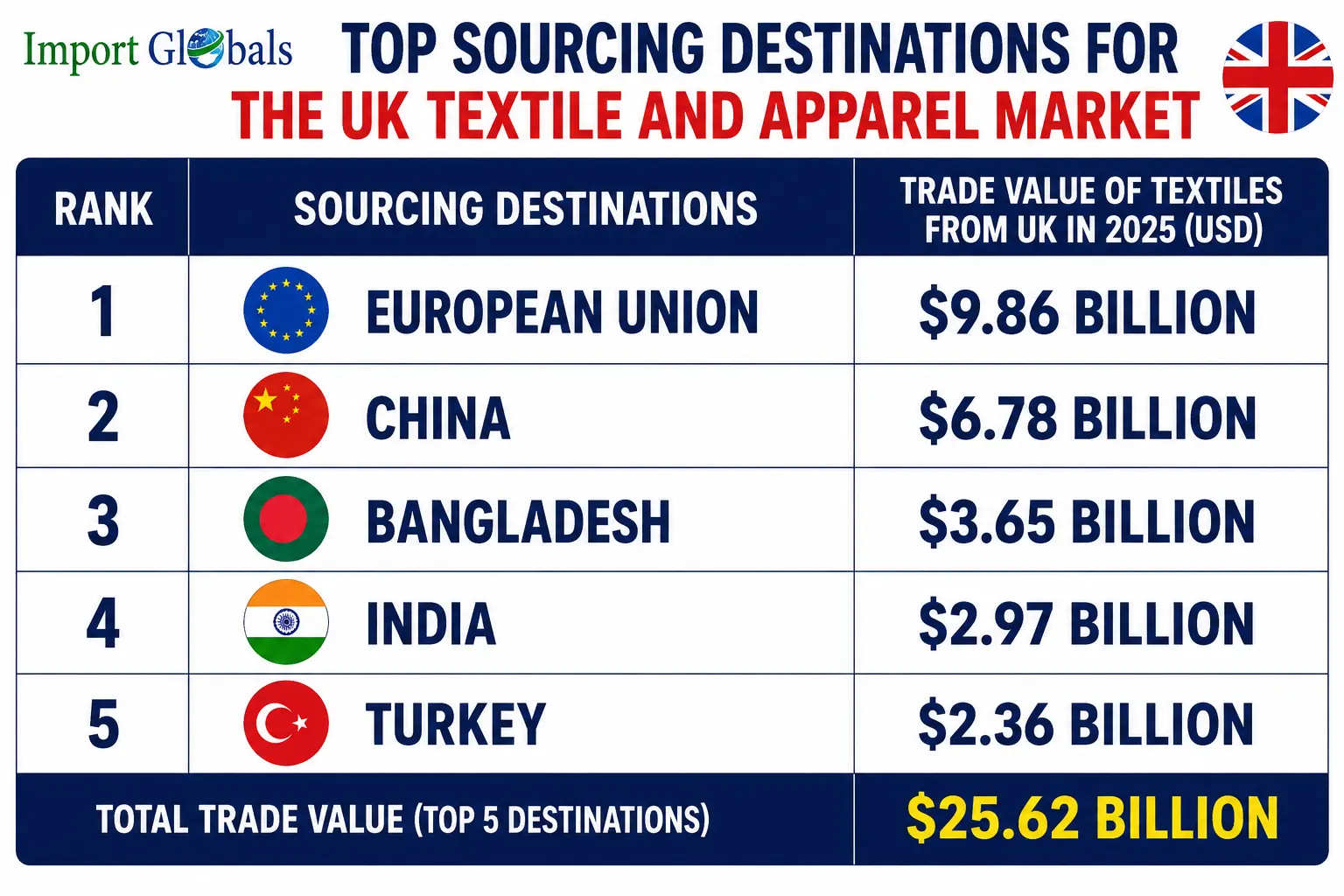
- European Union - The European Union Import Data reported itself as one of the top regions contributing to the textile and apparel industry of the United Kingdom. The establishment of the logistics connection, consumer demand rate, and the historical commercial relationships have maintained bilateral integrity. The fashion brands and textile companies' collaboration has promoted the trade of clothing, fabrics, accessories, luxury products, and specialized textiles.
- China - China Import Data listed garments, fabrics, accessories, home textiles, and synthetic materials as the main factors crafting the bilateral integrity between China and the United Kingdom. The large manufacturing base of the UK has allowed buyers to source products across different price segments, covering mass market apparel.
- Bangladesh - Bangladesh Import Data lists retailers and fashion brands sourcing shirts, trousers, knitwear, and outerwear as the main traded variants from the United Kingdom to the nation. Both countries have been exchanging textile production to maintain a strong positioning on a global scale.
- India - India is also an important textile and apparel partner of the United Kingdom because of its diversified manufacturing base. The supply of cotton textiles, yarns, fabric garments, and home textiles within both the economies has supported the trade relationship. The UK-India trade agreement has expanded the bilateral trade in Indian textiles.
- Turkey - Wrapping up the list of the top trade partners of the UK's textile and apparel trade, Turkey is also a significant one, says Turkey Import Data. Turkish companies are skilled in providing fabrics, yarns, garments, denim, home textiles, and finished apparel. The shorter transportation has maintained the valuable positioning of the nation amidst those looking for replenishment cycles.
Challenges Affecting the UK Textile and Apparel Trade Market
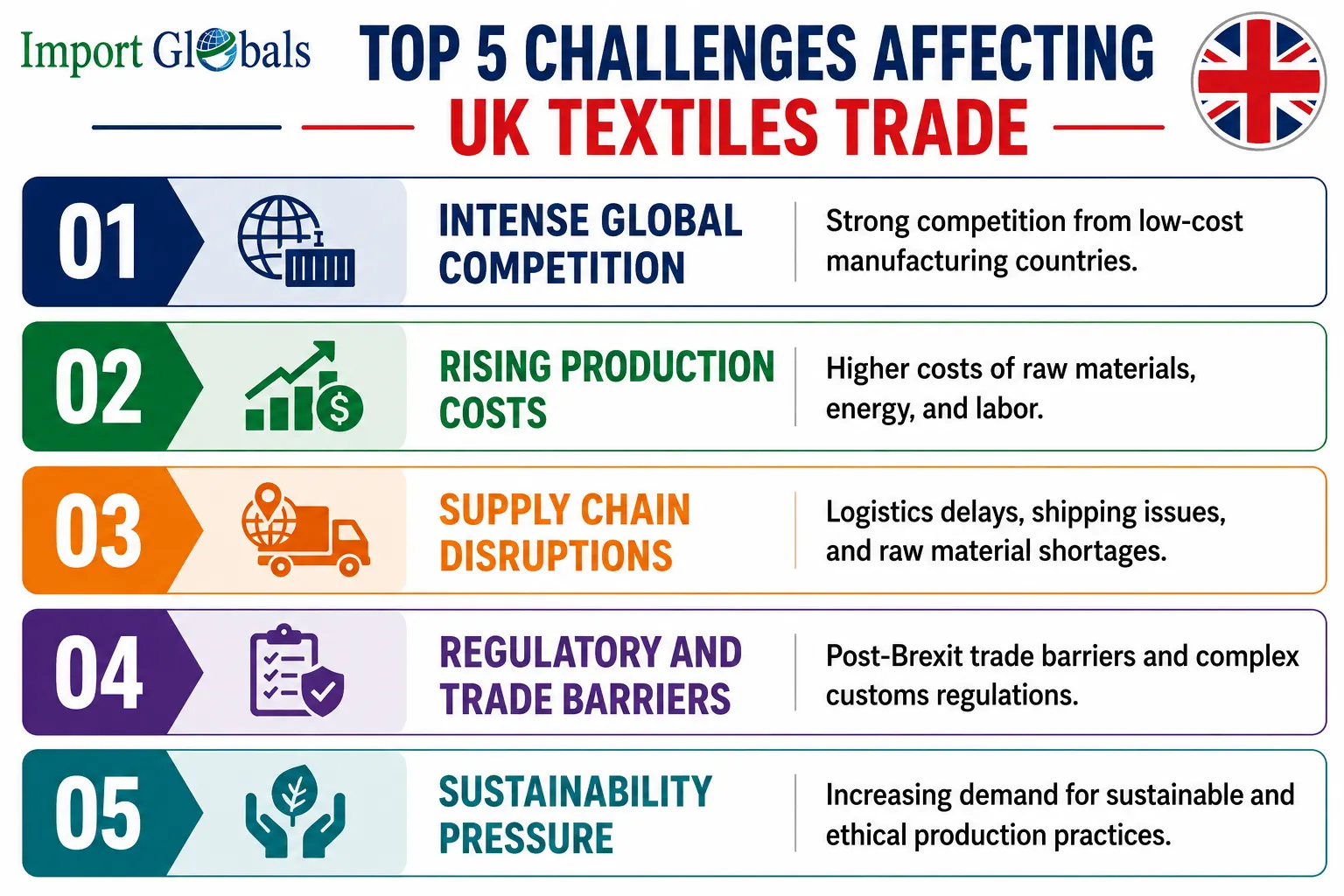
The UK textile and apparel trade market is facing different challenges like supply chain volatility, higher transportation costs, inflationary pressures, and international competition. Sustainability is backed up by retailers and consumers increasingly demanding greater transparency over different sectors like manufacturing processes, labour conditions, and carbon emissions.
The UK textile and fashion industry has recently experienced an improvement in domestic manufacturing. Production areas like knitwear jersey, cut-make-trim manufacturing, and printing have supported the trade ranking. UK Statistical Data reported that suppliers from Asia and other low-cost production markets are the main regions offering highly competitive prices that have made the UK's trade in textiles and apparel difficult.
Industries Supporting the UK Textile and Apparel Trade
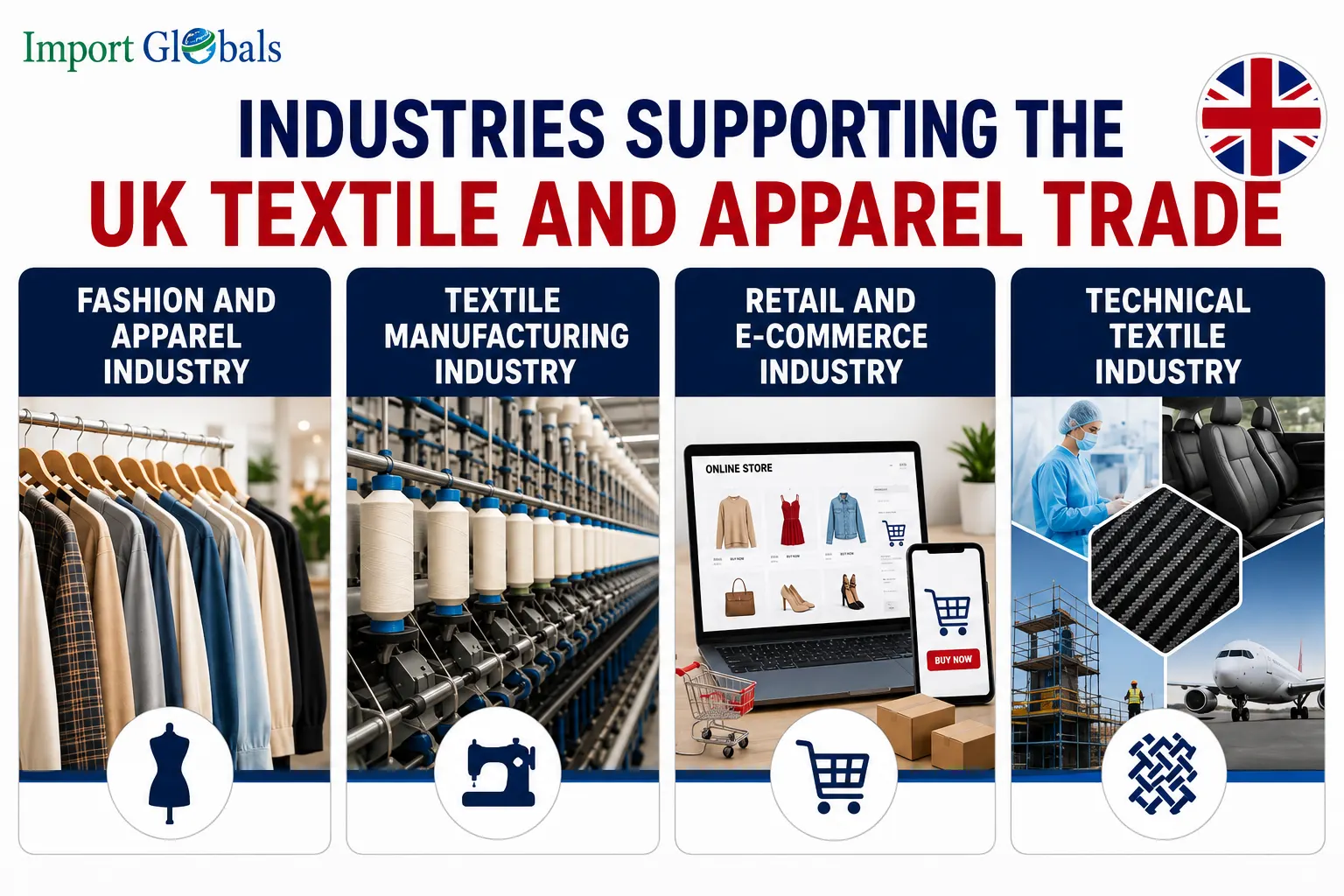
- Fashion and Apparel Industry - The fashion and apparel industry is one of the strongest pillars that has been creating the foundation of the textile and apparel trade of the United Kingdom. The country has maintained its recognition as one of the top reliable suppliers of designer, high street, sportswear, and independent fashion brands. This has created demand for fabric, yarn, accessories, manufacturing services, and digital commerce.
- Textile Manufacturing Industry - The textile manufacturing industry holds a massive significance in the UK textiles and apparel trade. The ability of the nation to meet the demand rate of domestic manufacturers regarding premium, technical, industrial, and specialized markets has maintained investment in modern machinery, automation, and sustainable fibres.
- Retail and E-Commerce Industry - The retailers and e-commerce companies are the major drivers of the UK's textile and apparel trade. The volatility of online shopping has maintained the digitalized trade continuity without depending exclusively on physical stores. Retail has created new requirements around inventory management.
- Technical Textile Industry - The technical textile industry is mainly responsible for supporting sectors like healthcare, automotive, construction, aerospace, defense, and sports. The UK Imports Shipment Data has promoted sustainability requirements while maintaining consumer expectations. The stronger circular economy has reduced the dependence on virgin raw materials while supporting the sustainable supply chain.
Future Trade Outlook of the UK Textile and Apparel Market
The UK textile and apparel market has created opportunities for digital retail, sustainable manufacturing, and higher value textile production. The consumer market has generated demand for imported clothing and textile products. Companies are responding to increasing dependence on sustainability, supply chain resilience, and changing consumer expectations. British brands are able to strengthen their international competitiveness with investment in premium design and sales.
UK Customs Shipments Data listed reshoring has become an important trend. Domestic manufacturing provides shorter lead times, greater control over quality, and improved supply chain transparency. International sourcing has continuously maintained the necessity of the Bangladesh, China, and India authorities over specific trade from the United Kingdom. The development of the UK-India trade has created additional opportunities for textile and apparel suppliers while strengthening the country's positioning in the global textile trade.
Conclusion
The UK textile and apparel trade is one of the important components of the country's international merchandise ecosystem. The UK Import Export Data reported that the data set is mainly beneficial for manufacturers, exporters, importers, retailers, brands, and distributors. Clothing imports and the demonstration of significant dependence have maintained the role as a fashion and design centre. British companies are increasingly exploring the reshoring of sustainable production and technical textiles to promote supply chain diversification. The greater investment in innovation, sustainable materials, and digital technologies has strengthened the competitiveness of the UK textile and apparel sector. Importers, manufacturers, and retailers have maintained an understanding of buyers and suppliers for market evaluation.
CTA
Trying to upgrade your textiles and apparel trade in the United Kingdom? You have landed at the right platform here. Import Globals holds a specialization in providing detailed access to the importers, exporters, and buyers of specific categories supplied from the United Kingdom. Subscribe to www.importglobals.com or drop an email at info@importglobals.com for detailed updates on the UK Textile and Apparel Trade Data to accelerate your global business growth.
FAQs
Que . Name the leading variants of textile and apparel products exported from the United Kingdom.
Ans. Clothing, textile fabrics, and textile fibres are the top variants of textile and apparel products traded from the United Kingdom.
Que. What is the export trade value of the United Kingdom in 2025?
Ans. The export trade value of the United Kingdom in 2025 is 1.28 trillion US dollars. It's basically textiles.
Que. What is the global trade rank of UK in 2025?
Ans. The global trade rank of UK in 2025 is 6th.
Que. What is the import trade value of textiles in the UK in 2025?
Ans. The import value of the UK's textiles in 2025 is 42.81 billion US dollars.
Que. Why is the United Kingdom an important textile and apparel trader?
Ans. The United Kingdom is an important textile and apparel trader because of the large consumer market and the development of the retail infrastructure.
Que. Name the top countries importing textile and apparel from the United Kingdom.
Ans. China, Bangladesh, and India are some of the top countries importing textiles and apparel from the United Kingdom.
Que. How does United Kingdom textile import-export data support business growth?
Ans. United Kingdom textile import-export data support business growth via proper identification of buyers, supplier analysis, analysis of market demand, and development of effective market expansion strategies.
Que. What information is available in UK textile and apparel trade data?
Ans. UK textile and apparel trade data covers Importer names, Exporter names, Shipment date, HS Code, Product Details, quantity, values, pricing information, origin country, importing country & port details.
Que. How frequently is the UK textile and apparel trade data updated?
Ans. UK textile and apparel trade data is updated on a monthly basis.
Que. Where can you obtain detailed information on UK textile and apparel trade data?
Ans. Subscribe to www.importglobals.com or drop an email at info@importglobals.com for detailed analysis of the UK textile and apparel trade data.
You Can Also Visit :-