Aluminum Supply Vulnerability in 2026: How Gulf Disruptions Are Changing Trade Around the World
- Apr 17, 2026
Aluminum Supply Vulnerability in 2026: How Gulf Disruptions Are Changing Trade Around the World
Research by Import Globals of US aluminum import statistics revealed a global demand for the metal from companies of all sizes. Over the past two decades, the Gulf region has emerged as a leading aluminum producer.
Thus, global trade is significantly impacted by any issues that arise in this region. In 2026, the reliability of the aluminum markets has diminished due to increased tensions in the Middle East and shipping issues in the Persian Gulf.
As per Europe Import Data by Import Globals, due to logistical hurdles, increasing premiums, limited supply, and increasing energy costs, Import Globals' data on European exports reveals that estimating aluminum pricing and trade has proven impossible. Import Globals' data on US exports shows that this metal is one of the most important. Aerospace, construction, electronics, automotive, packaging, and renewable energy are just a few of the many fields that rely on it. As more and more countries explore for ways to electrify its infrastructure, make things lighter, and build things that last a long time, they have been using more and more metal. But recent events in the area have demonstrated how weak the world's aluminum supply chains are.
The Importance of Aluminum in World Trade
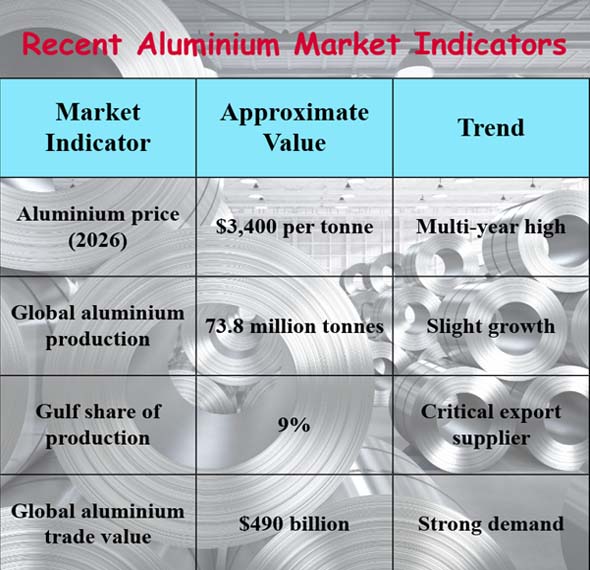
People trade aluminum a lot since it is one of the most frequent metals used in industry. It is needed in various fields because it is light, doesn't rust, and can be used again. Solar panels, drink cans, cars, and planes are just a few of the products that require aluminum. As per USA Export Data by Import Globals, there is a lot of demand for aluminum all throughout the world. Every year, people all across the world trade aluminum goods and raw metal for hundreds of billions of dollars. Aluminum trade has been strong in the past several years since there has been a lot of demand from the manufacturing and infrastructure sectors. The globe made roughly 73.8 million tons of aluminum in 2025. This shows that the demand for aluminum in big economies stayed the same.
- Aluminum's Important Uses in Business
- Making cars and cars that run on electricity
- Projects for buildings and infrastructure
- Industries that work in aerospace and defense
- Systems that use renewable energy
- Consumer electronics and packaging
The shift toward electric cars and renewable energy will probably increase the need for aluminum even further because lighter materials use less energy.
The Global Aluminum Production Scene
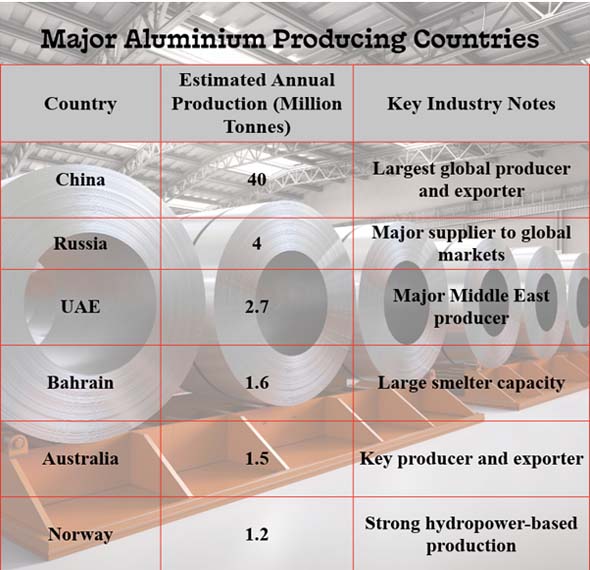
There are only a few sites in the world where they make aluminum. These regions have the requisite energy sources, bauxite supply, and the ability to smelt. China is remains the biggest producer of primary aluminum, which makes up the biggest part of the total. As per Russia Import Export Trade Data by Import Globals, some of the most important manufacturers include Russia, the United Arab Emirates, Bahrain, India, Australia, and Norway. The Gulf region, especially the UAE, Bahrain, and Qatar, has become a major place to create aluminum since it has access to inexpensive electricity.
In the previous 20 years, the Gulf Cooperation Council (GCC) countries have invested a lot of money on aluminum smelting factories. These investments have made the area a major supplier to markets all over the world. There are some of the biggest aluminum smelters in the world in the Gulf region, like
- Emirates Global Aluminum (UAE)
- Aluminum Bahrain (Alba)
- Qatalum (in Qatar)
A lot of aluminum from these factories goes to Europe, Asia, and North America. The Gulf region is a very important supplier to markets all over the world because it makes about 9% of the world's aluminum. As per USA Import Data by Import Globals, a lot of this aluminum goes to other nations, so any issues with Gulf production or shipping routes have an immediate effect on supply chains all across the world.
Why the Gulf Region Is Important for Aluminum Supply
One of the most important shipping routes for metals and energy exchange around the world is the Strait of Hormuz. This tiny body of water connects the Persian Gulf to shipping lines all around the world. Many Gulf aluminum makers rely on the canal to send their commodities to markets all over the world. Any issues along this route can make shipments take longer, cost more, and limit the number of goods available. Because of recent political tensions, shipping in the area has been quite difficult. Missile strikes, security challenges, and problems with logistics have all affected industrial facilities and commercial movements. Based on Europe Import Trade Analysis by Import Globals, some Gulf smelters have had problems or delays with their operations because of the war. This has made it harder for people to get what they need on the worldwide market.
The Strait of Hormuz and the Trade in Aluminum
Before the most recent issues in the world, there was already a lack of aluminum. Prices had already gone up because energy costs were going up, there was less smelting capacity in Europe, and demand from manufacturing sectors was rising up. As per Eutope Exporter Data by Import Globals, the problems in the Middle East made things considerably harder for supply systems. In 2026, the price of aluminum reached its highest point in four years because people were apprehensive about shipping and supply issues.
Fluctuations in the Price of Aluminum in 2026
Recent conflicts between countries have generated problems in some parts of the aluminum supply chain.
1. Issues with Making Things
Several aluminum smelters in the Gulf region have had challenges running their companies because of security problems and power shortages. Production facilities need power sources and logistics networks that work all the time. When these things alter, aluminum production can slow down or stop.
2. Delays in Shipping
As per Russia Importer Data by Import Globals, shipping concerns in the Persian Gulf have made it more expensive to move things and have led metal shipments to be late. Insurance costs and security threats have gone higher, which has caused freight prices to go up.
3. Taking Something off the Shelf
Traders have started pulling aluminum out of overseas warehouses to meet supply agreements. A lot of aluminum has been taken out of London Metal Exchange storage to deal address shortages in Europe and North America.
4. Higher Premiums in Some Areas
The price of aluminum on the physical market has gone up a lot since there isn't enough of it and people are fighting over it. Because there is so much demand and so little supply, premiums in major markets are at their highest levels in years.
Disruptions in the Supply Chain Are Affecting the Global Trade in Aluminum
Aluminum is used in a lot of different fields, therefore difficulties with its supply influence the economy all around the world Automotive Industry: automotive makers use a lot of aluminum to build automotive parts that are light. If there aren't enough supplies, it can take longer and cost more to manufacture something.
The Building Business
Based on Europe Import Shipment Data by Import Globals, people often use aluminum to make windows, buildings, and sections of buildings. Prices for metals are going higher, which might also make it more expensive to manufacture things around the world.
Energy that Can be Used Again
Solar panels, wind turbines, and electricity transmission systems all consume a lot of aluminum. Any difficulty with getting aluminum can affect initiatives that employ renewable energy.
The Business of Packaging
Food and drink cans are often made of aluminum. Businesses that create packaging and businesses that sell consumer goods can be hurt by a lack of materials.
Effects on Global Industries
The way that trade works around the world is changing because aluminum supply networks are facing challenges. To keep supply and demand in check, producers and merchants are moving more and more goods to other marketplaces. For example, some exporters are transferring shipments of aluminum from China to Japan and South Korea due of changes in demand and political developments. As per South Korea Import Export Trade Analysis by Import Globals, these shifts highlight how quickly geopolitical risk may influence trade routes around the world.
Long-Term Prospects for the Markets for Aluminum
Even though the market is unsettled right now, demand for aluminum is expected to be high for a long time. Several structural trends suggest that aluminum use will continue to rise:
- Change in Energy
For electric cars, solar energy systems, and battery technologies, we need aluminum and other light metals.
- Building up the infrastructure
As cities flourish and emerging economies put money into infrastructure, the need for aluminum will keep going up.
- Recycling and being green
As per Japan Export Import Global Trade Data by Import Globals, recycling aluminum is easy and takes a lot less energy than making it from scratch.
This makes it appealing in an economy that doesn't put out much carbon. But if tensions between countries stay high in crucial production areas, supply problems will still be a concern.
Strategies for Mitigating Supply Risk
Businesses and governments are looking into different ways to make the aluminum supply chain less likely to break down.
Getting things from Different Areas
Countries that buy aluminum are starting to look for supply from more than one area instead of just one supplier.
Increasing Production at Home
Some countries are investing in their own smelting capacity to make sure they have enough supplies.
More things that can be recycled
Recycling aluminum consumes less energy and cuts down on the requirement for primary manufacture.
Strategic Stockpiling
Some firms and governments are creating strategic reserves to protect themselves from difficulties with the supply chain.
Conclusion
The aluminum market in 2026 shows how quickly geopolitical problems can change the flow of goods around the world. Making aluminum in the Gulf region is becoming more essential. This is good and bad for trade around the world. Recent events in the Persian Gulf have shown how easy it is for supply lines to be cut off, especially those that go through the Strait of Hormuz. Prices have gone up, the market is less stable, and firms have had to reconsider how they get their goods because of these concerns.
The aluminum company is still doing well since there is increasing demand for it in the manufacturing and renewable energy industries. The events of 2026, on the other hand, show how closely linked global trade and geopolitics are. In order to make sure that aluminum supply chains are stable in the future, governments and businesses will need to focus on recycling, diversifying their supply chains, and using their resources wisely. Import Globals is a leading data provider of Europe Import Export Trade Data.
FAQs
Que. What does aluminum mean for trade around the world?
Ans. Cars, construction, aerospace, electronics, and packaging are just a few of the many fields that use a lot of aluminum. It is very important for modern infrastructure and industry since it can be reused and is light.
Que. What do you think will cause the price of aluminum to go up in 2026?
Ans. Prices have gone up because of political tensions, shipping problems, high energy costs, and a lack of goods from important production areas.
Que. Why is the Gulf area so crucial for getting aluminum?
Ans. Bahrain, Qatar, and the UAE are some of the countries that have large aluminum smelters and make roughly 9% of the world's aluminum.
Que. When there are problems with the supply of aluminum, which industries are most affected?
Ans. Some of the industries that depend on aluminum the most and are most affected by shortages are automotive manufacturing, construction, renewable energy, and packaging.
Que. Where to get detailed USA Import Export Global Data?
Ans. Visit www.importglobals.com.