How Worries About Energy Supplies Are Influencing Trade Around the World: Sinopec Obtains Its Oil From Russia
- Apr 25, 2026
How Worries About Energy Supplies Are Influencing Trade Around the World: Sinopec Obtains Its Oil From Russia
Import Globals says that worldwide wars and supply concerns are having a big effect on Russia's oil flows. These issues are having a huge impact on the global energy market. In early 2026, the Chinese state-owned energy company Sinopec made headlines when it bought Russian crude oil instead of the oil it regularly got from the Middle East.
As per USA Import Data by Import Globals, the US temporarily lifted some of its sanctions against Russia, which let some hydrocarbon agreements go ahead. The goal was to lessen the level of stress in the global energy markets at a period when countries were very stressed with each other.
Problems with the supply chain on vital shipping lanes like the Strait of Hormuz, sanctions against Russia, and wars in the Middle East have made the global oil trade very different. China and India are two countries that buy oil. To make sure they always have enough, they get their oil from other regions. Oil exporters are also changing the way they do business to meet the needs of their customers.
This article discusses about how tensions between countries affect oil flows, how important it is for Sinopec to buy Russian crude for international markets in 2025–2026, and how the global energy trade is changing.
Countries Are Fighting Over Middle Eastern Oil, Which is Being Cut Off
Based on Iran Export Data by Import Globals, for a long time, the Middle East has been the most important place in the world for oil exports, sending a lot of crude oil to other countries. Shipments have been held up, meanwhile, because of the Strait of Hormuz and the broader situation with Iran.
One of the most important areas in the globe for energy to get through is the Strait of Hormuz. This small conduit that connects the Persian Gulf to other waterways is responsible for around one-fifth of the world's oil trade. When tensions grow, oil markets move swiftly, ship movements slow down, and insurance costs go up.
In early 2026, worries about supply problems rose when it became evident that there were problems with shipping and naval tensions in the area. Because of these problems, Asian refiners had a harder time receiving oil from the Middle East. As a result, customers had to hunt for other sources.
China was especially weak because it gets more than half of its energy from the Middle East. In 2026, as shipments from the area dropped a lot, Chinese enterprises started seeking for alternative places to get their products. These were Russia, Brazil, and Africa. Because of this, China's plan for getting crude oil has changed quickly.
Sinopec's Plan to Get Oil from Russia
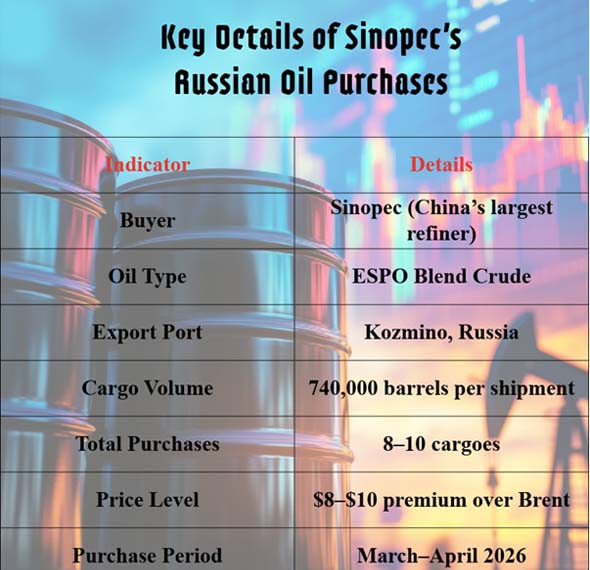
As per China Import Export Trade Data by Import Globals, to fix supply concerns, China Petroleum & Chemical Corporation (Sinopec), the world's largest oil refiner, bought Russian crude oil in March and April 2026. Trade sources say that Sinopec bought 8 to 10 cargoes of ESPO (Eastern Siberia–Pacific Ocean) blend oil from the Kozmino port in Russia. Each shipment has about 740,000 barrels of oil, which is a big boost for China's energy needs.
Prices for these shipments are roughly $8 to $10 higher per barrel than ICE Brent prices. This shows that there was a lot of demand for other goods amid the crisis in the Middle East. The US temporarily removed some sanctions on Russian oil transactions to keep the world's markets steady and avoid big supply shortages. This made it possible to buy things.
How China is Changing the Way It Buys Oil
Based on Russia Import Data by Import Globals, China buys more crude oil than any other country. It uses more than 11 million barrels per day. In other words, any change in how China buys things can have an effect on oil markets all around the world.
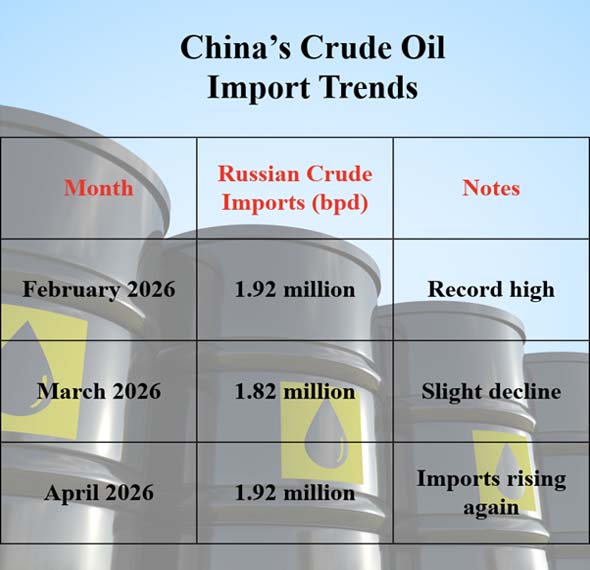
Recent information shows that China has been buying more from Russia because it can't trust the supply from the Middle East as much. In March 2026, China bought about 1.82 million barrels of Russian crude oil every day. This was a little less than the record high of 1.92 million barrels per day that was set in February.
By April 2026, the number of exports from Russia was virtually back to the peak level it had been at in February. These numbers show that Russian crude has become one of the most important backup suppliers for Chinese refiners when supplies are low.
As per Russia Import Trade Analysis by Import Globals, China is also getting less energy from the Middle East, which is another big development. In early 2026, shipments dropped a lot since it was hard to distribute them and there were problems in the area.
Why Asian Buyers Want to Buy Russian Oil
Since 2022, Western sanctions have transformed the way oil is traded around the world. This has made Russian crude oil more appealing to buyers in Asia.
There are a lot of reasons why Russian oil is appealing:
1. Prices that are Excellent for Business
According to USA Export Data by Import Globals, Russian crude oil has often been sold for less than what the rest of the world thinks it should cost. Russian barrels are still open to negotiation in negotiations and long-term supply contracts, even though the last few cargoes were bought at a higher price since there weren't enough of them.
2. Geographic Advantage
From Russia's Far East ports, it's easy to send goods to China, Japan, and South Korea. As per Russia import data by Import Globals, the ESPO pipeline and the Kozmino export terminal make it easier to get to Asian markets.
3. Trade deals that could change
Because Western sanctions hinder Russia from selling oil to Europe and North America, Moscow has changed its shipments to Asia. Because of this change, Russian producers and Asian refiners can now do business with each other in new ways.
4. Safety of Supply
Based on Russia Importer Data by Import Globals, Countries that are apprehensive about instability in the Middle East can get oil from Russia instead of through the Strait of Hormuz. Because of these benefits, Russia has sent a lot more oil to Asia throughout recent political crises.
How it Changes Commerce and Energy Prices All Around the World
In early 2026, the energy markets were substantially affected by escalating tensions in the Middle East and changing trade flows. Oil prices went rising because people were worried about supply issues. During the Strait of Hormuz crisis, worries about supplies sent the price of crude oil in Europe up to roughly $150 per barrel.
Because of this price rise, refiners had to look for supply in other places, like Russia, West Africa, and the US. As per Russia Import Shipment Data by Import Globals, these things show how closely tied the world's energy markets are. An issue in one spot might swiftly mess up trade between continents.
Changes in How Suppliers and Refineries Do Business
Refineries have also had a tougher time doing their jobs because of problems with the supply chain. Sinopec said that in March 2026, it cut the amount of crude oil its refineries could process by around 5% since it didn't know how much crude oil it would get.
According to Russia Import Export Trade Analysis by Import Globals, when refiners aren't sure when they'll get crude oil, they usually change the speeds at which they process it. Lowering the number of runs at refineries can help keep stockpiles stable for a short time while companies hunt for new supply contracts.
But problems that endure a long period might cause gas prices to go up, make it hard to find refined products, and make the energy markets around the world unstable.
India and Other Asian Countries Are Buying More Things From Russia
Russia sells oil to more than just China. India has also bought a lot of Russian crude since sanctions changed how trade works around the world. In March 2026, India bought a lot more Russian oil, and Russian crude made up a big part of the country's overall fossil fuel purchases.
Based on Russia Export Import Global Trade Data by Import Globals, Turkey and other Southeast Asian countries have also increased their trade in energy with Russia. Because of global sanctions, this information demonstrates that Russia is transferring less energy to Western markets and more to Asia.
What the Long-term Repercussions Will Be on the Commerce in Energy Around the World
Changes in the way Sinopec buys things are a sign of bigger changes in the global energy system.
1. Making the Energy Supply More Diverse
Big importers seek to locate new areas to purchase their goods so they don't have to depend on just one site.
2. New Energy Partnerships
Because of sanctions and tensions between countries, trade between Russia and Asian economies is growing more and more dependent on each other.
3. Oil Markets That Alter All the Time
Conflicts that affect shipping routes and supply chains are making energy prices less stable.
4. Large Amounts of Energy Reserves
Countries are using more and more strategic reserves and flexible supply contracts to solve problems. These signs point to a very busy energy market around the world in the next few years.
Final Thoughts
Sinopec's purchase of Russian crude oil in 2026 shows how quickly the global energy system is shifting. The change was made easier by a short break in sanctions and problems in getting energy from the Middle East. It shows how quickly political tensions can change how countries deal with each other.
Russia has become a major choice for Asia's biggest energy consumers who want to find safe sources of supplies. Not only does the change strengthen Russia's position in Asian energy markets, but it also shows how important it is to have a more varied supply chain in global trade.
In the future, geopolitical tensions, sanctions, and energy security will continue to have an effect on the global oil market. Countries that can swiftly adjust to changes in an environment that is becoming more unpredictable will have an easier time procuring energy and dealing with price changes. Import Globals is a leading data provider of Russia Import Export Trade Data.
FAQs
Que. Why did Sinopec get oil from Russia in 2026?
Ans. Sinopec got crude oil from Russia since they couldn't receive it from the Middle East because of political problems and shipping challenges in the Strait of Hormuz.
Que. What type of oil did Sinopec buy from Russia?
Ans. The company bought ESPO blend crude oil that came from the Kozmino port in Russia's Far East.
Que. How much oil did Sinopec buy from Russia?
Ans. Trade sources claim that Sinopec acquired 8 to 10 shipments, each with about 740,000 barrels of oil.
Que. What does this mean for the oil market around the world?
Ans. Because of this, Russia may sell more oil to Asia and not have to rely on oil from the Middle East as much. This changes the paths that energy trade takes around the world.
Que. Where to get detailed Russia Import Export Global Data?
Ans. Visit www.importglobals.com.