
Steel Export Opportunities 2025: Top Importing Countries and the Brands Supplying Them
- Oct 24, 2026
- 31 Views
Steel Export Opportunities 2025: Top Importing Countries and the Brands Supplying Them
The global steel trade has been a major part of crafting the industrial supply chains and the bilateral integrity of many regions worldwide. The steel exports has representatively declined by 6.2% in 2025, while China's exports has increased by 13.8%, solidifying the country's ranking as the top exporting authority.
The importing markets by volume mainly include European Union, followed by United States and Italy at a staggering shipment rate of 43.7 million tons, 23.9 million tons, and 20.4 million tons.
China, Japan, South Korea, Germany, and the European Union are some of the top steel exporting authorities of the global marketplace, reported Global Shipments Data. The iron and steel are one of the top exported variants of the Chinese authorities, which has attained a valuation of 72.19 billion U.S. dollars in 2025. The European Union, with Germany and Indonesia, has also maintained the statistical growth rate of the specific sector, with staggering export valuation of steel worth 31.87 billion U.S. dollars, 29.63 billion U.S. dollars, and 27.97 billion U.S. dollars.
Steel Export Significance: Trade at a Glance in 2025
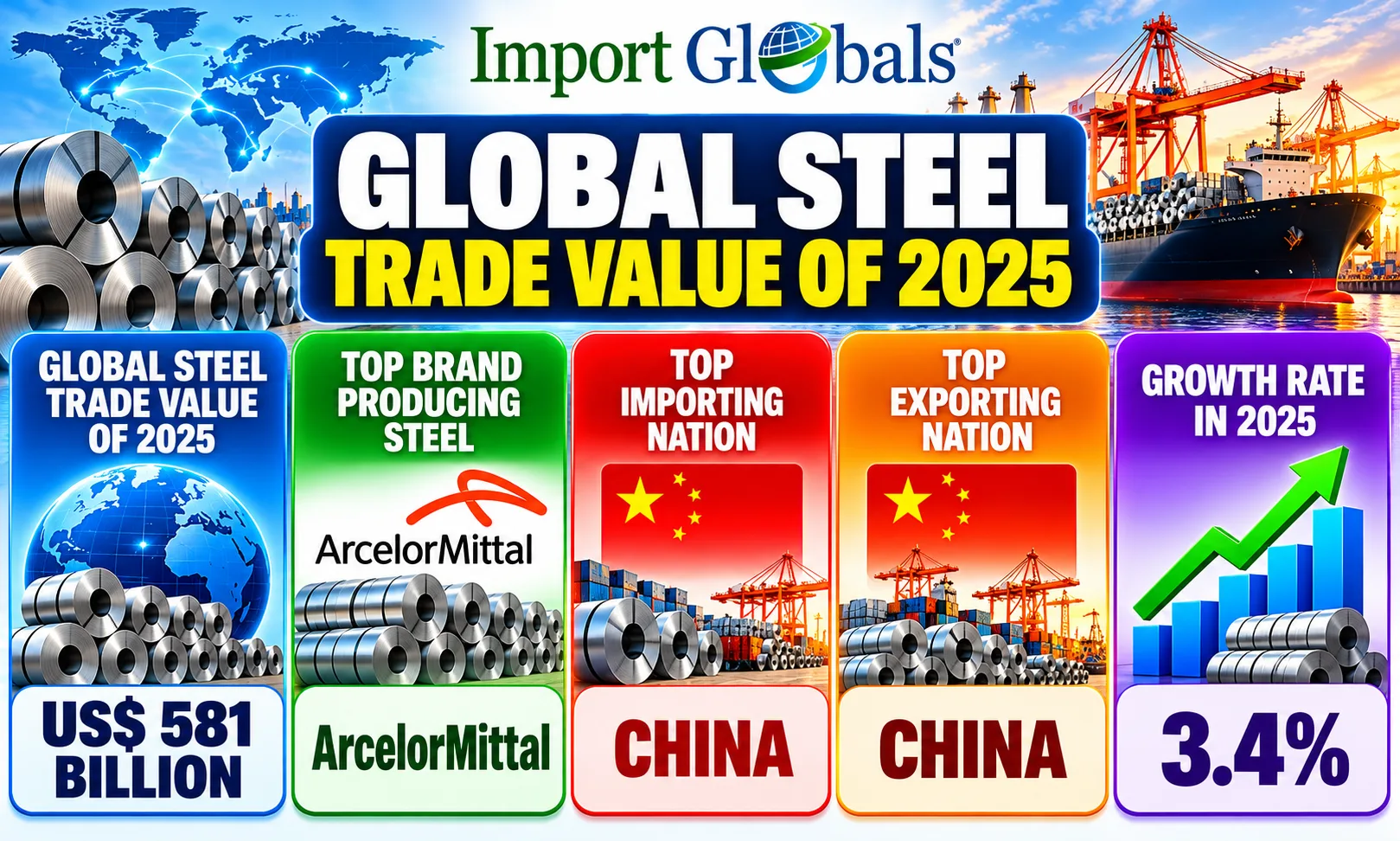
The worldwide steel trade has reached a valuation of 581 billion U.S. dollars in 2025. That is representative of the growing importance of steel in the global marketplace. The Global Import Export Shipments Data listed Arcelor Mittal as one of the top brands supporting the steel trade on a global scale, pointing out the significance of major steel companies to the global demand. China is one of the leading importing and exporting country because of its important position in the world steel trade.
The participation in the import and export processes is signifying to the complexity of the international steel supply chain, with the executive flow from one market to another depending on the industry needs. The data also shows a 3.4% increase in the global steel trade market in 2025. The data shows the general picture of the size and representatives of the industry on the global market and players in international operations. For different businessmen, importers, exporters, and market analysts, the tracking of the values of world steel trade, major producing brands, leaders of the world steel trade, and annual growth rates might be useful in finding market opportunities, evaluation of the sourcing strategies, and understanding changes.
Top 10 Steel Product Categories for Export Opportunities in 2025
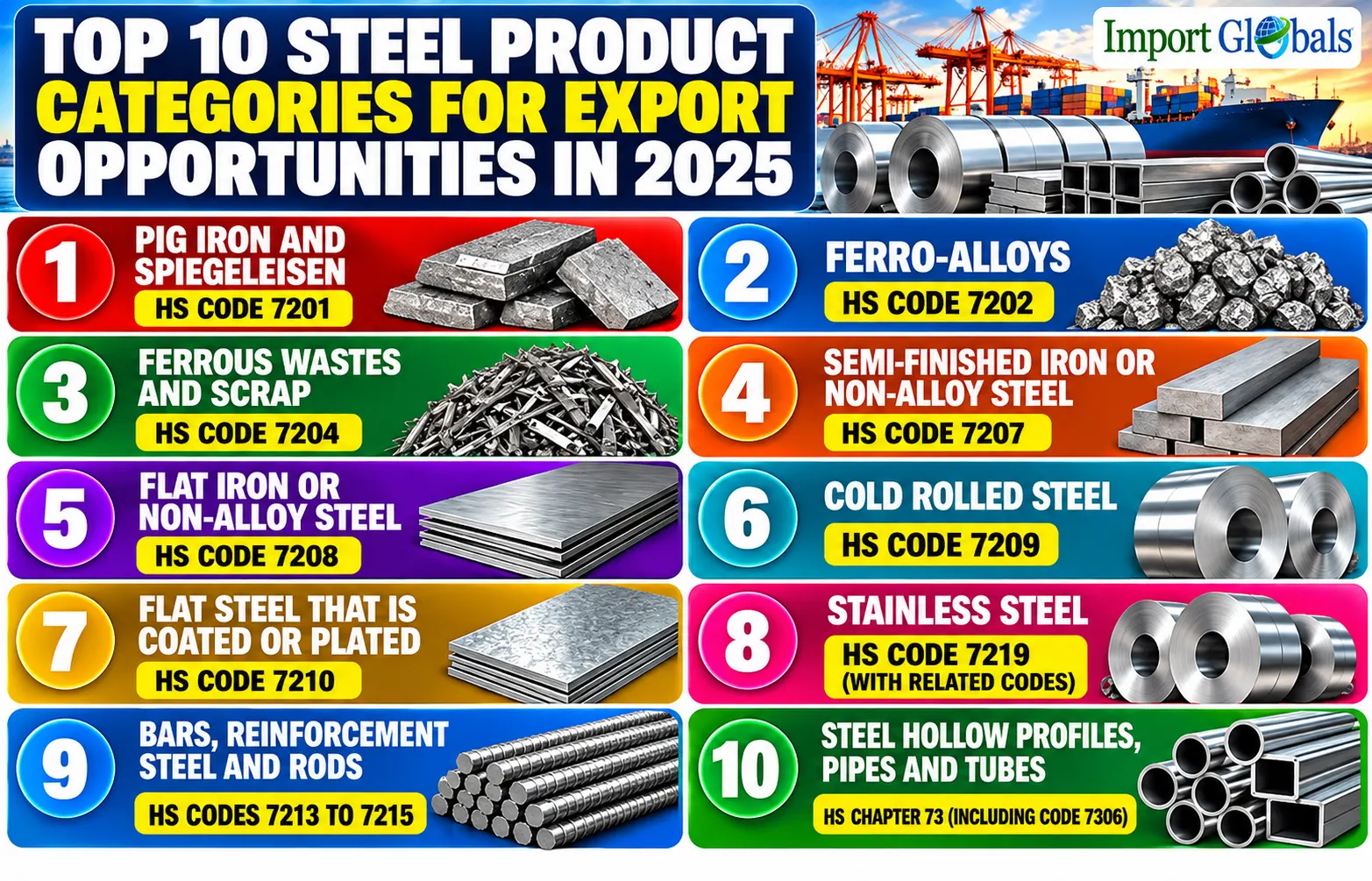
1. Pig Iron and Spiegeleisen – HS Code 7201
Global Trade Valuation: US$7.75 Billion
Pig iron has an indispensable role in the steel and casting industries. The prospects of export depend on the industrial demand, the composition of the pig iron and impurities, transportation expenses, and the needs of the steel industry.
2. Ferro-Alloys – HS Code 7202
Global Trade Valuation: US$52.42 Billion
Ferro-alloys serve to add certain components to steel and improve its strength, hardness, corrosion resistance, and other properties. Companies engaged in steel manufacturing and production of alloys would search for stable composition and reliable suppliers, as per Global Import Data.
3. Ferrous Wastes and Scrap – HS Code 7204
Global Trade Valuation: US$69.92 Billion
Ferrous scrap is the main feedstock for steelmaking and recycling production using electric arc furnaces. The export potential depends on the quality of scrap, contamination limits, preparation requirements, ecological norms, and restrictions on scrap shipment for export.
4. Semi-Finished Iron or Non-Alloy Steel—HS Code 7207
Global Trade Valuation: US$35.05 Billion
Semi-finished products such as slabs and billets are being converted into finished steel products. The ability to export these semi-finished products will depend on the production needs, chemical properties, the amount of products to be produced, and the cost of transporting bulk materials.
5. Flat Iron or Non-Alloy Steel—HS Code 7208
Global Trade Valuation: US$82.24 Billion
Flat-rolled steel is used in the shipbuilding, construction, machinery, and industrial manufacturing industry. When placing an order, buyers check for the thickness, width, strength, surface quality, coil size, etc.
6. Cold Rolled Steel—HS Code 7209
Global Trade Valuation: US$20.48 Billion
Cold-rolled steel is widely used in different industries, including the automotive industry and household appliances manufacturing. The competition among the exporters of such steel will depend on the consistency of the thickness and surface quality of the steel as well as the mechanical features of the steel products.
7. Flat Steel That is Coated or Plated - HS Code 7210
Global Trade Valuation: US$78.51 Billion
Flat steel that is covered or plated, such as plated or zinc-plated products, is utilized in roofing, construction, appliances, as well as in industries. Buyers take into consideration the thickness and type of coating, its resistance to corrosion, and the finishing.
8. Stainless Steel - HS Code 7219 with Related Codes
Global Trade Valuation: US$47.66 Billion
Stainless steel is used for chemical equipment, food processing, and construction as well as in consumer products. The classification is based on the shape and size of the product reported Global Export Data. Grade of stainless steel, resistance to corrosion, and finish are the most important factors.
9. Bars, Reinforcement Steel and Rods - HS Codes 7213 to 7215
Global Trade Valuation: US$45.27 Billion
Long steel products are used in construction and engineering. Exporters should study local codes for building, grades of steel, and the market for construction.
10. Steel hollow profiles, pipes and tubes - HS Chapter 73 Including Code 7306
Global Trade Valuation: US$39.28 Billion
Steel pipes and tubes are used in building, water processing, machinery, and industries. Classification of the product is done through the process of production, cross-section, material, and application. Buyers may require testing for pressure.
Top 10 Steel-Importing Markets and the Brands Supplying Them in 2025
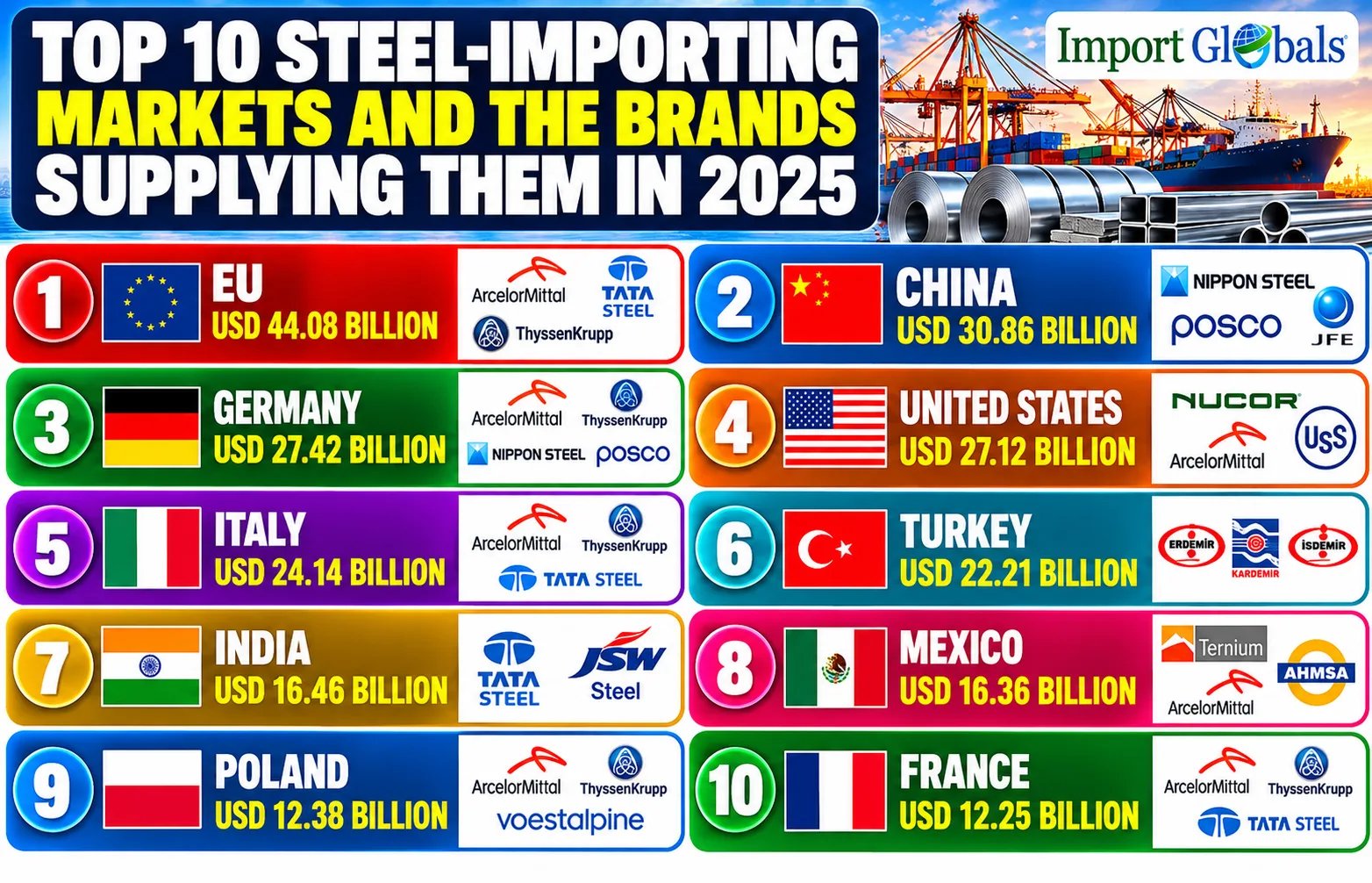
1. EU - USD 44.08 Billion
According to the Global Trade Data, the EU has recorded the highest steel imports. Demand for steel products is generated by the construction field, automotive, engineering, machinery, and industrial industry. ArcelorMittal, ThyssenKrupp Steel, Tata Steel and other global steel manufacturers have been mainly running the supply rate of steel products in the European Union. The companies are exporting the steel products to pay attention to the EU trade defense measures.
2. China - USD 30.86 Billion
China has listed itself as one of the significant importer of iron and steel because of the world's leading export momentum. The imports may consist of special grades of steel and steel products needed for specific industries. Companies such as Nippon Steel, POSCO, and JFE Steel can be considered examples of the sophisticated steel industry. Changes in domestic supply as well as policy will most probably have a significant influence on the opportunities of the country.
3. Germany - USD 27.42 Billion
The automotive, engineering, industrial machinery, and manufacturing sectors in Germany generate demand for various steel products. The names of suppliers in the battle for a share of the market are ArcelorMittal, ThyssenKrupp Steel, Nippon Steel, and POSCO.
4. United States — US$27.12 Billion
The United States imports steel for use in various sectors, including construction, manufacturing, automotive production, energy infrastructure, and industrial fabrication. In the market, there is competition between international suppliers and domestic producers like Nucor and other established mills. Therefore, before determining landed costs, exporters should take into consideration applicable tariffs, quotas, anti-dumping measures, and product-specific requirements.
5. Italy — US$24.14 Billion
Many types of steel are employed in the machinery manufacturing, metalworking, construction, and automotive supply chains in Italy. Several suppliers like ArcelorMittal, ThyssenKrupp Steel, Tata Steel, and others show different supplies to be chosen from. Export possibilities are best for products that possess certain technical advantages or stable deliveries.
6. Turkey — US$22.21 Billion
Turkey is a country that produces its own steel and is also a country that imports some of the iron and steel products. Demand is determined by different sectors, such as construction, fabrication, machinery, and industrial manufacturing. Exporters should conduct an analysis of special-grade products and specifications that relate to local production if they wish to be successful. Local producers and suppliers provide serious competition.
7. India — US$16.46 Billion
Thanks to the growth of the infrastructure, production, and automotive segments, the Indian market has grown significantly in terms of the demand for steel. Local brands, like Tata Steel and JSW Steel, have been actively competing in different product segments. While making inquiries related to orders for quality control and import policies, international companies may try entering the market by providing specialized steel products or alloys.
8. Mexico — US$16.36 Billion
The fact that Mexico’s automotive, construction, and equipment industries have been driving the demand for steel presents significant opportunities for suppliers. These include local as well as international steel producers, competing with other regional and global players in the North American market. It is crucial for exporters to understand client needs, trade agreements, logistics, and other issues when entering this market, says Global Import Trade Data.
9. Poland —US$12.38 Billion
Poland’s demand for iron and steel is driven by its construction, infrastructure, machinery, and production industries. Major international brands like ArcelorMittal are among the many players in this market that face fierce competition from European and Asian producers. Prior to negotiating with distributors and manufacturers, exporters should understand product regulations and costs as well as customer requirements.
10. France — US$12.25 Billion
France imports steel for several sectors, such as construction, transportation, engineering, industrial machinery, and production. Major suppliers in the European market include ArcelorMittal, ThyssenKrupp Steel, Tata Steel, and specialized manufacturers. Companies looking to do business in France should check the relevant product classifications, certificates, trade restrictions, and buyer requirements.
The Top 10 Steel Brands Globally for Supply
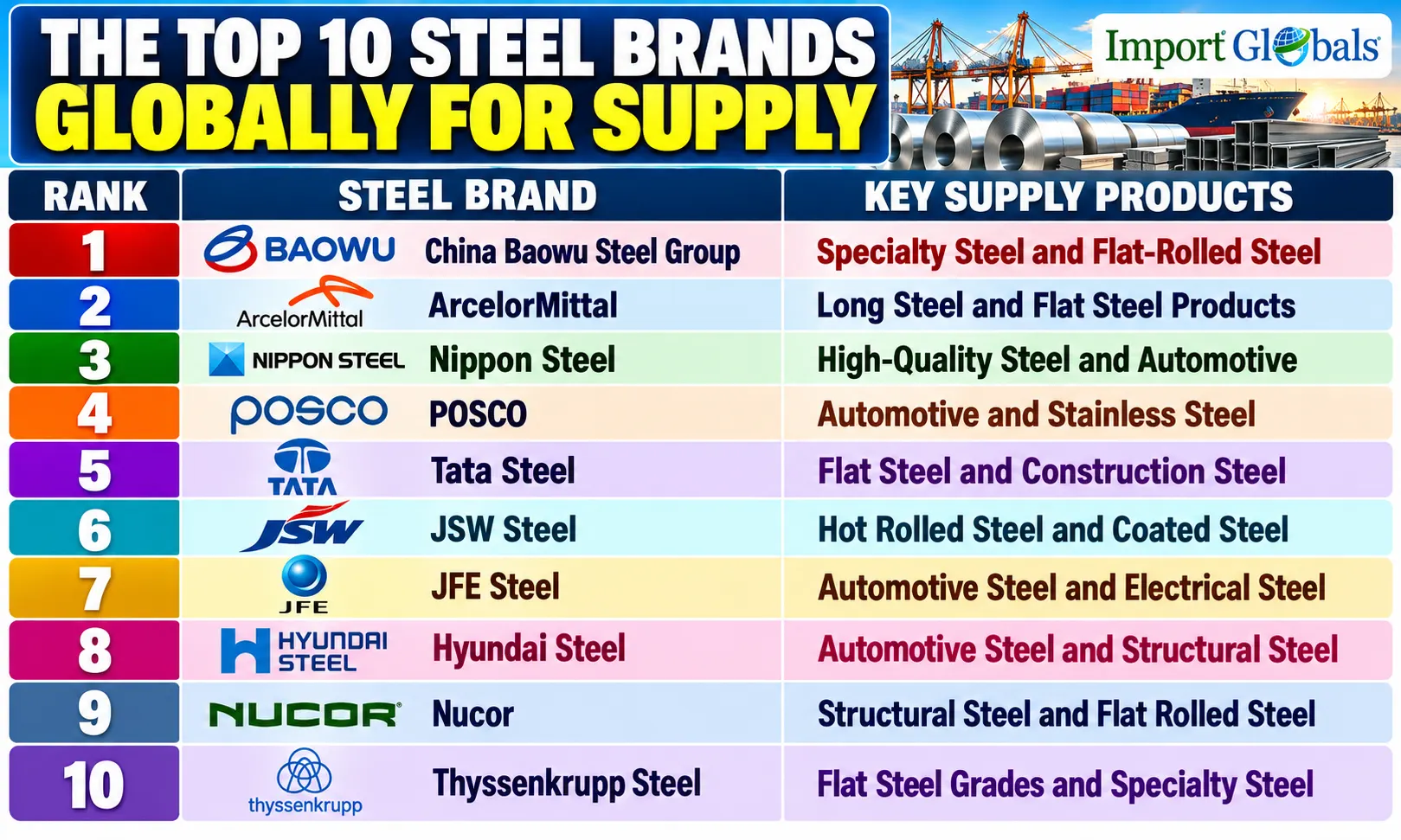
1. China Baowu Steel Group – Specialty Steel and Flat-Rolled Steel
China Baowu has been an eminent provider of steel products and performs splendidly in sectors such as construction, automotive manufacturing, infrastructure, and industrial processing. Given its size, China Baowu is a significant player in the global steel industry.
2. ArcelorMittal – Long Steel and Flat Steel Products
ArcelorMittal is well known because of the success it has achieved in steel supply, particularly in the automotive industry, construction, packaging, engineering, and energy production. Older types of technologies have played a key role within the supply chain of metal and steel manufacturing.
3. Nippon Steel – High-Quality Steel and Automotive
Nippon Steel is a major supplier of steel and related products for automotive, machinery, and construction purposes. Its state-of-the-art steel factories represent an essential milestone for exporters interested in obtaining their high-tech materials.
4. POSCO – Automotive and Stainless Steel
POSCO is a global leader in supplying steel to the sectors of the automotive industry, shipbuilding, manufacturing, and construction. The manufacturing of steel products at POSCO emphasizes the necessity of durability and consistency of a material in highly competitive industrial environments, reported Global Trade Statistics.
5. Tata Steel - Flat Steel and Construction Steel
Tata Steel offers products for engineering, construction, automotive manufacturing, and infrastructure. Due to its global presence; Tata Steel can compete in various types of steel.
6. JSW Steel - Hot Rolled Steel and Coated Steel
JSW Steel produces steel for construction, appliances, automotive parts, and industrial applications. Exporters can take the advantage of this productivity by targeting the regions with highest demand rates.
7. JFE Steel - Automotive Steel and Electrical Steel
JFE Steel serves automotive and electrical industries. The demand basis is supported by the executive production units per regions in the industry.
8. Hyundai Steel - Automotive Steel and Structural Steel
Hyundai Steel offers steel for automobile production, construction, and industrial use. It shows how closely connected steel production is to large manufacturing supply chains.
9. Nucor — Producer of Structural Steel and Flat Rolled Steel
Nucor is one of the leading producers in the USA with a wide variety of products supplied to the construction, manufacturing, energy, and industrial sectors. Its foothold in the domestic market is significant when it comes to the issue of competition in the market for steel in the United States.
10. Thyssenkrupp Steel — Flat Steel Grades and Specialty Steel
Thyssenkrupp Steel provides its manufacturing partners with flat steel and specialized steel products. As a leading steel producer in Europe, Thyssenkrupp Steel emphasizes the importance of good quality control and reliable delivery in its business.
Statistical Analysis of Global Steel Exports: 2016–2025
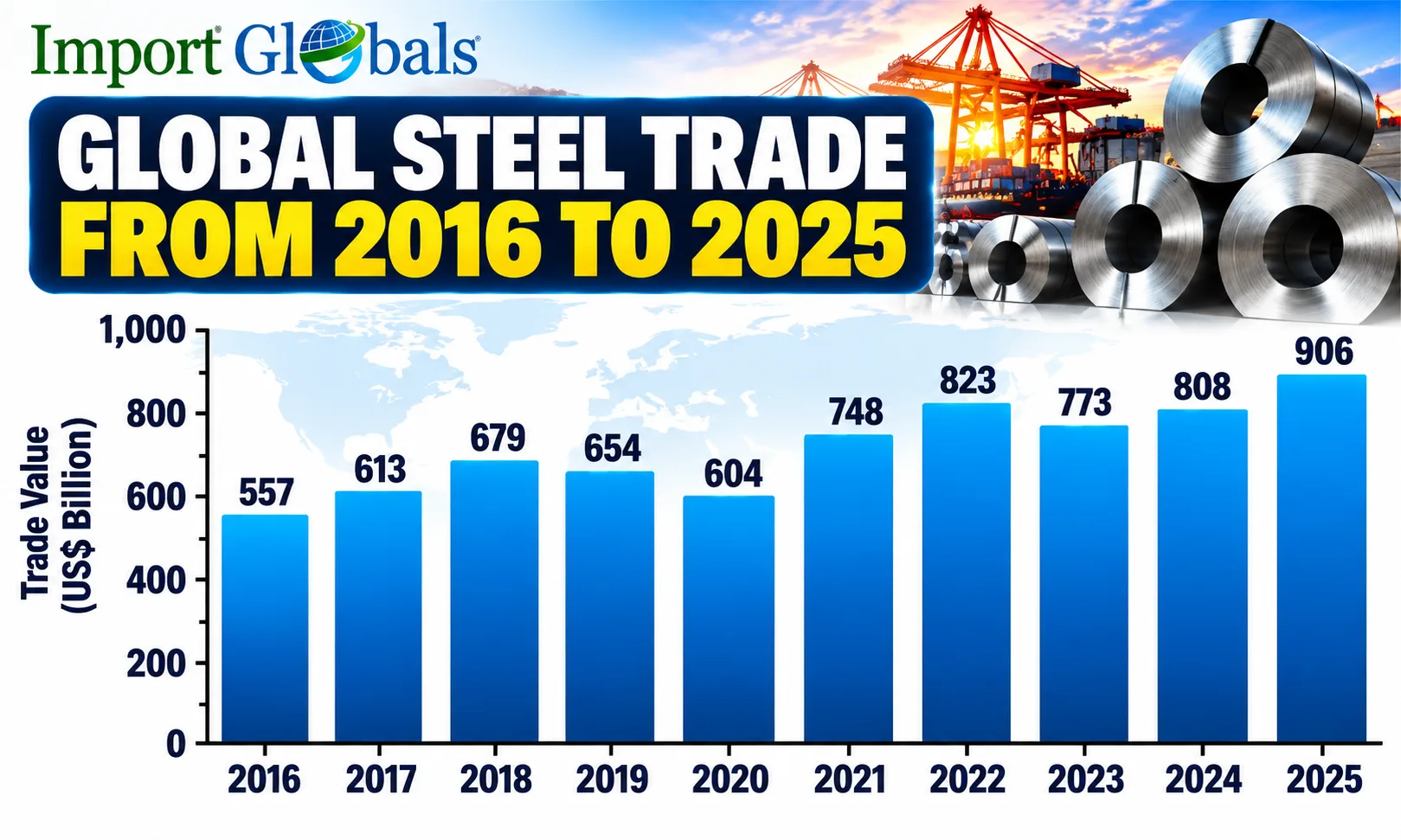
The global steel trade underwent an upward growth trend from 2016 to 2025. In dollar terms; the value rose from $557 billion in 2016 to $613 billion in 2017 and $679 billion in 2018. The trade value fell from $654 billion in 2019 to $604 billion in 2020. There was a surge in 2021; as the market value attained $748 billion, eventually reaching $823 billion in 2022. In 2023, a decline was reflected in the trade value as it fell to $773 billion and then recovered to $808 billion in 2024.
In 2025, the trade value went to $906 billion, the highest value in all the years. Thus, it can be concluded that the total value rose by $349 billion from 2016 to 2025, indicating a growth figure of approximately 62.7%.
Vietnam-China Steel Trade: Top Bilateral Partners of 2025
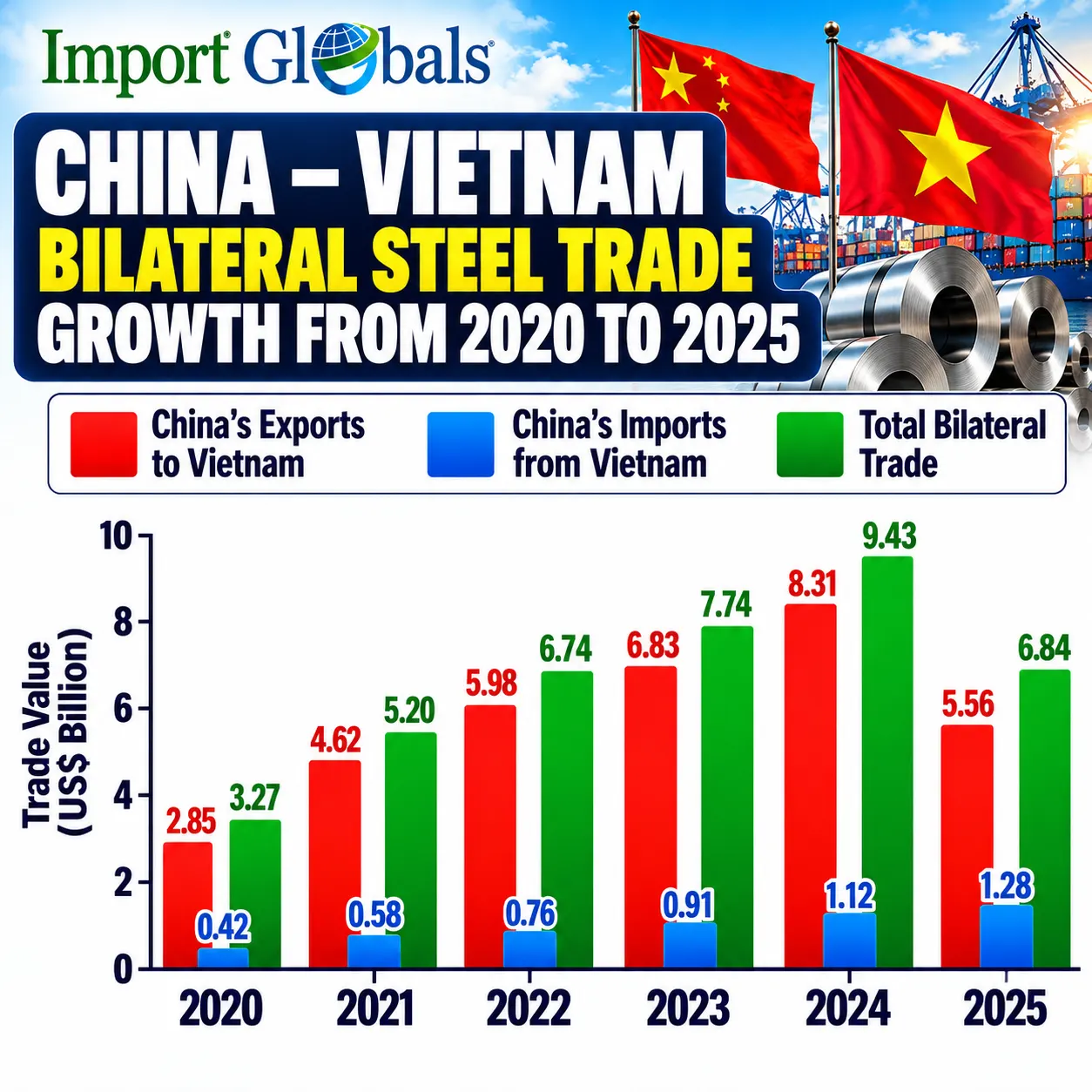
China and Vietnam hold key places in global steel commerce because of their manufacturing capacity, industrial needs, and participation in international supply chains; but their positions are quite different. China is the largest steel exporting country says Global Trade Shipments Data; while Vietnam is a prominent steel importing nation, even though Vietnam also exports steel products.
China has gained its position as the leading steel exporter in 2025, as it possesses a huge production capacity, its long-established manufacturing base, its ability to offer competitive prices, and a sophisticated network of international distribution channels. Even though crude steel production has dropped by 4.4% to around 960.8 million tons, the nation exported 119 million tons of steel products, as producers are looking for foreign markets in times of weak local demand, especially in the construction sector.
As for Vietnam, this country is a significant steel importer as well because of the rising number of projects implemented in construction and other sectors of industry. In 2025, Vietnam imported about 16.09 million tons of iron and steel worth US$11.21 billion, although the volume of imports reduced by 9.16% and by 10.9% in value compared to 2024.
Significant Challenges in Global Steel Export Market
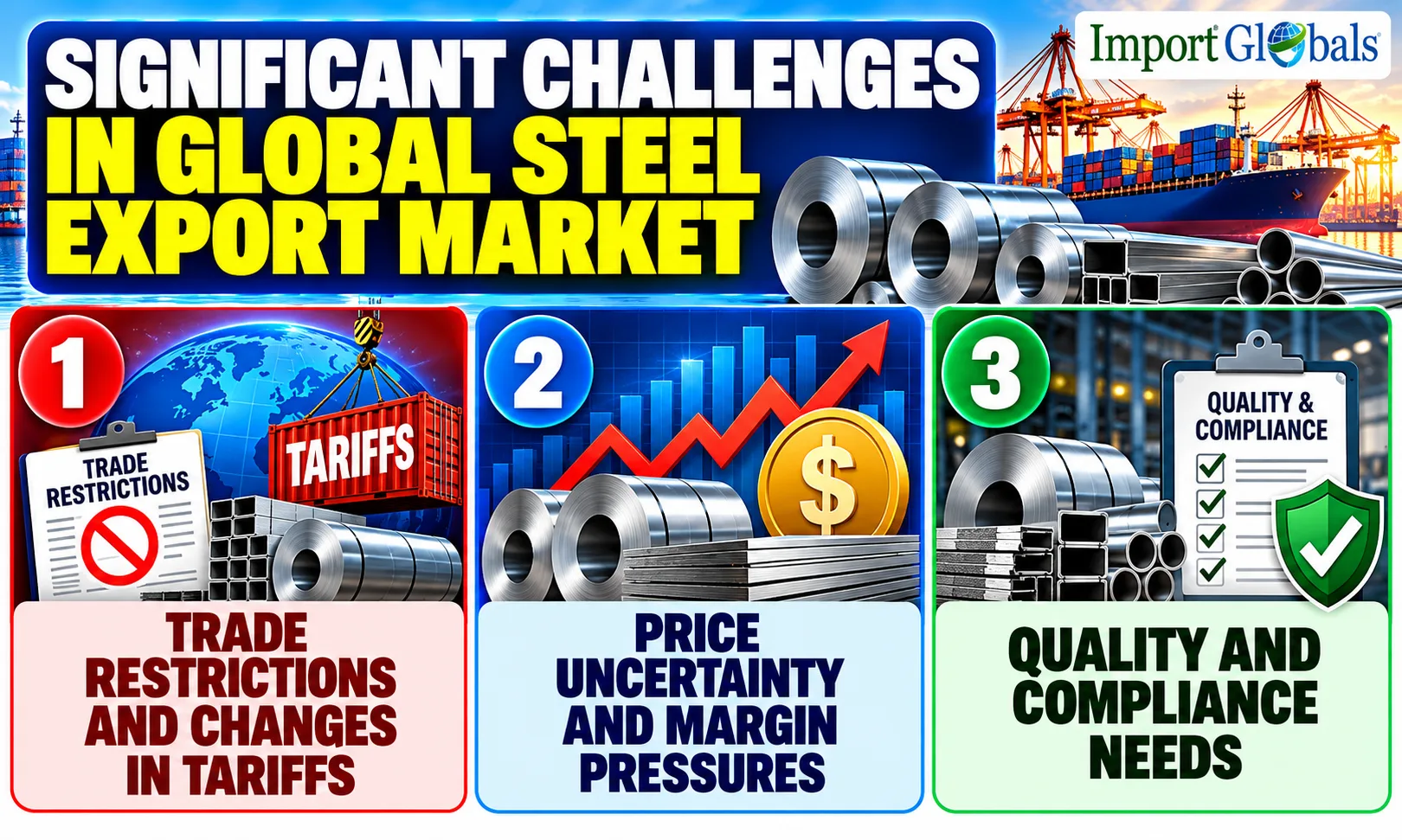
Trade Restrictions and Changes in Tariffs
The steel industry is a highly politicized one since countries are often protective of their domestic industries and manufacturing capabilities. The measures taken to curb dumping may include anti-dumping taxes or quotas and tariff regulation imposed on steel. Thus, exporters should check the current regulations of the country regarding a particular product code and origin prior to making agreements.
Price Uncertainty and Margin Pressures
Strong fluctuations of steel prices depend on a number of factors, including costs of raw materials, fuel, transportation, currency rates, demand cycles, and production facilities. At the same time, there might be a big difference between the price quoted in a quotation and the price paid upon delivery. Businesses can decrease these risks by implementing strict procedures for the validity of their quotations and the conditions of contracts.
Quality and Compliance Needs
Steel suppliers have to obey the law and particular requirements set forth by buyers. Specifically, customers may require special national and international standards, mill test reports, chemical scope records, mechanical test reports, and traceability.
Future Prospects for Steel Exporting Chances
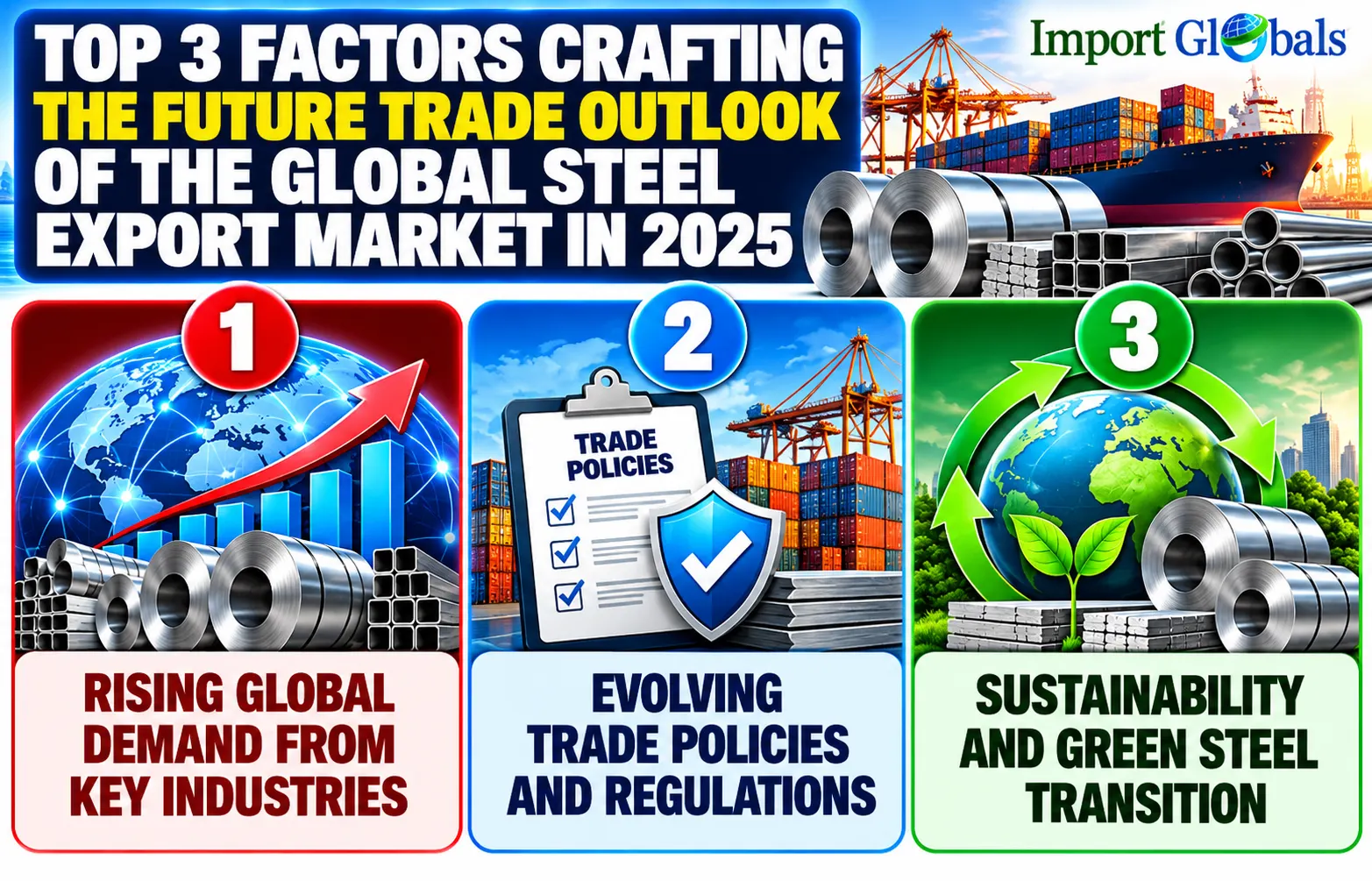
Steel export chances will continue to rely on the interaction of industrial need, domestic production, investments in infrastructure, and trade policy. Construction and transportation projects will positively contribute to the increase in demand for structural steel, as well as reinforcement products, while automotive, energy, and engineering will utilize a combination of different standard and specialized grades.
The main thing to consider now when producing steel is the transition to less polluting steel-making technologies. Nowadays, buyers pay much attention to production methods, emissions data, energy sources, and transparent supply chains. Exporters that can provide relevant information concerning the environment have better chances to fulfil the needs of customers that have certain decarbonisation goals. Yet requirements differ from one market to another, so companies should not think that one certification or reporting approach fits all.
Exports might benefit from developing regional supply chains to be quick and at the same time comply with technical requirements. However, there are trade barriers and protective measures that will redirect the demand from one supplier to another, says Global Import Export Data. Companies should pay constant attention to the changing tariffs, trade protection measures, customs regulations, and carbon-related policies.
Conclusion
In the year 2025, steel export opportunities will be seen between the most developed economies as well as rising manufacturing markets. Some of the major industrial countries will be the USA, Germany, Italy, South Korea, Vietnam, Turkey, France, Thailand, India, and Canada. Each country will demonstrate different patterns of demand, but the best option concerning the destinations and products will depend on the required specifications, pricing, and laws.
The biggest suppliers that influence the conditions of doing business in the steel industry are China Baowu, ArcelorMittal, Nippon Steel, POSCO, Tata Steel, and many others. However, when wanting to enter the market, it is not only important to understand these companies but also to know who the ultimate consumer is going to be. It is necessary to identify the people who will import the steel products, distribute, service, and manufacture these products.
Global Trade Statistics will help businesses recognize new markets and find out about purchasing trends. When data regarding regulatory compliance, documentation, buyer verification, and logistics is collected, proper business decisions can be made.
CTA
Trying to discover new opportunities in the global steel market? Import Globals is here to resolve all your trade complexities. The platform promotes exploration of the global steel trade with Import Globals, which users can identify the promising export destinations for understanding the product-level demand rate along with analysis of the HS code classification. Subscribe to www.importglobals.com or drop an email at info@importglobals.com for a detailed understanding of the steel trade in the global marketplace to drive your international business growth.
FAQ’s
Que. What is the global steel trade value of 2025?
Ans. The global steel trade value of 2025 is 581 billion U.S. dollars.
Que. Name the country that is the leading steel exporter in 2025.
Ans. China is the leading global steel exporter in 2025.
Que. Which countries are among the major steel importing markets of 2025?
Ans. The European Union, the United States, Italy, and Germany are the major steel importing markets of 2025.
Que. Name the steel products that are offering export opportunities in 2025.
Ans. Pig iron and ferrous scrap are the top steel products offering export opportunities in 2025.
Que. What is the HS code for global steel export?
Ans. The HS code for global steel export is 7201.
Que. Name the companies that are the major players in the global steel industry.
Ans. China, Baowu, and ArcelorMittal are the major players in the global steel industry.
Que. How does Global import-export data support business growth?
Ans. Global import-export data supports business growth via proper identification of buyers, suppliers, analysis of market demand, and development of effective market expansion strategies.
Que. What information is available in Global trade data?
Ans. Global trade data covers importer name, exporter name, shipment date, HS code, product details, quantity, pricing information, origin country, importing country, and port details.
Que. How frequently is the Global trade data updated?
Ans. Global trade data is updated on a monthly basis.
Que. Where can you obtain detailed information on Global trade data?
Ans. Visit www.importglobals.com or drop an email at info@importglobals.com for detailed updates on Global trade data.
You Can Also Visit :-
