Steel Trade Analysis: The Top Exporters and Global Demand Rate of the Specific Product
- Jul 11, 2026
Steel Trade Analysis: The Top Exporters and Global Demand Rate of the Specific Product
The global steel industry is continuously progressing with time while serving as the strongest pillar of international trade. Automotive manufacturing, infrastructure development, shipbuilding, machinery production, renewable energy projects, and industrial manufacturing have been upgrading the overall trade.
The continuous investment in urbanization, transportation networks, energy infrastructure, and advanced manufacturing has now become one of the most in-demand commodities in international commerce. The requirement for high-strength steel, stainless steel, alloy steel, electrical steel, galvanized steel, and specialty steel has increased the cross-border steel trade.
The hike in the investment made by the government authorities in renewable energy projects, electric vehicles, and commercial construction has upgraded the trade portfolio. Global Trade Data reported that the industrial equipment demand rate is continuously upgrading while promoting further accelerated international steel imports and exports. Global Steel Trade Data says worldwide export of steel stood at a staggering rate of 1.1 trillion U.S. dollars(imports + exports). China, Japan, South Korea, Germany, India, and Turkey are considered the top trading regions.
Steel trade intelligence is one of the valuable resources for manufacturers, exporters, importers, and construction companies because it enables them to identify profitable markets, monitor the global demand rate, analyse competitors, and establish reliable international partnerships. The businesses right now are able to upgrade their trade portfolio while categorizing the trade information. Subscribe to Import Globals, the leading global steel import-export trade data provider, for staying updated with the latest information regarding steel exports on a global scale with Global Export Trade Data.
The Comprehensive Outlook of the Global Steel Import-Export Market
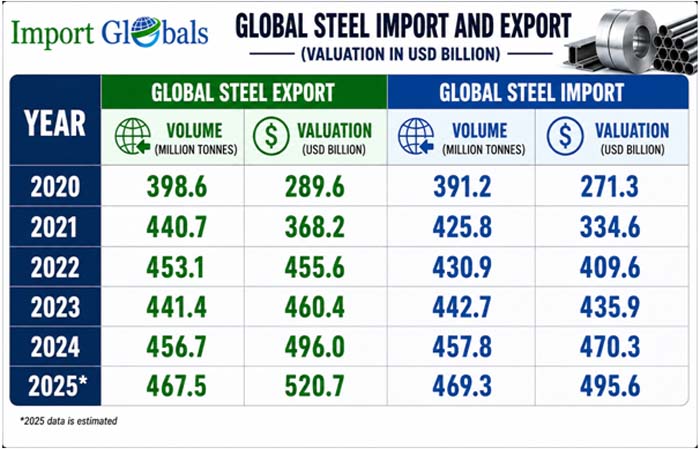
The steel sector is one of the strongest contributors to modern industrialization. Major infrastructure projects, railway network, offshore platform, and manufacturing plant have been promoting the heavy trade of steel essentials. The rapid industrialization across Asia, the Middle East, Africa, and Latin America has been strengthening the global steel consumption. The development of the economies has continuously invested in addressing aging infrastructure while properly expanding electric vehicle manufacturing.
Global Steel Shipment Data represented the trade of iron ore, metallurgical coal, ferroalloys, and scrap steel as the factor promoting the finished steel essentials trade. The high integrity of the international supply chain has strengthened the worldwide steel trade with a focus on continuous investment in modern steel manufacturing technologies. The growing adoption of green steel production and carbon emission reduction technologies has reshaped the international trade of steel in recent times.
Why is the Steel Industry a Top Trade Sector?
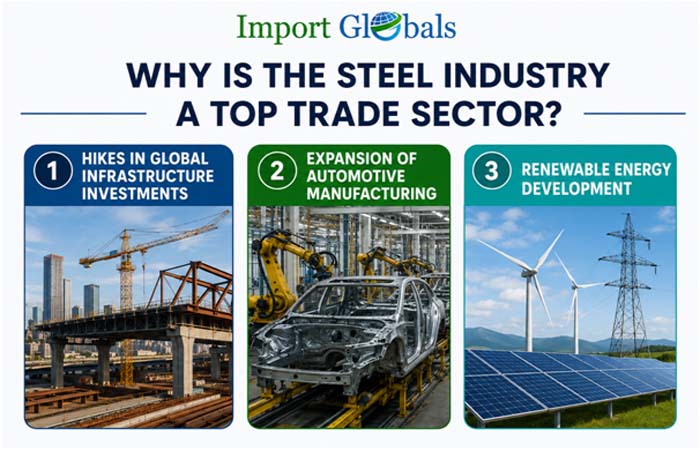
Steel is considered one of the valuable assets of the global marketplace, as represented by the Global Steel Shipments Data. The major factors driving the international steel imports and exports at the present time are,
1. Hikes in Global Infrastructure Investments - Global Steel Export Data reported the continuous investment by the government authorities worldwide of billions of dollars in highways, airports, bridges, and ports as the main factor promoting the steel industry's growth rate. The investments in significant international demand have supported the bilateral integrity of different regions.
2. Expansion of Automotive Manufacturing - The rapid production of passenger vehicles, commercial vehicles, and electric vehicles has overall strengthened the global demand for flat steel. The demand rate regarding galvanized steel, stainless steel, and specialty automotive steel has supported the specific integrity of the product.
3. Renewable Energy Development - Wind turbines, solar farms, hydroelectric projects, and power transmission have contributed to sustained international trade. This sector is facilitating the overall demand rate with power transmission infrastructure, manufacturing sector growth, heavy machinery, industrial equipment, aerospace components, and defense manufacturing.
The Latest Traded Steel Product Variants of the Global Market
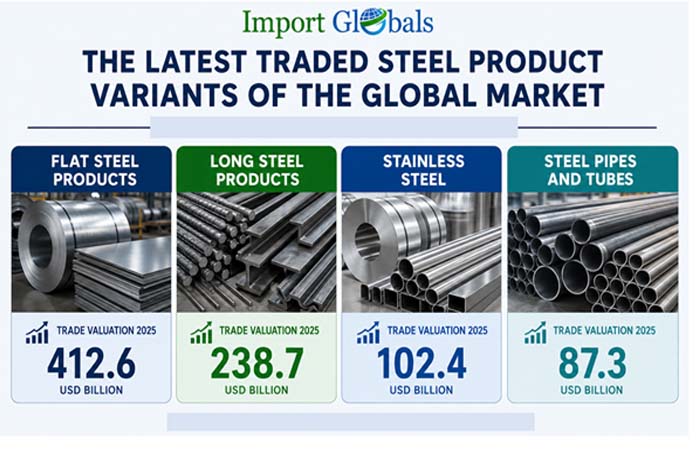
- Flat Steel Products - Global Steel Customs Data reported flat steel products as the top traded category. Galvanized sheets, coated steel, and electrical steel are the largest shareholders of the specific sector. The wide utility in automobile supplies, construction, and engineering industries has upgraded the trade portfolio.
- Long Steel Products - Long steel products like wire rods, beams, angles, rails, and structural sections are significant contributors to the international demand, mainly because of the expanding infrastructure projects.
- Stainless Steel - Stainless steel is considered an increasingly valuable resource in the global marketplace. The high adaptability of the specific product, durability, and applications across food processing, healthcare, and pharmaceuticals have supported the construction industry.
- Steel Pipes and Tubes - Oil and gas exploration, water transportation, construction, and industrial manufacturing have boosted the trade of steel pipes and tubes on a global scale. Seamless pipes, welded pipes, and specialized steel tubing are the largest variants.
The Largest Steel-Importing Countries in 2025
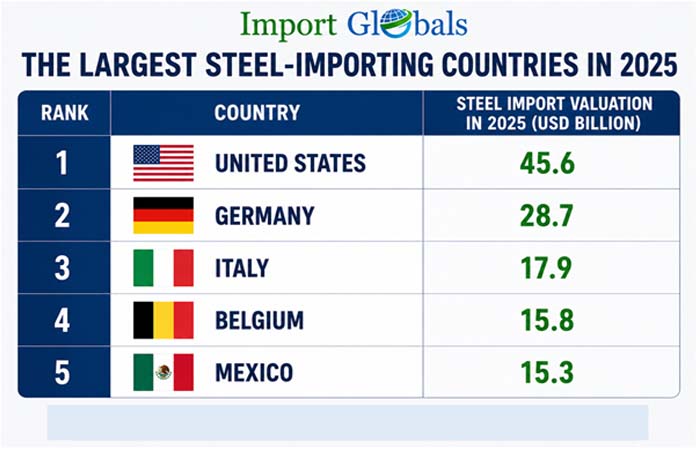
Different economies have been reliant on the import of steel products, mainly because of the increasing activity of industrial sectors. Below are the countries, as reported by Global Steel Import Data, as the top importing nations.
- United States - The US Import Data says that the country is considered one of the largest steel importers because of its extensive infrastructure investment, automotive manufacturing, machinery production, and construction activities. The country mainly originates its steel imports from Canada, Mexico, South Korea, Brazil, and Germany.
- Germany – Germany as presented by Germany Import Data is also a significant importer of steel products. The steel imports of the nation are supported by the automotive and engineering sectors, along with the integrity of the major European distribution hub.
- Italy - Italy is a significant importer of steel, backed up by machinery manufacturing, shipbuilding, and industrial equipment. The steel imports of the nation are supporting the industrial productivity rate along with the global trade compliance, says Italy Import Data.
- Belgium – Belgium as reported by Belgium Import Data is a significant importer of steel and is popular as one of the leading logistics and steel distribution centres of the European Union. The advanced port infrastructure and the transportation network have been supporting the substantial steel imports.
- Mexico - The rapid industrialization, automotive manufacturing, and infrastructure expansion have led to a hike in Mexico's steel imports. The continuous strengthening of the import demand has maintained the trade deficit reported Mexico Import Data.
The Leading Steel Exporting Countries of the Global Marketplace
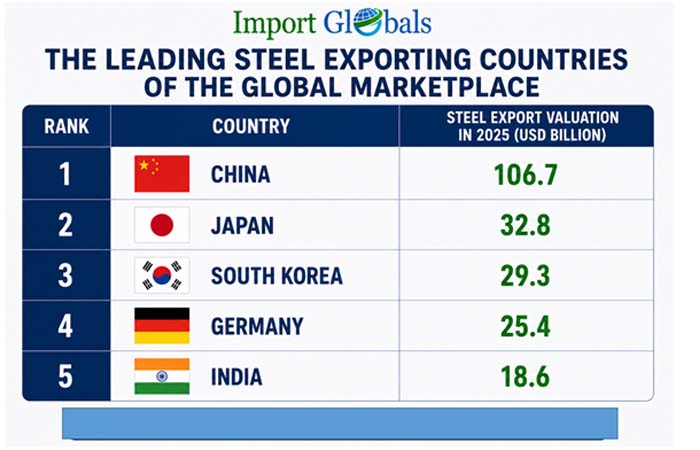
- China - China is the largest steel exporter at the present time. The hike in trade is because of the production capacity, advanced manufacturing technologies, and the integrated supply chain. Structural steel, stainless steel, galvanized products, pipes, and specialty steel to the main regions have supported the thriving rank reported China Export Data.
- Japan - Japan Export Data listed the country itself as the leading exporter of steel on the global marketplace because of its quality-equipped trade, such as stainless steel and specialty engineering steel. The advanced manufacturing technologies have supported the quality standards.
- South Korea - South Korea has established itself as one of the top steel trading nations on the global scale. The investments in particular automotive steel, shipbuilding steel, and electrical steel have supported the trade across North America, Europe, and Southeast Asia, says South Korea Export Data.
- Germany – Germany as presented by Germany Export Data is a premium exporter of steel on the global marketplace. Stainless steel, alloy steel, and precision industrial products are the latest variants exported from the nation. The advancement of the manufacturing capabilities and the world-class quality standards compliance has supported the trade portfolio.
- India - India is one of the fastest-growing steel exporters, with the expansion of its production capacity. The competitive manufacturing cost and abundant iron ore resources have been supporting the steel manufacturing rate.
The Industries Driving the Global Steel Trade
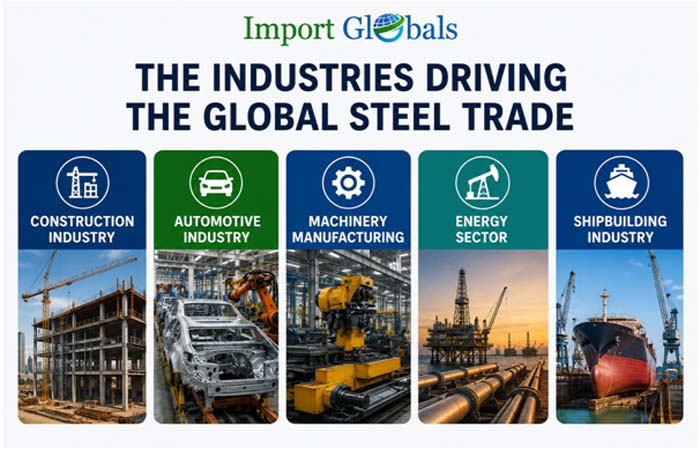
- Construction Industry - Commercial buildings, residential housing, industrial parks, and airports have been supporting the steel demand rate on a global scale.
- Automotive Industry - The automotive industry is also a significant factor supporting the global steel trade. The continued use of steel as the primary material for passenger cars and commercial vehicles has been a facilitating factor in the overall hike in the global steel trade.
- Machinery Manufacturing - Industrial machinery, mining equipment, and agricultural machinery production increases supported the global steel trade. Machine tools and manufacturing systems have significantly contributed to the global steel demand.
- Energy Sector - Oil and gas pipelines, offshore drilling platforms, renewable energy projects, and power plants have been supporting the large quantities of specialized steel products trade.
- Shipbuilding Industry - Global shipping, marine engineering, naval defense, and offshore infrastructure have strengthened the demand for the high-strength shipbuilding steel trade on the global marketplace.
Latest Business Opportunities in the Global Steel Market
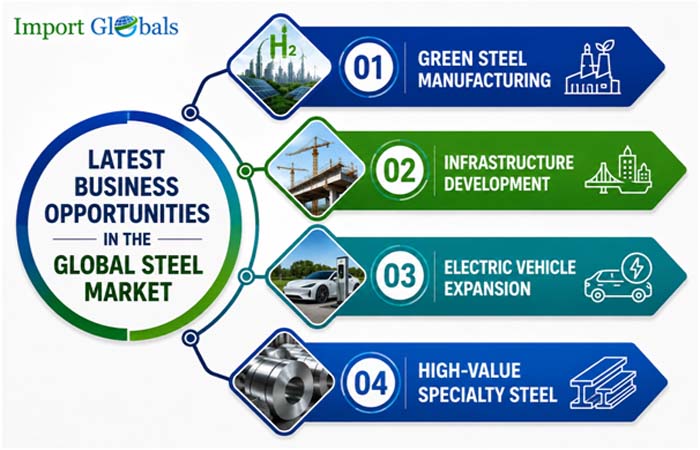
- Green Steel Manufacturing - The environmental regulations regarding green steel manufacturing have resulted in government investments in low-carbon steel production, hydrogen-based steelmaking, and electric arc furnace technologies. This initiative has overall created significant export opportunities.
- Infrastructure Development - The massive government infrastructure development worldwide has supported the long-term opportunities while creating severity for manufacturers and exporters.
- Electric Vehicle Expansion - The rapid growth of electric vehicles has increased the demand for advanced automotive steel products. It has boosted the trade portfolio while supporting trade integrity.
- High-Value Specialty Steel - Premium alloy steel, electrical steel, corrosion-resistant steel, and engineering steel have overall attracted the profit margins. The specific sector has been serving as a contributor to the overall upgrade.
The Beneficial Role of Steel Import-Export Data in Global Trade
Global Import Export Data is considered one of the most beneficial tools for business authorities that are looking for a service expansion in the global steel market. Global Steel Customs Data reported that the shipment-level intelligence helps businesses in monitoring international demand, evaluating competitors, and identifying reliable buyers.
Import Globals is considered a valuable platform that provides shipment-level intelligence because it includes all the detailed information regarding importer name, exporter name, HS code, product description, shipment quantities, pricing information, and origin countries. The businesses can utilize the information with proper identification of high-demand steel products, evaluation of global supply chains, and reduction of procurement risk.
Challenges Associated With the Global Steel Trade
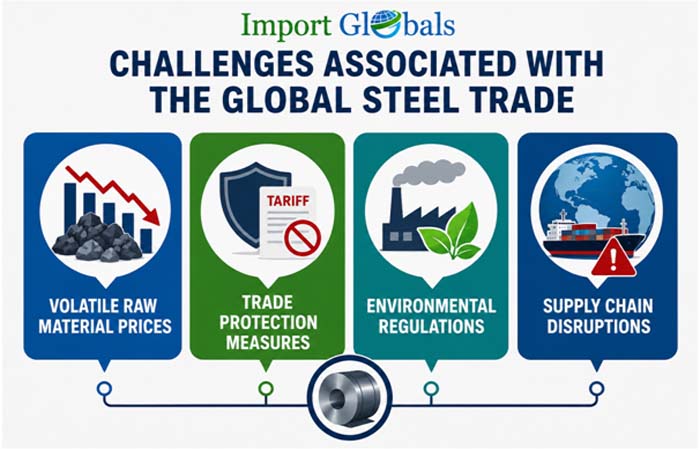
- Volatile Raw Material Prices - The fluctuation of the prices of iron ore has created severe difficulties for the business authorities. Scrap steel and energy trade have influenced the manufacturing cost while promoting international trade competitiveness.
- Trade Protection Measures - Anti-dumping duties and safeguard Tariffs initiatives have been serving as a significant difficulty for the global steel trade. It has overall affected the steel exports and international market access.
- Environmental Regulations - The government worldwide is imposing stricter carbon emission standards, which have increased the compliance costs for traditional steel manufacturers while encouraging the proper and cleaner production technologies.
- Supply Chain Disruptions - Geopolitical conflicts, transportation delays, and shipping bottlenecks have created uncertainties across the international steel supply chain.
Future Trade Outlook of the Global Steel Market
The future of the international steel industry will be highly optimistic in the near future. The continuous urbanization, infrastructure modernization, renewable energy, and industrial expansion will maintain the strong global steel demand. Green steel production, digital manufacturing, artificial intelligence, and hydrogen-based steelmaking will promote the overall trade integrity across different regions. The development of the countries and the increasing focus on high-value specialty steel will promote sustainable manufacturing technologies.
Conclusion
The global steel industry will be serving as one of the most influential sectors in international trade. The growing infrastructure investment, automotive production and technological advancement will strengthen the worldwide steel imports. China, Japan, South Korea, Germany, India, Turkey, and Italy will be the leading contributors to the global steel trade. The businesses and their utility across Global Steel Import Export Data will help them identify profitable opportunities with the optimization of the sourcing strategies.
CTA
Looking for an expansion in your global steel trade? Import Globals is here to help. The platform is skilled in resolving all the complexities of trade regarding a specific global essential. Subscribe to www.importglobals.com or drop an email at info@importglobals.com to get reliable access to global steel trade data to accelerate your business growth.
FAQs
Que. What is the global steel trade value for 2025?
Ans. The global steel trade value in 2025 is 1.1 trillion US dollars.
Que. Name the largest steel exporter of the global marketplace.
Ans. China is the largest steel exporter in the global marketplace.
Que. What is the most traded steel product globally?
Ans. Flat steel products are the most traded essential steel products on a global scale.
Que. Name the industries that are the top consumers of steel.
Ans. Construction, automotive, machinery manufacturing, energy, and shipbuilding are the top consumers of steel.
Que. Why is steel import-export data important for businesses?
Ans. Steel Import-Export Data is important for businesses because it helps the authorities in identifying buyers and suppliers, monitoring shipment trends, and analysing competitors.
Que. What challenges affect the global steel trade?
Ans. Volatile raw material prices, environmental regulations, and trade tariffs have been affecting the global steel trade.
Que. How Global Steel Import Export Data support business growth?
Ans. Global steel import export data support business growth via proper identification of buyers, suppliers, analysis of market demand, and development of effective market expansion strategies.
Que. How frequently is Global Steel Trade Data updated?
Ans. Global Steel Trade Data is updated on a monthly basis.
Que. What information is included in global Steel Import-Export Trade Data?
Ans. Global Steel Import-Export Trade Data covers Importer names, Exporter names, Shipment date, HS Code, Product Details, quantity, values, pricing information, origin country, importing country & port details.
Que. Where can you obtain detailed information on Global Steel Trade Data?
Ans. Visit www.importglobals.com or email at info@importglobals.com for detailed updates on Global Steel Trade Data.
You Can Also Visit :-
Global Import Export Trade Data of 2023
What is Exporter Data? How is it used to make Smart Strategies for Business Growth?