What the New 25% U.S. Tariff on Countries Trading with Iran Means for Global Commerce
- Feb 09, 2026
What the New 25% U.S. Tariff on Countries Trading with Iran Means for Global Commerce
In the middle of January 2026, the U.S. put a lot more economic pressure on Iran by putting a 25% tariff on any country "doing business" with Iran.
This is often called a secondary tariff. This method is different from regular sanctions that only hurt certain companies, ships, banks, or goods. Instead, it threatens to make all trade with the U.S. more expensive for countries that do business with Iran. This makes commerce with Iran a "global supply-chain risk" in real life, because even transactions that are far away might cost more when goods, parts, or counterparties touch U.S. markets. The headline is easy to understand: "25% tariff."
But the business effects are not. The law makes it unclear what "doing business" means, when it will happen, who has the legal power to do it, who is exempt, and how it will be enforced. As per Iran Import Data by Import Globals, that uncertainty alone can stop trade, because global trade depends on being able to foresee what will happen. Contracts, insurance, shipping schedules, and finance all include policy risk in their prices. Companies sometimes start to de-risk before the details of enforcement are set. They do this by changing suppliers, changing shipping routes, making compliance stricter, or even stopping transactions entirely.
Why This Is Different: From Sanctions to "Secondary Tariffs"
For years, the U.S. has put pressure on Iran through primary sanctions (which stop U.S. people and businesses from doing business with Iran) and secondary sanctions (which punish non-U.S. companies for doing business with Iran, especially in the areas of energy, finance, and shipping). A threat of a tariff against whole countries is a more direct tool. The U.S. might, for example, raise tariffs on imports from a shipping company's home country instead of punishing it for delivering Iranian oil. This would affect sectors that have nothing to do with oil, such as electronics, textiles, machinery, or consumer goods.
This structure is important because it puts more decision-makers under pressure. As per Iran Export Data by Import Globals, legal, finance, and shipping teams are responsible for following traditional sanctions. A broad tariff shock affects the whole economy, therefore trade ministries, central banks, industry associations, and big exporters all become involved.
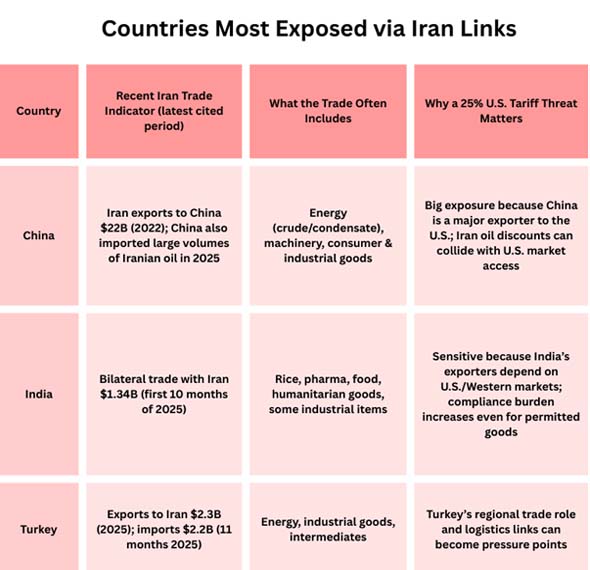
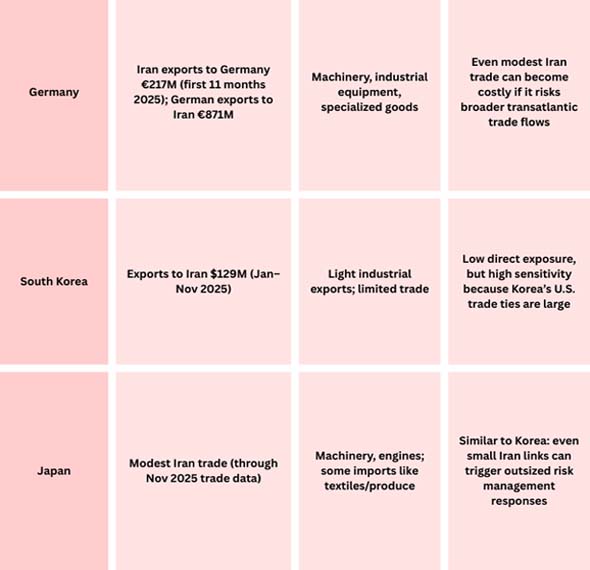
The Core Mechanism: What a 25% "Country-Level" Tariff Does to Supply Chains
Even if a company never does business with Iran directly, it can still be at risk through:
Risk of Supplier Contamination
A tier-2 supplier may get chemicals, metals, and other things from Iran. This connection can lead to tariffs at the country level. Then, companies go too far and switch suppliers, which raises costs and lead times.
Shipping and Insurance Problems
As per Iran Customs Data by Import Globals, trade with Iran is already under more scrutiny when it comes to ships, ports, and insurance. A secondary tariff system might raise the risk premium for routes that go through the Gulf, transshipment hubs, or flagged ships that are linked to patterns of avoiding sanctions.
Friction in Financing and Settling
Banks are more careful, trade credit is harder to get, and settlement costs go up, especially when it's hard to prove that Iran-related compliance is being followed.
Repricing and Renegotiating Contracts
"Change in law" clauses are common in long-term contracts. A 25% tariff threat encourages companies to raise prices, renegotiate, or leave, which causes a lot of legal and operational problems.
Effects of Global Trade in 2025–26
1) Trade Diversion Speeds Up and Grows Messier
Companies change the flow of trade as policies change. As per Iran Shipments Data by Import Globals, this shock is different, though, because it's not just "don't buy Iranian goods." It says, "Don't do business with Iran at all, or you could lose your U.S. trade." That can lead to:
- Finding new suppliers for metals, chemicals, and intermediates.
- Greater transshipment (greater routing through third nations).
- Documentation arms races (more need for audit trails, vessel tracking, and certificates of origin).
- The end result is typically greater friction costs—including paperwork, delays, and compliance costs—that act like an extra tax on trade even when no tariff is being collected.
2) Energy Markets Have a Risk Premium, Notably in Asia
Parts of Asia's refining infrastructure have relied on Iran's crude oil as a vital cheap feedstock. A credible enforcement regime can make it harder to get that cheap supply or make it more expensive to move it. Results include:
- Wider price differences between crude oil that is and isn't sanctioned.
- Refiners are under pressure on their margins since they rely on inexpensive barrels.
- More expensive shipping and insurance on sensitive routes.
- Even if barrels keep flowing, they may do so through less clear channels, which increases the legal and operational risk for traders and shippers.
3) Metals, Mining, and Industrial Inputs Are Caught in the Crossfire
Iran is also important for more than just oil; it's important for metals and mining supply lines as well. As per USA Import Data by Import Globals, if the tariff threat makes "Iran business" definitions wider to cover financing, joint ventures, or industrial purchases, commodity dealers and manufacturers may lower their risk. That can make niche supply routes less flexible and force purchasers to look for other sources.
4) The " Geopolitics of Compliance" Gives You an Edge Over Your Competitors
In 2025–26, compliance maturity will be more important for trade competitiveness. Companies that have good screening, traceability, and supplier controls will obtain contracts.
Banks, insurers, and big buyers want verification of clean supply chains, which makes it harder for smaller businesses to export. Some trade routes get more business just because people think they are "lower risk."
5) The Likelihood of Fragmentation Increases: More Blocs and More Unilateral Tools
A secondary-tariff approach is in line with a worldwide trend: big countries using trade access as a way to gain influence. If a lot of countries use it, it will drive them to make their own payment channels, logistics networks, and sourcing techniques to make themselves less vulnerable, which will make things even more divided.
Things to Watch for Till 2026
Full Enforcement With Wide Definitions
The biggest problem is that de-risking is happening all over Asia–Middle East commerce, energy flows are being diverted, and compliance costs are going up.
Enforcement That is Selective (for Some Countries or Sectors)
The tariff becomes a tool for negotiation, putting pressure on a few high-profile ties while giving others a break.
Legal and Political Barriers Make It Take Longer to Put Into Action
Uncertainty still hurts trade if the policy has legal problems or isn't clear about how it will work, because businesses plan for the worse.
Conclusion
If the U.S. charged a 25% tax on countries that do business with Iran, either directly or as a threat, it would be a big change in how economic power is employed. It brings geopolitics into ordinary business, like shipping, trade finance, sourcing, and contract law. The main short-term effect is not simply higher prices; it's also uncertainty, which makes firms take longer to hire people, make choices, and pay more to follow the rules. International trade is predicted to cost more, require more paperwork, and be more affected by politics by 2025–26. The best companies will be the ones who see compliance and supply chain transparency as strategic skills rather than just things that need to be done in the back office. Import Globals is a leading data provider of USA Import Export Trade Data.
FAQs
Que. Is this the same as "secondary sanctions"?
Ans. Not really. Secondary fines usually only apply to certain businesses or actions. A secondary tariff at the country level is bigger and can hurt industries that aren't related.
Que. Who has to pay the tariff? Who pays it: overseas sellers or U.S. buyers?
Ans. U.S. importers usually pay tariffs when they bring goods into the country, but costs are often passed on through prices or lower margins.
Que. Does "doing business with Iran" include trade that is allowed or humanitarian?
Ans. That depends on the final rules. Until official guidance makes the scope and exemptions clear, businesses should consider that definitions could be broad.
Que. Which industries are most likely to be affected first?
Ans. Energy and shipping (immediate risk premium) come first, then trade finance, and finally manufacturing supply chains that depend on sourcing from several countries.
Que. Where to get detailed Iran Customs Data?
Ans. Visit www.importglobals.com.