
A Decade of Dominance: Europe Leads Global Chemical Imports
- Oct 26, 2026
- 32 Views
A Decade of Dominance: Europe Leads Global Chemical Imports
Europe’s chemical import market is considered an important part of industrial production and international trade; driven by the demand for organic chemicals, pharmaceuticals, petrochemicals, polymers, fertilizers, and other specialized chemical products.
The European Union (EU) imported about US$378 billion of chemicals and related products, which represented a 7% increase compared to the previous year’s import value of about US$352 billion. Among the top external suppliers of chemicals to Europe are China, the USA, and the UK. In the period from January to October 2025, China delivered chemicals worth US$30.2 billion, the USA worth US$27.7 billion, and the UK worth US$17.1 billion.
The growth of chemical imports reflects the ongoing dependence of European industries on suppliers of crucial raw materials and special chemical items. The areas that were importing the chemicals are the pharmaceutical industry, the plastic production sector, automobile manufacturing, the agricultural sector, and industrial processing. Organic chemicals, petrochemicals, polymers, and special chemicals were the components of the different chemicals imported by Europe, reported Europe Customs Data. The changes in prices at the international level, disruptions of the supply chain, current regulations, and increased competition from external manufacturers influence the chemical procurement process.
Europe’s Chemical Imports of 2025: The Conclusive Summary
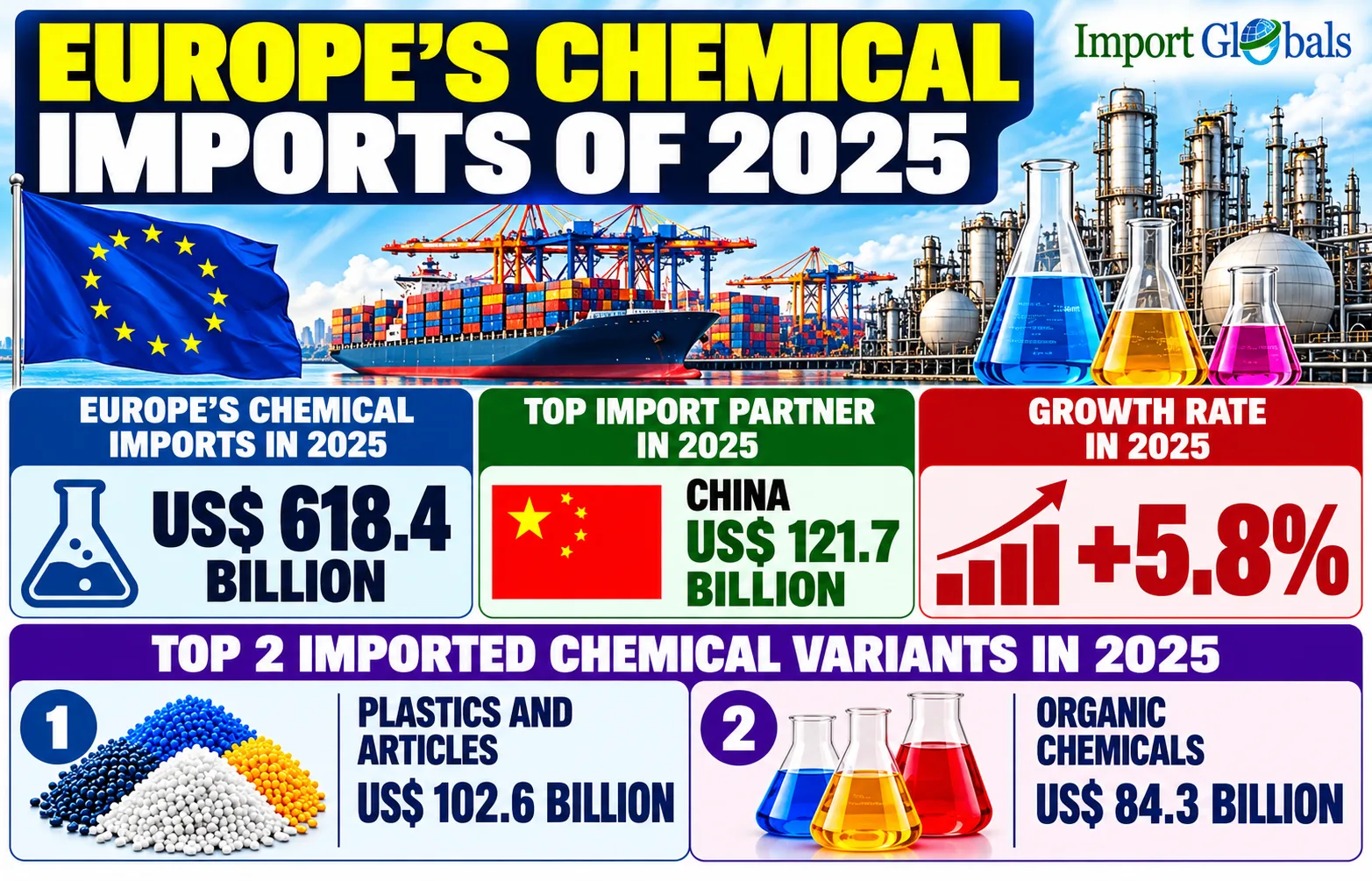
Europe showed great growth in its imports of chemicals in 2025 based on the high demand for industrial chemicals, plastics, organic substances, as well as special chemicals. The Europe Trade Data indicated that the chemical import valuation for the region reached US$618.4 billion and registered growth of 5.8% during the year. China was recognized as the main partner in imports of chemicals valued at about US$121.7 billion, which indicates China’s huge role in fulfilling the needs of the European region in manufacturing and production industries.
In terms of imported chemicals, Plastics and plastic goods came first among the total import values of US$102.6 billion, which are widely used in the areas of packaging, construction, the automotive industry, electronics, and consumer goods. Organic chemicals were estimated as the second-largest importer of chemicals in the amount of US$84.3 billion in 2025. They are used as essential components in the production of pharmaceuticals, agricultural materials, physicochemical processing, and chemical production. The increase in the imports of chemicals by Europe proves that the region still continues to depend on foreign suppliers in terms of raw materials and finished products.
Top 10 Chemical Imported Variants of Europe in 2025
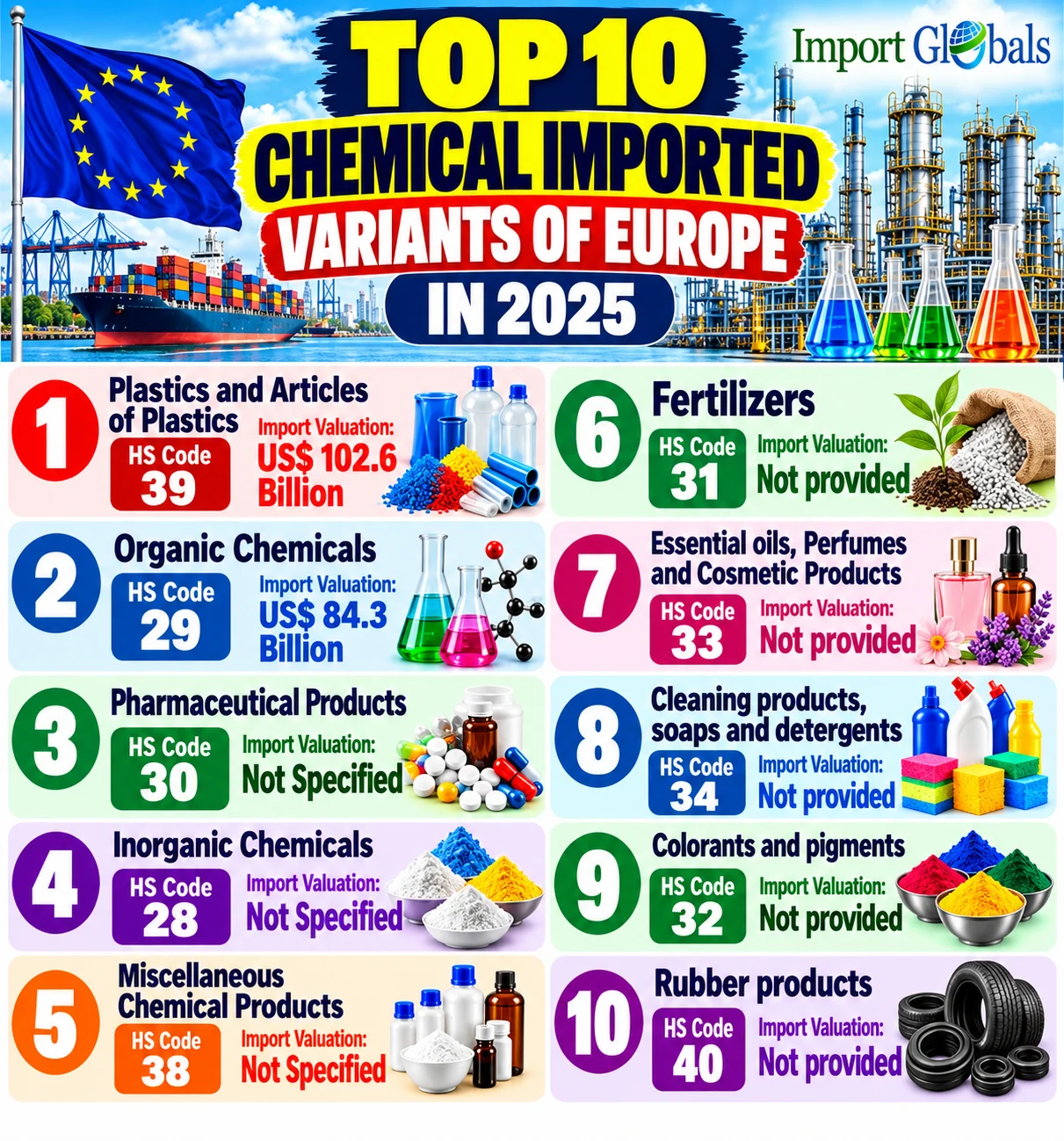
- Plastics and Articles of Plastics — HS Code 39 — Import Valuation: US$102.6 Billion
European countries import plastic and plastic forms that are used for packing, construction, automobile parts, electronics, and consumer goods production. These items serve the manufacturing supply chain and provide necessary components in many industrial applications.
- Organic Chemicals — HS Code 29 — Import Valuation: US$84.3 Billion
Organic chemicals are vital components in the manufacture of medicines, agricultural chemicals, polymers, coatings, and industrial formulations. European countries rely on these imports to keep their production up and running.
- Pharmaceutical Products — HS Code 30 — Import Valuation: US$74.3 Billion
Pharmaceutical products are the top 3rd imported chemicals of the European union, as per Europe Customs Data. The exposure of the population towards fatal diseases and the ongoing industrial requirements for medicaments has driven the demand rate.
- Inorganic Chemicals — HS Code 28 — Import Valuation: US$62.13 Billion
Inorganic chemicals include industrial acids, chemical elements, oxides, and other compounds. These products are used in water treatment, metallurgy, fertilizer production, electronics, and other chemical processing methods.
- Miscellaneous Chemical Products — HS Code 38 — Import Valuation: US$54.28 Billion
Miscellaneous chemical products involve prepared chemical mixtures, laboratory reagents, catalysts, and special compounds. These supplies help various manufacturing and environmental industries deal with particular processes.
- Fertilizers — HS Code 31 — Import Valuation: US$49.65 Billion
Fertilizers bring crucial nutrients for farming and horticulture in Europe. The import of fertilizers enables, on the one hand, the farmer to maintain soil productivity and crop yields and, on the other hand, to provide the necessary agricultural products when domestic production cannot meet demand.
- Essential oils, Perfumes and Cosmetic Products — HS Code 33 —Import Valuation: US$37.62 Billion
Essential oils and their products are needed for manufacturers of cosmetics, perfumes, spa products, and various consumer goods. Importing them helps European companies get necessary components for their special formulations to be sold to consumers.
- Cleaning products, soaps and detergents — HS Code 34 — Import Valuation: US$29.18 Billion
Cleaning products are useful for domestic hygiene, commercial cleaning, health organizations, and industry. Imports are vital for satisfying customer needs and providing specialized cleaning products.
- Colorants and pigments — HS Code 32 — Import Valuation: US$18.20 Billion
Colorants like paint, varnish, pigments, and dyes are needed in construction, the automotive industry, textiles, and some branches of manufacturing. Import helps get colorants and some other formulations in order to manufacture specific coloured products.
- Rubber products — HS Code 40 — Import Valuation: US$16.52 Billion
Rubber products help different sectors and industries like automotive manufacturing, industrial machinery, healthcare equipment, construction, and consumer products. The imports of rubber products include tyres, seals, hoses, and other components.
Top 10 Import Partners of Europe for Chemical Imports
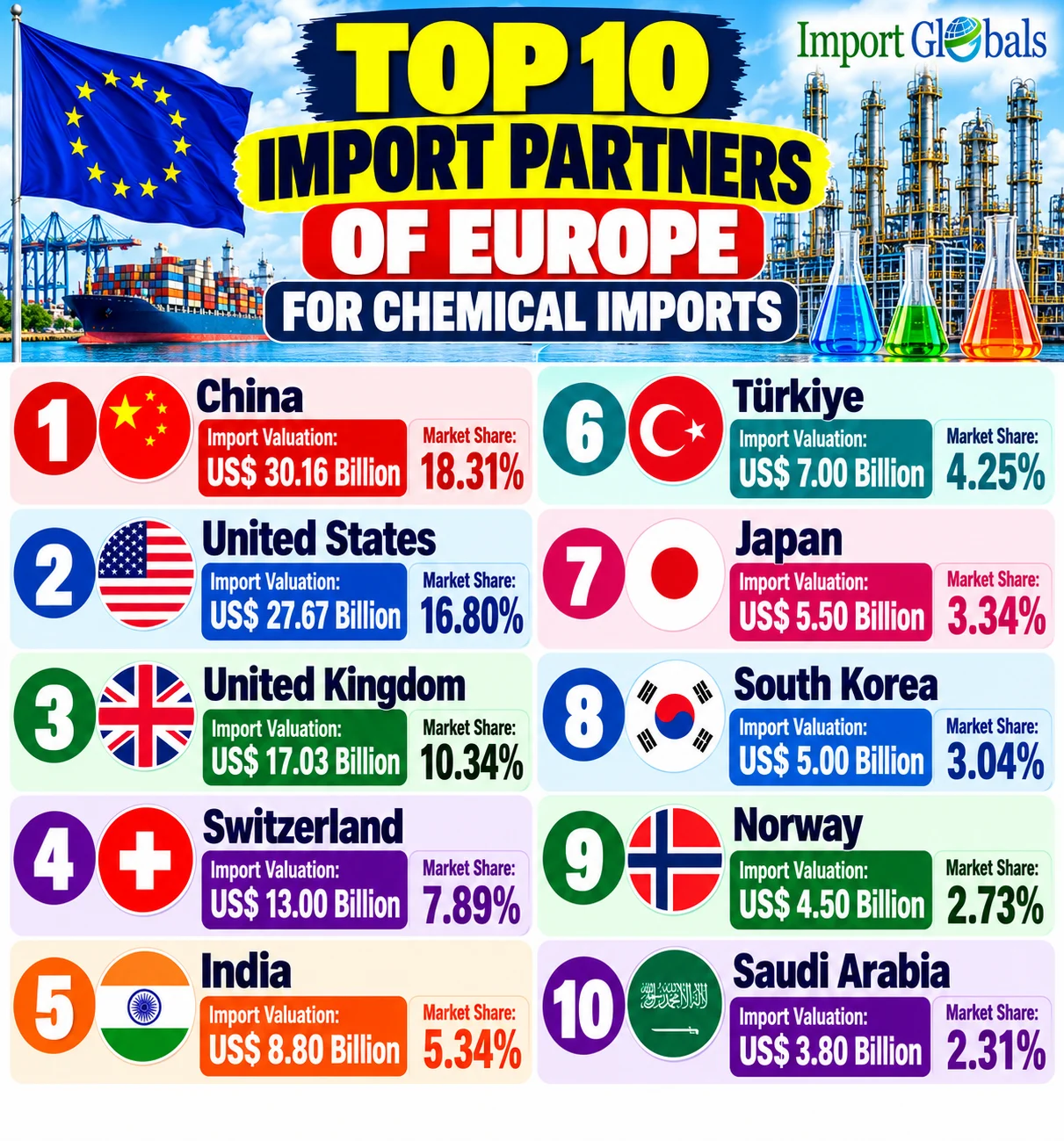
- China – Import Valuation: 30.16 billion dollars. Market share: 18.31%
China has secured its position as the largest supplier of chemicals to the EU, which helps satisfy the demand of the EU markets for organic products, polymers, industrial ingredients, and manufacturing inputs.
- United States – Import Valuation: 27.67 billion dollars. Market share: 16.80%
The US accounts for exports of chemicals, petrochemical products, pharmaceutical ingredients, and many other formulations to Europe. The established transatlantic chains of supply help in the procurement of industrial products and thus provide European manufacturers with diverse inputs of chemicals.
- United Kingdom – Import Valuation: 17.03 billion dollars. Market share: 10.34%
The UK is an important partner for the EU in terms of chemicals, reported Europe Export Data. Its location has made distribution easier and elevated cross-border supplies.
- Switzerland —Import Price: US$13.00 Billion | Market Share: 7.89%
Switzerland is a major supplier of pharmaceutical raw materials, special chemicals, biotech products, and high-value chemicals. Its advanced life-science sector enables European chemical production as well.
- India —Import Price: US$8.80 Billion | Market Share: 5.34%
India is a provider to Europe of generic pharmaceutical raw materials, plant-based chemicals, dyes, agrochemical intermediates, and special substances. This is made possible due to low production costs and increasing production capacity.
- Turkey —Import Price: US$7.00 Billion | Market Share: 4.25%
Turkey supports the chemical needs of Europe with plastics, detergents, industrial chemicals, paints, and chemical intermediates. Its location allows for low delivery times.
- Japan —Import Price: US$5.50 Billion | Market Share: 3.34%
Japan is a supplier of advanced chemical materials, polymers, electronics, synthetic substances, and high-performance industrial ingredients. The high level of technology in Japanese manufacturing allows for the provision of services to the automotive, electronics, health care, and precision engineering industries in Europe.
- South Korea —Import Price: US$5.00 Billion | Market Share: 3.04%
South Korea is a supplier of special petrochemicals, polymers, battery materials, electronic chemicals, and industrial substances. The advanced manufacturing sector of Korea allows it to meet the needs of electronics, automobiles, and energy storage.
- Norway —Import Value: US$4.50 billion | Market Segment: 2.73%
Norway plays a part in supplying petrochemical feedstock and various types of industrial chemicals and certain chemical derivatives in the European market. The country benefits from available energy resources and already established business ties reported Europe Shipment Data, which assist in the acquisition of goods and services relating to industrial sourcing.
- Saudi Arabia —Import Value: US$3.80 billion | Market Segment: 2.31%
Saudi Arabia is an important global provider of petrochemical products, plastics, as well as chemical feedstock. Saudi Arabia's integrated hydrocarbon industry enables manufacturers in Europe to receive the necessary supplies for plastics and industrial production.
Top 10 Companies Boosting the Chemical Imports of Europe
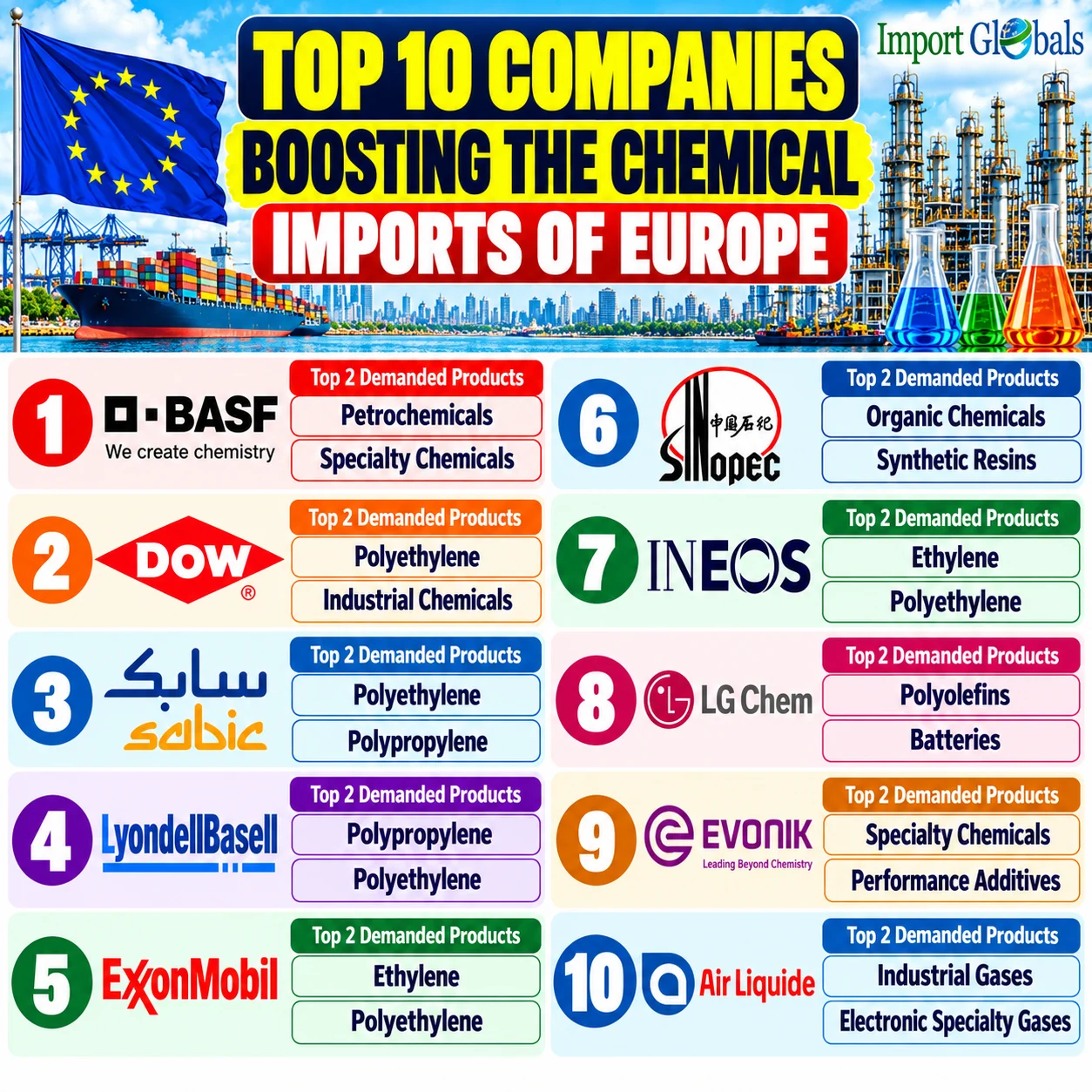
- BASF — Top 2 demanded products - Petrochemicals and Specialty Chemicals
BASF assists chemical supply chains with petrochemical feedstock, performance chemicals, and specialty chemicals. The company offers a wide range of products across various industries in Europe; including automotive, construction, agriculture, manufacturing, and consumer goods.
- Dow — Top 2 demanded products: Polyethylene and Industrial Chemicals
Dow provides polyethylene, performance materials, and industrial chemicals; which are essential for packaging, construction, automotive components, and manufacturing services. The company’s international network for production helps satisfy the European demand for essential chemicals.
- SABIC — Top 2 demanded products - Polyethylene and Polypropylene
SABIC manufactures both commodity petrochemicals and polymers used for packaging, automotive components, construction, and consumer goods. The company has a massive production operation that is crucial on an international scale to customers in the European area requiring polymers.
- LyondellBasell — Top 2 demanded products - Polypropylene and Polyethylene
LyondellBasell provides plastic resins and intermediates that are critical to packaging, household products, pipes, and the automotive industry. The production facilities serve to satisfy the growing demand in Europe for plastics.
- ExxonMobil — Top 2 demanded products: Ethylene and Polyethylene
ExxonMobil provides petrochemical feedstock’s as well as chemicals such as ethylene and polyethylene. The international company has a wide manufacturing and distribution network that meets the needs of European customers.
- Sinopec’s Petrochemical Business - Top 2 demanded products - Organic Chemicals and Synthetic Resins
Sinopec’s petrochemical operations provide organic chemicals, synthetic resins, and polymer materials. The scale of production impacts chemical supply on a global scale, with relevant products connected to industries located in Europe through Asian markets.
- INEOS - Top 2 demanded products - Ethylene and Polyethylene
INEOS produces petrochemicals, olefins, polymers, and specialty chemicals used in many industries, such as construction, automotive, healthcare, and packaging. Its International operations create connections between different industries in Europe and established chains of petrochemical supplies, as per Europe Trade Statistics.
- LG Chem - Top 2 demanded products - Polyolefins and Batteries
Another representative of the petrochemical industry is LG Chem, which provides petrochemical products, plastics, and battery-related chemicals. The effective role of the company is because of the growing demand rate regarding the specific products and the industrial productivity rate.
- Evonik Industries - Top 2 demanded products - Specialty Chemicals and Performance Additives
Evonik offers unique products that include specialty chemicals, additives, and advanced materials. The specific rates of formulations and product performance encourage buyers in Europe to source some chemical products internationally.
- Air Liquide - Top 2 demanded products - Industrial Gases and Electronic Specialty Gases
Air Liquide produces industrial and specialized gases utilized in chemical processes, metal production, healthcare, and semiconductor production. They have gas technologies that make use of high purity in the manufacturing of products in many industries, as well as those that have the unique characteristics required in processes.
Statistical Analysis of Europe’s Chemical Imports Over the Past 10 Years
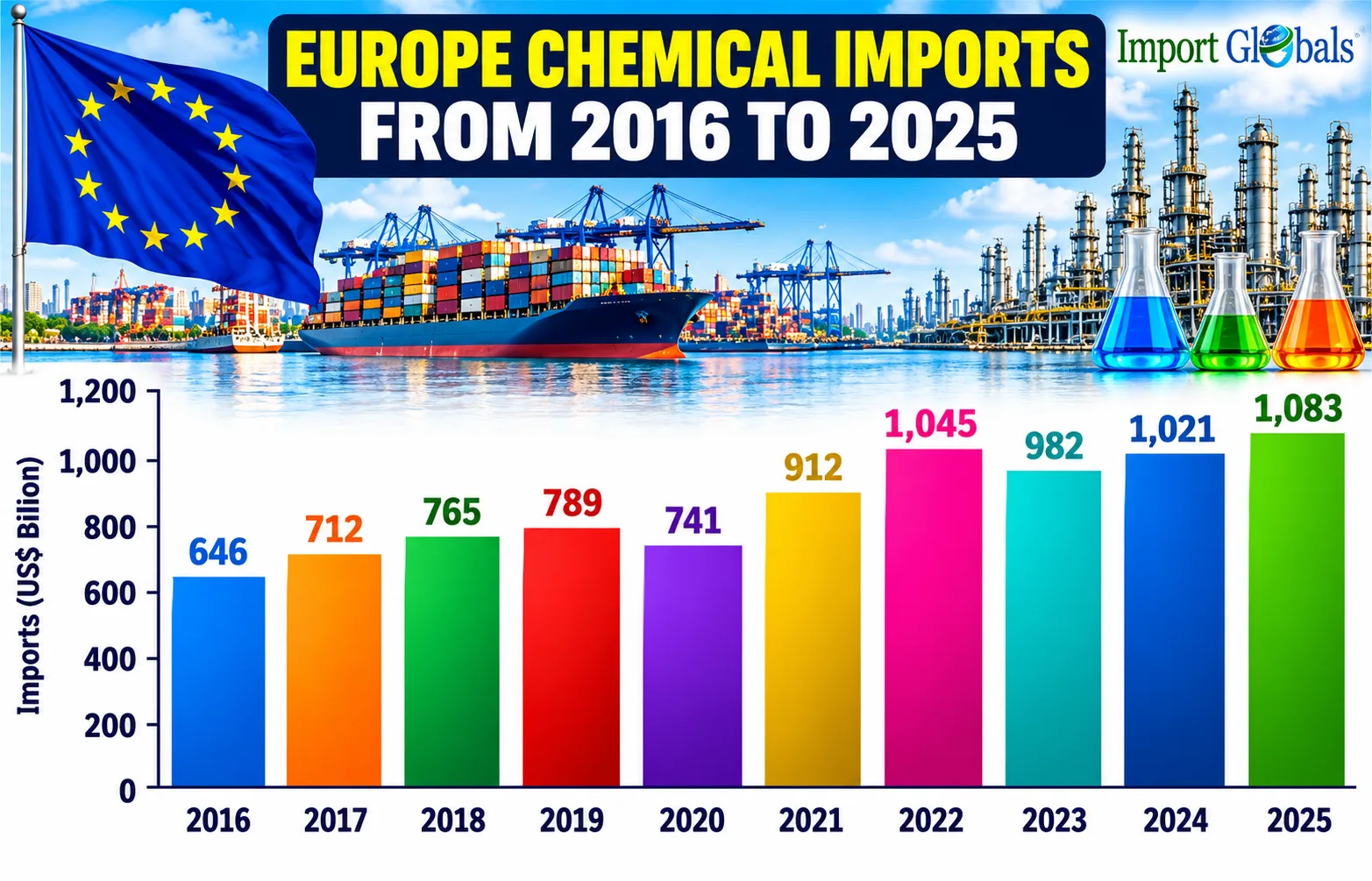
The volume of chemical imports of Europe showed steady growth from 2016 until the end of the decade. As evidenced by the figures provided in the Europe Trade Statistics, the amount of chemical imports reached US$646 billion in 2016 and increased in several consecutive years: US$712 billion in 2017, US$765 billion in 2018, and US$789 billion in 2019; however, the imports decreased and amounted to US$741 billion in 2020.
The imports showed a good recovery in 2021 when they reached US$912 billion in total, whereas in 2022, the value of those imports rose to US$1,045 billion. In 2023, the volume dropped to US$982 billion but again increased to US$1,021 billion in 2024. Finally, in 2025, the import total neared US$1 trillion.
Bilateral Trade Review: The Significance of the Top Trade Partner
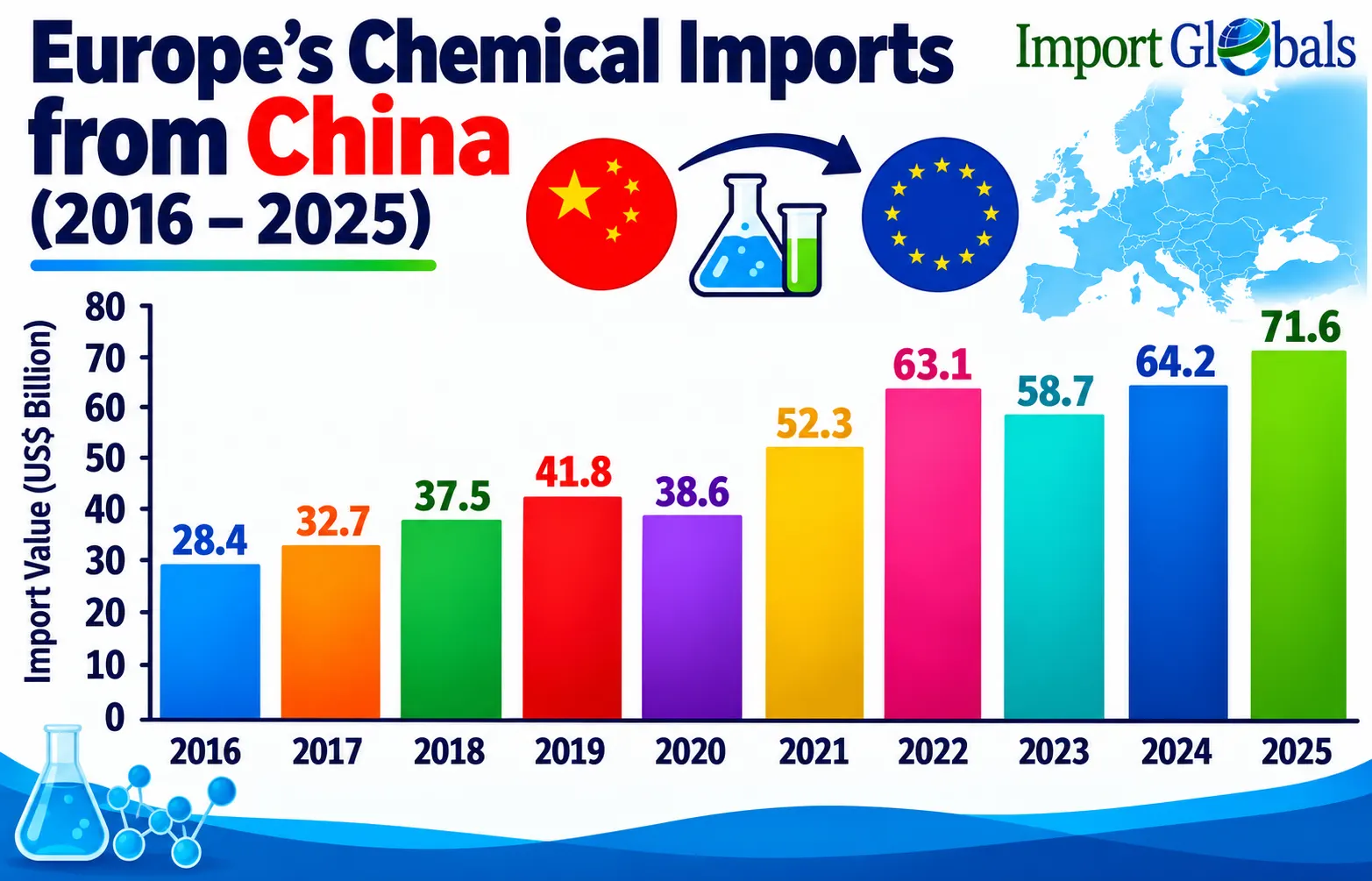
The chemical imports of Europe from China developed considerably during 2016-2025, symbolizing the increasing significance of Chinese chemicals in the European supply chain. The Europe Import Export Data shows that imports were valued at $28.4 billion in 2016, then increased to $32.7 billion in 2017 and $37.5 billion in 2018, then increased to $41.8 billion in 2019 before decreasing somewhat in 2020, and then regained their strength in 2021 when imported values reached $52.3 billion, before slightly increasing to $63.1 billion in 2022.
However, the imports decreased to $58.7 billion in 2023 before increasing again to $64.2 billion in 2024. By 2025, the chemical imports of Europe from China reached $71.6 billion – the highest sum in the chart. This increase demonstrates growing trade relations between China and Europe based on the demand for industrial chemicals, chemical intermediates, plastics, and other inputs for production. The increase from 2016 to 2025 illustrates the importance of bilateral trade in chemicals despite the changes in the yearly totals.
Tariffs Promoting the Chemical Imports of Europe
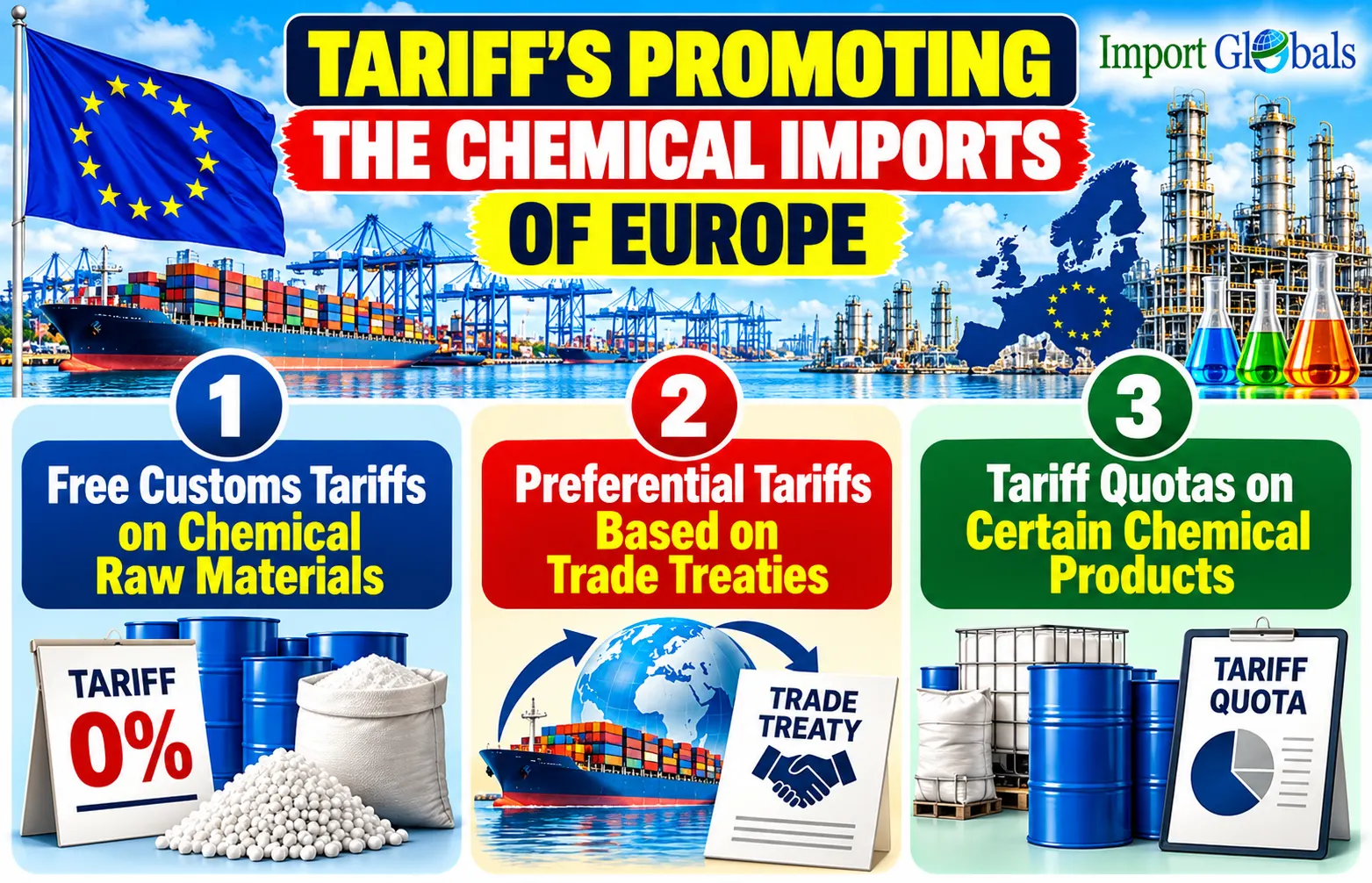
- Free Customs Tariffs on Chemical Raw Materials
The customs duties for some chemical raw materials, semi-processed goods, and chemical inputs that cannot be produced in sufficient quantities within the boundaries of the European Union are suspended or reduced. These steps help lower procurement costs and increase the industrial competitiveness of the EU’s manufacturing industry.
- Preferential Tariffs Based on Trade Treaties
Trade treaties can reduce or abolish customs duties on chemical products shipped to the EU from its partner countries. Trade treaties contribute to suppliers’ competitiveness, as well as enable the diversification of supply sources and the establishment of chemical trade relations, while being subject to product-specific rules of origin requirements.
- Tariff Quotas on Certain Chemical Products
Tariff quotas enable certain amounts of eligible chemical goods to be imported on a lower or even zero tariff basis. This allows EU manufacturers to keep their costs down and rely on abroad-produced chemical products.
Future Trade Outlook of the Chemical Imports of Europe
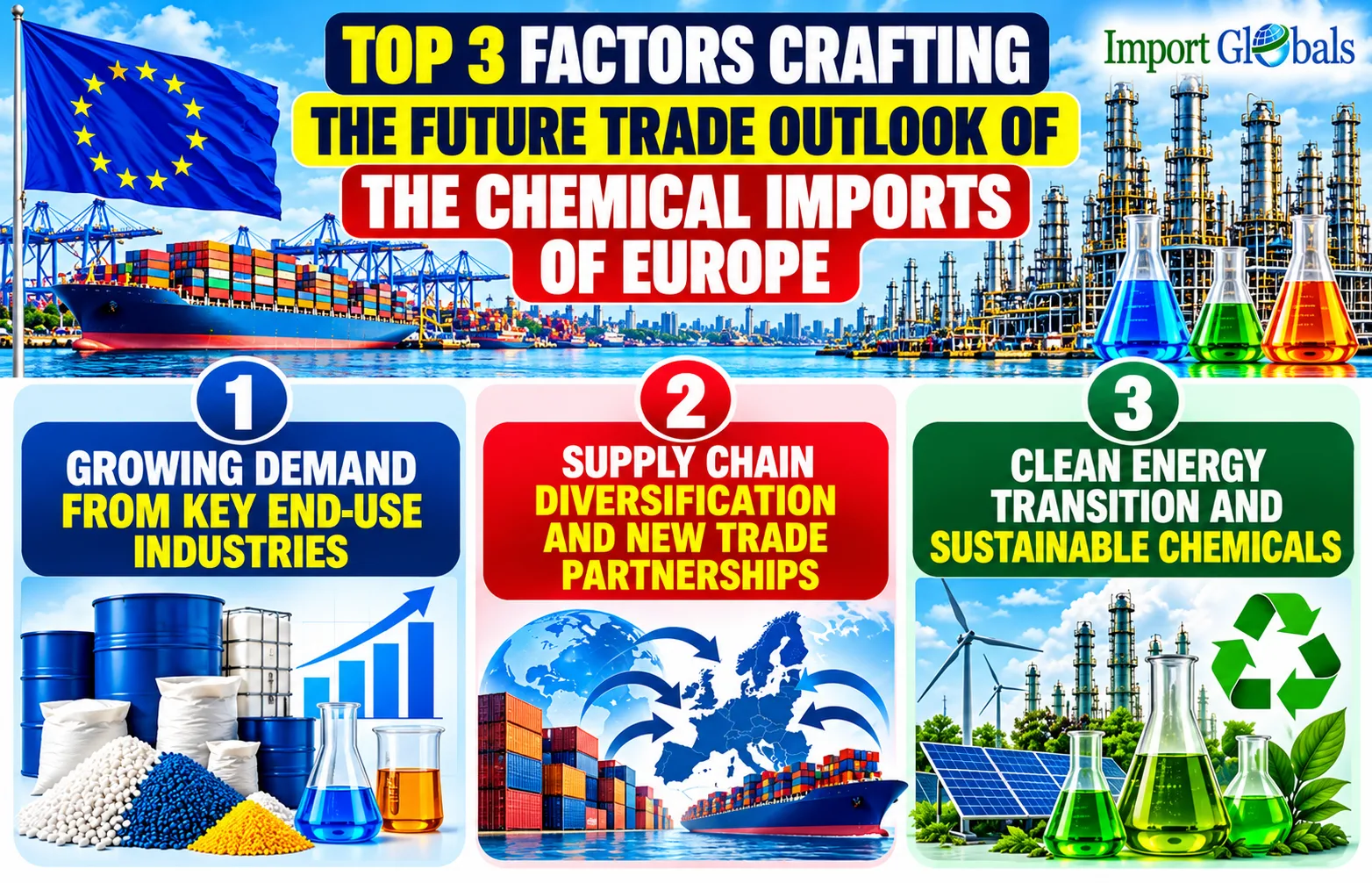
The projection for imports of chemicals into Europe shows that these will remain crucial for all branches of industry. According to the Europe Import Data, chemical imports into Europe will amount to US$1,083 billion in 2025, still keeping a competitive position with the support of the international suppliers of raw materials, chemicals, and intermediate goods.
Imports of chemicals from China are going to stay important due to competitive prices, enormous production capacity, and a broad product mix. The dynamics of the growth in trade volumes rise from US$28.4 billion in 2016 to US$71.6 billion in 2025.
However, the future growth will be defined by industrial demand, energy prices, reliability of suppliers, and trade regulations. The European industry may face the necessity of further diversification for the purpose of achieving resiliency in sourcing processes.
Conclusion
European chemical imports remained a cornerstone of the region’s production and were introduced into international commerce in 2025. The demand for plastics and other types of chemical goods (organic chemicals, medicines, fertilizers, petrochemicals, and specialty chemicals) persisted across industries.
The leading external suppliers to Europe included China, the USA, and the UK, while Switzerland, India, Turkey, and Japan were among the main contributors to Europe's sourcing mix.
China’s chemical import figures reflected the growing volume of the bilateral trade between the two regions. The increase in chemical imports from China surged from US$28.4 billion in 2016 to US$71.6 billion in 2025. The future industry results will depend on the levels of industrial demand, prices of energy, stability of the supply chain, and the regulatory environment in terms of environmental policies and international trade issues.
CTA
If you are trying to get the latest information regarding the organic chemicals import of the European Union, then Import Globals is here to resolve the complexities, backed by active databases. Subscribe to www.importglobals.com or drop an email at info@importglobals.com for detailed updates on chemical imports to the European Union to transform your international business growth.
FAQ’s
Que. What are the top chemical imports of Europe in 2025?
Ans - The top chemical imports of Europe in 2025 are plastics and articles of plastics, and organic chemicals.
Que. What is the total value of Europe’s chemical imports in 2025?
Ans - The total amount of chemicals imported in the European Union in 2025 is 618 billion US dollars.
Que. Name the country that leads the top import partners list of Europe in 2025.
Ans. China is the country that leads the top import partners list of Europe in 2025.
Que. Why is Europe importing chemicals?
Ans. The European Union has been importing chemicals mainly because of pharmaceutical production, plastics manufacturing, and automotive production.
Que. What is the HS code for organic chemicals?
Ans. The HS code for organic chemicals is HS -29.
Que. Name the top company affecting Europe's chemical imports in 2025.
Ans. BASF is the top company affecting Europe's chemical imports in 2025.
Que. How does Europe’s import-export data support business growth?
Ans. Europe’s import-export data supports business growth via proper identification of buyers, suppliers, analysis of market demand, and development of effective market expansion strategies.
Que. What information is available in Europe trade data?
Ans. Europe trade data covers importer name, exporter name, shipment date, HS code, product details, quantity, pricing information, origin country, importing country, and port details.
Que. How frequently is the Europe trade data updated?
Ans. Europe trade data is updated on a monthly basis.
Que. Where can you obtain detailed information on Europe trade data?
Ans. Visit www.importglobals.com or drop an email at info@importglobals.com for detailed updates on Europe trade data.
You Can Also Visit :-
