AI and World Trade 2026: How Artificial Intelligence Changes International Trade?
- Sep 25, 2026
AI and World Trade 2026: How Artificial Intelligence Changes International Trade?
With the rise of AI technologies, business practices have transformed around the world. In fact, it has transformed the way businesses discover new markets and choose buyers and suppliers, make decisions about shipping operations, manage supply chains, and assess the changes in demand. Additionally, the rise of AI creates demand for semiconductors and computing systems.
Thus, the relationship between global trade and AI evolves in two ways. AI impacts businesses operating in international trade, while international trade contributes to devices and software needed for the development of AI.
For importers and exporters, manufacturers, customs services, shipping companies, and researchers, it is crucial to use reliable Global Import Data to understand such changes.
What Makes AI Necessary for World Trade?
Huge volumes of data are generated by international trade. Each international trade transaction contains data such as product descriptions, HS Code, date of shipment, quantity and value of shipment, ports of loading and unloading, country of origin of goods, country of destination, buyers and suppliers involved in a transaction, and the means of transport.
Since the beginning of international trade, analysis of trade transaction information has been a tiresome process requiring a huge amount of manual work. AI has the ability to deal with big data, detect patterns, and process information faster than other methods.
With AI analytics, businesses can investigate:
- Trends in imports and exports
- Demand for certain products
- Buyers’ behaviour
- Suppliers’ performance
- Frequency of cargo delivery
- Market growth trends
- Classifications of goods
- Price patterns
- Movements within the supply chain
- Links in international trade
This is where Global Trade Data can be very useful.
Artificial Intelligence and Global Imports
Artificial intelligence is continuously transforming the strategies of the importers. The utilisation of the AI Based methodologies has been maintaining the reliance on supplier research and purchasing patterns.
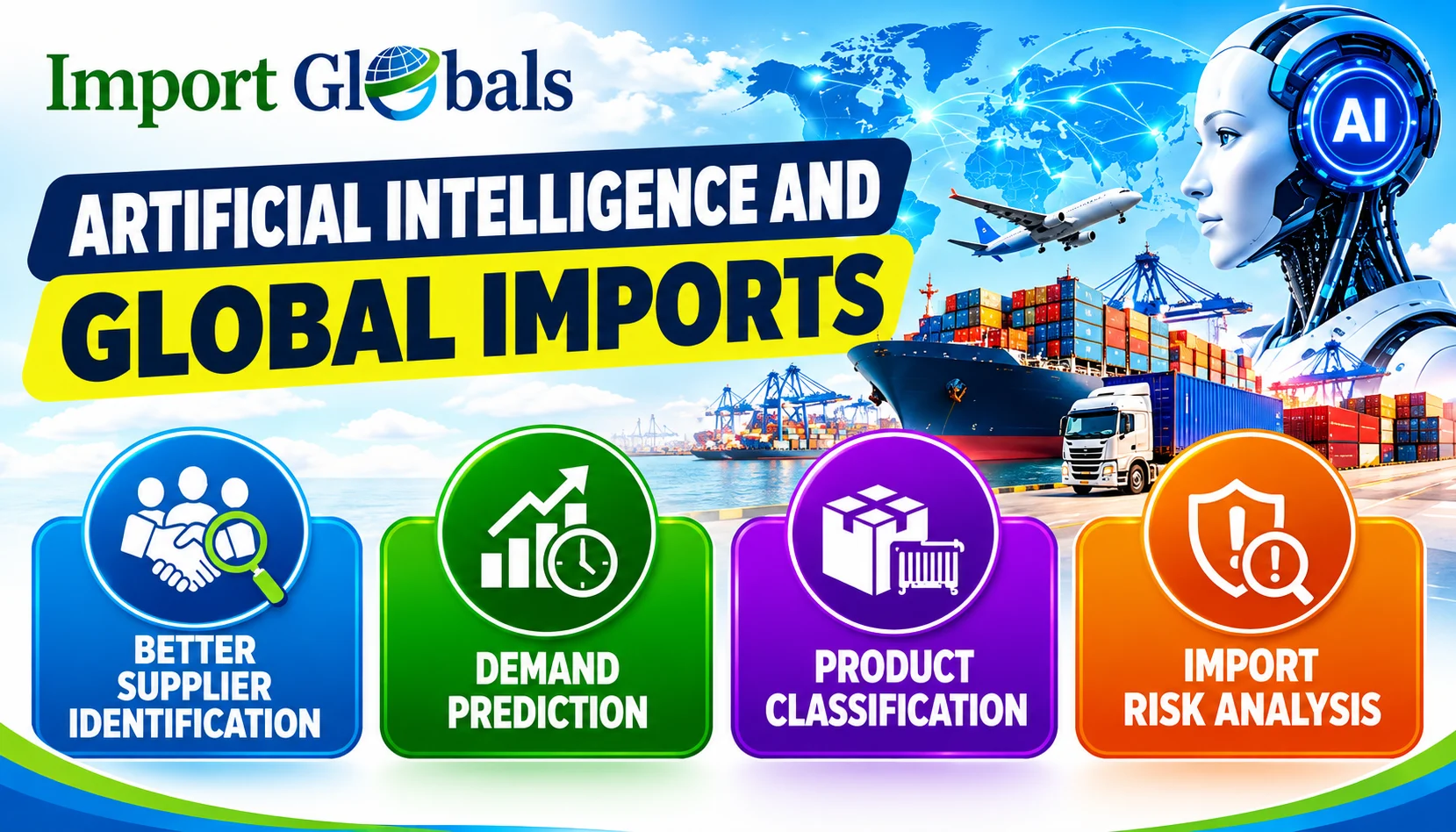
1. Better Supplier Identification
Using AI technology, importers can now evaluate supplier data on the basis of several dimensions such as product type, shipment volume, destination market, and historic transactions.
AI makes it easier to filter large datasets in companies’ databases to discover the suppliers that meet their requirements. For instance, an importer could monitor international shipments by suppliers of a certain component or ready-made product.
Global Import Trade Data can also facilitate the supplier identification process, as it provides information about the imported products and trade participants depending on the available dataset.
2. Demand Prediction
Artificial intelligence has been promoting the analysis of the previous demand trend for the progressive traders to help them craft their business strategies. The importers right now are able to get proper analysis of the characteristic of trade with acknowledgement of historical importing figures, seasonal demand trend, categories of goods and market location.
3. Product Classification
The acknowledgement of the HS code promotes dictation of customs protocol, trade records, and legal requirements. Artificial technology has been helping with the categorization of the product, while the description of the application has been supporting the proper trade.
4. Import Risk Analysis
The improvement of the risk analysis helps the businesses get proper identification of the peculiar circumstances. It helps the companies get proper detection of the anomalies of trade with the frequency of the shipments, product names, and the supplier actions, reported Global Import Export Data.
AI And Global Exports
AI is of interest to exporters as well. Companies looking for clients abroad have to know in which territories demand exists, which firms buy certain products, and how their competitors perform.
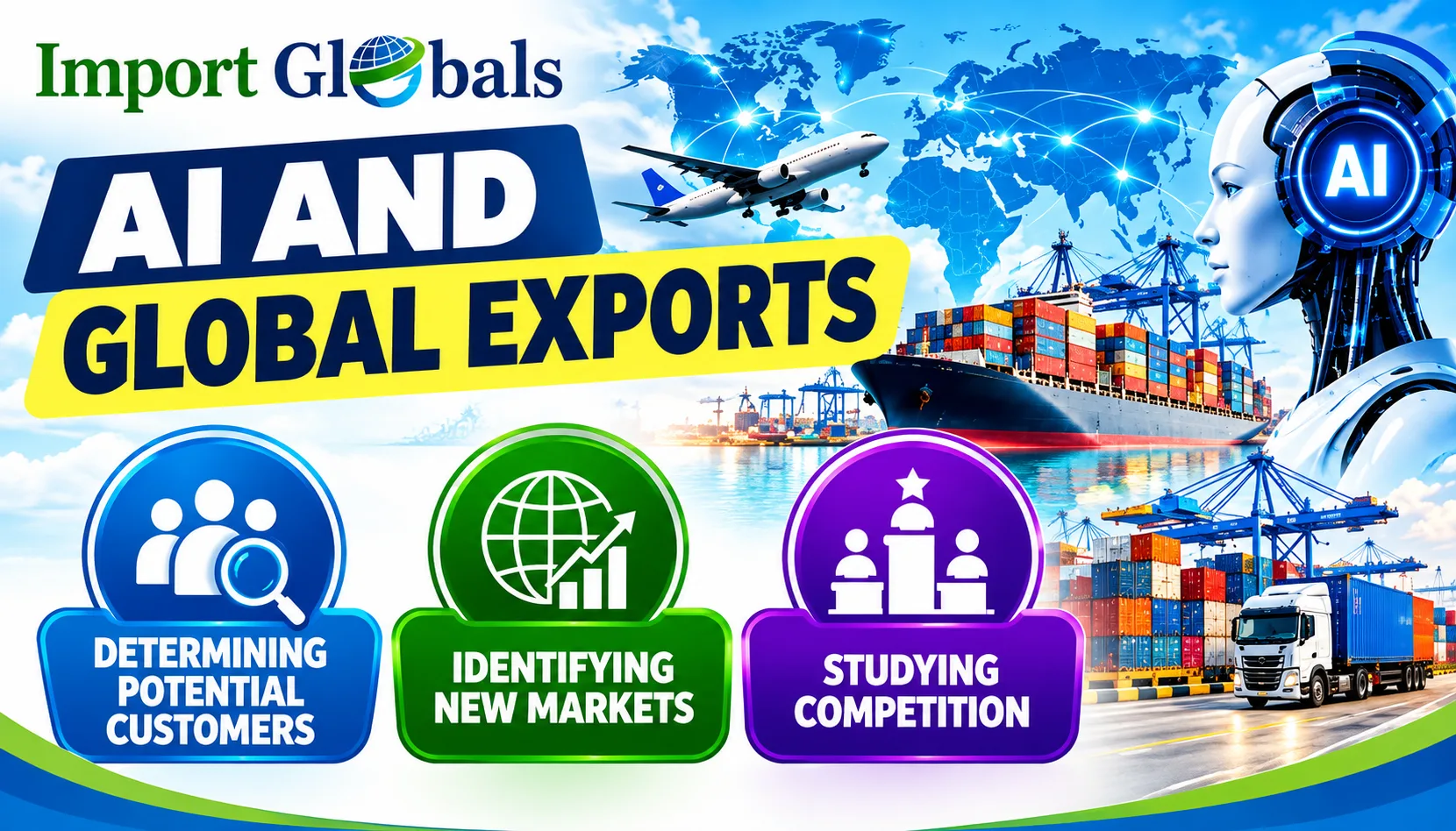
Determining Potential Customers
Exporters can track international buying to determine which firms import their type of products routinely. Global Import Export Data allows companies to analyse the flow of international trade between countries and groups of products, so exporters may look into potential destinations.
Identifying New Markets
Artificial intelligence can track fluctuations in import demand and shipping in different countries. For instance, if imports of a certain industrial component are rising in one of the countries, it is worth investigating whether this country can be a good target market. AI allows studies of multiple markets at one time and based on selected parameters.
Studying Competition
Exporters may utilize trade data to study competitors internationally.
The Companies may see:
- Countries where the goods are shipped;
- Products that are exported;
- How often they ship goods;
- What volume of goods they export;
- Who buys their products;
- Who supplies them with goods.
Combining these data with AI enables small-scale companies to study competition more easily.
How Global Import Export Data Supports AI-based Trade Analysis?
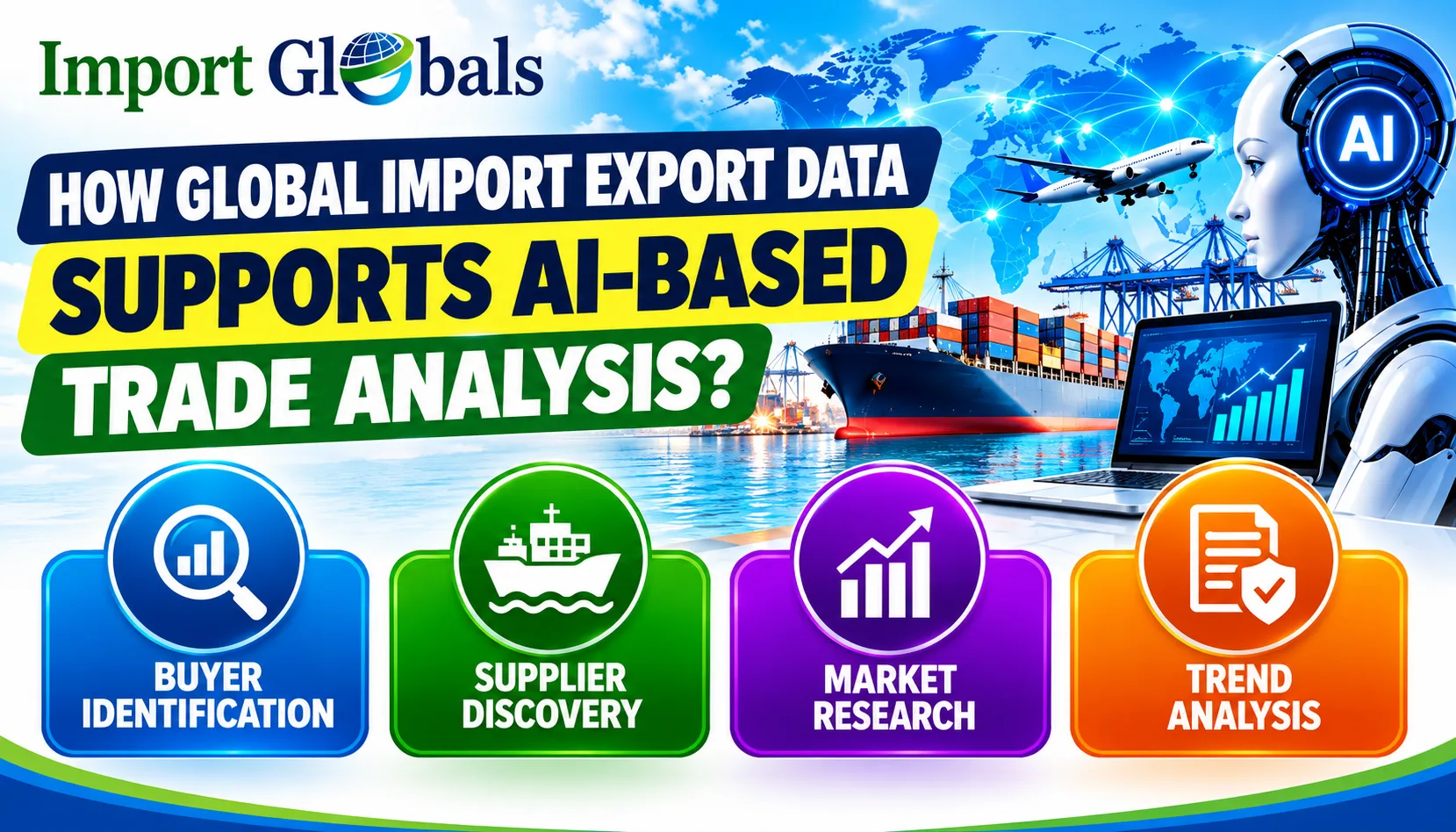
The development of AI technology provides ample opportunities for the emergence of valuable datasets on trade data.
The Global Import Export Data figures include information about international product movement across multiple countries. The availability of that information depends on the origin and extent of the datasets in question and may consist of:
- Buyer names
- Seller names
- Product description
- HS Code
- Shipment dates
- Shipments quantities
- Shipment value
- Country of shipment origin
- Country shipped to
- Port of shipment
- Delivery method
AI has the ability to process such specific indicators at once, rather than analysing each record independently. For instance, a company studying global automotive business might correlate product information, the end market, shipment regularity, and suppliers’ work to distinguish differences in the cost of motor vehicles trade.
AI and Worldwide Supply Chains
Global supply chains have become more complicated. A single item may include raw materials from one nation, production in another place, assembly in yet another area, and final shipment across multiple markets. AI can support companies in evaluating these complex supply chains.
Companies can use AI-powered systems to track the following:
- Supplier performance
- Stocks
- Shipping timelines
- Port operations
- Transport charges
- Commodity costs
- Production capacity
- Demand
- Delivery processes
- Market disruptions
The possibility to examine all of these factors at the same time enables tackling supply chain weaknesses of the organization. Global Trade Statistics shows historical trends, while AI allows defining patterns connected to them.
AI-Related Products Affecting World Trade
AI is not just changing trade processes, but also affecting the commodities traded internationally.
To develop AI, it is necessary to have a huge physical infrastructure, which consists of:
- Semiconductors
- Processors
- Servers
- Equipment for data storage
- Networking equipment
- Telecommunication Systems
- Computing equipment
- Cooling systems
- Power management equipment
- Electronic components.
These goods are an integral part of world supply chains that are being developed. The increasing development of AI infrastructure increases the number of imports and exports between the countries that create technology and the countries that invest a lot of money in AI. Companies that use Global Import Shipments Data can analyse how the demand for these products in the various markets changes.
AI & Digital Services
AI is reshaping global service trade. Software development, cloud computing, data processing, consulting, finance, design, customer service, and digital services offer the potential to add AI. Digital services differ from conventional goods because they may not require transportation. This provides companies with an opportunity to serve their international clients from home.
A business may benefit from AI-based services in the form of automated services, translations, analysis, and so on. As digital services become more popular, international trade research will need to focus on both areas.
How AI Can Help Small and Medium-Sized Exporters?
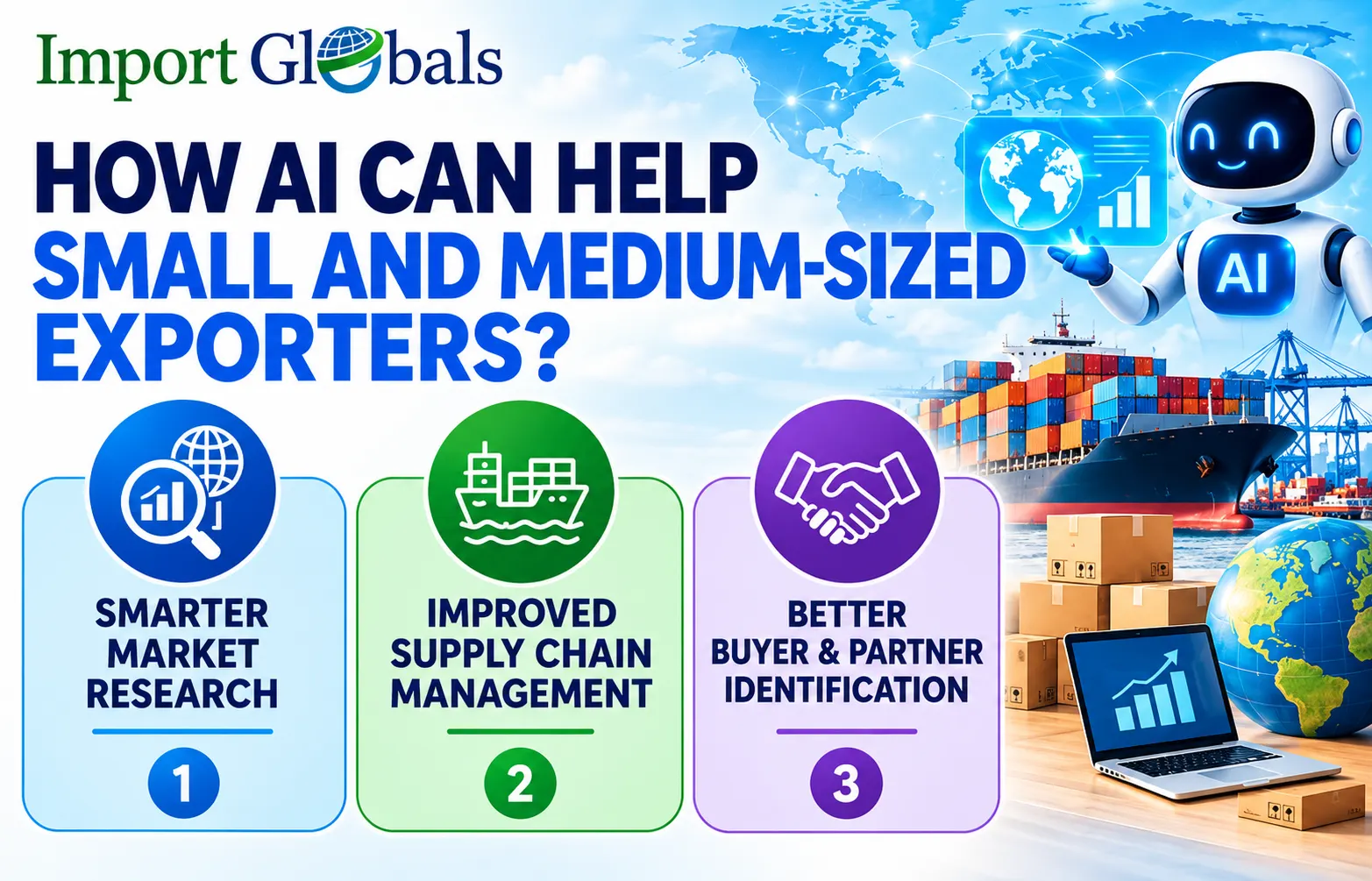
In the past, only large multinational corporations had access to elaborate research departments, consultants, and advanced analytics systems.
With the advent of AI, certain analytics capabilities will be available to smaller companies, as per Global Trade Statistics. For instance, small or medium-sized exporters may employ AI technologies for:
- Market analysis
- Buyer search
- Supplier search,
- Competitor analysis
- Product analysis
- International marketing
- Client communication
- Trade data analysis
- Demand forecasting
- Market development
For instance, a small plant manufacturer can use Global Import Export Shipments Data to find the countries importing similar machines and look for buyers in these markets.
AI systems will help to aggregate the information, while the company will be able to use its own business experience in the evaluation of the prospect.
AI and Global Trade Data Analysis
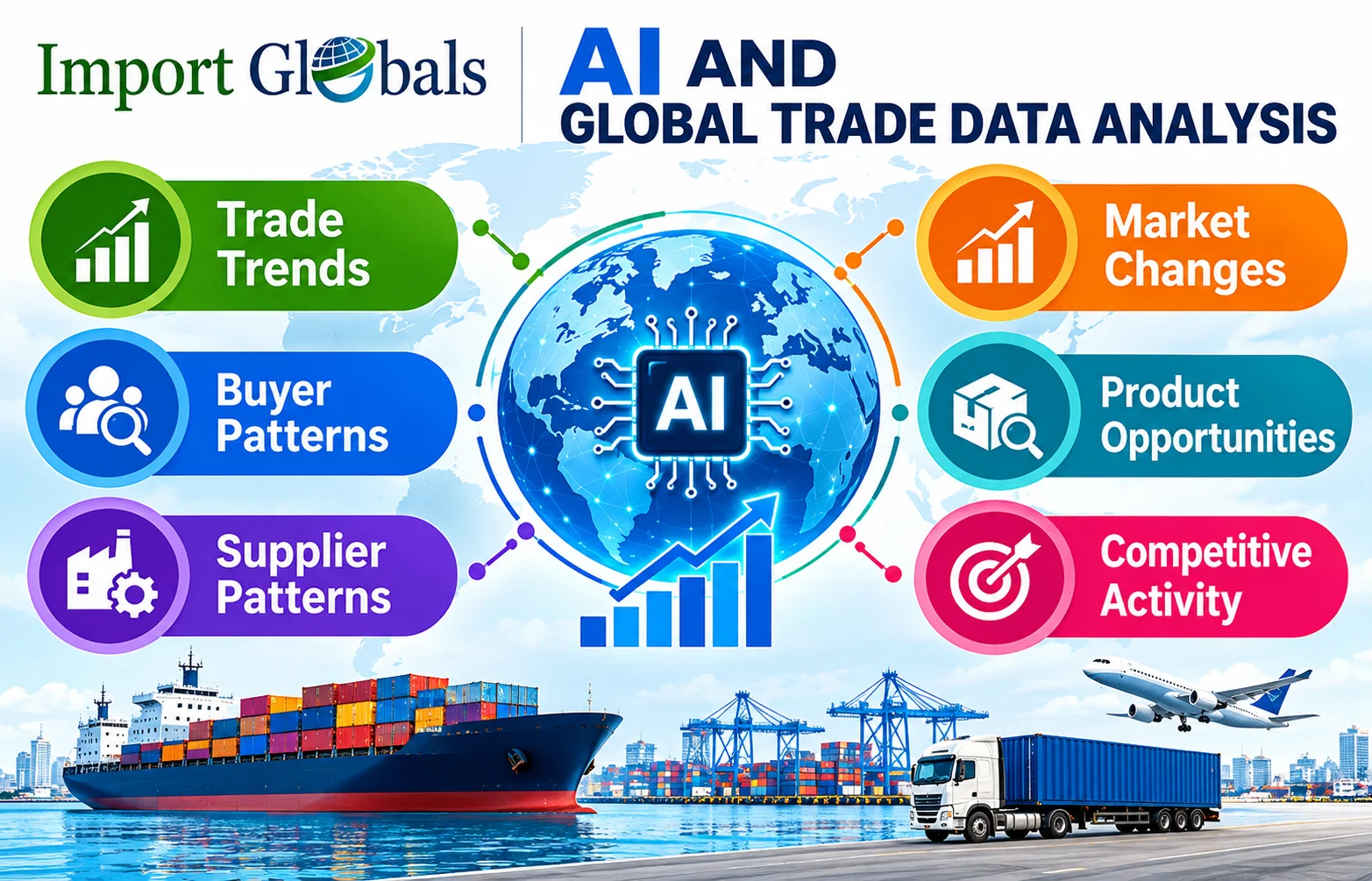
AI is one of the main uses of big trade information. Global Trade Import Data may consist of millions of entries from many countries, products, and transactions. It is very slow to oversee such data by hand.
AI may assist in showing businesses:
Trade Trends
AI is able to estimate previous data in order to reveal the rise/fall in shipments of goods.
Buyer Patterns
A firm’s representatives may observe how often goods have been purchased and which products are in demand to identify purchase patterns.
Supplier Patterns
AI is capable of finding out which firms provide certain products regularly.
Market Changes
Instead of knowing about demand levels based on changes in shipment amounts, businesses are able to learn how demand levels change.
Product Opportunities
Companies may use product groups connected with certain goods in different countries to see where more research is needed.
Competitive Activity
Exporters may learn more about partners’ shipment volumes and geography of their deliveries.
Problems of AI in World Trade
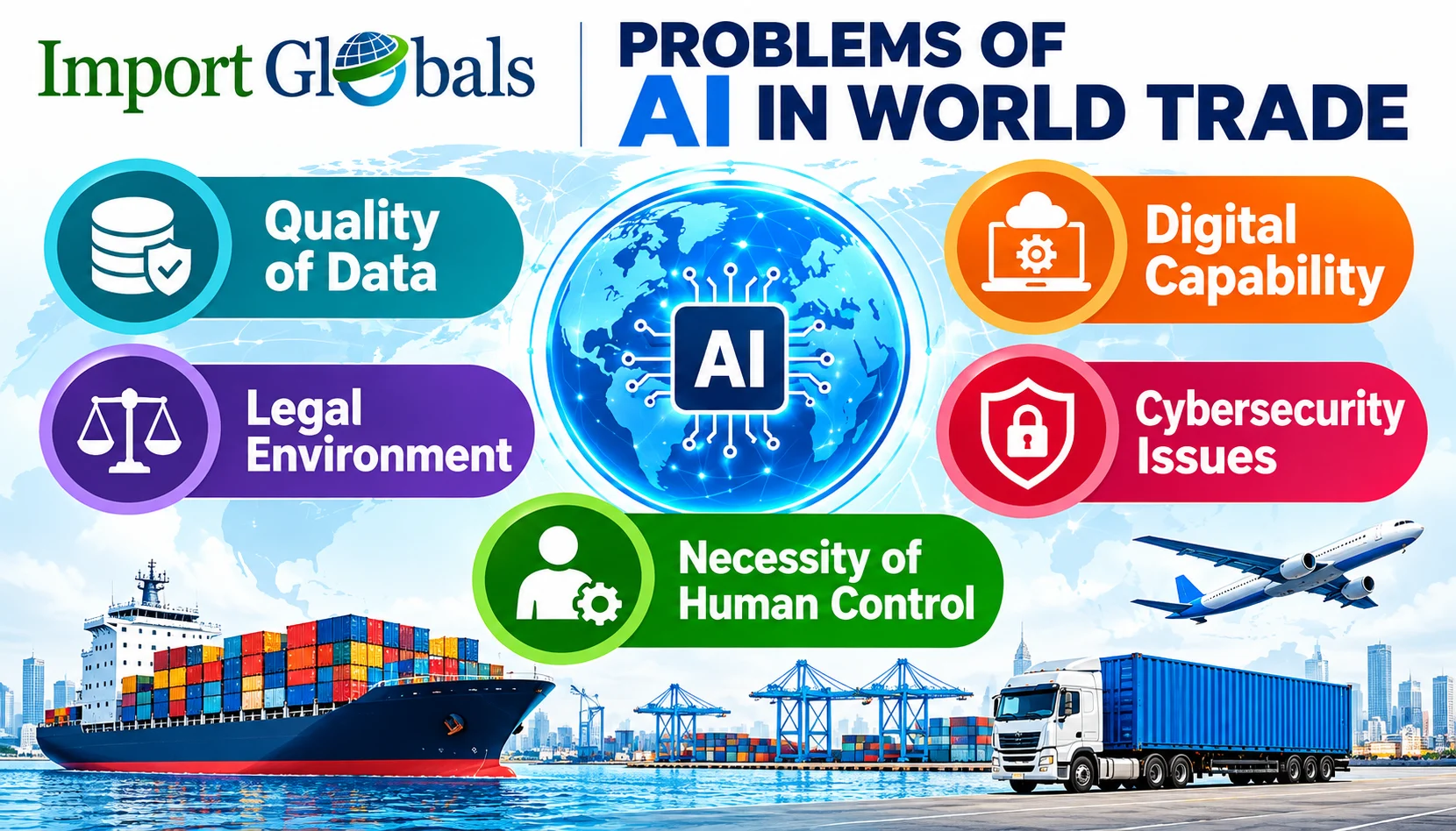
AI has many benefits, but its usage brings disappointing moments too.
1. Quality of Data
AI solutions are greatly influenced by the level of quality of data they depend on. If the data is incorrect, insufficient, or outdated, the analytics produced by AI tools can be faulty, which is why companies should check the origin, coverage, timing, and methodology of the data about trade they use.
2. Digital Capability
Not all countries and companies have the same level of access to computers, software, and professional staff. Varying levels of technology lead to different use of AI by companies.
3. Legal Environment
Nations have their own ways of treating AI, data protection, privacy, and e-commerce. Possible legal changes should be taken into account by companies.
4. Cybersecurity Issues
Increasing digitization of international trade brings along new challenges regarding cyber security. Various databases regarding trade, logistics and customs contain sensitive information.
5. Necessity of Human Control
There is no point in replacing human analysis with AI-generated outcomes.
The Role of AI in Emerging Markets
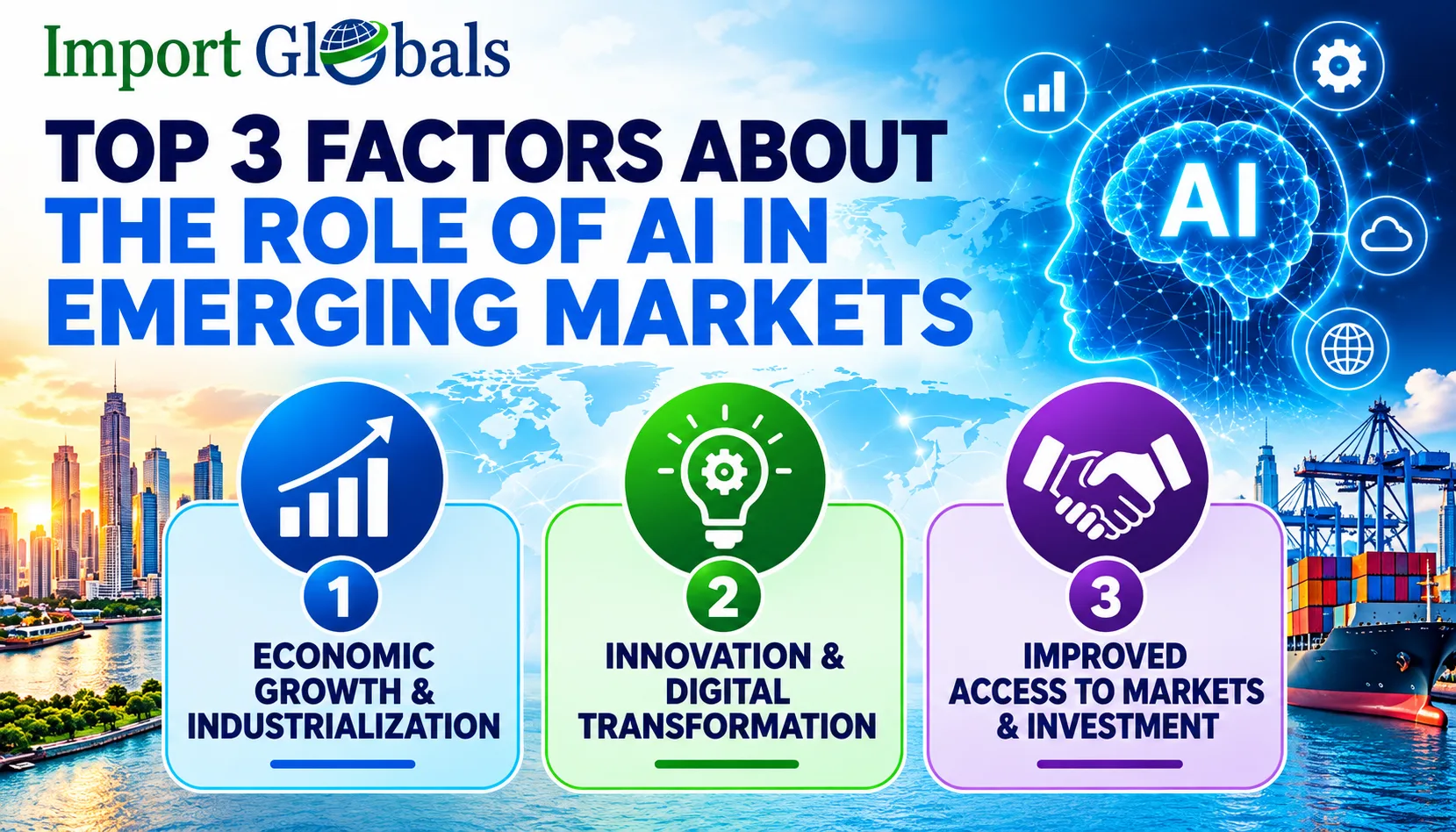
AI may play an essential role in helping businesses in emerging markets get involved in international trade. With the help of AI, companies from developing countries may analyse foreign demand, look for buyers, and study their competitors.
Nevertheless, the variations in digital infrastructure, availability of internet, computing power, and professional skills have an impact on the implementation of AI. Thus, the connection between technological advancement and trade participation is quite significant.
Countries with strong digital infrastructure may have better opportunities for AI implementation in manufacturing, logistics, services, and international commerce.
How Firms Can Use Global Import Data With AI?
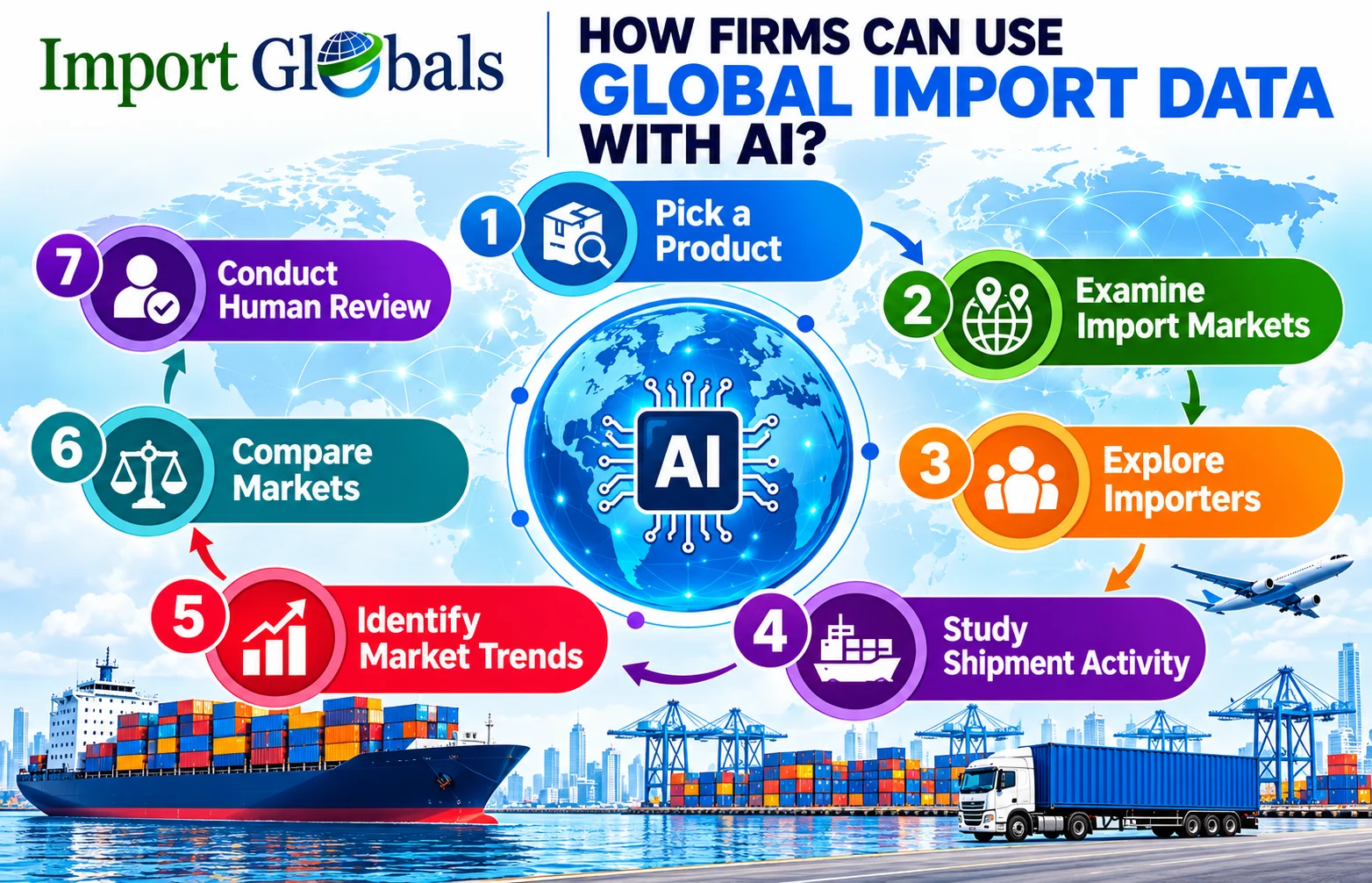
By leveraging Global Import Data with AI technologies; Authorities are able to get the detailed updates
For Example:
Step 1 – Pick a Product
Begin by choosing the right product category or HS code to study.
Step 2 – Examine Import Markets
Identify all of the countries that import the product of interest.
Step 3 – Explore Importers
Look for the firms that buy the product.
Step 4 – Study Shipment Activity
Analyse the frequency, quantities, and values of shipments.
Step 5 – Identify Market Trends
Leverage AI tools to examine past developments.
Step 6 – Compare Markets
Make comparisons of the countries involved using the same market indicators.
Step 7 – Conduct Human Review
Carry out verification of the key findings prior to making any strategic decisions. Using this method will allow the businesses to turn the raw data on trade into structured market research.
How Global Trade Data Can Aid in Business Development?
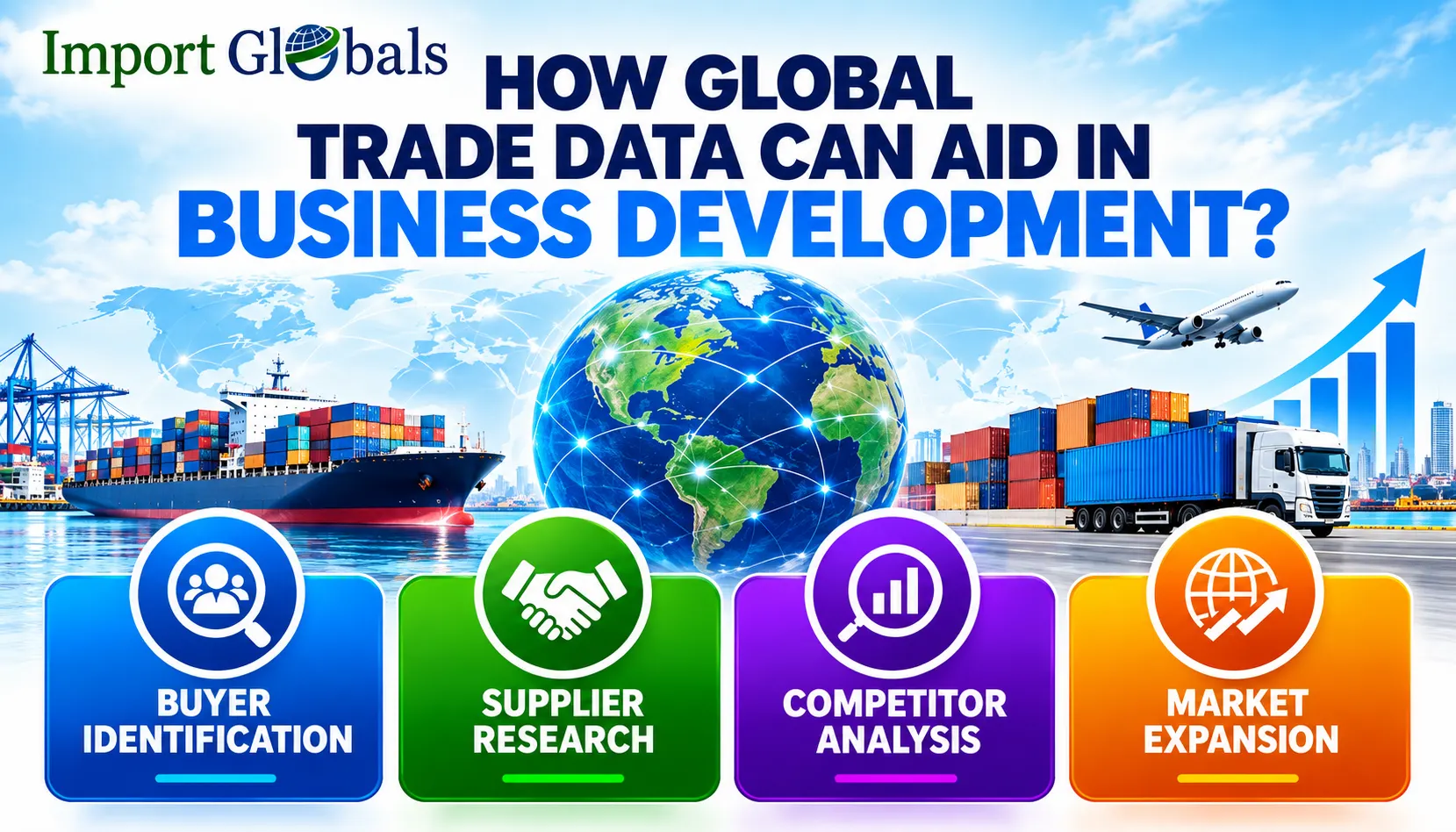
Any firm engaged in foreign commerce needs proper information for the purpose of understanding markets and dealing with various issues.
Global Trade Data might assist businesses in research on:
- International Trade Flows
- Demand for Products
- Countries of Import
- Countries of Export
- Customers
- Providers
- Shipments
- Types of Goods
- HS Codes
- Trade Values
- Trends
When used in combination with artificial intelligence, such data may be properly organized in modelling.
This information may be used by companies for:
- Buyer Identification: Find enterprises having distinct products for sale.
- Supplier Research: Consider foreign suppliers and their deliveries.
- Competitor Analysis: Detailed study of the export processes of the top authorities.
- Market Expansion: Find countries with growing product demand.
The Future of AI and International Trade Data
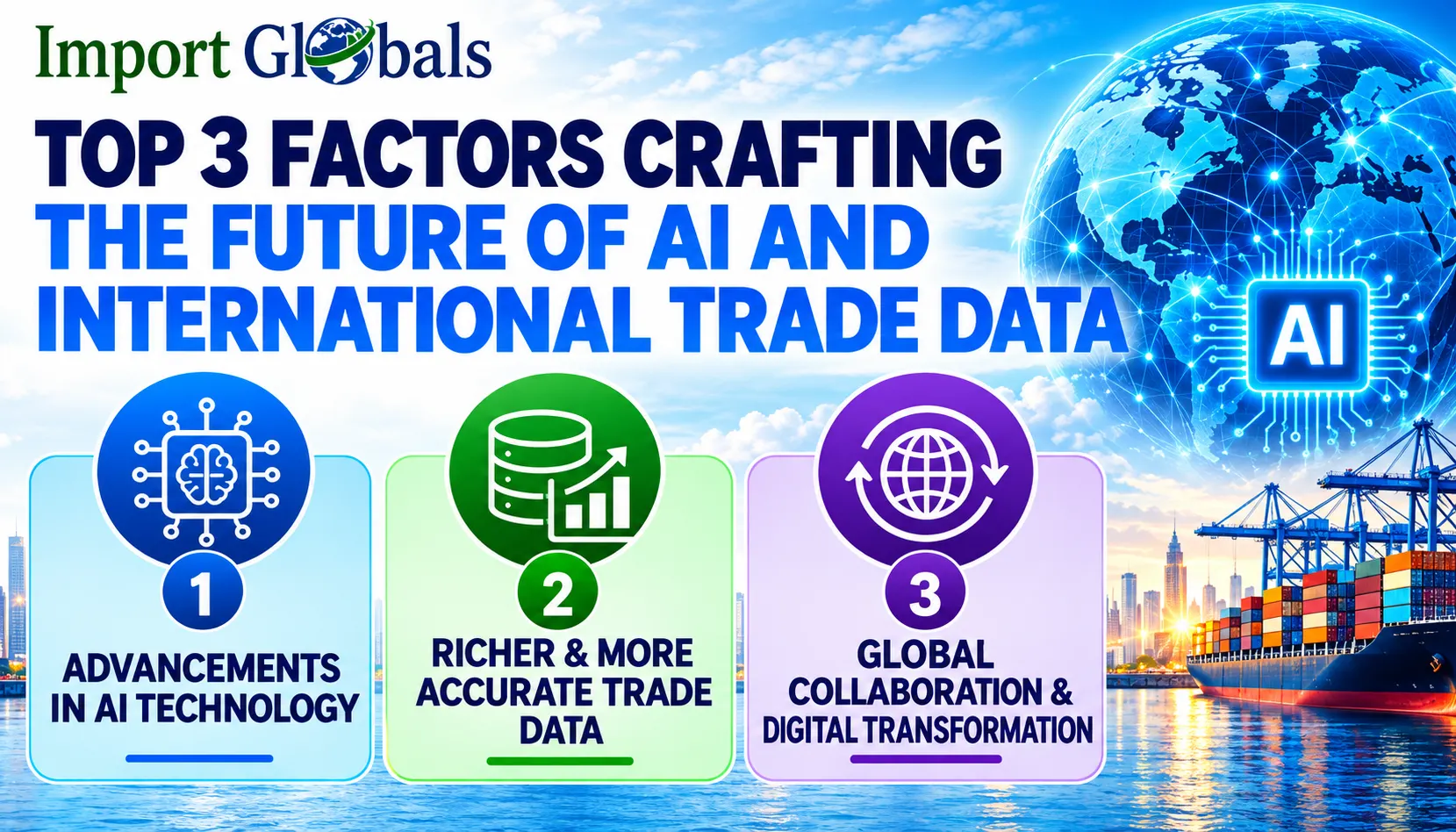
The relationship between artificial intelligence and international trade in the future will be based mostly on data. To this end, AI systems will acquire the ability to process structured and unstructured data at the same time. As a result, an enterprise will have an opportunity to bring together trade statistics and company data, market signals, transport business information, etc.
For instance, a business could look into the following data altogether:
- Demand for a product
- Import statistics
- Activity of buyers
- Activity of suppliers
- Market growth
- Shipping activities
- Price data
- Activities of competitors
Despite the fact that AI will give businesses an opportunity to analyse all these factors at the same time, it should be noted that it does not imply that AI will be capable of predicting international trade with 100 percent accuracy. International trade is still impacted by the economy, consumer demand, commodity prices, regulations, geopolitics, and unforeseen incidents, reported Global Customs Data.
Conclusion
Artificial Intelligence is playing a key role in international business as it changes what is traded by countries and how international trade is managed.
As it is used more widely, there is a greater demand for semiconductors, servers, computing systems, telecom equipment, and other technological goods. In addition, AI is helping companies to evaluate suppliers, buyers, markets, products and supply chains.
For importers or exporters, combining the use of AI and Global Import Data triggers new ways of examining suppliers, demand, and markets. Global Import Export Data allows businesses to study the logistics of products internationally, and Global Trade Data helps with understanding international relations and trade.
In fact, many companies get access to Global Import Export Trade Data, which helps them study international business in detail using AI to process information.
However, successful implementation of AI depends on the quality of data, technology, cybersecurity, and regulatory control. As international business becomes more digitalized and interconnected, the combination of good trade information and AI-based data analysis will remain a promising area of development in 2026 and later.
CTA
Looking for updated information regarding how AI is transforming global imports and exports? Then you have come to the right platform here; Import Globals provides precise information regarding global Import-Export Trade Data, providing detailed information regarding the top emerging regions in the global marketplace. Subscribe to www.importglobals.com or drop an email at info@importglobals.com for detailed information on the role of artificial intelligence in transforming international imports and exports to drive your international business growth.
FAQ’s
Que. How is AI actively transforming global trade?
Ans. AI is transforming global trade by actively helping businesses with detailed acknowledgement of import and export information and identification of buyers and suppliers.
Que. What is global import data?
Ans. Global import data is precise information regarding the products entering the international market. It basically includes product details, HS code, shipment quantities, and values.
Que. What information is available and captured in global trade data?
Ans. Global trade data includes detailed information regarding the importer and exporter details, product description, shipment dates, and quantities.
Que. How does AI help with the analysis of the global import-export data?
Ans. AI helps the business authorities process large data sets by identifying patterns and organizing the trade information.
Que. Does AI help with identification of potential international buyers?
Ans. AI helps with analysis of trade reports and active identification of purchasing patterns, with identification of companies that are relevant to the buyers for specific products.
Que. What are the top challenges of AI in international trade?
Ans. Data quality, cybersecurity, and unequal access to technology are the top challenges of AI in international trade.
Que. How does global import-export data support business growth?
Ans. Global import-export data supports business growth by proper identification of buyers, suppliers, analysis of market demand, and development of effective market expansion strategies.
Que. What information is available in global trade data?
Ans. Global trade data covers importer names, exporter names, shipment date, HS code, product details, quantity, values, pricing information, importing country, and port details.
Que. How frequently is the global trade data updated?
Ans. Global trade data is updated on a monthly basis.
Que. Where can you obtain detailed information on global trade data?
Ans. Visit www.importglobals.com or email info@importglobals.com for detailed updates on global trade data.
You Can Also Visit :-