As the Battle in Iran Continues on, the U.s. Is Getting Closer to Becoming a Net Exporter of Crude Oil. This is a Huge Change in How the World Buys and Sells Energy
- May 04, 2026
As the Battle in Iran Continues on, the U.s. Is Getting Closer to Becoming a Net Exporter of Crude Oil. This is a Huge Change in How the World Buys and Sells Energy
In 2026, the energy market throughout the world changed a lot because to political instability in the Middle East that fouled up oil supply channels and changed how items moved around the world. Because of the long-running crisis in Iran, it is exceedingly hard for crude oil to pass through the Strait of Hormuz, which is one of the most important energy transport routes in the world. As it became harder to get crude oil, people all over the world quickly looked for new places to get it, and the US was a favorite alternative.
Because of this change in demand, the US is almost ready to start sending out more crude oil than it brings in for the first time since World War II. As per USA Import Data by Import Globals, this would change the way energy is traded all around the world in a huge way. The U.S. has become a crucial supplier for Europe and Asia throughout the crisis because it exports more oil from shale fields, has greater refining capacity along the Gulf Coast, and has more tanker journeys.
The event shows how rapidly political conflicts can mess up trade around the world. One of the biggest changes in how energy is traded nowadays is the current dilemma. Because oil prices are going up and down and shipping routes are being disrupted, countries are putting a lot of effort into ensuring sure their energy supply is safe.
The Iran War and What It Did to the World's Oil Supply
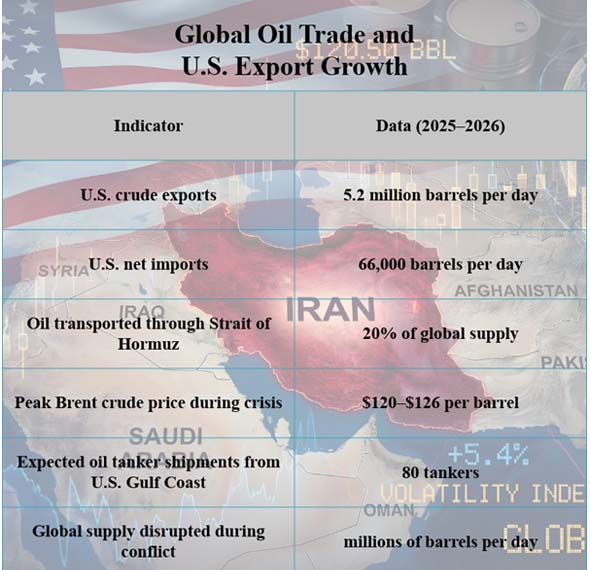
As per Iran Export Data by Import Globals, the war in Iran in 2026 was one of the worst things that had happened to the oil business in the world. The Strait of Hormuz is a small piece of water that connects the Persian Gulf to the rest of the world. It was closed off, and there was a lot of military activity in the vicinity. This stopped a lot of oil and liquefied natural gas from being moved throughout the world. This chokepoint is important for the world's energy supply networks since it moves about 20% of the world's crude oil.
As the unrest got worse, oil output in the Middle East had to fall down a lot. Shipping delays, lack of supplies, and naval blockades made the energy markets very hard to anticipate. Some oil producers in the Gulf had to stop making millions of barrels a day because they couldn't safely transfer it to buyers all over the world.
Based on Germany Import Export Trade Data by Import Globals, people all across the world started looking for other sources of energy because of this dilemma. Japan, South Korea, Germany, France, and the Netherlands are just a few of the European and Asian countries that bought more American crude oil to make up for the lack of oil from the Middle East.
The situation rapidly made oil prices go up. At the height of the interruption, Brent crude cost more over $100 a barrel. This showed how bad the supply difficulties were and how the oil market was becoming more dangerous from a political point of view.
The U.S. has never sent out more oil than it does now. In the last ten years, the United States has quickly become a bigger player in the world's energy markets. The main reasons for this are the shale revolution and better hydraulic fracturing technologies. But things moved much faster after 2026.
As per Europe Import Custom Data by Import Globals, the volume of oil supplied from the U.S. rose up a lot as buyers throughout the world looked for reliable sources. The number of barrels sent from the U.S. reached more over 5.2 million per day, which is the most in a few months. At the same time, the U.S. only brought in 66,000 barrels of oil a day, which meant that the country was very near to being a net exporter of crude oil.
The US was in a similar situation during World War II in the 1940s, when American oil output helped the Allies win the war. Because of this, the current situation marks a historic turning point in the history of energy markets around the world. As the price difference between U.S. West Texas Intermediate (WTI) and Brent oil, the global benchmark, grew, purchasers from other countries were more likely to buy American oil. When Brent is more expensive, refiners in Europe and Asia can save money by buying oil from the U.S. In the Gulf Coast, it drives up exports.
The Gulf Coast's Huge Oil Infrastructure Has Helped the US Quickly Increase Exports
Based on USA Import Trade Analysis by Import Globals, Corpus Christi, Houston, and Louisiana Offshore Oil Port are becoming more and more important stops for ships that carry crude oil throughout the world. These highways, pipelines, storage facilities, and deep-water export terminals that can load supertankers connect shale reserves in the middle of the country to markets all over the world.
The Port of Corpus Christi, which is the main oil export gateway in the U.S., had an unprecedented amount of traffic during the crisis. Over the last ten years, the port has spent a lot of money on its infrastructure. This has made the ship channels bigger and added additional space for storage. This has helped the port keep up with the growing need for exports from buyers in other countries.
As per Europe Exporter Data by Import Globals, Energy companies have also sent dozens of supertankers to bring American crude oil to markets all over the world. Analysts believe that in the next few months, more than 80 oil ships will be loading oil from the Gulf of Mexico. This shows how much more people all throughout the world want energy from the U.S. is getting more and more popular in Asia and Europe.
Because supply routes in the Middle East have been severed, a number of countries have had to look for other sources of energy. Europe has been looking for other sources of energy since things got worse with Russia. Because of this, it has bought more American crude oil. As per Netherlands Import Data by Import Globals, Asian economies that rely on oil from the Middle East have also begun to get it from the US. Japan, South Korea, and a few Southeast Asian countries have signed longer-term contracts with U.S. exporters for commodities.
This change is part of a bigger shift in how trade works around the world. Not just producers from the Middle East, but also those from North America, Latin America, and Africa are becoming part of supply chains in more and more countries. This event also shows how important it is to keep energy safe. To defend themselves from geopolitical crises, governments are putting dependable suppliers and a variety of import sources at the top of their lists of things to do.
The Market is Unstable and Oil Prices Are Going Up and Down
Based on France Import Data by Import Globals, the oil market is still quite unpredictable because of the conflict that is still going on and the unclear shipping circumstances. But increased supplies from the U.S. have helped the supply stay steady around the world.
When the crisis got worse at initially, the price of oil shot through the ceiling. The price of genuine oil shot increased to $120 to $150 a barrel in some locations. But futures markets have changed because investors are attempting to figure out what might happen with ceasefire deals and diplomatic solutions.
Traders, refiners, and governments have had a hard time keeping track of energy costs since they change so often. Shipping costs have gone up because insurance costs have gone up and shipping routes have been longer to avoid areas where there is fighting. The situation shows how volatile the energy markets are around the world. Things that happen in the world can quickly change prices, supply chains, and the economy.
Issues that are Stopping U.S. Exports From Growing Even Further
Even though exports are going up, the US has a number of structural problems that could slow down export growth in the near future. One big worry is that the infrastructure isn't strong enough to manage the strain. As demand rises, export ports, pipelines, and tankers are getting close to their limits. It costs a lot of money, and the government has to give authorization for these buildings to be bigger.
As per Europe Import Export Trade Analysis by Import Globals, another problem is how the home supply works. Even while shale output in the U.S. is still strong, producers need to find a solution to meet the needs of both the U.S. and other nations for Import Globals' statistics on imports to the US shows that people are also worried about how things are moved. There aren't many deep-water facilities or unique loading places that big oil tankers can use. Shipping charges may go up if there are traffic jams at important ports because more goods are being shipped.
The Global Energy Trade is Changing
The events of 2026 show that geopolitical problems can speed up developments that have been happening in global trade for a long time. In the past, the US was one of the biggest importers of energy in the world. Right now, it is a major energy exporter that could have an effect on energy costs around the world.
This transformation is a hint of bigger changes in the world's energy system. Based on USA Import Export Global Data by Import Globals, the global energy market is changing because more shale oil is being produced, more LNG is being exported, and more money is being put into renewable energy.
At the same time, traditional energy producers in the Middle East still face geopolitical concerns that might make it harder for investments and supply lines to move. During the crisis, many countries have found it more and more important to diversify their energy sources, build up their strategic reserves, and put money into alternative energies.
The Future of the World's Energy Markets
Politics and diplomacy in the Middle East will have a big impact on the future of energy markets around the world.If things settle down and shipping lanes open up again, oil prices may go back to where they were before the crisis, and trade throughout the world may pick up where it left off. But if the US keeps having problems, it may have to sell even more energy to foreign countries. Energy experts also think that governments will put more money into hydrogen, renewable energy, and other fuels at a faster rate to reduce their reliance on crude supply lines that are vulnerable to political pressures. The events of 2026 have shown that the world's energy markets are getting ready for a new time of strategic strife and instability, no matter what happens.
Final Thoughts
The Iran War and the closing of the Strait of Hormuz have caused one of the biggest changes in the global oil trade in decades. The US quickly increased its crude oil production to satisfy global demand since traditional supply channels were becoming less reliable. Since World War II, this is the closest the US has been to being a net exporter of oil. Exports are now more than five million barrels per day, while net imports are at their lowest levels ever. This change shows that the amount of energy the US produces is becoming more important in global markets. The article also shows how wars between countries hurt the economy, trade, and supply chains. Because the world is currently in an uncertain energy condition, the events of 2026 are likely to have a big effect on energy policy and business for a long time. Import Globals is a leading data provider of USA Import Export Trade Data.
FAQs
Que. Why is the US about to send out more crude oil than it brings in?
Ans. Because of the growing worldwide demand for American oil and the broken supply systems in the Middle East, the United States has been exporting more oil than it buys.
Que. How did the unrest in Iran affect the world's oil trade?
Ans. The battle made it hard for ships to get through the Strait of Hormuz, which is an important route for moving crude oil across the world. Because of this, many countries looked for other suppliers.
Que. Where in the United States is there more oil coming in?
Ans. Since the crisis started, countries in Europe and Asia, like Japan, South Korea, Germany, and France, have been buying more U.S. crude oil.
Que. Can the United States continue to be a net oil exporter for a long time?
Ans. This might happen if the infrastructure for exporting keeps getting better and shale production stays high. The result will depend on what the US needs for energy and what other countries do, though.
Que. Where to get detailed USA Export Import Global Trade Data?
Ans. Visit www.importglobals.com.