The G20's Plan to Keep Food Safe in 2026 During the Global Fertilizer Trade Crisis
- Apr 30, 2026
The G20's Plan to Keep Food Safe in 2026 During the Global Fertilizer Trade Crisis
In general, fertilizers play an extremely significant role in agriculture on a global scale since they promote plant growth and maintain food chains. Farmers require fertilizers that include three essential elements, namely nitrogen, phosphorus, and potassium, for cultivating more produce and covering increasing demands for food.
However, the current state of the global fertilizer market is rather challenging due to increasing energy prices, geopolitics, and shortage issues in 2026.
As per USA Import Data by Import Globals, the United States is leading a new G20 effort to make sure that everyone in the globe can access fertilizers. This is one of the biggest items in trade news right now. This is supposed to stop food shortages and make farming trade more stable. This initiative has been launched against the backdrop of increasing concerns among many people that the ongoing turmoil in the Middle East may exacerbate issues related to food poverty on the international level through disrupting food production and availability.
This initiative is intended as part of an overall campaign aimed at raising awareness regarding fertilizers, and specifically their role not only as tools for agricultural purposes, but also as an essential commodity which is important from the viewpoint of economic implications, international trade, and food security globally. The article focuses on issues related to the present condition of the fertilizer market, possible actions to be undertaken by the G20 countries, and predictions regarding agricultural trade internationally up to 2025-2026.
The Growing Importance of Fertilizer in Global Trade
According to the USA Export Data provided by Import Globals, fertilizers are essential for farmers as fertilizers return important nutrients to the land and allow plants to grow faster. If they do not receive enough fertilizers, it could mean disaster for the world's food supply and plants could be at risk of dying off.
The global market for fertilizers has expanded significantly over the last ten years and has emerged as a key factor in farming on a global level, since there is more demand for food and less farmland being available for production and the human population is increasing steadily. The fertilizer business is expected to reach $181 billion in 2025 according to market predictions. Over the next ten years the business should expand considerably as more emphasis is placed on food security and the production of agriculture increase due to government actions.
Purchasers are now buying increasing amounts of fertilizers from all regions of the world and it was expected that by 2025 demand for fertilizers would exceed 205 million tons due to increased agricultural productivity at a fast rate throughout the world. The fertilizer market is quite vulnerable to problems relating to trade, energy costs, political issues and armed conflict, according to USA Import Export Trade Data (Import Globals). Production of fertilizer is labor-intensive, using large amounts of natural gas and minerals.
Fertilizer Supply Chains Are Being Messed Up by Geopolitical Tensions
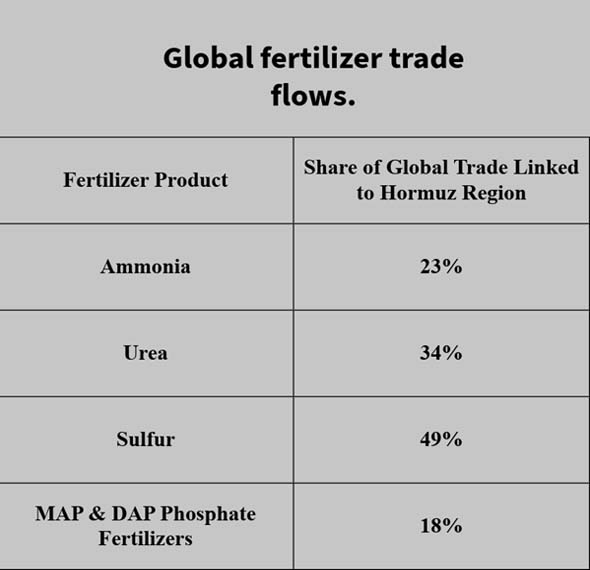
The tension between Iran and the Middle East's shipping routes has also made a big difference in the fertilizer industry. The Strait of Hormuz is a really busy shipping lane on the world, used for export of oil and fertilizer, but it's also vulnerable.
According to the Iran Import Data by Import Globals, many Persian Gulf countries import both the fertilizer and the materials it's made from. So large quantities of ammonia, urea and sulfur pass through the Strait of Hormuz every year.
There was a major decline in the shipping of the strait in the 2026 conflict. This in turn made it impossible for the demand and supply, and global prices of fertilizer increased significantly, in some cases traffic of the tank vessels significantly decreased due to safety concerns by shipping companies. This disruption quickly spread to agricultural markets all across the world, harming farmers on several continents.
How Higher Fertilizer Prices Effect Farmers
Based on USA Import Trade Analysis by Import Globals, in many regions of the world, the price of fertilizer has gone up a lot since the trade in fertilizer has been interrupted. Urea and other nitrogen fertilizers have been struck the worst.
In some places, prices have nearly doubled since the recession started. For example, the price of urea jumped from roughly $500 per ton before the war to almost $1,000 per ton. A number of farmers are revising their planting plans since fertilizer prices have gone up so much.
For instance, wheat farmers in Argentina have reported that rising fertilizer prices might lead them to grow fewer crops. According to exporter data from Import Globals, farmers are switching to oats or barley, which require less fertilizer. The project aims to encourage governments, banks, and trade groups worldwide to work together. These rising prices are creating a major challenge for farmers who depend on fertilizers to grow their crops. This change in cereal cultivation could greatly affect the global supply of grain and the trade of agricultural products.
The G20's Strategy to Ensure That Individuals Have Access to Fertilizer
Based on USA Importer Data by Import Globals, the United States has taken the lead in a new initiative within the Group of Twenty (G20) to ensure that there is sufficient fertilizer for all due to the issue. According to U.S. officials, the availability of sufficient fertilizer is essential for the prevention of a significant food crisis and the continuation of global food production. If done well, the G20 plan might help maintain fertilizer markets steady around the world and prevents agricultural trade from getting messed up again.
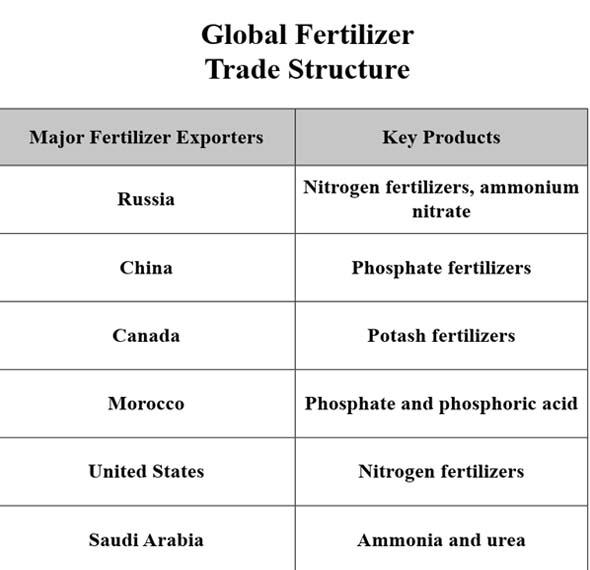
These countries account for almost fifty percent of the world's fertilizer exports. This illustrates how few places have access to it. There are just a few places that make fertilizer. If there are difficulties with the supply in any of these places, it can quickly disrupt markets all over the world.
The idea suggests cooperation among leading countries and international financial institutions such as The World Bank and The International Monetary Fund. Developing countries facing problems with importing fertilizer will be provided with money by these organizations. The issue of logistical problems blocking importing fertilizer in need countries is dealt with in USA Import Shipment Data by Import Globals. Creating shipping lines of humanitarian purpose may become a solution for secure importing fertilizer on a dangerous sea way.
The Trade of Food and Fertilizer Security
The fertilizer problem has highlighted how tightly linked agricultural inputs are to food security around the world. Your crops could not grow as well if you don't use enough fertilizer. Experts worry that long-term challenges with getting fertilizer could make food insecurity worse around the world. Economic forecasts say that if fertilizer shortages don't resolve, up to 45 million more people could not have enough food.
Based on USA Import Export Trade Analysis by Import Globals, this risk is especially high in new places like Sub-Saharan Africa, where farming is already having a hard time becoming productive. In poor countries, a lot of governments aid farmers by giving them money to buy fertilizer. But rising prices and a scarcity of supplies have made it hard for national budgets to work, so officials are looking for support from other countries.
Changes in the Markets for Commodities and Fertilizers
Other global commodities markets are also going through substantial shifts at the same time as the fertilizer crisis The supply chains for agriculture worldwide are even more stressed as a result of the increasing prices of electricity and fertilizer. For example, anxieties all around the world have caused energy prices to rise a lot.
As per Europe Export Import Global Trade Data by Import Globals, the cost of fertilizer is directly impacted by the fact that natural gas is a critical component in its production. In the beginning of 2026, fertilizer prices increased by approximately 26%, as indicated by data from the commodity market.This was due to the difficulty in obtaining the products and the escalating cost of their production.
The Future of Fertilizer Trade and Supply Chains
Even though things are awful right now, the planet will require more fertilizer in the coming decades. Farming that is more productive will be needed to feed more people. Industry experts say that the global fertilizer market might be worth more than $260 billion by the early 2030s. This is because more crops are being grown and more fertilizer is needed.
The Crisis Has Also Revealed That Supply Chains Need to Be Stronger
Here are some suggestions that people are talking about to make fertilizer trade systems better:
- Getting fertilizer from more than one source
- Investing in manufacturing fertilizer at home
- Improving the infrastructure for logistics and transportation
- Finding innovative fertilizers and farming methods that don't harm the environment
These methods could help make farming around the world more resilient during political changes by reducing reliance on a few key exporting areas.
Final thoughts
The fertilizer supply problem of 2026 shows how politics, farming, and business are all interrelated. Fertilizers are very important for the food chain around the world. Their availability problems can quickly cause problems in the economy and farming.
The United States backs the G20 proposal, which is a big step toward fixing the biggest problems in the fertilizer market. Policymakers want to stop an even worse food security catastrophe by working together on a global basis and making sure that fertilizer is always available.
On the other hand, the current crisis shows that there are even bigger problems in the global fertilizer trade. Too many manufacturers in one place, reliance on important transportation routes, and vulnerability to energy prices all contribute to market instability.
As the globe deals with climate change and political problems, it will be important to keep building strong fertilizer supply chains to protect food and keep the trade in agricultural goods stable. Import Globals is a leading data provider of USA Import Export Trade Data.
FAQs
Que. What does fertilizer do for businesses and farms around the world?
Ans. Fertilizers give plants important minerals like nitrogen, phosphorous, and potassium that help them grow and make extra food for people all around the world.
Que. What was the cause of the fertilizer supply concerns in 2026?
Ans. The supply of fertilizers and global supply chains are significantly affected by tensions between Middle Eastern countries and issues with shipping routes such as the Strait of Hormuz.
Que. What is the objective of the G20 fertilizer project?
Ans. The objective of the project is to encourage countries to collaborate in order to ensure the availability of fertilizer, maintain the stability of agricultural markets, and prevent the emergence of food shortages worldwide.
Que. Which countries export the most fertilizer to other countries?
Ans. Collectively, they constitute a significant portion of the global fertilizer commerce.Some of the largest exporters of fertilizer are the United States, China, Canada, Morocco, Saudi Arabia, and Russia.
Que. Where to get detailed USA Import Export Global Data?
Ans. Visit www.importglobals.com.