Brazil Export Statistics 2026: Significant Goods and Worldwide Markets
- Sep 12, 2026
Brazil Export Statistics 2026: Significant Goods and Worldwide Markets
Brazil is one of the world's most important exporting countries mainly because of its strong agricultural base, abundant natural resources, and strong international trade connections. In 2026, it has continued to show the success of commodities in foreign exchange operations, as well as confirming the opening of opportunities in the production of processed food, industrial products, airplanes, metallurgy, packing paper, coffee, ostrich meat, etc.
The most recent trade statistics on Brazil Export Data show that Brazil’s export dynamics were stable from January to August 2026. Exports reached approximately US$250.86 billion in January-August (up 10.3%), while imports accounted for US$195.54 billion (up 6.1%). As a result, Brazil maintained a good trade surplus of approximately US$55.32 billion.
With such performance, Brazil has achieved good results in the field of exports in the global market. Nevertheless, the export environment has also changed. China is one of the major countries with a significant demand for Brazilian exports. The US is one of the countries where the situation is more complicated due to tariff barriers, says Brazil Shipment Data.
Analysis of Brazil Export Data 2026
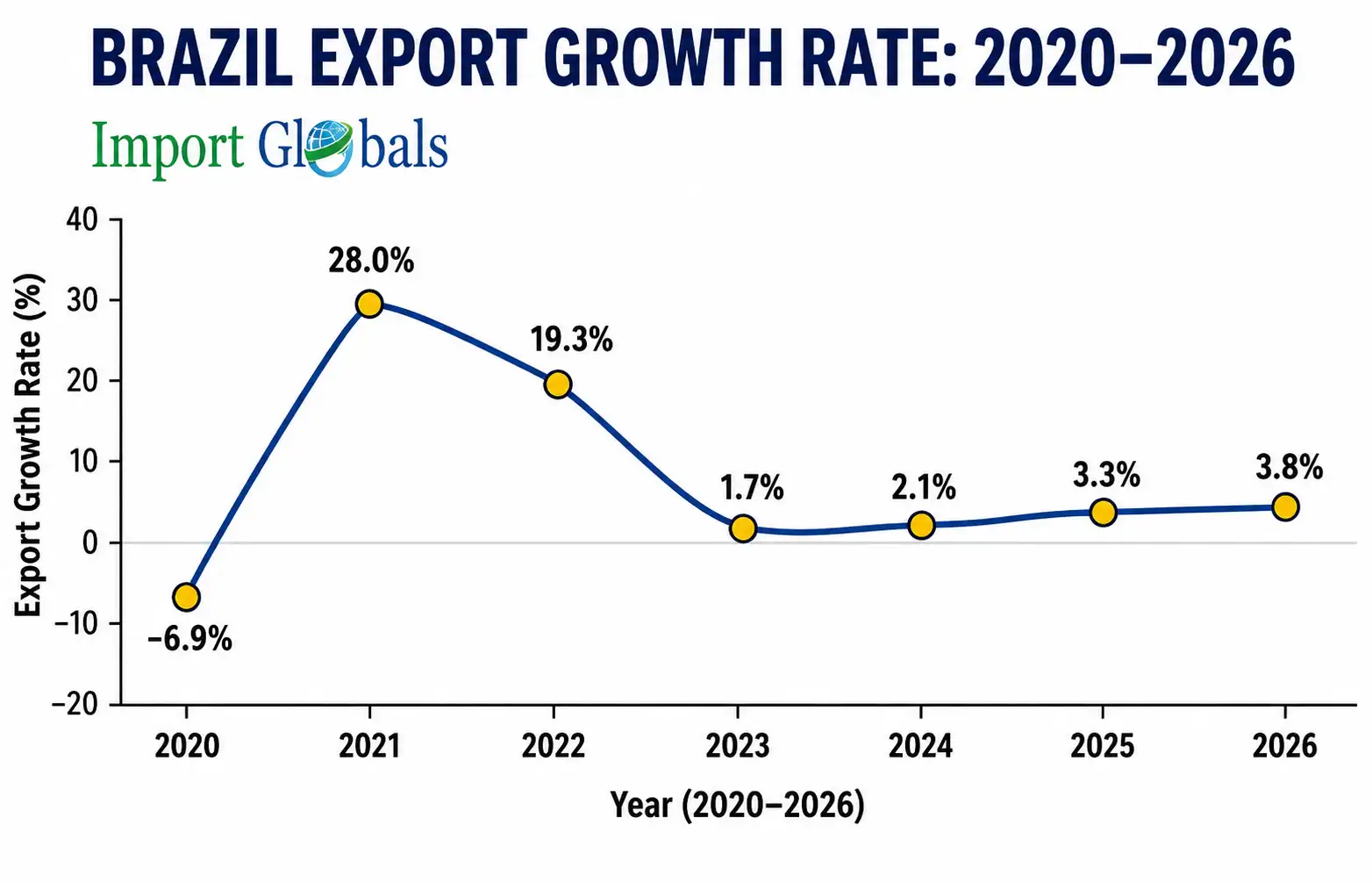
Starting in 2026, Brazil made solid exports after the previous record-breaking year of 2025. As reported by Brazil Customs Data, Brazilian agribusiness exports totalled around $169 million in 2025, and all Brazilian exports amounted to $348.3 billion.
More details are provided by the governmental trade data analysed for January-June, indicating a healthy development for every category of Brazilian export activity:
- Agricultural: $42.65 billion, the increase marked as 9.2%
- Extractive industry: $46.43 billion, corresponding to an increase of 24.2%
- Manufacturing: 94.70 billion, reflecting an increase of 7.1%
The extractive industry's successful performance confirms not only the importance of petroleum and material exports but also the agriculture industry as a major pillar of Brazil's competitiveness for global food markets.
As of August, total exports reached $250.86 billion; thus, Brazil is reporting massive growth in its sales, reported Brazil Import Data.
Leading Products in Brazil's Exports in 2026
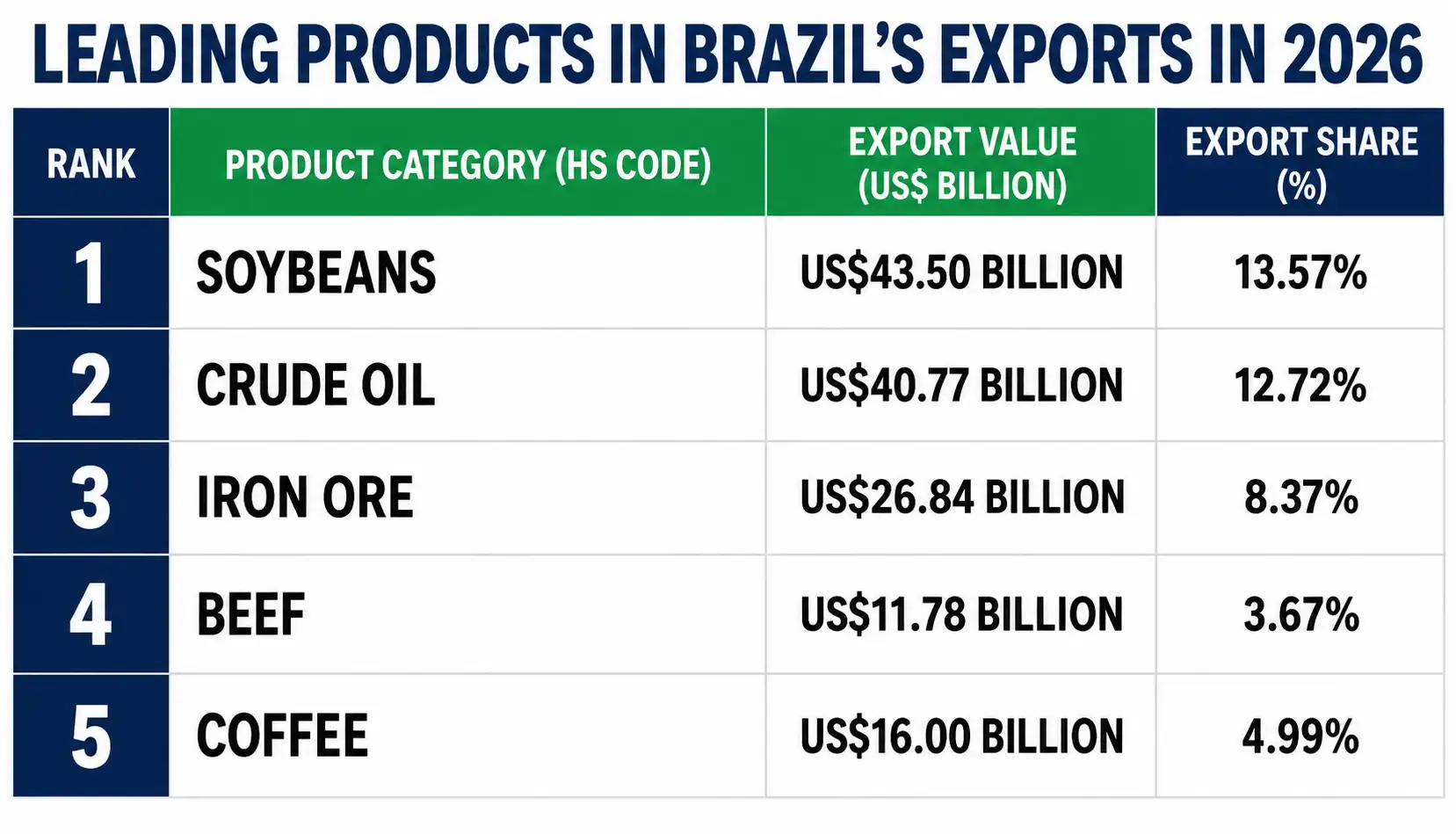
Compared with many economies based on commodities, the export portfolio of Brazil is more diversified. However, a few goods dominate Brazil's foreign trade turnover.
1. Soybeans
Soybeans are among the top exported products of Brazil. The volume of the specific product is at a staggering rate of 108.2 million tonnes, holding a valuation of 43.5 billion US dollars. China is one of the top sectors driving the shipment rate, as per Brazil Trade Data. The specific trade represents the extension of the traded variants beyond limited visibility, as per global compliance.
2. Crude oil
Crude oil is a significant export commodity for Brazil. The oil production from Brazil offshore, particularly from the pre-salt oil fields, has enabled Brazil to increase its ability to export energy. For example, during the first half of 2026, crude Petroleum and related products were among the top contributors to Brazil’s export performance.
According to the Brazil Shipments Customs Data, crude petroleum exports increased by about 28.9% in the January 2026-June 2026 period. This is significant, since Brazil is a notable agricultural exporter and remains a key energy exporter.
3. Iron Ore
Iron ore stayed among the top Brazilian exports during 2026. In the first half of the year, the export of this commodity rose by some 5.2% in comparison with the first half of 2025. China is of great importance to Brazil in dealing with iron ore due to its powerful steel industry.
This, in turn, means that Brazilian ore exports are highly dependent on Chinese industry needs. This means that Brazilian export results depend on changes in construction activity, investments in infrastructure, steel production, and environmental and political measures taken in China.
4. Beef
Brazil Customs Shipment Data reported that the country holds immense weight as one of the top countries in terms of exporting beef products.
Traditionally, the demand for beef from China has played an instrumental role in the development of these exports, while other major markets include the Middle East, Southeast Asia, and North America.
The year 2026 shows us a different side of the commodity export system and makes it clear why exporters should be diligent about figuring out any regulatory and trade-policy threats.
The month of September 2026 revealed that the European Union has stopped imports of animal products from Brazil, which is responsible for the reduction of an estimated US$1.84 billion in annual exports, particularly in terms of beef and poultry products. The above-mentioned is an indication of the necessity of complying with all food-safety needs and requirements, traceability, certification, and market diversion.
5. Coffee
Coffee also matters in Brazil, as it is one of the main sources of coffee, and in fact, exports rose significantly, amounting to US$16 billion in revenue in 2025. Strong prices were responsible for such success, says Brazil Trade Data. Brazilian coffee industry comprises both green coffee and processed products and is thus able to provide opportunities along the international supply chain.
While official statistics for 2026 claim that coffee exports of non-roasted varieties decreased in volume during 2026, the overall power/importance of coffee should not be underestimated.
The ability to obtain Brazilian coffee from different origins, varieties, processing methods, and quality grades means that foreign importers will be able to conduct business effectively.
Industries Driving Brazil’s Exports in 2026
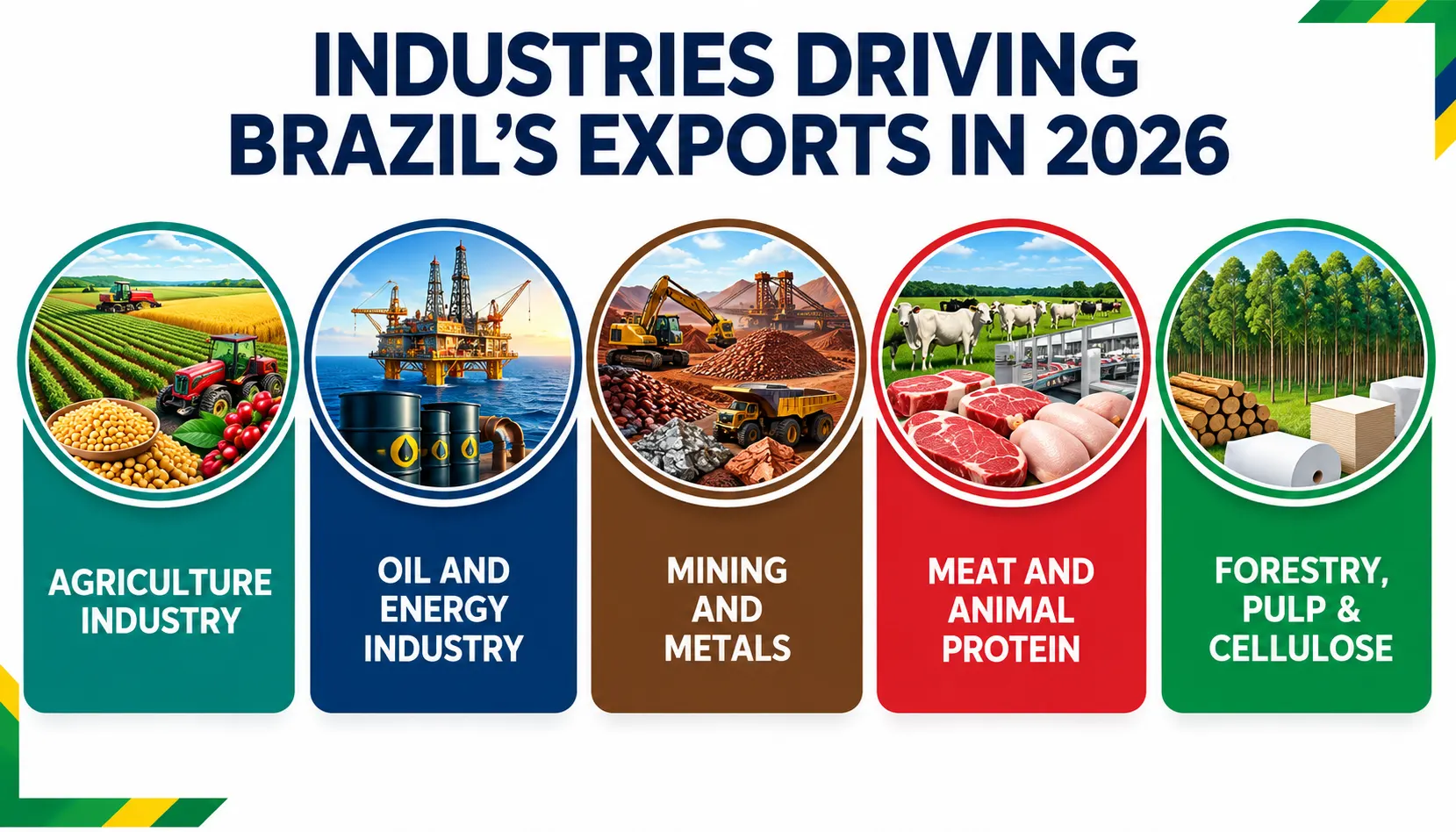
- Agriculture industry - The agriculture industry is a significant contributor to Brazil's economic growth rate. Brazil Customs Trade Data reported that the specific industry has recorded a valuation of 57.85 billion US dollars in revenue contribution to the overall export momentum.
- Oil and Energy industry - Crude petroleum export revenues reached approximately US$36.86 billion during January–August 2026, which is a growth of 23.8%. Brazil's offshore production, especially due to production at pre-salt fields, allows Brazil to firmly establish itself as a major supplier of energy resources in the world.
- Mining and Metals - The mining sector in Brazil continuously earns large amounts of foreign revenue through iron ore, copper, precious metals, and various other minerals. The earnings from extractive production in the period of January-August 2026 are US$62.14 billion, which is 19.6% more than in the previous period. Among the products covered by exports of extractive industries, copper is remarkable, as its sales have experienced a significant growth of 80.6%, while iron ore is a traditional product that is widely in demand in the world manufacturing industry, reported Brazil Shipment Trade Data.
- Meat and Animal Protein - The livestock and meat processing sector in Brazil has kept its competitiveness. Beef as well as poultry meat is among the most significant export goods of Brazil. Beef exports in the first eight months of 2026 were US$11.74 billion (22.3% growth, similar to the previous period); poultry exports grew by 22.4%. The strong presence of Brazil in the global protein export market is determined by the high demand for food products from various countries.
- Forestry, Pulp & Cellulose - The forestry sector is a considerable part of Brazil’s income from exports. The government earned US$ 7.10 billion from cellulose in January–August 2026. The important driving forces behind the industry include eucalyptus plantations, wood processing plants, and logistics services for delivery and distribution of products.
Emerging Markets for Brazil Exports
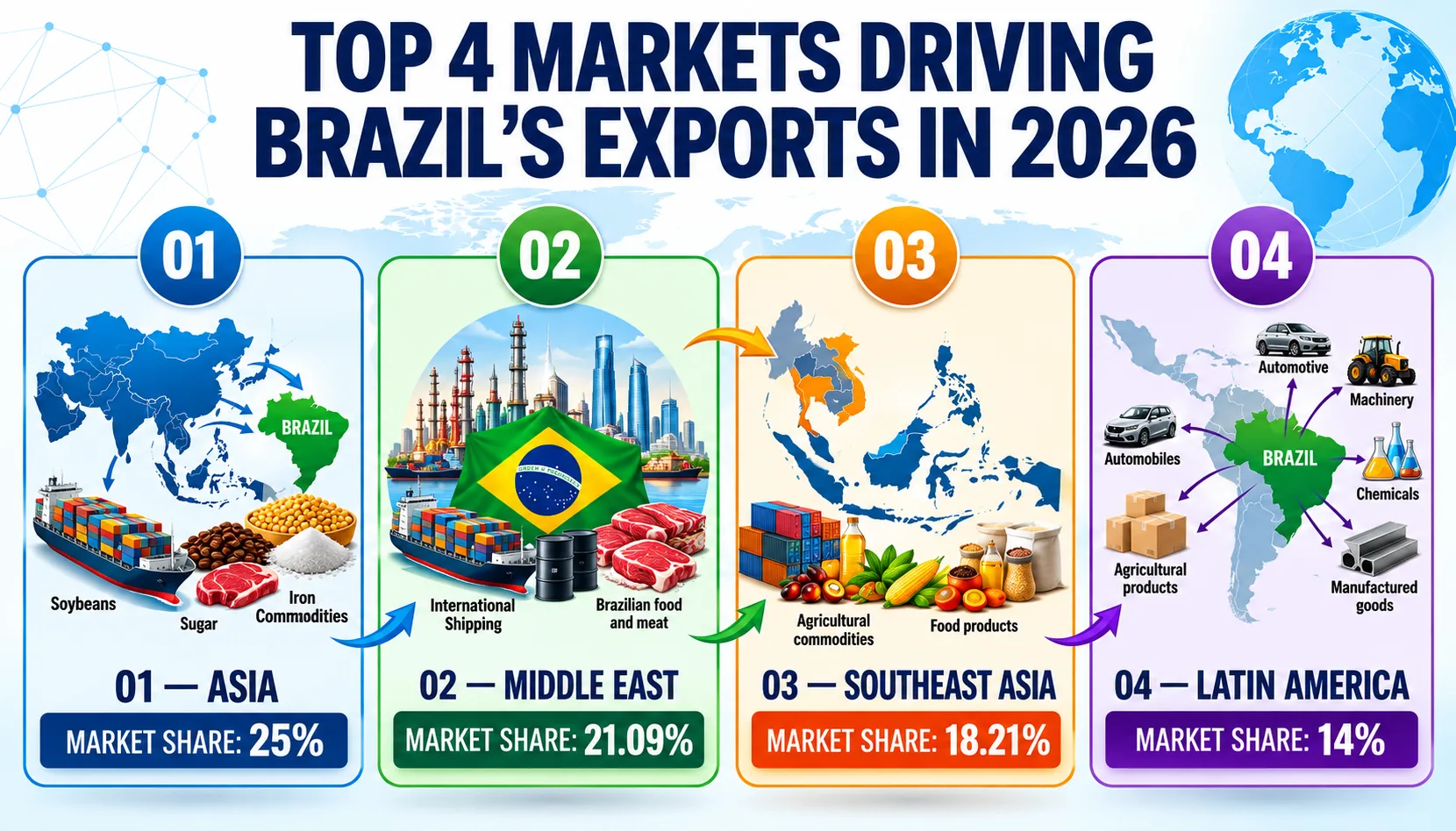
Brazil has seen some remarkable changes in the export market, with the discovery of new markets being at the top of the list. Brazilian exporters of agricultural products have made their way to nations such as Pakistan, Argentina, the Philippines, Bangladesh, the UK, and Mexico, where their exports soared. For instance, in 2025, Brazilian agricultural exports to Pakistan had gone up by a whopping 122%, compared to 29% with Argentina.
Trading in alternative markets like these proves to be a sound strategy, reported Brazil Import Trade Data. That would allow Brazilian exporters not to depend on markets such as China, the US, or the EU anymore and to penetrate.
- Asia - Asia, is becoming a centre of opportunities for Brazilian soybeans, meat, coffee, sugar, and processed foods due to high population growth, urbanization, and rising demand for food.
- Middle East - The Middle East historically has been an important destination for halal-certified beef from Brazil.
- Southeast Asia - Southeast Asia, which includes countries such as Indonesia, Vietnam, the Philippines, Malaysia, and Thailand, has a lot in store for agricultural commodities and food products.
- Latin America - Latin America offers opportunities for trading cars, machinery, ready-made food, chemicals, agricultural products, and manufactured goods at reasonable prices.
Challenges Affecting Brazil's Export Sector
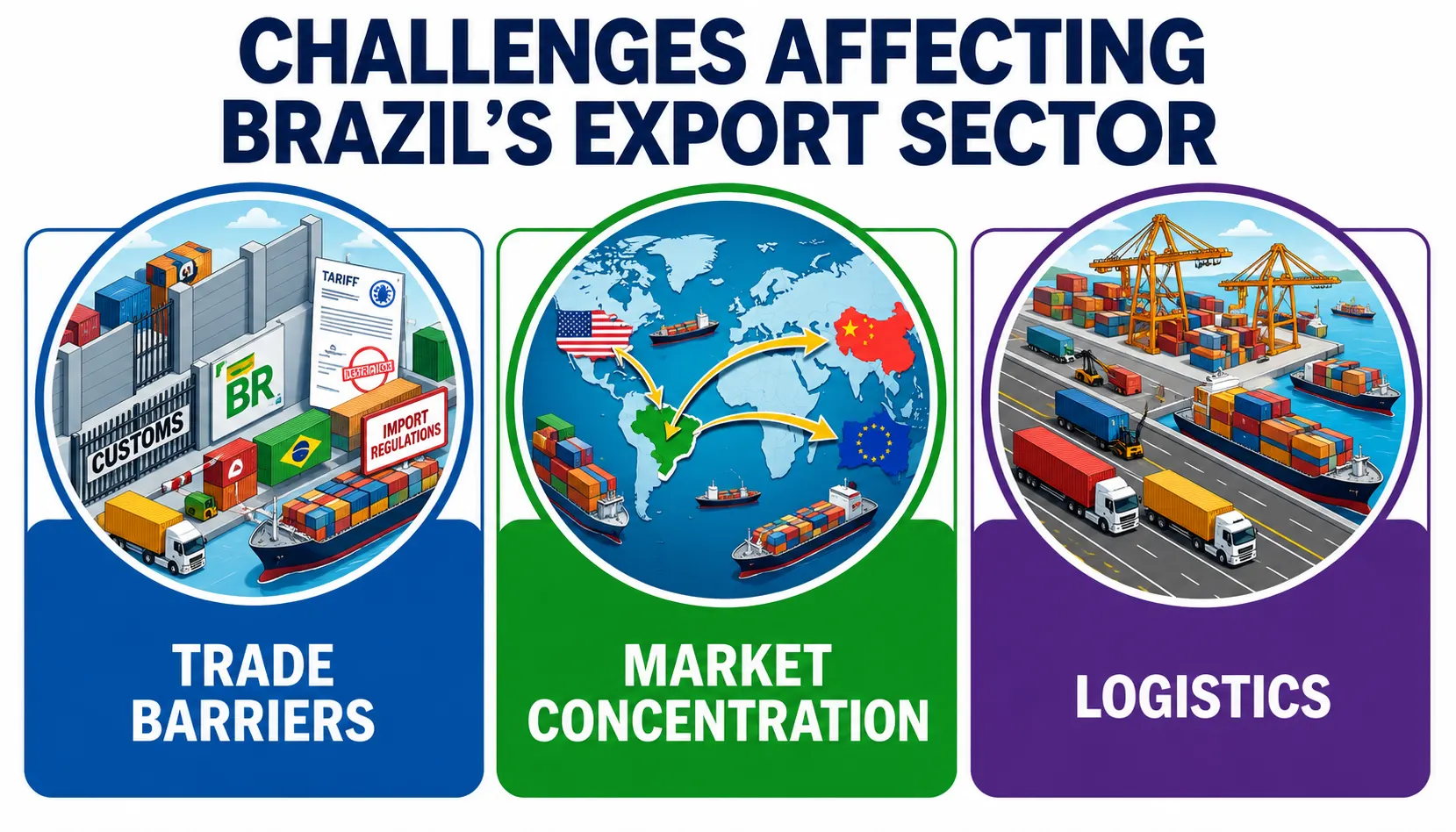
Exporters, although engaged in a booming business, are not without their share of challenges.
Trade Barriers
Trade policies and tariff changes can drastically affect Brazilian products' competitiveness, with the U.S. being the most impacted, reported Brazil Import Customs Data.
Market Concentration
China is an essential customer of many Brazilian export products. In this way, diversification of markets becomes essential.
Logistics
Brazil has vast territory. This fact makes logistics an important issue for exporters, especially those working in the regions away from the seaports.
Main Opportunities for Importers in 2026
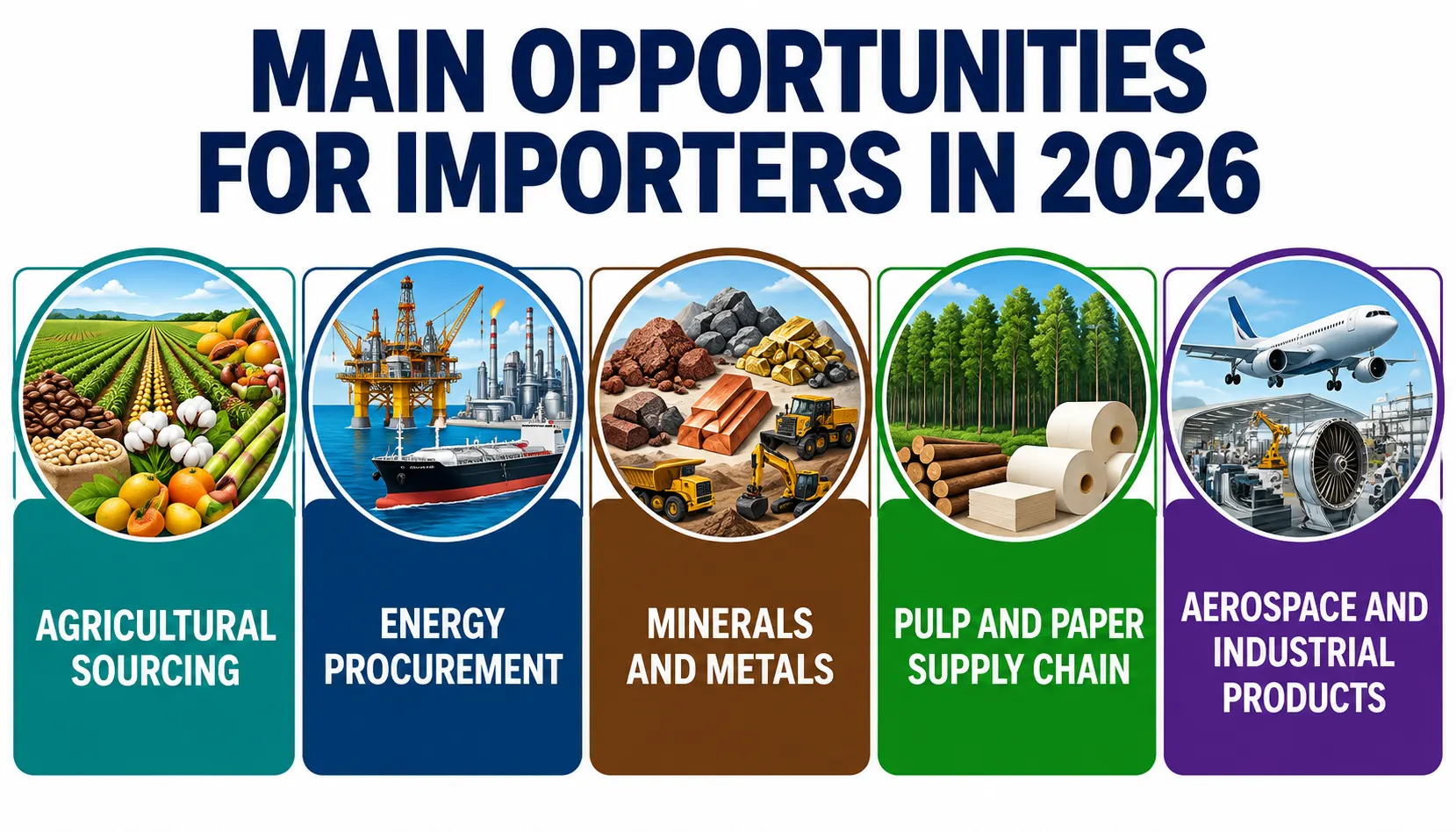
The Brazilian export market has a number of prospects for international buyers.
Agricultural Sourcing
Brazil’s large production capacity allows buyers to source significant amounts of commodities such as soybeans, coffee, meat, sugar, cotton, fruits, etc.
Energy Procurement
The increase in crude oil production gives an opportunity for foreign energy buyers to work with new suppliers.
Minerals and Metals
The export of iron ore, copper, gold, and other minerals gives opportunities for industrial buyers and manufacturers.
Pulp and Paper Supply Chain
Brazil’s forestry industry ensures competitive supply of cellulose for the global paper and packaging industries.
Aerospace and Industrial Products
Brazil is not just a raw commodities exporter. Brazil's ability to manufacture aircraft and industrial products allows it to secure high-value transactions, reported Brazil Trade Statistics.
Future Trade Outlook of Brazil
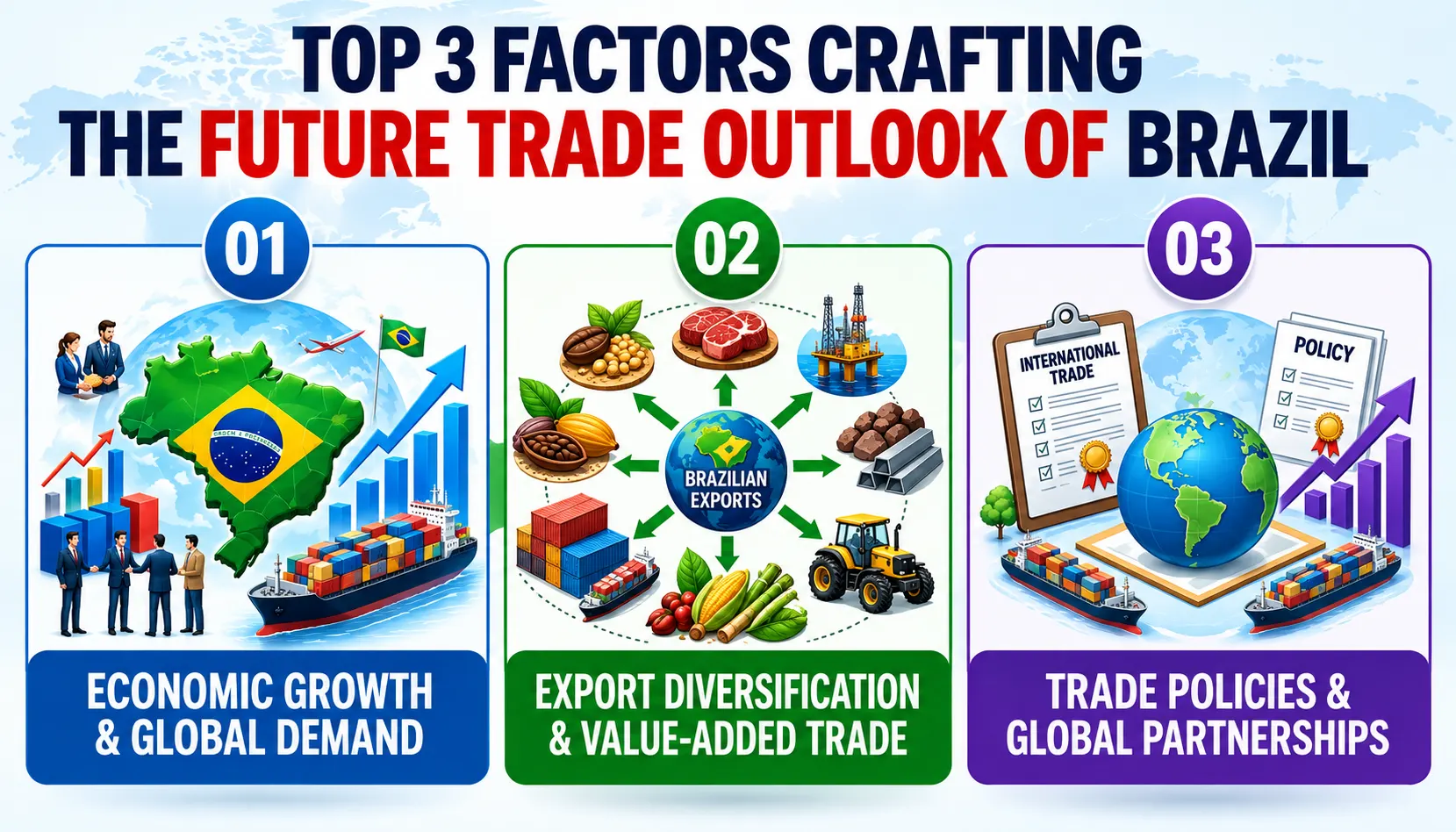
The future trade outlook of Brazil will be strong, with an increasing influence from various geopolitical tensions, commodity prices, climate conditions, and the changing global supply chain. Brazilian exports are at a staggering rate of 250 billion U.S. dollars in 2025. The industries have grown by 19.6%, with agriculture up 9.5%. The agriculture sector is expected to maintain its position as one of the most important export engines. Soybeans, meat, coffee, cotton, sugar, and animal feed products are continuously benefiting from the large-scale production capacity.
The energy and mining sectors have been offering significant future potential. Crude petroleum exports have grown by a rate of 23.8%. Brazilian Customs Shipment Data reported that the European Union's September 2026 suspension will illustrate the sanitary and compliance requirements for effective market access.
Conclusion
Brazil is right now establishing itself as one of the most important suppliers of agricultural commodities. The huge natural resource base, productive agriculture sector, offshore oil reserves, and mining capabilities are giving the country a powerful foundation for international trade. The promising sectors will be moving beyond dependence on a limited number of commodities and markets. The greater value addition, diversification, and market expansion will help Brazilian companies build a more resilient global supply chain.
CTA
Looking for the latest expansion of strategies regarding Brazil's overall trade market? Then you have landed on the right platform. Import Globals holds special expertise in providing detailed information on Brazil's latest trade activities. The datasets highlighted on the platform support the transformation of trade information into actual trade intelligence, promoting market strategies. Subscribe to www.importglobals.com or drop an email at info@importglobals.com for detailed updates on Brazil's export activities to drive your international business growth.
FAQ’s
Que. What are the top exported products of Brazil in 2026?
Ans. Soybeans, crude petroleum, and iron ore are the top exported products of Brazil in 2026.
Que. What is the export trade value of Brazil in 2026?
Ans. The export trade value of Brazil in 2026 is 250 billion U.S. dollars.
Que. What is Brazil's largest export market?
Ans. China is one of the largest export markets of Brazil.
Que. Why are soybeans an important part of Brazil's trade?
Ans. Brazil's soybean trade is an important part of the global market because of the extensive agricultural land, which promotes productivity and favourable growing conditions.
Que. What is the role of the United States in Brazilian exports?
Ans. The United States is a major destination for Brazilian exports mainly because of the agricultural, industrial, steel, and aerospace trade regulations.
Que. Name the industry that has the strongest export potential in Brazil.
Ans. Agribusiness is one of the industries that holds the strongest potential in Brazil.
Que. How does Brazil import-export data support business growth?
Ans. Brazil import-export data support business growth via proper identification of buyers, suppliers, analysis of market demand, and development of effective market expansion strategies.
Que. What information is available in Brazil trade data?
Ans. Brazil trade data covers importer names, exporter names, shipment dates, HS code, product details, quantity, values, pricing information, origin country, importing country, and port details.
Que. How frequently is the Brazil trade data updated?
Ans. Brazil trade data is updated on a monthly basis.
Que. Where can you obtain detailed information on Brazil trade data?
Ans. Visit www.importglobals.com or drop an email at info@importglobals.com for detailed updates on Brazil trade data.
You Can Also Visit :-