Brazil–Argentina Trade: Key Products and Business Opportunities

- Aug 27, 2026
Brazil–Argentina Trade: Key Products and Business Opportunities
Brazil-Argentina trade has been one of the vital resources driving global economic growth, backed by strong economic ties, a regional supply chain, and participation in the Southern Common Market.
Argentina Trade Data reported that the bilateral trade of merchandise goods has reached a valuation of 32 billion U.S. dollars, with the highest level of 12% increase in 2025. Argentina exported goods worth 12 billion U.S. dollars, while imports from Brazil to Argentina are at a staggering rate of 18 billion U.S. dollars, with a representative trade deficit of 5.6 billion U.S. dollars for Argentina.
Brazil Customs Data reported that the country has been serving as one of the most important trading partners, while Argentina has been a significant destination for Brazilian manufactured products. The automotive sector was particularly important for strengthening bilateral trade. Brazilian vehicle exports to Argentina have increased with an overall growth rate of 156.5% on a year-on-year scale. The automobiles and auto parts trade of Brazil, including electrical equipment, chemicals, plastics, agricultural commodities, food products, and other manufactured goods, has supported the continuous importance of the cross-border industrial supply chain.
The Significance of Brazil-argentina Trade in 2025
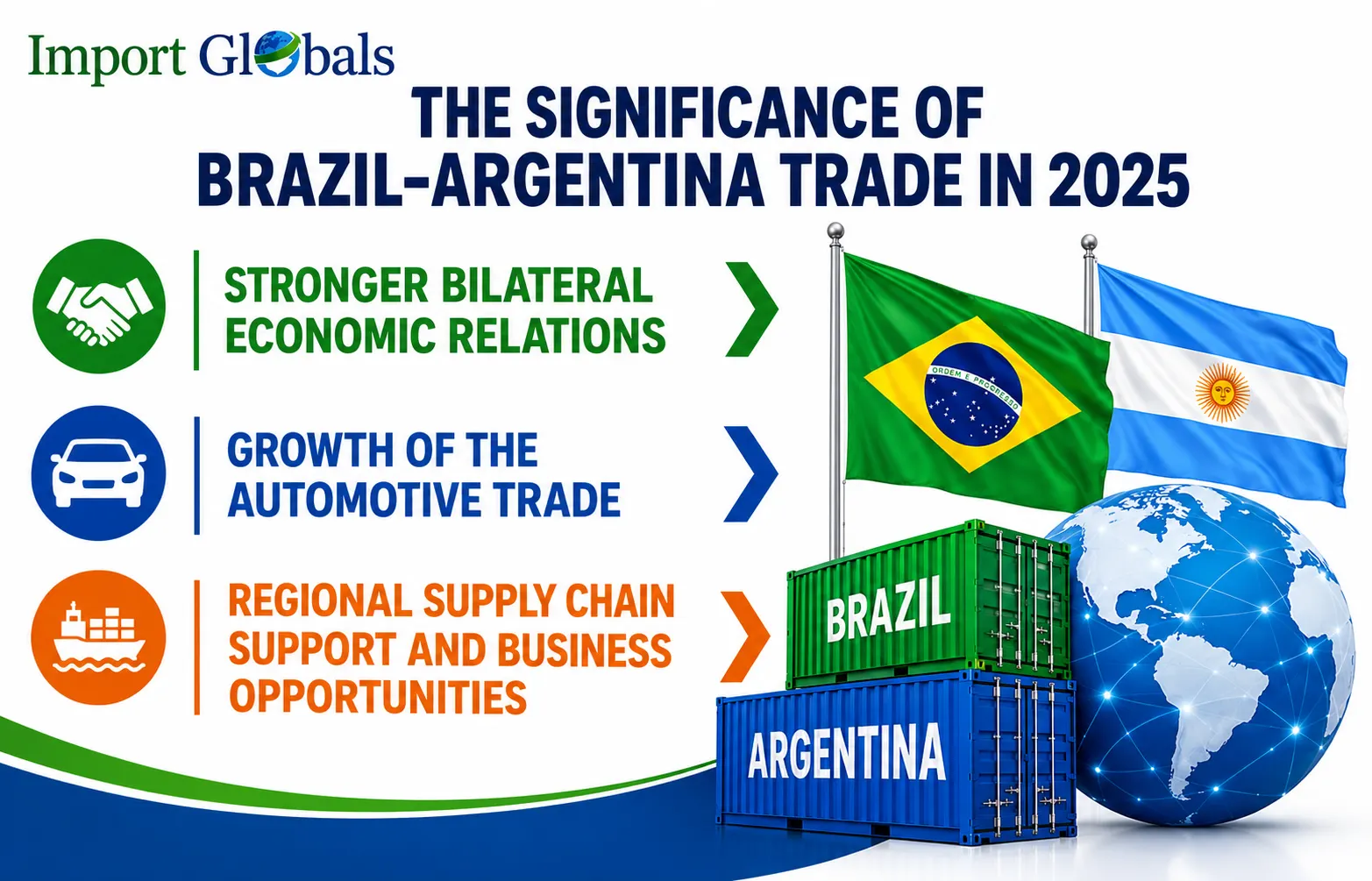
- Stronger Bilateral Economic Relations - Brazil-Argentina trade has represented the bilateral integrity of both regions as a factor promoting the collaborative trade of different regions worldwide. Argentina exported products worth 12 billion U.S. dollars to Brazil and imported essentials worth 18 billion U.S. dollars, which has reported the positioning of the nation as the leading trading partner.
- Growth of the Automotive Trade - The automotive sector upgrade of trade has also been a major factor supporting the Brazil-Argentina trade. The countries have been serving as a major pillar of bilateral commerce. Brazilian vehicle exports to Argentina have increased by 156.5%. Argentina mainly accounted for 58.9% of Brazil's vehicle exports. It demonstrates the importance of the Argentine market to the Brazilian automotive industry, according to Brazil Import Data.
- Regional Supply Chain Support and Business Opportunities - The trade relationship, as per the Argentina Trade Export Data, shows that the Brazil-Argentina relationship extends beyond automobiles to machinery, electrical equipment, plastics and chemicals. The exports to Argentina were at a staggering rate of 18 billion U.S. dollars, with vehicles accounting for 7.83 billion. This strong product has supported an integrative manufacturing supply chain while creating opportunities for companies seeking new buyers.
Top Exported Products of Brazil to Argentina
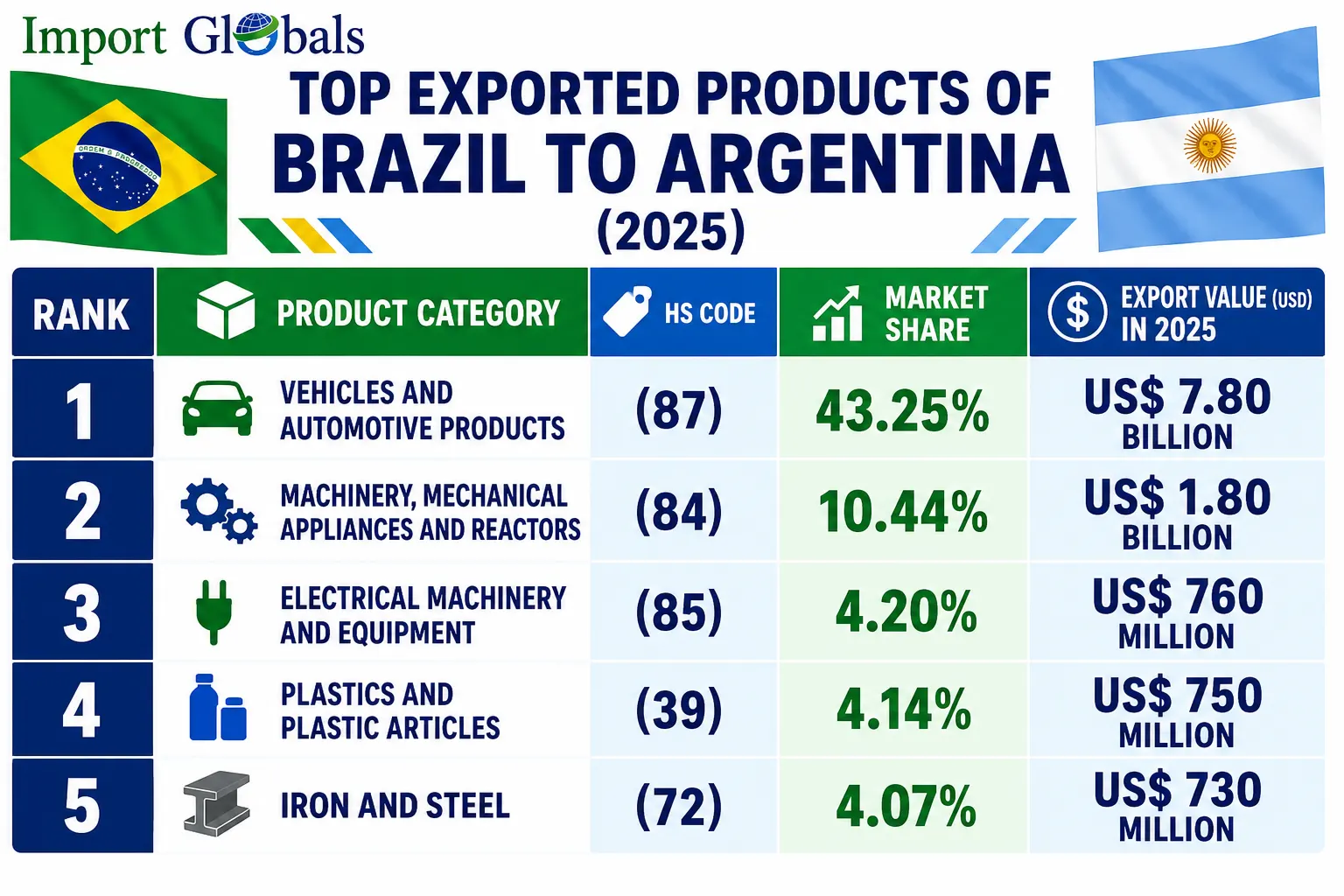
1. Vehicles and Automotive Products (HS Code 87) — 43.25% Market Share
Vehicles and automotive products, as reported by the Brazil Export Data, are one of the top exported categories of the nation to the Argentine market. It accounts for 7.8 billion U.S. dollars of the total exports of Brazil to Argentina. The category mainly encompasses passenger vehicles, commercial vehicles, truck tires, vehicle bodies, chassis, and automotive parts. Passenger cars mainly account for 3.8 billion U.S. dollars of Brazil's automotive trade. The strong performance is a representation of the Brazilian and Argentine automotive industries' integrity.
2. Machinery, Mechanical Appliances and Reactors (HS Code 84) — 10.44% Market Share
Brazil Trade Statistics reported machinery, mechanical appliances, and related equipment as a significant contributor towards the economic growth rate of the nation. Brazil is one of the second-largest export categories to Argentina, with an export valuation of 1.8 billion U.S. dollars in 2025. The strong movement of machinery reflects the interconnected nature of Argentine industries under regional trade agreements. The accountability of the specific product is 10.44%.
3. Electrical Machinery and Equipment (HS Code 85) — 4.20% Market Share
Electrical machinery and equipment are also the leading exported categories of Brazil to Argentina. The valuation is 760 million U.S. dollars in 2025, with a representative market share of 4.20%. The category covers electrical equipment, electronic machinery, and related products. The growing demand rate from the global consumer base and the modernization of the industrial and commercial system have supported the bilateral integrity, says Argentina Export Data.
4. Plastics and Plastic Articles (HS Code 39) — 4.14% Market Share
Plastics and plastic articles account for 750 million U.S. dollars of Brazil's exports to Argentina. The important industrial inputs are mainly used in packaging, automotive, manufacturing, construction, consumer products, and numerous manufacturing activities. The significant trade value demonstrates the importance of Brazil as a nearby supplier. The cross-border trade linkages are effective for supporting the demand for specific products, reported Brazil Customs Shipments Data.
5. Iron and Steel (HS Code 72) — 4.07% Market Share
Iron and steel report major export categories of Brazil to Argentina. Steel trade is one of the industrial inputs used in automotive production. The establishment of the metals industry and geographical proximity has provided a strong foundation for the supply of Argentina with iron and steel products.
Top Imported Products of Brazil From Argentina
1. Vehicles and Automotive Products (HS Code 87)
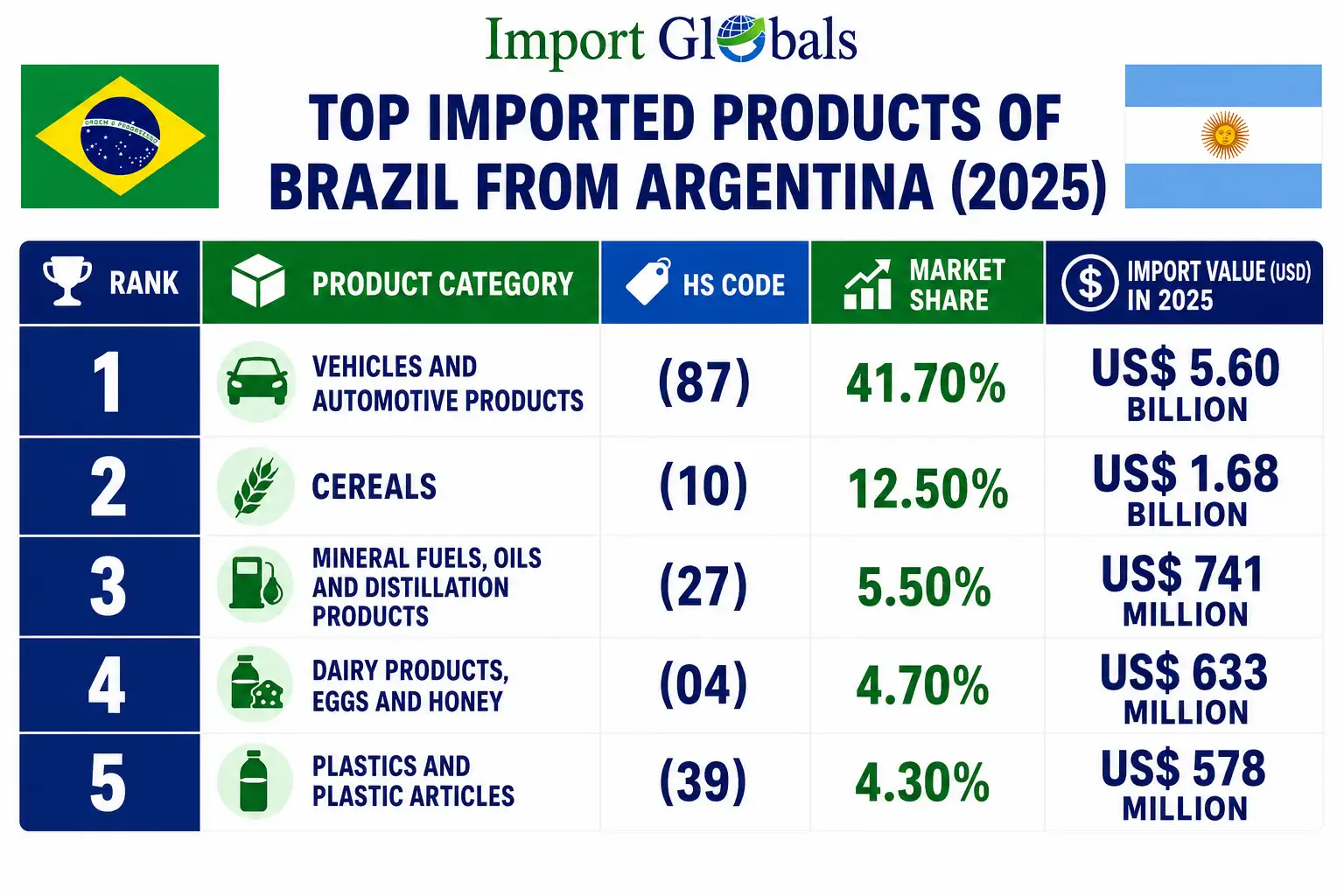
Brazil Import Customs Data reported vehicles and automotive products as the top imported categories from Argentina, worth an import valuation of 5.6 billion US dollars in 2025. The overall accountability of the specific product is 41.7%. The category mainly encompasses commercial vehicle trucks, automotive components, chassis, and other vehicle-related products. The strong regional manufacturing and integrity have been supporting the overall trade. Argentina is an important automotive production hub. The substantial share of automotive products highlights the importance of Argentina in the vehicle supply chain.
2. Cereals (HS Code 10)
Cereals report 12.5% of the overall market share of Brazil's import from Argentina. The specific import valuation is 1.68 billion US dollars. The category mainly includes wheat and other grains across the food processing, milling, bakery, and agricultural industries. The large agricultural production capacity and the proximity to Brazil have made it a competitive supplier. The bilateral cereal trade reflects the complementary nature of both countries.
3. Mineral Fuels, Oils and Distillation Products (HS Code 27)
Mineral fuels, oils, and distillation products account for 741 million US dollars of mineral fuels. The products within this category mainly encompass petroleum-based commodities, refined fuels, mineral oils, and other energy-related products. The expanding oil and gas production strengthens its position as a regional energy supplier. Brazil Customs Trade Data says that the large industrial and transportation sectors have created sustained demand for energy products.
4. Dairy Products, Eggs and Honey (HS Code 04)
Dairy products account for 4.7% of Brazil's imports from Argentina, worth a valuation of 633 million US dollars in 2025. The specific category encompasses milk and dairy products, cheese, butter, eggs, natural honey, and other related food commodities. The proper establishment of the agricultural and dairy processing industry is mainly capable of supplying a wide variety of products to the Brazilian market. The geographical proximity provides logistical advantages for exporters and importers.
5. Plastics and Plastic Articles (HS Code 39)
Plastics and plastic articles report a 4.3% market share of Brazilian imports from Argentina. The specific sector accounts for 578 million US dollars of imports. The category covers plastic polymers, packaging materials, industrial plastic products, and other manufactured plastics. The establishment of the petrochemical and plastic sector has enabled exporters' participation in regional supply chains.
Challenges Impacting the Brazil-Argentina Trade of 2025
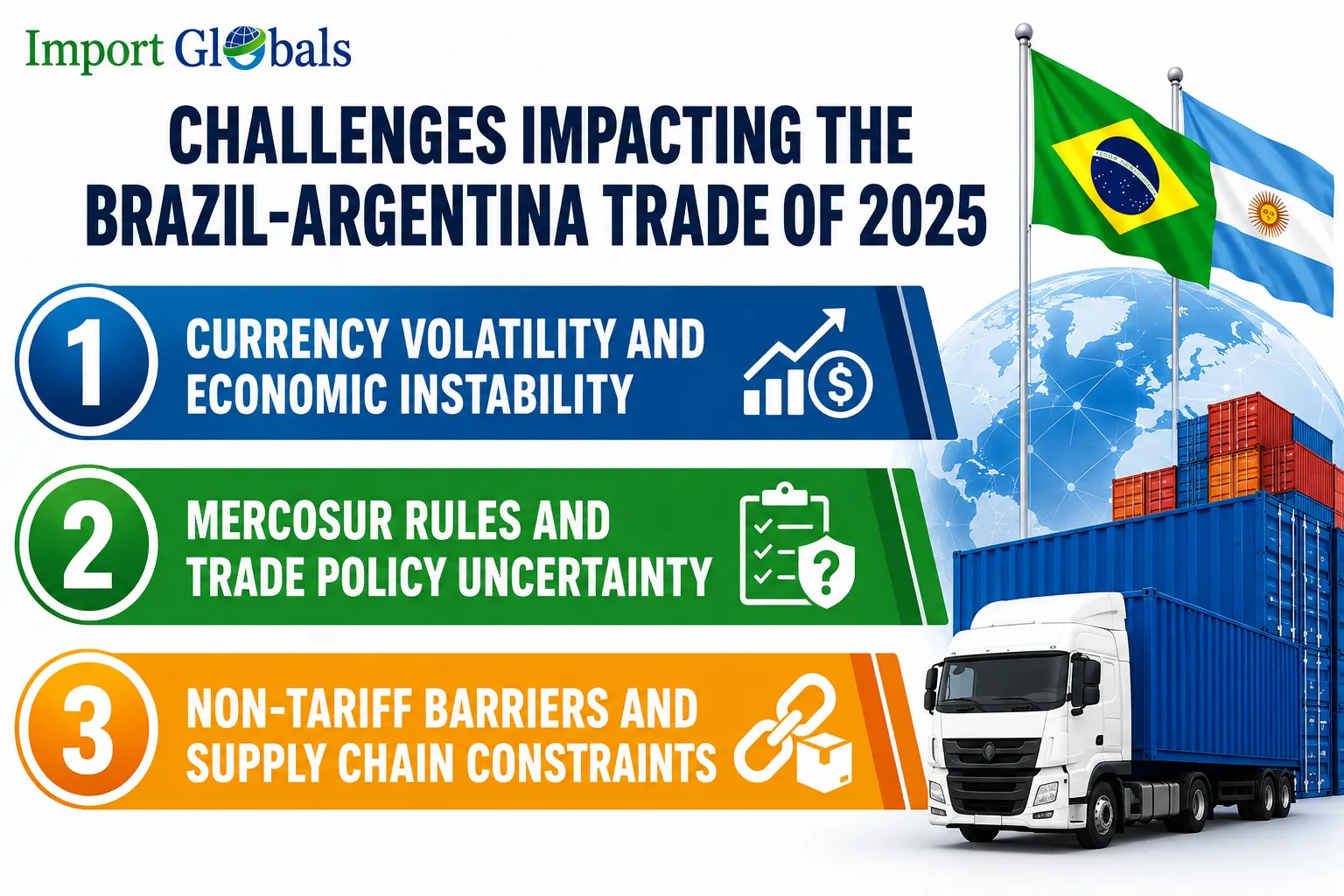
- Currency Volatility and Economic Instability - Brazil-Argentina trade, as reported by the Argentina Import Data, is facing continuous fluctuations mainly because of currency volatility and broader economic instability. The sudden changes in exchange rates are significantly affecting the competitiveness and pricing of products. Argentine businesses have faced difficulties, creating uncertainty for Brazilian importers and exporters. The conditions are making contract pricing, payment arrangements, and investment decisions more complicated.
- Mercosur Rules and Trade Policy Uncertainty - The Mercosur rules and changing trade policy, as per the Brazil Customs Shipments Data, are another factor causing bilateral commerce fluctuations. National priorities are creating uncertainty regarding tariff exemptions, rules of origin, and external trade negotiations. The country's push for greater flexibility in external trade arrangements has surrounded the bloc's common trade policy. The framework is intended to reduce trade barriers and create predictable commercial conditions.
- Non - Tariff Barriers and Supply Chain Constraints - They affect the efficiency of Brazil-Argentina trade. The tariffs are relatively favourable under the Mercosur arrangement. Businesses were able to face the technical requirements, customs procedures, and documentation requirements. This increased transaction costs delays for exporters and importers. The differences in technical requirements and regulatory procedures disrupt manufacturing schedules reports Argentina Trade Data.
How Important Are Brazil Trade Data and Argentina Trade Data in the Identification of Bilateral Trade Opportunities?
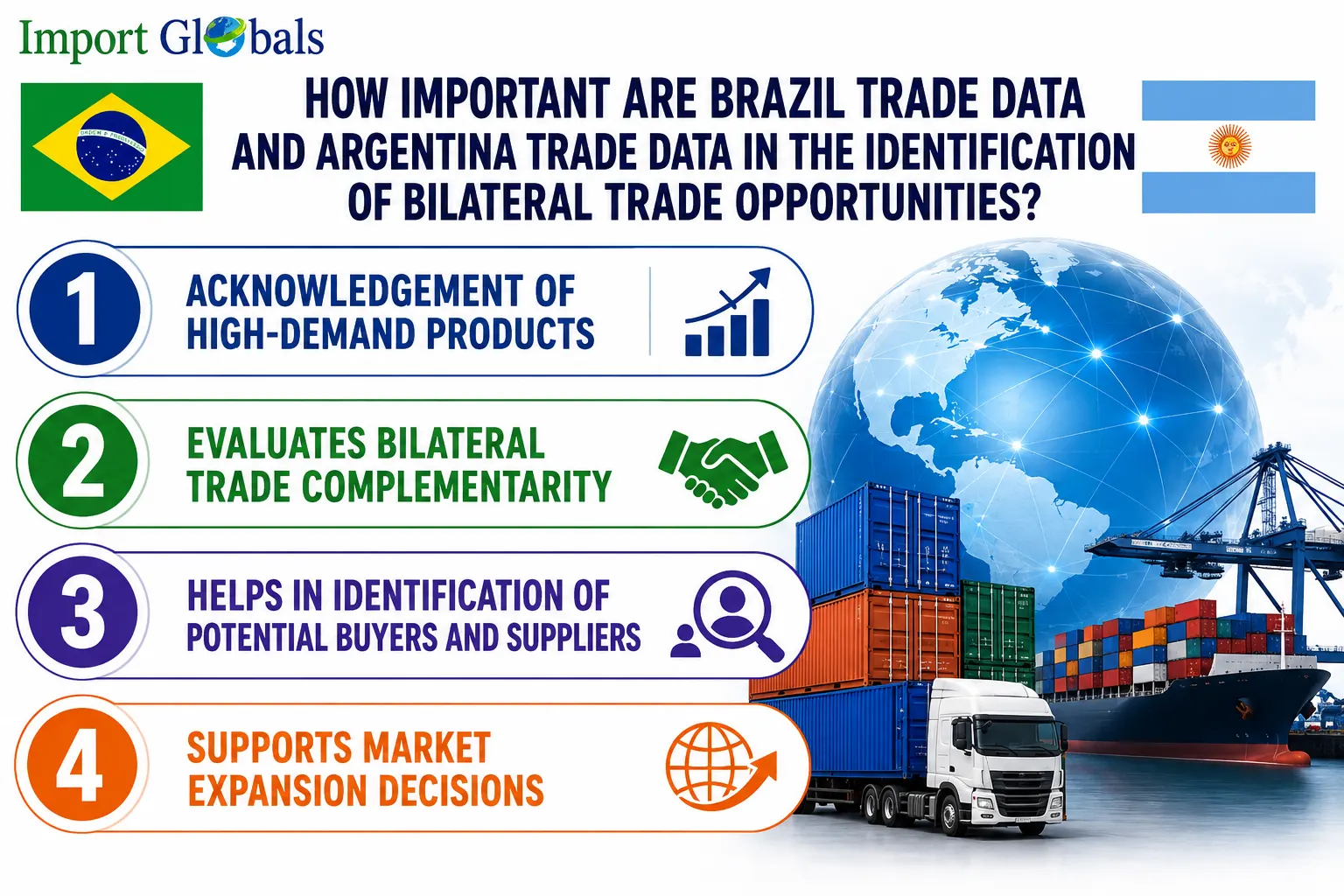
- Acknowledgement of High-Demand Products: Brazil Trade Customs Data helps businesses get a proper clarification regarding the information on Argentina and their import valuation. The highlighted shipment activity and market demand rate give a clear visualization to businesses for high-potential categories like vehicles, cereals, mineral fuels, and dairy products.
- Evaluates Bilateral Trade Complementarily: The bilateral trade complementarity evaluation helps businesses identify bilateral trade between Brazil and Argentina. Argentina Export Data reported that exports to Brazil have reached a valuation of 12 billion U.S. dollars in 2025. Such information helps businesses determine the product categories established for the cross-border demand rate.
- Helps in Identification of Potential Buyers and Suppliers: The shipment-level intelligence helps the businesses get clarified information on Brazilian importers and Argentine exporters. The information on importer and exporter name, HS code, and product description supports supplier evaluation and buyer identification. It enables the companies to move beyond general market statistics.
- Supports Market Expansion Decisions: Argentina Trade Statistics reveals that Brazilian products are in demand. This two-way analysis helps the exporters with identification of new markets and potential customers. The market decisions are getting updated with the latest acknowledgement of trade activities.
Future Trade Outlook for Brazil-Argentina Trade
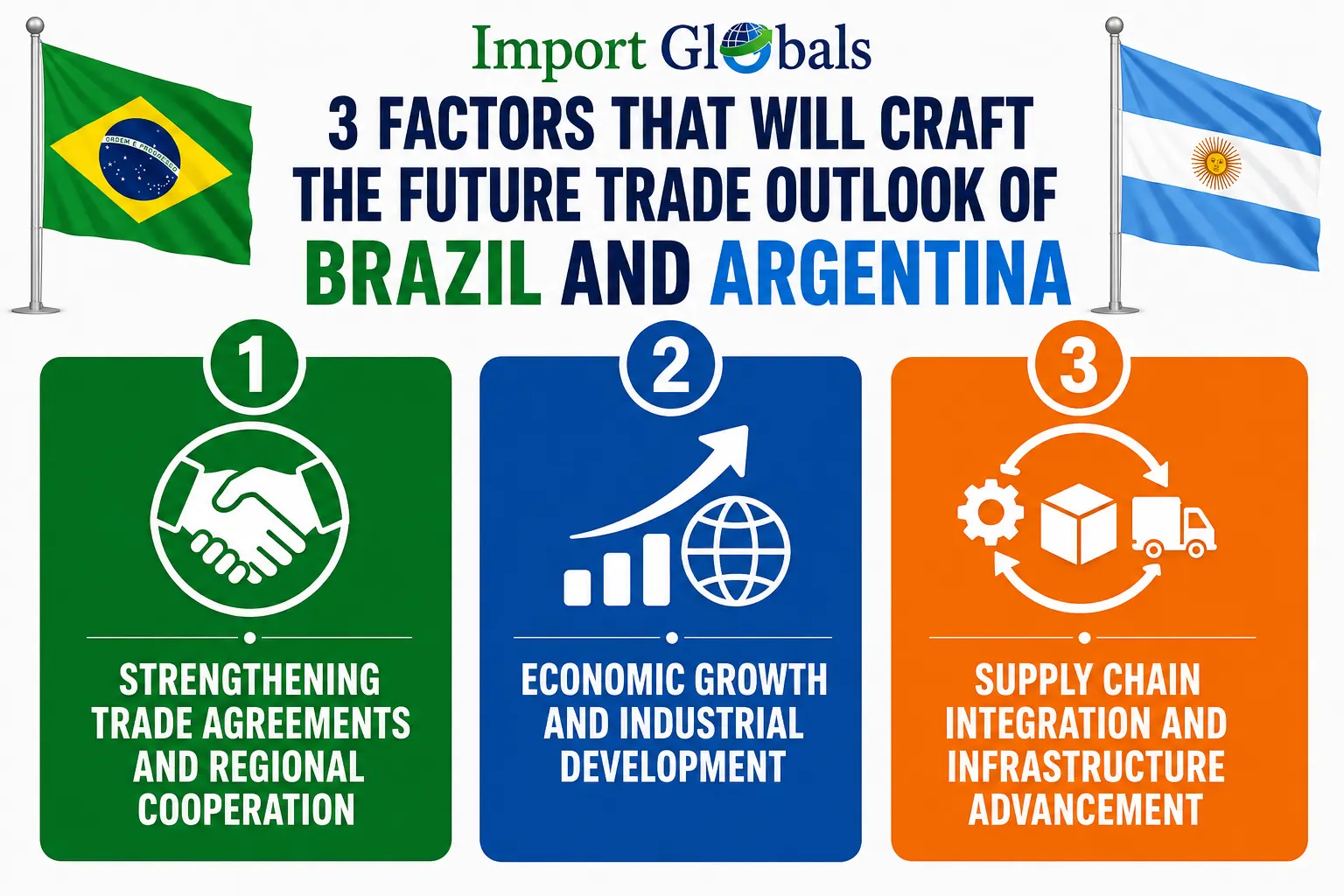
The future of the Brazil-Argentina trade is quite positive, backed up by the strong regional integration, complementary production capabilities, and the proper establishment of demand across agricultural, energy, food, and industrial product categories. Automotive manufacturing, cereals, dairy products, energy, plastics, and machinery will maintain the important role of the nation in bilateral commerce.
The positioning of Argentina as the leading export destination will maintain the importance of the nation to international trade. Businesses will need to monitor currency movements, economic conditions, and macro policies with changes in the trade forum. The companies trying to be progressive can use the detailed Brazil Trade Data and Argentina Trade Data for identification of changing demand patterns, active buyers and suppliers, and emerging product opportunities.
Key Takeaways:
- Brazil and Argentina have recorded a trade relationship of 31 billion U.S. dollars in 2025.
- Argentina's exports to Brazil are valued at 12 billion U.S. dollars in 2025.
- Vehicles and automotive products are the top traded segment within the economies.
- Agricultural products create significant trade opportunities.
- Energy and industrial products offer additional growth.
- The shipment-level Brazil and Argentina trade data support buyer identification.
Conclusion
Brazil-Argentina trade is a demonstration of the strong trade momentum in 2025. The combination of geographical proximity, market integration, and industrial linkages will support complementary agricultural production while promoting a strong foundation for future trade growth. The business opportunity will be moving beyond trade values and understanding of products. The Brazil Trade Statistics and Argentina Trade Statistics will help the companies identify the patterns of trade, along with the development of the targeted sourcing, sales, and market expansion strategies.
CTA
Trying to have an expansion in your business opportunities in Brazil or Argentina? You have landed at the right platform here. Import Globals holds a specialization in providing detailed information regarding the identification of potential buyers, suppliers, high demand, and sourcing markets. The reliable access to detailed trade intelligence helps the authorities drive market expansion and sourcing decisions. Subscribe to www.importglobals.com or drop an email at info@importglobals.com for detailed acknowledgement of the Brazil-Argentina trade data to drive your global business growth.
FAQs
Que. What is the Brazil-Argentina trade value of 2025?
Ans. The overall bilateral trade value of Brazil and Argentina in 2025 is 31 billion U.S. dollars.
Que. What is Argentina's exported products valuation to Brazil in 2025?
Ans. Argentina exported products worth 12 billion U.S. dollars to Brazil in 2025.
Que. What are the top products exported from Argentina to Brazil in 2025?
Ans. Vehicles, food, dairy products, and cereals are the top products exported from Argentina to Brazil in 2025.
Que. Why is Brazil important for Argentina's trade?
Ans. Brazil is important for Argentina's trade because it demonstrates the importance of the Brazilian market to Argentine exporters.
Que. Why is Argentina important for Brazilian importers?
Ans. Argentina is also important for Brazilian importers because it helps with a significant regional supply of vehicles, cereals, and energy products.
Que. What is the global export trade rank of Brazil and Argentina?
Ans. The global export trade rank of Brazil and Argentina in 2025 is 16th and 17th.
Que. How does Brazil-Argentina import-export data support business growth?
Ans. Brazil-Argentina import-export data support business growth via proper identification of buyers, supplier analysis, analysis of market demand, and development of effective market expansion strategies.
Que. What details does Brazil-Argentina trade data cover?
Ans. Brazil-Argentina trade data covers Importer names, Exporter names, Shipment date, HS Code, Product Details, quantity, values, pricing information, origin country, importing country & port details.
Que. How frequently is the Brazil-Argentina trade data updated?
Ans. Brazil-Argentina trade data is updated on a monthly basis.
Que. Where can one get the detailed analysis on Brazil-Argentina trade data?
Ans. Visit www.importglobals.com or drop an email at info@importglobals.com for detailed analysis on the Brazil-Argentina Trade Data.
You Can Also Visit :-