Indonesia Import Data 2025: Latest Trade Statistics and Market Insights
- Aug 31, 2026
Indonesia Import Data 2025: Latest Trade Statistics and Market Insights
The Republic of Indonesia positioned between the Indian and Pacific Oceans, is a representative trading nation. The geographical location of the nation plays an important role in the global trade ranking, while maintaining connectivity across major Asian markets with international shipping routes.
Indonesia has recorded strong import activity while reflecting the growing requirements of its manufacturing, energy, infrastructure, and consumer sectors. Indonesia Customs Data reported that the country has imported products worth 241 billion U.S. dollars in 2025.
The import demand was mainly driven by raw and auxiliary materials, representing 70% of the total imports. The capital goods contribution to the country's imports is at a staggering rate of 49 billion U.S. dollars, while the consumer goods were valued at 22 billion U.S. dollars. Indonesia Trade Data reported China as one of the largest import trade partners, valued at 87.41 billion U.S. dollars of imports. The substantial import activity is a representation of the dependence of the country on international suppliers for industrial inputs, machinery, energy products, and consumer goods. The Indonesia Import Data provides valuable insights for international exporters and businesses looking for identification of high-demand product categories and development of sourcing or market entry opportunities.
Factors Promoting the Import of Indonesia
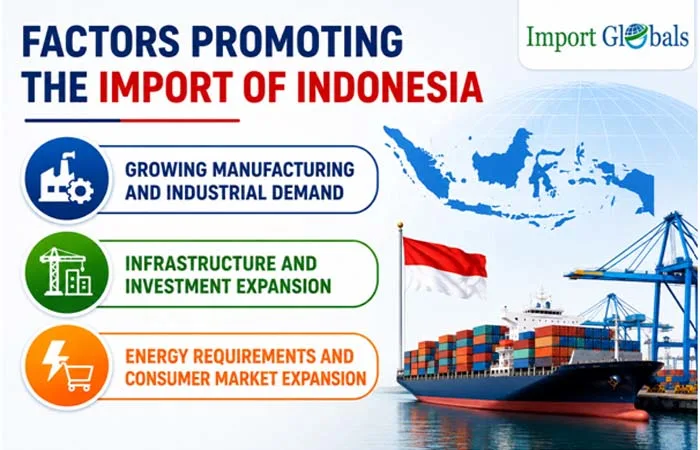
- Growing Manufacturing and Industrial Demand - The expansion of the manufacturing sector is one of the major factors that has been driving the import demand of the country in 2025. The substantial volumes of raw materials, intermediate goods, and machinery supported domestic production. The growing automotive, electronics, food processing, chemicals, and metal processing industries will report an increase in the requirement for imported materials and equipment. The positioning of the country within the regional supply chain will encourage manufacturers to source specialized components, says Indonesia Customs Trade Data. The domestic industries will continuously promote the expansion of production capacity along with improvement of competitiveness.
- Infrastructure and Investment Expansion - The infrastructure development and investment activities will maintain the important growth rate of the nation, while supporting the import of Indonesia. The government and private sectors' increasing investment in industrial facilities, energy projects, construction, and urban development will maintain the effective resourcing of different essentials. The projects will be responsible for creating demand for imported machinery, electrical equipment, construction materials, specialized technologies, and capital goods. The development of the industrial parks will facilitate the increasing demand for production equipment and intermediate inputs. Indonesia's continuous strengthening of the infrastructure will promote productive capacity with representative trade updates regarding international suppliers and materials.
- Energy Requirements and Consumer Market Expansion - The growing energy requirements and expanding consumer market will contribute to higher imports. The important producer of commodities will be taking note of the import of petroleum products and other energy-related goods to satisfy domestic consumption and industrial requirements. The large population and rising household demand will support the import of consumer products, pharmaceuticals, and other finished goods, reported Indonesia Export Data. The changing consumer preferences and the improving purchasing power will strengthen the demand for international products while maintaining the import of both essential consumer goods and energy supplies.
Industries Promoting Indonesia's Imports
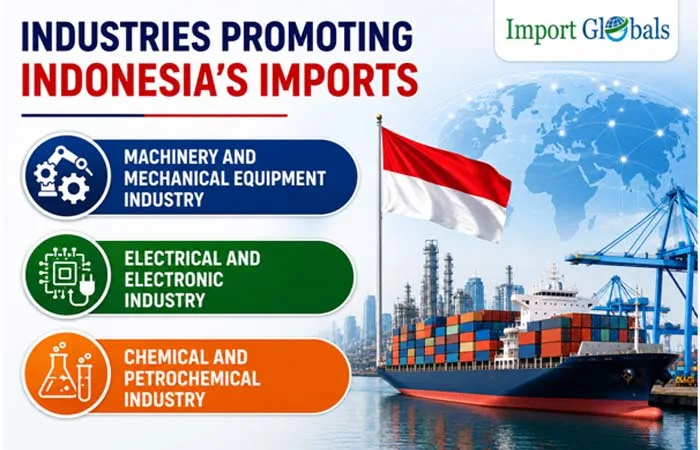
- Machinery and Mechanical Equipment Industry - The machinery and mechanical equipment industry is one of the significant contributors towards the strong demand categories for imported machinery and mechanical equipment. Machinery imports are at a staggering rate of 36 billion U.S. dollars, accounting for 17.56% of the non-oil and gas imports. The emphasis of the authority on industrialization and downstream processing has increased the requirements for advanced equipment. China, Japan, and major industrial suppliers have maintained effective trade for important sources, says Indonesia Shipment Data.
- Electrical and Electronic Industry - The electrical and electronic industry is a major contributor to Indonesia's import demand rate. The import of electrical machinery, equipment, and components is at a staggering rate of 32 billion U.S. dollars in 2025. The overall demand of the electronics industry is supported by electronics manufacturing, telecommunications, digital infrastructure, consumer electronics, and industrial automation. The imported products mainly include electrical equipment, electronic components, communication devices, and technology-related products. Smartphone imports are at a staggering rate of 3 billion U.S. dollars.
- Chemical and Petrochemical Industry - The chemical and petrochemical industry is also an important driver of imports in Indonesia. The chemicals are essential for plastics, pharmaceuticals, agriculture, food processing, and textile trade. The dependence on imported petrochemical feedstock supports substantial external demand for chemical inputs.
Top Import Partners of Indonesia
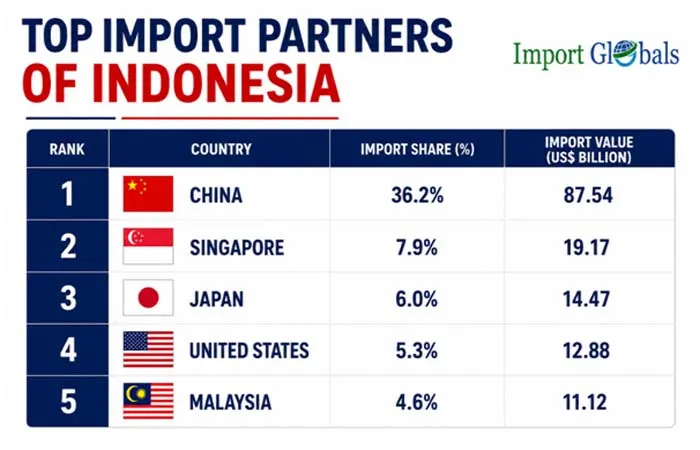
- China — 36.2% Import Share | US$87.54 Billion - China Export Data reported the nation as one of the top import partners of Indonesia with an effective supply rate of 87.54 billion U.S. dollars of goods to the Indonesian authorities. The bilateral trade connectivity is mainly supported by the ongoing demand in Indonesian consumers for machinery, electrical equipment, electronics, industrial components, and manufactured goods. The scale of Chinese shipments reflects the integration of both economies into the regional supply chains.
- Singapore — 7.9% Import Share | US$19.17 Billion - Singapore Export Data maintained the effectiveness in Indonesia's import memorandum. The supply rate of products to Indonesia is valued at a valuation of 19.17 billion U.S. dollars in 2025. The trade relationship is basically strengthened by the positioning of the country as a major regional trading, refining, and logistics hub. Indonesia Import Data reported refined fuels, machinery, electrical equipment, precious metals, and other industrial goods as the main essentials traded with Singapore.
Japan — 6.0% Import Share | US$14.47 Billion - Japan Export Data reported that the country holds an overall import share of 6% in Indonesia's economy, with 14.47 billion U.S. dollars of exports to Indonesia. Japanese companies are maintaining a strong commercial relationship with Indonesia, particularly across automotive machinery, electronics, steel and industrial manufacturing. The imports from Japan provide Indonesian authorities with vehicles, automotive components, machinery, mechanical equipment, and metals. The reputation for high-quality industrial products and the establishment of the investment presence have strengthened the bilateral supply chain.
United States — 5.3% Import Share | US$12.88 Billion - The United States reports 5.3% of the import market share of Indonesia. US Export Data listed energy resources, agricultural commodities, machinery, aircraft-related products, and technology-intensive goods as the top traded variants with Indonesia. The bilateral relationship continues due to development through trade negotiations covering technology, products, and energy essentials.
Malaysia — 4.6% Import Share | US$11.12 Billion - Malaysia Export Data listed the nation as one of the top import partners of Indonesia. The effective supply rate of goods from Malaysia to Indonesia is valued at 11 billion U.S. dollars in 2025. The geographical proximity and the establishment of the regional supply chain have supported the bilateral trade between the two countries. Indonesian imports of petroleum products, chemicals, and electrical equipment have maintained the intermediate goods trade from Malaysia. The energy products represent an especially important component of the trade relationship, while supporting the manufacturing sector.
Top Imported Variants of Indonesia
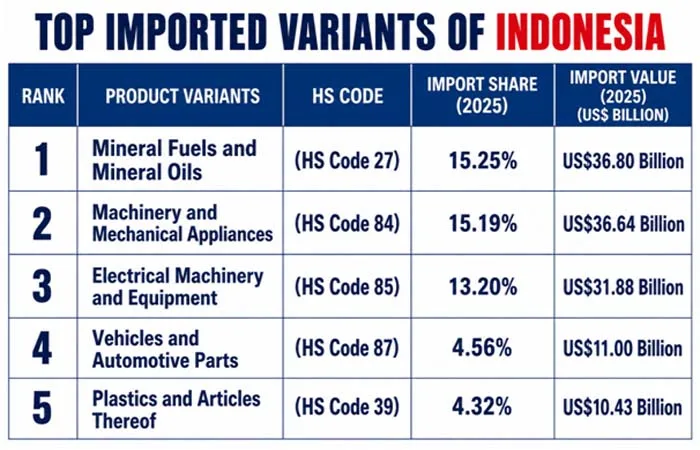
1. Mineral Fuels and Mineral Oils (HS Code 27) — 15.25% Import Share | US$36.80 Billion - Mineral fuels and mineral oils are the top imported categories of Indonesia, with an import valuation of 36 billion U.S. dollars in 2025. The category mainly accounts for 15.25% of the import market share of Indonesia. The expanding transportation, manufacturing, electricity generation, and industrial sectors will maintain the substantial requirement for imported energy products. The significant import requirement will reflect the need for supplementation of domestic energy production with Indonesian supplies.
2. Machinery and Mechanical Appliances (HS Code 84) — 15.19% Import Share | US$36.64 Billion - Machinery and mechanical appliances account for 36 billion U.S. dollars of Indonesia's overall imports, accounting for 15.19% of the import market share. The category includes mechanical equipment, boilers, production systems, and machinery parts. Infrastructure development, mining, construction, and industrial modernization are expected to increase the demand for sophisticated imports, says Indonesia Import Export Data.
3. Electrical Machinery and Equipment (HS Code 85) — 13.20% Import Share | US$31.88 Billion - Electrical machinery and equipment account for 13.20% of the import share of Indonesia. The overall import value is 32 billion U.S. dollars at present. The growing electronics manufacturing, telecommunication, digital infrastructure, and industrial automation will support the category's trade. The increasing participation in the regional electronics supply chain will require substantial imports of components and equipment.
4. Vehicles and Automotive Parts (HS Code 87) — 4.56% Import Share | US$11.00 Billion - Vehicles and automotive parts account for a 4.56% share of Indonesia's import economy. The overall trade of 11 billion in imports has maintained Indonesia's growing import ranking on a global scale. The category mainly covers passenger vehicles, commercial vehicles, automotive components, and accessories. The country's growing consumer market and transportation requirements for industrial automotive activities will create opportunities for international vehicles.
5. Plastics and Articles Thereof (HS Code 39) — 4.32% Import Share | US$10.43 Billion - Plastics and plastic articles report a 4.32% import share of Indonesian imports. The imported plastics are used in a wide range of trade inputs across packaging, automotive, manufacturing, electronics, construction, consumer products, food processing, and other industries. The expanding manufacturing base is responsible for creating sustained demand for polymers, plastic materials, and finished plastic articles.
The Future Trade Outlook of Indonesia Imports
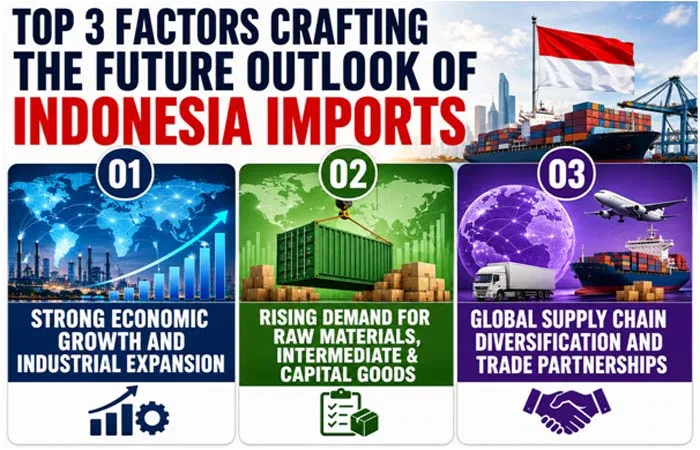
Indonesia's imports, as reported by Indonesia Customs Import Data, will be strongly positive, backed by industrial expansion, infrastructure development, rising domestic demand, and continuous investment in manufacturing. The total imports of 241 billion U.S. dollars will mainly contribute to the industrial growth rate and the country's ranking. The composition of auxiliary goods and capital goods is 70:22 in the overall revenue generation. Machinery, electrical equipment, energy products, chemicals, automotive components, and industrial raw materials are the latest variants imported.
The domestic demand and investment maintained by the government authorities will support the economic growth rate. The growing integration into the global value chain will create additional opportunities for international suppliers. The recent trade developments with major partners, including China, will create greater emphasis on minerals, energy technology, green energy, and industrial cooperation. The businesses will help the authorities monitor tariff changes, logistic costs, current movements, and energy prices.
Conclusion
The import market of Indonesia will demonstrate the growing dependence on international suppliers. The market intelligence will provide substantial opportunities for businesses looking for trade updates. China will be the leading source of imports, while Singapore, Japan, the United States, and other major trading partners will contribute in a significant manner in the overall trade growth. The dominance of raw materials, auxiliary goods, and capital goods will highlight the importance of manufacturing and investment activities. Indonesia Shipments Data says that the forward trade companies will keep on monitoring the product demand, import values, and pricing trends for regulatory developments and identification of profitable opportunities.
CTA
Looking for an expansion in your business opportunities in Indonesia? Import Globals is here to help. The detailed information helps the authorities with the identification of potential buyer-suppliers, high-demand products, emerging markets, and sourcing opportunities. Get the latest access to shipment-level trade intelligence for understanding market insights to make informed decisions while strengthening your international sourcing strategy. Subscribe to www.importglobals.com or drop an email at info@importglobals.com for detailed updates on Indonesia trade data for the latest market updates.
FAQ'S
Que. What is the total import trade value of Indonesia in 2025?
Ans. The total import trade value of Indonesia in 2025 is 242 billion U.S. dollars.
Que. Name the largest import partner of Indonesia in 2025.
Ans. China is the largest import partner of Indonesia in 2025.
Que. What are the top imported products of Indonesia?
Ans. Mineral fuels, machinery and mechanical equipment are the top imported products of Indonesia.
Que. Why is Indonesia importing large quantities of machinery?
Ans. Indonesia is importing large quantities of machinery because of the manufacturing, construction, mining, infrastructure, and downstream processing sectors.
Que. What is the total percentage of Indonesia's imports of raw materials in 2025?
Ans. The raw materials import share of Indonesia in 2025 is 17.11 percent.
Que. Explain the role of China in Indonesia's import market.
Ans. China is Indonesia's leading import source, with an effective supply of electrical equipment, electronics, vehicles, components, and other manufactured goods.
Que. How does Indonesia import-export data support business growth?
Ans. Indonesia Import Export Data supports business growth via proper identification of buyers, supplier analysis of market demand, and development of effective market expansion strategies.
Que. What information is available in Indonesia trade data?
Ans. Indonesia trade data covers Importer names, Exporter names, Shipment date, HS Code, Product Details, quantity, values, pricing information, origin country, importing country & port details.
Que. How frequently is Indonesia import data updated?
Ans. Indonesia import data is updated on a monthly basis.
Que. Where can one obtain the detailed information on Indonesia trade data?
Ans. Subscribe to www.importglobals.com or drop an email at info@importglobals.com for detailed updates on Indonesia's import activities.
You Can Also Visit :-