Key Industries That Connect the U.S. and Europe Through Transatlantic Trade

- Dec 27, 2025
Key Industries That Connect the U.S. and Europe Through Transatlantic Trade
Not only are the headline numbers "big," but the industry is also "deep," with parts that cross borders multiple times to make cars, medicines made through globally distributed clinical and manufacturing networks, aircraft made from specialized parts sourced across the Atlantic, and business services that support everything from cross-border investment to digital delivery.
As per USA Import Data by Import Globals, the most important thing about U.S.–Europe commerce is that it is based on high-value industries, advanced standards, and long-term investment linkages. The industrial logic of specialization, trusted suppliers, and scale preserves the connection at the center of global trade, even when politics or short-term fluctuations make things more difficult.
The Size of the Relationship Between the US and Europe
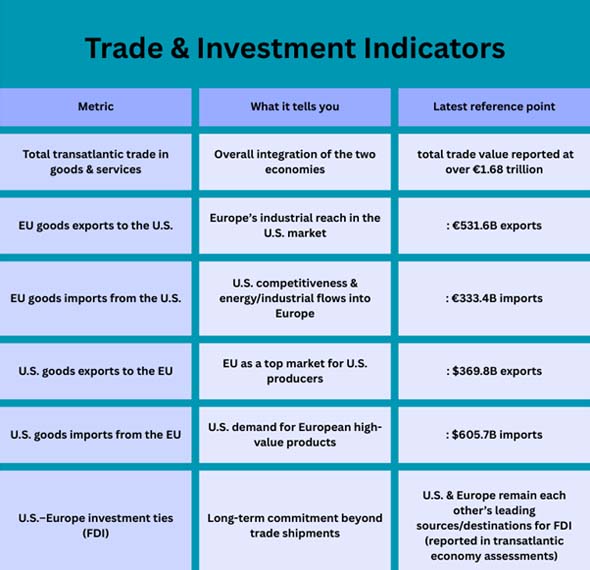
As per Europe Export Data by Import Globals, trade between the U.S. and Europe includes both goods and services, and it is made stronger by huge investments going both ways. Overall trade between Europe and the US has stayed very high in recent years. This is because there is a lot of demand for pharmaceuticals, machinery, transportation equipment, chemicals, and a wide range of commercial services.
It helps to break down "what links" the U.S. and Europe into:
Trade in goods (things like manufactured goods, energy, chemicals, machines, and transportation equipment).
Trade in services includes banking, professional services, ICT/digital, royalties and licensing, and travel.
Investment (FDI) (factories, subsidiaries, research and development centers, and networks of corporate ownership).
Pharmaceuticals and Life Sciences are the First Industry
As per USA Export Data by Import Globals, pharmaceuticals are the one industry that best represents modern transatlantic trade. The U.S. gets a lot of its medications from Europe, and U.S. businesses are very active in European markets through trade and investment.
This isn't just a story about a "shipment"; it's a story about an ecosystem. Both areas have clinical trials and regulatory workflows.
Making and packaging specialized active parts and keeping the cold chain running are all part of production networks.
As per USA Import Custom Data by Import Globals, people prefer to work with partners they can trust because they have high standards and strict guidelines.
One of the major groups of things that Europe sends to the U.S. is drugs. This highlights how crucial it is for the two countries to work together on healthcare production and new ideas.
Industry 2: Machines and Tools for Factories
Across the Atlantic, machines are what keep everything running smoothly. This includes factory machines, industrial systems, and specialized tools for energy, construction, and complex production.
As per Europe Import Trade Analysis by Import Globals, precision engineering, capital goods, and industrial automation are some of Europe's strengths.
The U.S. has a lot of strengths, like a big supply of industrial goods, specialized tools, and high-tech systems.
Machinery trade is often "sticky" since purchasers care about things like lengthy service lives. Ecosystems for upkeep, availability of spare parts, and validation of performance.
As per USA Exporter Data by Import Globals, when a plant settles on a technological stack, it can be expensive to swap, therefore machinery commerce generally shows long-term ties instead of one-time deals.
Industry 3: Supply Chains in the Aerospace and Aviation Industry
Aerospace is one of the most interconnected businesses in the world, and transatlantic ties are quite important. Precision manufacturing is one area where aircraft and aircraft parts need a lot of teamwork. Safety and being certified, extensive supply chains for avionics, engines, materials, and systems.
Even if the final assembly is done in one place, the inputs come from several places. In actuality, aerospace trade means high-value exports, extended delivery times, and a lot of services (maintenance, repair, and overhaul) that last for decades after delivery.
Industry 4: Cars and other Transportation Equipment
As per Europe Importer Data by Import Globals, the U.S. and Europe trade a lot of transportation equipment, such as automobiles, parts, and other machinery. This commerce is affected by what customers want (high-end segments, performance criteria), industrial clusters, like networks of engineers and suppliers, and rules (for example, safety and emissions).
The transport equipment trade also shows how quickly tariffs and changes in regulations can change the connection, yet the channel stays strong because people want specialist products and well-known brands.
Chemicals (not only drugs) are the Fifth Industry
Chemicals are another important industrial bridge outside pharmaceuticals. These include industrial chemicals, specialized chemicals, and inputs utilized in agriculture, industry, consumer goods, and sophisticated materials.
As industry makes more things, the trade in chemicals rises. According to USA Import Trade Statistics by Import Globals, it is also susceptible to the cost of energy (feedstocks). Standards for the environment, and the stability of the supply chain, especially for specialist inputs.
Industry 6: Energy and Mineral Goods
In the last few years, energy has become a more important part of the transatlantic story. From a European point of view, minerals and fuels have been important imports from the U.S. As per Europe Import Shipment Data by Import Globals, the energy link is strategic because it has an impact on the prices of industrial inputs. Energy security for the country, and the effects of inflation.
Energy commerce is also cyclical; even when quantities stay the same, prices might go up or down quickly based on world pricing.
Industry 7: Digital Trade and Business Services
Things are only half the story. Services trade, which includes things like technology services, finance, insurance, consulting, engineering services, and intellectual property, often decides how well goods commerce can happen.
Three main ways that services connect the U.S. and Europe are:
Business operations: As per USA Import Export Trade Analysis by Import Globals, multinational companies from the U.S. and Europe have big operations on both sides of the Atlantic that need continual cross-border services.
Cloud services, software, cyber security, data services, and platform-based exports are all examples of digital delivery.
IP and licensing include royalties, patents, brand licensing, and working together on research and development.
People frequently don't think about services as much as they should since they're less visible than shipping containers. However, they can be quite important for staying competitive and having a long-term impact on the economy.
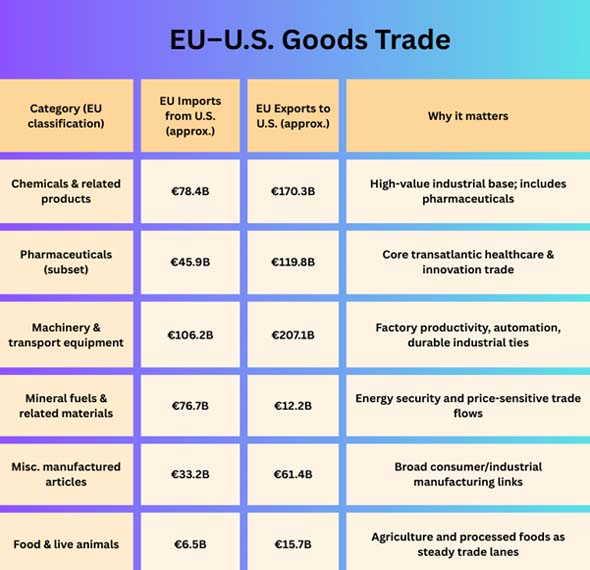
A Data View: The EU's Major Industry Groups Trade with the U.S.
The table below shows the main groups of items that the EU trades with the U.S. using traditional trade groupings. This shows why some sectors are more important than others in the relationship.
Why These Industries Are Connecting the Two Economies
The Transatlantic link is very strong because it is based on structural advantages:
Mutual Specialization: As per USA Export Import Global Trade Data by Import Globals, both sides sell high-tech goods where they are the best in the world.
Investment Integration: subsidiaries, factories, and R&D centers make sure that money flows both ways all the time.
High Standards and Trust Networks: regulated businesses prefer to deal with partners who are already following the rules.
Reinforcing Innovation: colleges, businesses, and labs work together to make it easier to bring innovative ideas to market.
The supply chain is deep; both locations have parts, tools, and engineering services. According to Import Globals' data on imports to Europe, trade between the U.S. and Europe isn't only about buying and selling. It's also about working together to make things, invest, and come up with new ideas.
Last Thoughts
Transatlantic trade is still an important part of the global economy because it focuses on industries that are strategically important and hard to replace, like chemicals, machinery, aerospace, medicines, transportation equipment, and high-value services. The actual power of the relationship comes from its depth, which includes supplier chains, investment ties, standards alignment, and innovation networks that last through business cycles.
The main point for exporters, importers, and policymakers is simple: to understand transatlantic trade, you need to keep an eye on not just the amounts of goods traded, but also the industrial ecosystems that connect the U.S. and Europe. Import Globals is a leading data provider of Europe Import Export Trade Data.
FAQs
Que. What kinds of businesses do most of the trade between the U.S. and Europe?
Ans. Pharmaceuticals and life sciences, manufacturing, chemicals, aerospace-related goods, transportation equipment, and a wide range of business and digital services.
Que. Why is the trade in drugs so big across the Atlantic?
Ans. This is because both areas are at the forefront of medication discovery and regulated manufacturing. This is made possible by ecosystems that combine research and development, production, and compliance.
Que. Is most of the commerce between Europe and the US commodities or services?
Ans. Both are important. Goods are more important for visibility and logistics, but services like banking, ICT, professional services, and IP are what make businesses run and stay competitive.
Que. Why is foreign direct investment (FDI) vital to this relationship?
Ans. FDI builds long-term connections, such as subsidiaries, factories, and research and development centers, that lead to ongoing trade and service flows that go beyond simple import/export deals.
Que. Where to get detailed USA Import Export Global Data?
Ans. Visit www.importglobals.com.