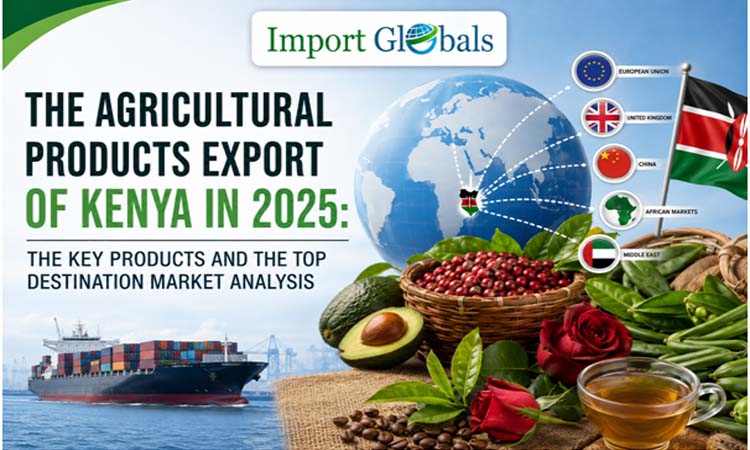
The Agricultural Products Export of Kenya in 2025: The Key Products and the Top Destination Market Analysis
- Aug 18, 2026
The Agricultural Products Export of Kenya in 2025: The Key Products and the Top Destination Market Analysis
The agricultural export sector is one of the preferred topics of discussion among the global leading traders at present.
Kenya Customs Data reported the specific sector as a significant contributor towards the economic growth rate, mainly because of the international trade activity and the growing global demand rate. The combination of fertile highlands, diverse climatic zones, established farming communities, and proximity to the major international shipping routes has driven the trade growth of the specific industry. The Kenyan authorities have been mainly recognized in the global trade market because of the effective trade of coffee, flowers, fresh fruits, vegetables, nuts, and other horticultural products with top-notch quality.
The government agricultural policies launched have supported the trade of nuts, cotton, edible oil, sugar, and other agricultural value chains. The tea trade of the country occupies a massive share of the overall export. The Ministry of Agriculture reported that around 600 million kilograms of tea have increased in the present time, says Kenya Trade Data. The horticultural exports have been strengthening the positioning of Kenya in the high-value international food market. Flowers, avocados, vegetables, fruits, and macadamia nuts have been providing different opportunities for the evolving traders.
Why is Kenya an Important Agricultural Exporter?
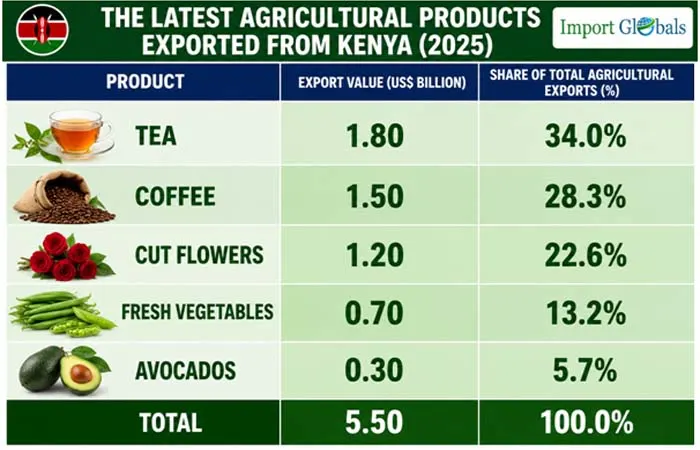
Kenya is one of the important agricultural exporters because of the diversified agricultural production base and the properly established connections with international markets. The production of traditional export commodities and high-value horticultural products will serve the authorities with beverage, retail, hospitality, and processing industries. Tea will be one of the strongest pillars of the agricultural export structure. The development of the globally recognized tea industry will support effective trade. The national tea industry, as reported by the Kenya Customs Shipment Data, will maintain high foreign exchange earnings in the overall trade. The horticulture trade of the nation will provide advantageous factors for manufacturers looking for service expansion.
Flowers, fruits, vegetables, hops, and nuts will create a diversified export portfolio. The geographical positioning of the country will mainly maintain the importance of the nation along with the establishment of the maritime gateway for connecting the agricultural exporters with buyers in the Middle East. The membership in regional and continental trade frameworks will expand the service into African markets while maintaining access to traditional overseas destinations.
What Information is Available in Kenya Agricultural Export Data?
Kenya Agricultural Export Data is a customized trade data sheet that provides clear visibility to business authorities regarding the specific products that are being exported from the nation as per the demanded categories. The shipment-level trade intelligence basically covers exporter name, importer name, product description, HS code, shipment date, export quantity, trade value, destination country, ports of shipment, purchasing patterns of the buyer, shipment frequency, and product specification. All these datasets highlighted together in one place help businesses get a proper visualization of the detailed insights of specific categories.
It keeps their database updated with the latest insights and the upcoming trade movements and regulatory activities on a global scale. The information is considered helpful for Kenya's agricultural export sector, says the Kenya Export Data, because it promotes the research of the businesses regarding tea along with examination of buyers importing Kenyan tea. The businesses can therefore move beyond the agricultural statistics for proper investigation of the product-level trade activity.
The Latest Agricultural Products Exported From Kenya
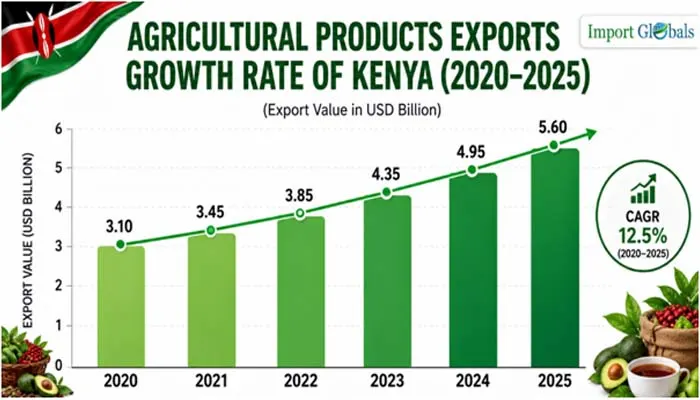
- Tea - Tea is one of the top agricultural traded essentials of Kenya. The country is mainly for black tea and has developed substantial production opportunities. The Ministry of Agriculture is continuously investing in tea production to support the export tradesays Kenya Statistical Data. The Kenyan tea exporters have been serving the traditional markets, mainly the Middle East, Africa, Europe, and Asia.
- Coffee - Coffee is another major agricultural export commodity. The Kenyan authorities have a specialization in coffee production. The Kenya Shipment Data reported that the shipments of the nation have reached 59 countries. The efforts of the manufacturing authorities to expand the value of coffee have directly impacted international market access.
- Cut Flowers - The export of cut flowers has also maintained the significance of the Kenyan authorities on a global scale. Roses and other cut flowers are effectively supplied to international markets, specifically Europe, for promoting the establishment of commercial farms, a skilled workforce, and air cargo connections of the nation.
- Fresh Vegetables - Fresh vegetables account for a significant portion as compared to other essentials. The production of French beans, peas, and other vegetables is supplied to importers mainly because of the shift toward a healthier diet of the global population. The opportunistic features of the Kenyan authorities have been supporting consistent quality, traceability, and phytosanitary compliance.
- Avocados - Avocados are also the top exported agricultural product of Kenya. The attraction of the specific product is mainly because of the international buyers and the growing global demand for healthy and nutritious foods. The Kenyan exporters have been serving the fresh produce markets with the development of opportunities in avocado oil and other value-added products. The Kenyan National Chamber has identified avocados among the top Kenyan agricultural products traded with strong potential in the Chinese market.
Top Export Destinations for Kenya's Agricultural Products
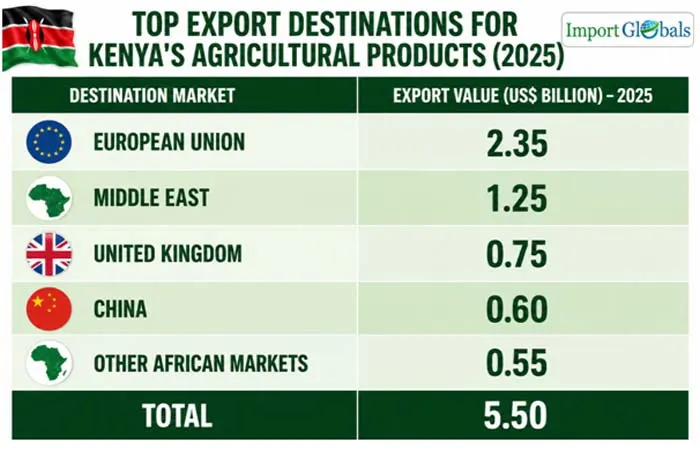
- European Union - The European Union is one of the top export partners that has been driving the agricultural export of the nation. European buyers hold seamless access to the large consumer markets that maintain strict compliance with food safety, pesticide residue, and traceability standards.
- Middle East - The export of agricultural products from Kenya to the Middle East has been mainly contributing to the economic growth rate. The Kenyan authorities are effectively supplying agricultural commodities, especially tea, fresh produce, and horticultural products. The proximity to East Africa has provided the country with logistical advantages.
- United Kingdom - The United Kingdom is also a significant export partner of Kenya, according to UK Import Data. The Kenyan authorities have mainly exported tea, flowers, vegetables, fruits, and other agricultural commodities.
- China - China Import Data reported itself as a trade authority of Kenyan agricultural exports. The organizations are mainly responsible for the effective supply rate of coffee, macadamia nuts, avocados, flowers, and other products as per the demanded categories of China.
- Other African Markets - Wrapping up the list of the top traded regions contributing to Kenyan agricultural export growth, African markets also hold a significant position. The markets are mainly important as a venue for agricultural export diversification. The regional trade reported by the Kenya Import Export Data reduces the dependence of the country on overseas markets while benefiting from the geographic proximity.
Challenges Affecting Kenya's Agricultural Export Market
Phytosanitary compliance has been maintaining the seamless trade of agricultural essentials from Kenya. Climate variability has been influencing production volumes and product quality. The agricultural sector is mainly dependent on weather conditions, which has been creating difficulties for the seamless trade.
The logistics and cold chain infrastructure are supporting the effective supply rate of fresh fruits, vegetables, flowers, and other perishable products. The export of processed, packaged, branded, or specialized agricultural products has been helping the Kenyan authorities to capture a greater share of the international value chains.
Industries Supporting the Kenyan Agricultural Exports
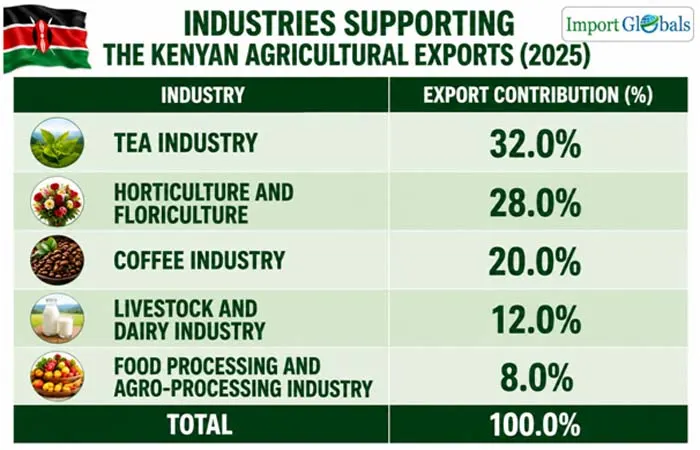
- Tea Industry – Kenya Trade Data reported that the tea industry is one of the strongest pillars supporting the agricultural export economy of the Kenyan authorities. The global recognition is fostered by the production of high-quality black tea, particularly from the highland regions. The tea processing facilities mainly convert the freshly harvested leaves into export-ready products. Pakistan, Egypt, the United Kingdom, Sudan, and the United Arab Emirates have been maintaining the overall statistical growth rate of the supportive trade. The industry supports farmers, processors, transporters, packaging companies, and warehouses as the main factors, with significant investment in value-added tea.
- Horticulture and Floriculture - The horticulture and floriculture industry has been playing a major role in expanding agricultural exports. The favourable climate, fertile agricultural zones, and irrigation infrastructure are promoting proximity to the international market. The Netherlands, the United Kingdom, the United Arab Emirates, and European markets are the main import destinations. The cold chain facilities, pack houses, air cargo services, and refrigerated transportation promote the effective trade of the industry. Greater processing, improved post-harvest management, and expanded market diversification have created additional export opportunities reports Kenya Import Data.
- Coffee Industry - The Kenyan coffee industry is also an important contributor to agricultural export development. Arabica coffee is widely valued because of the distinctive flavour quality characteristics and the high-altitude cultivation. The coffee production supports a broad ecosystem with warehouses, transport providers, and international traders. The specialty coffee marketing helps the Kenyan producers capture greater value from global demand. The expansion of the direct trade relationships reduces the dependence on bulk exports while strengthening the long-term export revenues.
- Livestock and Dairy Industry - Kenya Shipments Data reported the livestock and dairy industry as a major contributor towards the economic growth rate of the nation. The growing food processing capabilities provide opportunities for traders to move beyond the export of raw agricultural commodities. The regional African markets offer significant potential to the traders because of geographical proximity and established commercial relationships. The cold chain infrastructure, traceability, and processing facilities have strengthened the ability to access premium export markets.
- Food Processing and Agro-Processing Industry - The food processing and agro-processing industry has supported agricultural exports. The industry includes mainly fruit processing, vegetable processing, edible oils, coffee and tea processing units. The agro-processing helps the authorities reduce post-harvest losses while improving the consistency, packaging, and marketability of the agricultural products traded in Kenya. The specific industry has been creating significant opportunities for the farmers and international buyers. The investment in modern processing technologies promotes export certification while helping Kenya increase value-added agricultural exports.
Future Trade Outlook of Kenya Agricultural Exports
Kenya's agricultural exports will be positive mainly because of the strong international demand for agricultural modernization, value addition, and efforts to diversify export destinations. The agriculture sector will be one of the top factors supporting trade competitiveness, with horticulture and industrial crops as the main units accounting for a substantial share. The government has identified tea, coffee, horticulture, and dairy as the main substantial shareholders. The macadamia sector will promote export earnings per kilogram, says Kenya Trade Statistics. The increase in export revenue will create domestic employment.
The horticulture sector will also be one of the major agricultural export opportunities, and the future growth rate will be dependent on the increasingly strict international phytosanitary and food safety requirements. The investment in cold chain and infrastructure will also help Kenyan exporters maintain trade competitiveness. Europe, Asia, the Middle East, and African markets will generate greater foreign exchange earnings for Kenya with participation of farmers and local processors in international trade.
Conclusion
The agricultural products export sector of Kenya has been an important player in international trade, supported by the diversified production base, established farming communities, and the favourable climatic conditions. Tea, coffee, cut flowers, fresh vegetables, and avocados are the latest products creating export opportunities. The European Union, Middle East, United Kingdom, China, and African markets have been driving overall trade growth. Greater investment in value-added processing, market diversification, and logistics has strengthened the positioning of Kenya in global agricultural trade. According to Kenya Customs Shipments Data. The exporters, importers, manufacturers, and distributors are able to have a proper market acknowledgement with the detailed shipment-level trade intelligence.
CTA
If you are trying to upgrade your agricultural export opportunities in Kenya, you have landed at the right platform here. The Kenya Export Trade Data of Import Globals helps the authorities with proper discovery of exporters, importers, HS code, shipment volumes, destination markets, product specifications, and purchasing patterns. Subscribe to www.importglobals.com or drop an email at info@importglobals.com for detailed updates on the export of agricultural products from Kenya to drive your business growth.
FAQ’s
Que. Name the top agricultural export products of Kenya in 2025.
Ans. Tea, coffee, and cut flowers are some of the top agricultural export products of Kenya in 2025.
Que. What is the export trade value of agricultural products from Kenya in 2025?
Ans. The export trade value of agricultural products from Kenya in 2025 is 2.09 billion US dollars.
Que. What is the role of tea in Kenya's agricultural export?
Ans. Tea is one of the strongest pillars of Kenya's agricultural exports because of the global recognition and the extensive supply to the Middle East, Africa, Europe, and Asia.
Que. Name the top export destinations for Kenyan agricultural products.
Ans. European Union, the Middle East, the United Kingdom, and China are the top destinations for Kenyan agricultural products.
Que. Why is the European Union important for Kenyan agricultural exports?
Ans. Europe is responsible for providing reliable access to the large consumer markets of Kenyan agricultural exporters, supporting trade expansion.
Que. What is the role of China in Kenya's agricultural export market?
Ans. China supports the export of coffee, macadamia nuts, avocados, and flowers in Kenya's agricultural export market.
Que. How do Kenya agricultural products import-export data support business growth?
Ans. Kenya agricultural products import-export data support business growth via proper identification of buyers and suppliers, analysis of market demand, and development of effective market expansion strategies.
Que. What information is available in Kenya agricultural products trade data?
Ans. Kenya agricultural products trade data covers importer names, exporter names, shipment date, HS code, product details, quantity, values, pricing information, origin country, importing country, and port details.
Que. How frequently is the Kenya agricultural products trade data updated?
Ans. Kenya agricultural products trade data is updated on a monthly basis.
Que. Where can you obtain detailed information on Kenya agricultural products trade data?
Ans. Visit www.importglobals.com or email at info@importglobals.com for detailed updates on Kenya agricultural products trade data.
You Can Also Visit :-