The Size of the Market for Malaysia's Plastic Scrap Imports in 2025–2026, Who They Trade With, and How Policies Affect Trade
- Mar 27, 2026
The Size of the Market for Malaysia's Plastic Scrap Imports in 2025–2026, Who They Trade With, and How Policies Affect Trade
Malaysia is now one of the most important places in the world for bringing in plastic garbage and scrap. It is a key aspect of the worldwide recycling supply chain. The government will still have to deal with two opposing agendas in 2025–2026: making it harder for illicit rubbish to get in by making environmental restrictions harsher and supporting its recycling and manufacturing firms.
The trade in plastic garbage around the world has altered a lot in the last ten years. This is especially true after China ceased taking plastic waste in 2018. As per Malaysia Import Export Trade Data by Import Globals, Plastic waste has thus become an essential area to go in Southeast Asian countries like Malaysia. But the sector is changing now because of stricter rules and increasing concern for the environment.
This blog talks about Malaysia's plastic scrap imports from 2025 to 2026. It looks at the size of the market, the main trading partners, changes in the law, and what the future holds.
Getting to Know the Trade in Plastic Scrap (HS Code 3915)
HS Code 3915 includes plastic waste, parings, and garbage, as well as plastic resources that can be recycled and used in manufacture. Businesses that assemble, pack, and make cars frequently use these commodities as secondary raw materials. Malaysia doesn't just buy recovered plastic; it also processes and sells it. This means that Malaysia is a key element of the world's efforts to build a circular economy.
The Size of the Market for Malaysia's Plastic Scrap Imports From 2024 to 2026
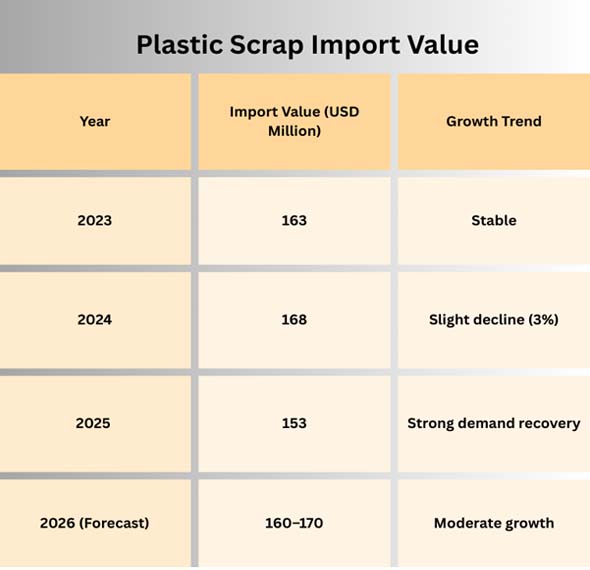
Because of demand from industry and global recycling trends, the market for bringing plastic scrap into Malaysia has developed steadily but slowly. In 2024, Malaysia hauled in more than $168 million worth of plastic debris. In the first three quarters of 2025, it brought in another $153 million. This suggests that demand is still strong, even though rules are getting harsher.
As per Malaysia Import Custom Data by Import Globals, forecast data shows that the growth rate will be consistent at roughly 4–5% per year until 2026. This is because demand from businesses is steady and the ability to recycle is expanding. Plastic scrap is only a small part of all imports (around 0.06% of all trade), but it is vital because it serves both industrial and environmental goals.
Malaysia as a World Plastic Waste Hub
Malaysia has always been one of the top countries in the world for importing plastic garbage, especially after China put limits on imports. From 2021 to 2024, Malaysia received more plastic scrap imports than any other non-OECD country. This shows how important it is to the flow of global garbage commerce.
Here are some reasons why the country is attractive:
- A recycling system that works well
- Processing costs that are competitive
- Strong base for manufacturing
- A good place to be in Southeast Asia
- But this fast expansion has also made many worry about how well the environment can handle it and how well we can handle waste.
Malaysia's Most Important Trade Partners: Imports of Plastic Scrap
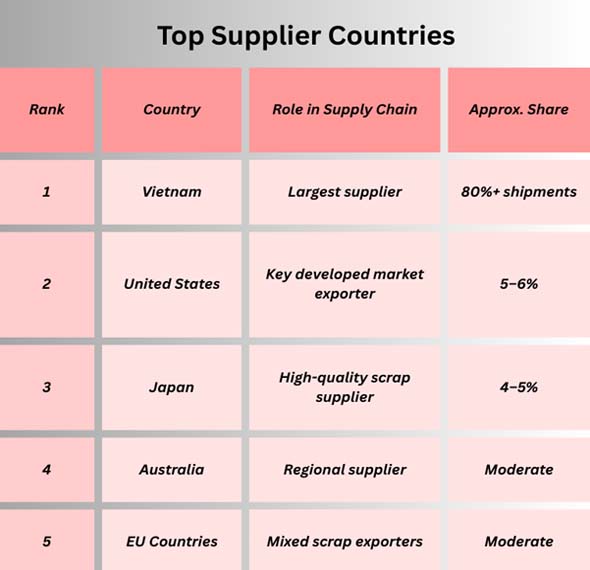
Based on Malaysia Import Trade Analysis by Import Globals, Malaysia gets plastic garbage from many different nations, although most of it comes from Asia and industrialized economies. Vietnam is the biggest supplier of plastic scrap to Malaysia, sending more than 80% of shipments. The US and Japan come next.
Important Trade Dynamics
- Vietnam is a significant hub for redistributing goods in the region.
- As per Malaysia Import Data by Import Globals, the United States sends a lot of recyclable rubbish to other countries.
- Japan sends plastic scrap that is cleaner and of better quality.
- Europe sends recyclable materials of different grades.
- This technique of getting raw materials from many different places makes sure that Malaysia's recycling industry always has what it needs.
Changes in Global Trade and Their Effects
According to Malaysia Exporter Data by Import Globals, the way plastic garbage is traded around the world is changing quickly, which has a direct effect on Malaysia's imports.
1. Effects of the China Ban
After China stopped letting plastic waste into the country, exporters moved to Southeast Asia, with Malaysia being a main destination.
2. Diversion from Other Countries
Exporters have had to send their goods to Malaysia instead of Indonesia because of recent changes in policy there. This has put further stress on Malaysia's waste management SI system.
3. More Exports From Developed Countries
As per Malaysia Export Data by Import Globals, countries like the UK and the U.S. have begun exporting more plastic trash to impoverished countries like Malaysia, where it is cheaper to recycle.
There Will Be Changes to Rules and Policies in 2025–2026
Malaysia has strict restrictions to keep plastic trash out of the nation and protect the environment.
Important Steps in Policy
1. After signing the Basel Convention, Malaysia now closely respects international laws regarding the trading in plastic waste. It only lets goods into the country from places that follow these guidelines.
2. Why SIRIM Certification is Necessary
Based on Malaysia Importer Data by Import Globals, SIRIM must obtain its clearance before plastic scrap may be transported into the nation. This is to make sure that the scrap meets standards for quality and the environment.
3. Stricter Limits on Contamination
New laws say that there must be low levels of contamination and tests before something may be exported.
4. Rules that Only Apply to Some Countries
Malaysia has done things to stop or limit imports from some countries. For example, it will be against the law to bring in plastic scrap from the U.S. starting in the middle of 2025. regarding the environment and issues with long-term viability.
A Lot of Plastic Scrap is Coming Into the Country Very Quickly, Which is Bad for the Environment in a Number of Ways:
1. Trash that is Brought Into the Country Without Permission
According to Malaysia Import Shipment Data by Import Globals, some of the trash that comes from other nations can't be recycled or is labeled wrong, which is bad for the environment.
2. The Ability to Deal with Trash
It takes a long time for local recycling centers to process a lot of materials.
3. Pollution Risks
Throwing items away the wrong way can pollute the land, water, and air.
4. People don't like It
Communities have been more against bringing in plastic debris because they are worried about the health and the environment.
The Economic Importance of Bringing in Plastic Scrap
Plastic scrap imports are vitally crucial to Malaysia's economy, even if there are challenges.
Main Benefits
- Helps the industries that recycle and manufacture products
- Lessens the need for new plastic materials
- Makes jobs in the recycling and processing industries
- It makes it easier to sell recycled items to other countries.
- Recycling is an important part of Malaysia's industrial environment, especially when it comes to making plastic and other packaging.
How to Find the Right Balance Between Growth and Rules in Your Trade Strategy
Import Globals' statistics on Malaysian imports shows that Malaysia is handling plastic trash imports in a fair way.
1. Make a Plan for How to Handle Controlled Imports
Reducing the amount of dirty, low-quality waste while allowing high-quality recyclable materials to come in.
2. Making Links Between Different Areas
As per Malaysia Import Export Trade Analysis by Import Globals, strengthening economic ties with ASEAN countries to make supply chains more stable.
3. Processing that Improves the Situation
Concentrating on the conversion of waste metal from foreign countries into a valuable commodity.
Final Remarks
As per Malaysia Export Import Global Trade Data by Import Globals, between 2025 and 2026, Malaysia is expected to receive a significantly greater quantity of plastic waste. More people are aware of environmental issues and more rules are being put in place, which is changing the industry. Even so, many ports still bring in plastic debris from all around the world.
The recycling industry is slowly growing since it is important to people and businesses all around the world. But Malaysia is changing how it imports goods to be more responsible and limited because of stronger rules, changes to the law, and the aim to be better for the environment.
As the worldwide market for plastic trash grows, Malaysia's long-term participation in the recycling ecosystem will depend on its ability to safeguard the environment while also encouraging economic progress.
FAQs
Que. How much do you think Malaysia will spend on plastic garbage imports in 2025?
Ans. In the first three quarters of 2025, Malaysia collected around $153 million worth of plastic waste.
Que. Which nation exports the most plastic waste to Malaysia?
Ans. Vietnam is the primary supplier and exports the most products.
Que. Why isn't Malaysia admitting plastic trash into the country?
Ans. To protect the environment, stop the illegal importation of trash, and obey the standards set by other countries.
Que. What does the future hold for this market?
Ans. The market will probably grow modestly, but it will also trend toward imports that are of better quality and more controlled.
Que. Where to get detailed Malaysia Import Export Global Data?
Ans. Visit www.importglobals.com.