US-Europe Trade Analysis: The Market Upgrades of 2025

- Sep 17, 2026
US-Europe Trade Analysis: The Market Upgrades of 2025
The U.S.-European bilateral trade relationship is one of the most significant commercial trade partnerships, supported by strong flows of goods, services, investment, energy, pharmaceuticals, machinery, and vehicles. The trade between the United States and the European Union has continuously expanded, despite the changing tariff policies, geopolitical uncertainties, and shifts in global supply chains.
As reported by US Trade Data, U.S. goods exports to the European Union are currently at a staggering rate of 412 billion U.S. dollars, while imports are valued at 632 billion U.S. dollars. The total bilateral goods trade between the two economies is at a rate of 1.04 trillion. The United States therefore has come across a trade deficit of 220.3 billion U.S. dollars with the European Union in 2025.
The European perspective has resulted in a trade surplus. The overall product structure is the highlighting factor of the complementary strength of both economies. The EU's leading exports to the U.S., including medicinal and pharmaceutical products, are responsible for power-generating machinery, reported EU Customs Data. The major exports to the European markets, including crude petroleum, petroleum preparations, and natural gas, have reflected the strength in energy, industrial goods, technology, and high-value manufacturing. The United States has imported substantial quantities from the European Union, mainly pharmaceuticals, machinery, specialty chemicals, and aircraft-related products, according to U.S. Shipments Data. The integrated transatlantic market and the flow of industrial products from the United States have supported the effective regulation of trade, mainly in pharmaceuticals, automobiles, machinery, and other high-value manufactured products.
Importance of the US-Europe Trade Relationship in Global Trade
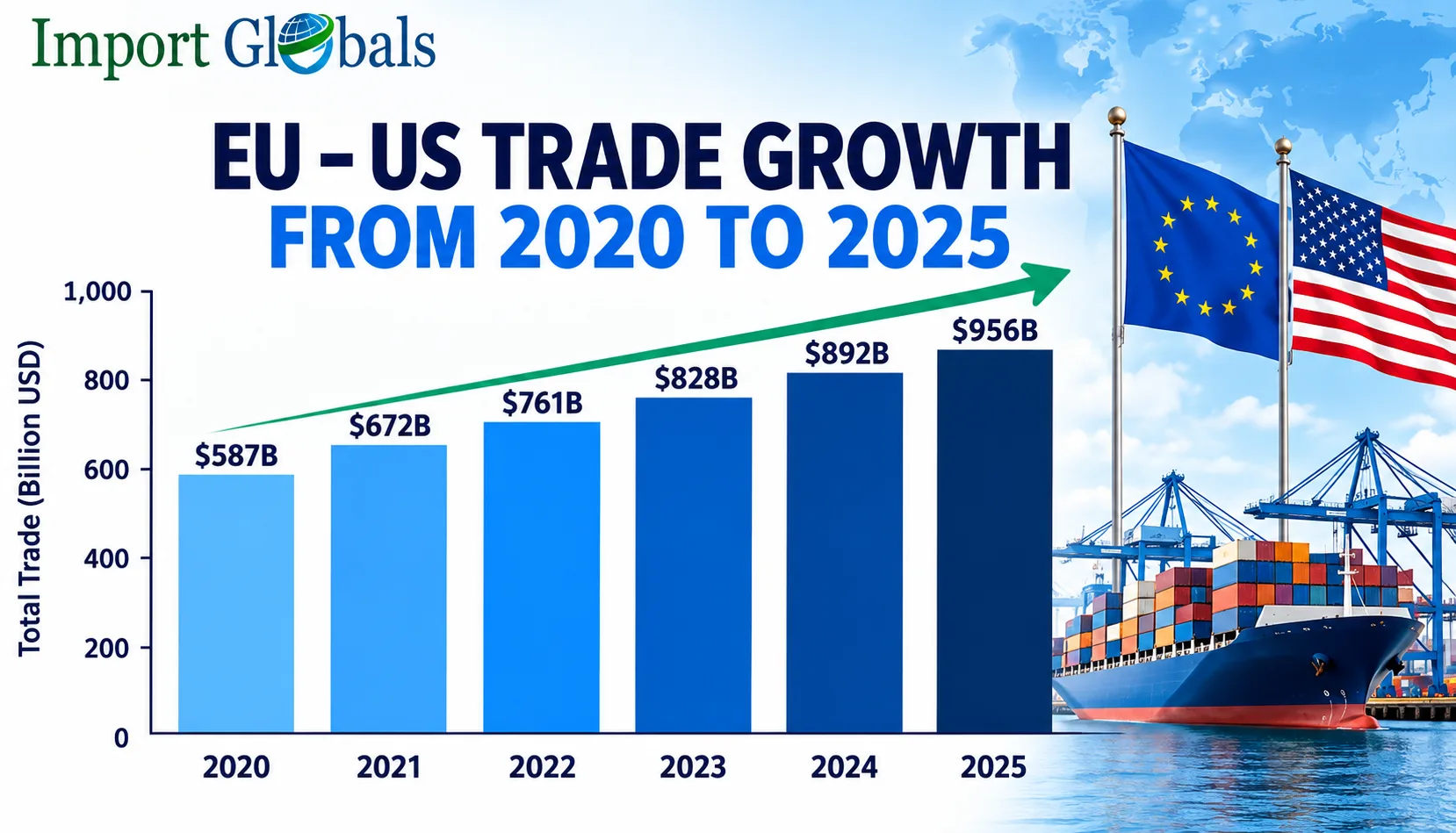
The trade relationship between the United States and Europe is among the most important trade partnerships in the world. The two continents account for significant shares of the global economy in terms of trade, investment, production, and consumption. As a result, their trade relationship has a prominent impact on international supply chains, trade flows, technological markets, and business practices in various sectors.
Moreover, US Customs Data reported that the diversity of traded goods between these markets makes the relationship vital. Trade between the US and Europe covers a range of goods, including machinery, vehicles, medicines, chemicals, electronics, aircraft, energy, and agricultural products. Therefore, companies and investors keep an eye on European Trade Data to learn the latest trends and understand the shifts in consumer demand.
Europe offers US companies the possibility of entering a vast and well-developed consumer market, and European companies may benefit from the scale, purchasing power, and technological prowess of the US economy in return. US Import Data is used to monitor shipment activity, products that have been imported, suppliers and buyers, and trade values and movements in the market.
The trade relationship between Europe and the US aids in reinforcing global supply chains. European and US companies are present in markets in production networks that are interconnected. Moreover, when policies change in one area of trade, it has a strong impact on other parts of the globe.
Industries Promoting Bilateral Relationship of EU and US

Automotive Industry
The automotive industry has been described as one of the most prominent sectors of EU–US bilateral trade, as per US Trade Statistics. European exporters send cars, commercial vehicles, automotive parts, and innovative technologies to the US, while American manufacturers deliver cars, engines, automotive components, and technologies. The sector benefits from steady consumer demand, established manufacturing processes, and large investments on both sides of the ocean. The trade in electric vehicles and batteries, as well as autonomous-driving technologies and other specialized components, is also showing positive development trends.
Pharmaceutical Industry
The category of pharmaceuticals and healthcare products is extremely important for EU-US bilateral trade. The EU and the US are considered the best regions for pharmaceutical research, biotechnology, production of medical equipment, and innovations in health care. The category of products includes medicines, vaccines, API, and laboratory devices. Growing demand in the healthcare sector is proving to be conducive to trade.
Equipment, Technology, and Futuristic Manufacturing
Equipment and advanced technology play another vital role in trade between the EU and the USA. The two markets trade in industrial equipment, electrical devices, aerospace technologies, automation systems, semiconductors, and special equipment for making certain products. These goods cover industries that range from energy and construction to automobile manufacturing and electronics. The growing need for automation, digitalization, artificial intelligence facilities, and clean energy technologies makes operational possibilities even broader.
Top Exported Products of the Us to EU
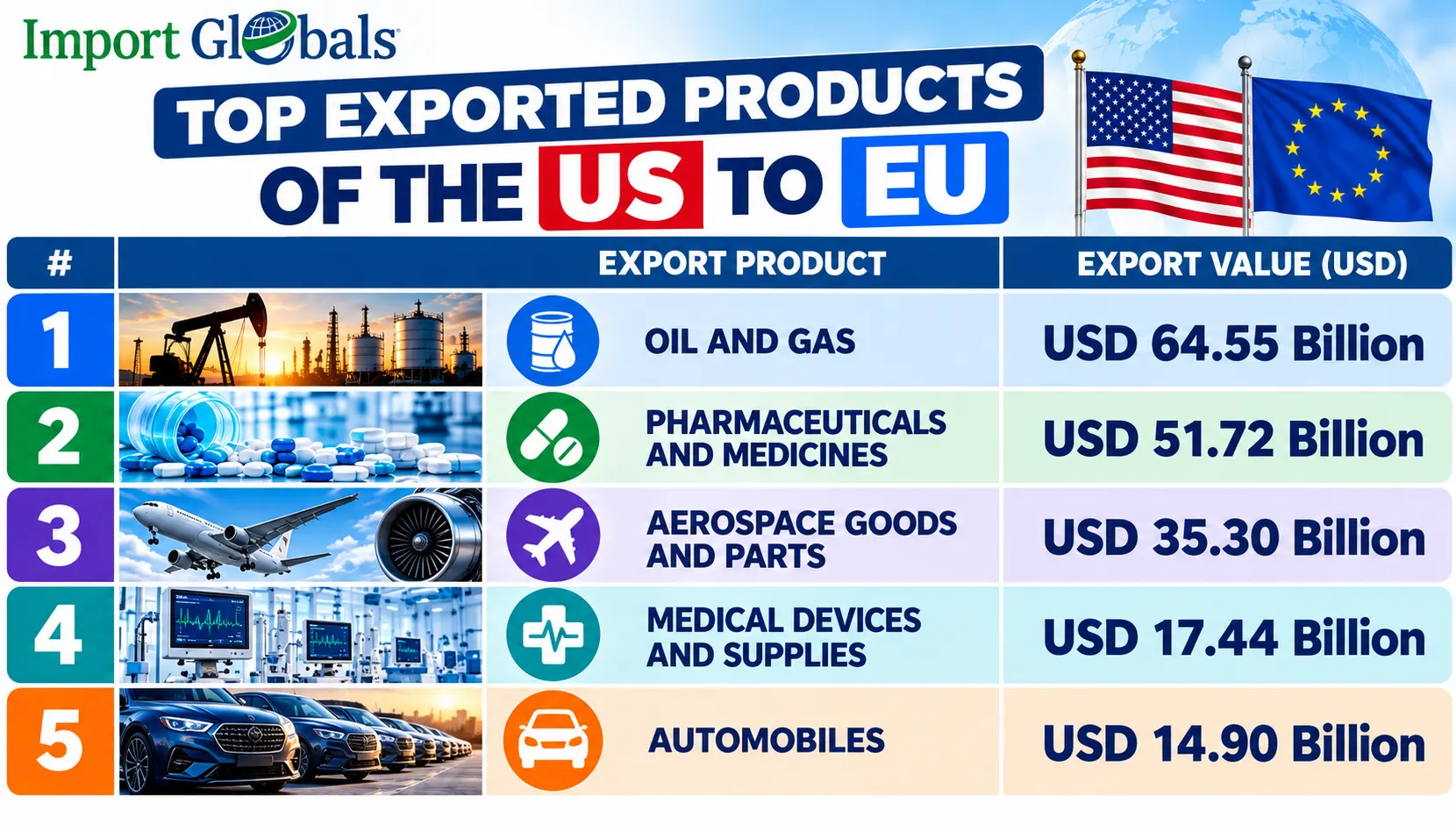
1. Oil and Gas — USD 64.55 Billion
In 2025, oil and gas were the leading US export category to the EU, accounting for roughly USD 64.55 billion, reported US Export Data. This export category illustrates Europe’s growing dependence on US energy. Energy exports have become critical for Europe in terms of energy security and diversified sources of energy supply.
2. Pharmaceuticals and Medicines — USD 51.72 Billion
Pharmaceuticals and medicines occupied the second place among exports to the EU with exports of around USD 51.72 billion. Such volume is attributed to highly developed collaboration between the pharmaceuticals industry of the US and the EU. Pharmaceuticals, biotech products, and other medical-related products are of utmost importance for transatlantic trading.
3. Aerospace Goods and Parts — USD 35.30 Billion
Aerospace goods and parts generated around USD 35.30 billion of US exports to the EU, reported US Shipment Trade Data. The sector includes aircraft, engines, and various accessories, among other aerospace equipment. High demand for aviation products and the presence of numerous aerospace manufacturing companies increase the volume of this trade.
4. Medical Devices and Supplies — USD 17.44 Billion
Medical devices and supplies accounted for nearly US$17.44 billion in US exports to the EU. This category profits from the advanced healthcare systems available in Europe and the demand for modern diagnostic, surgical, laboratory, and medical technologies.
5. Automobiles — USD 14.90 Billion
Automobiles accounted for almost US$14.90 billion worth of US exports to the EU. Certainly, the European car market is extremely competitive, yet American automobiles still find demand in niche markets, such as luxury and performance vehicles, and larger cars.
Top Exported Products of the EU to US
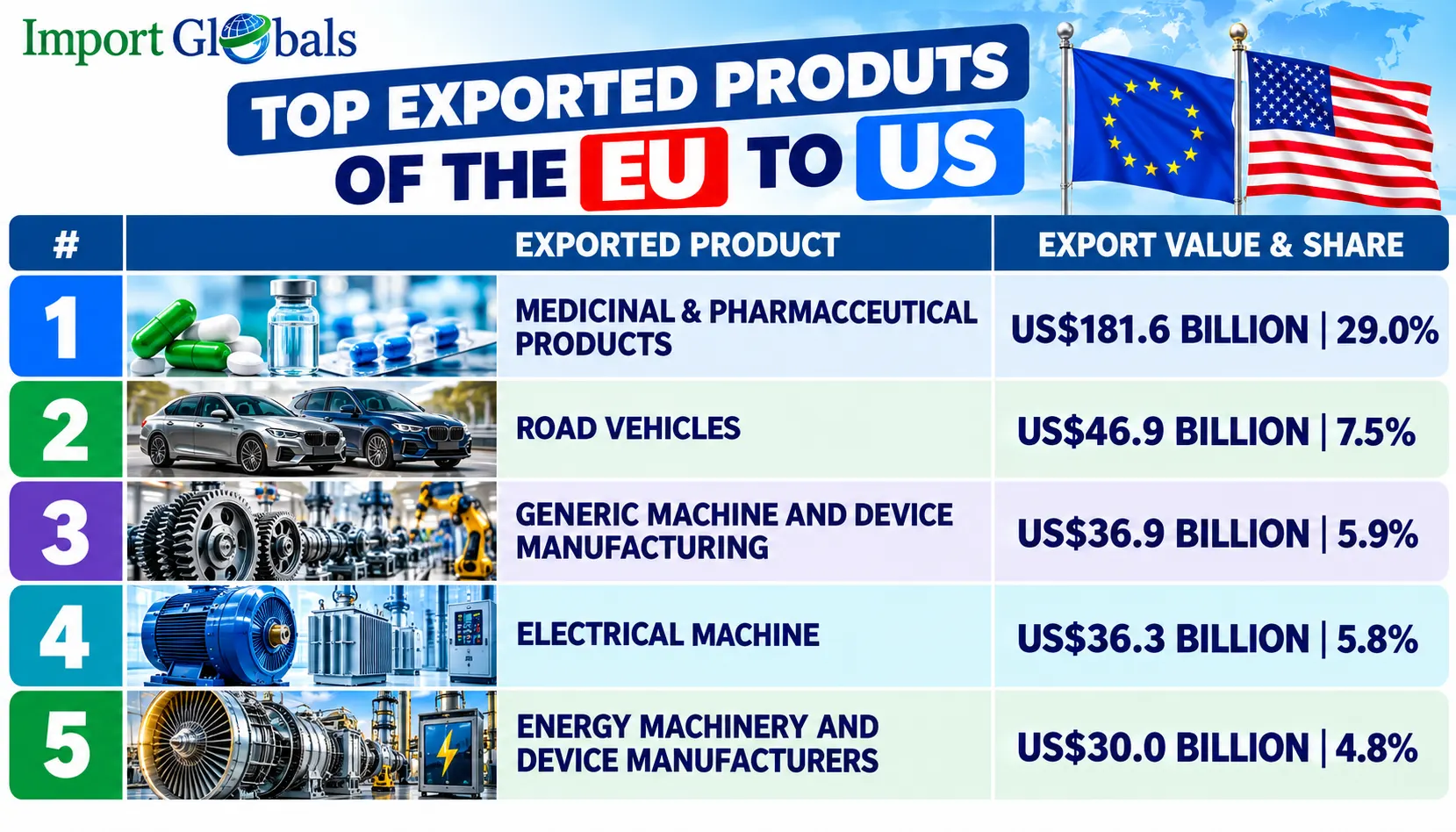
1. Medicinal & Pharmaceutical Products — US$181.6 Billion | 29.0%
Medicinal and pharmaceutical products were the top EU export category to the US in 2025, representing 29% of EU total exports to America, as per EU Export Data. This corresponds to a yearly export value of US$181.6 billion based on the overall performance. The excellent results are due to the advanced state of the pharmaceutical and biotechnology sectors in Europe and the high demand for medicine, healthcare products, and innovative treatment methods in the US industry.
2. Road Vehicles — US$46.9 Billion | 7.5%
Road vehicles were the second-biggest EU export category to the US, representing 7.5% of the EU total exports to the US or approximately US$46.9 billion. European car manufacturers have a strong foothold in the US automotive sector, especially in premium, luxury, performance, and specialty segments. The export of road vehicles also involves a very extensive chain of providing automotive components and technologies.
3. Generic Machine and Device Manufacturing - US$36.9 Billion | 5.9%
Generic machine and device manufacturing accounted for 5.9% of the total EU exports to the USA, which corresponds to approximately US$36.9 billion. European industries have a good reputation in the world regarding the supply of machinery for different industries, like manufacturing, building, engineering, energy, etc. Growing investments in new production capacities create a positive environment for the demand for European machinery, says EU Customs Trade Data.
4. Electrical Machine - US$36.3 Billion | 5.8%
Electrical machine was responsible for 5.8% of the EU exports to the USA (roughly US$36.3 billion). This category comprises a set of electrical devices and elements that are used in different industries, including manufacturing, infrastructure, electronics, energy, technology, etc. More and more projects for digitalization and improvement of technological infrastructure create a good opportunity for EU suppliers.
5. Energy Machinery and Device Manufacturers - US$30.0 Billion | 4.8%.
Machinery and devices that produce energy accounted for 4.8% of total EU exports to the USA (around US$30.0 billion). These products help in energy generation, production processes, and energy infrastructure. The possibility of using superior engineering skills in the manufacture of complex machinery is crucial for the relationship between Europe and America.
Top Challenges Affecting the EU–US Bilateral Trade Relationship
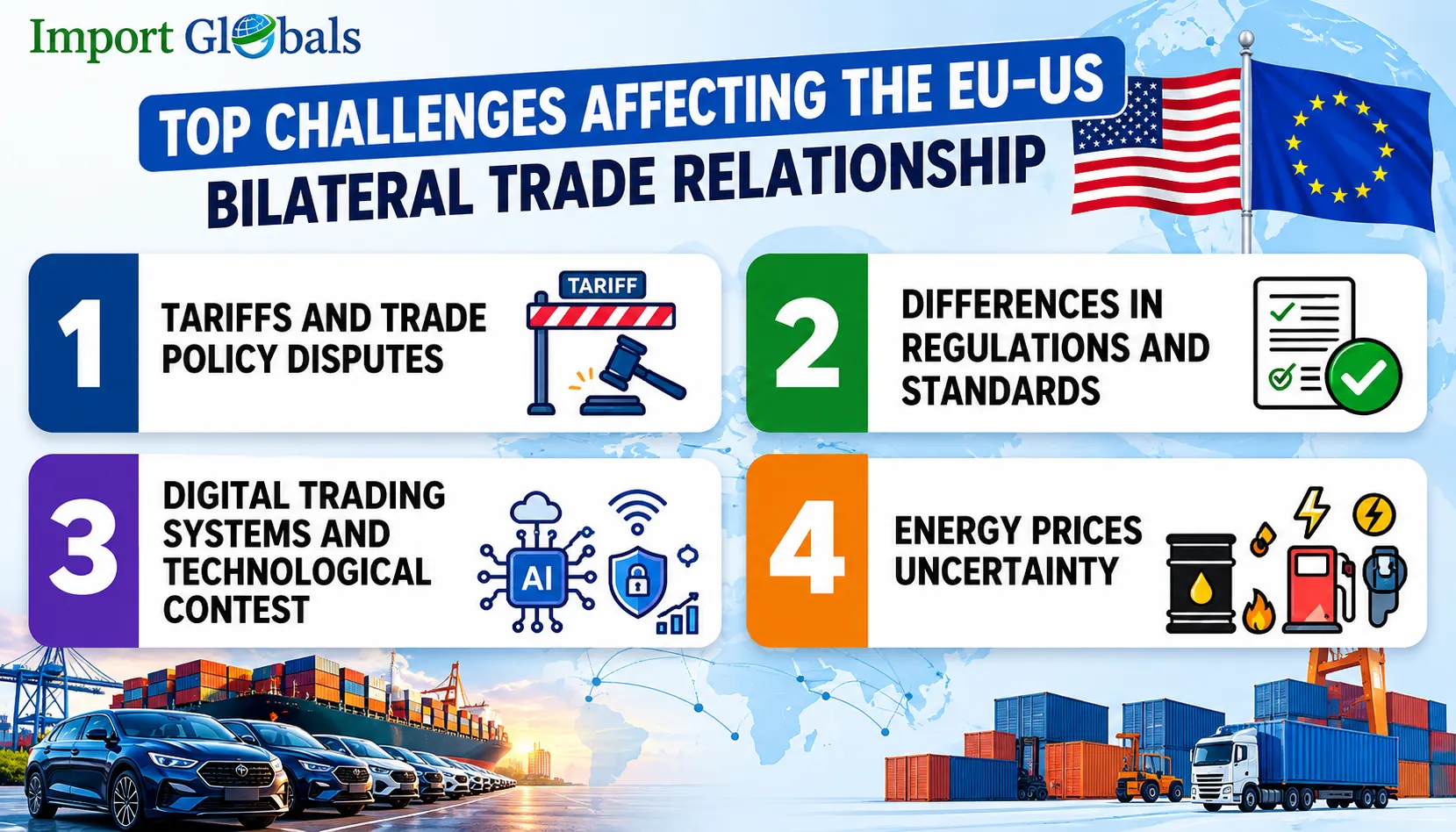
1. Tariffs and Trade Policy Disputes
Disputes over tariffs and trade policies continue to present a significant challenge for businesses engaged in EU–US trade. Some import fee adjustments will heighten costs for businesses, decrease their competitiveness, and promote uncertainty for exporters and importers. Hence, there is a need for regular negotiations in order for transatlantic trade to be stable, says US Shipment Customs Data.
2. Differences in Regulations and Standards
The US and EU are often on uneven footing when it comes to regulations and product standards. Sectors such as automobiles, pharmaceuticals, agriculture, and chemicals exhibit significant differences between the two sides, making businesses face extra compliance costs and difficulties.
3. Digital Trading Systems and Technological Contest
Issues related to digital taxation, data security, artificial intelligence, online services, and technology regulations are becoming more and more popular areas of dispute, as per EU Import Export Trade Data. The contradictions in the strategies of the EU and the US with regard to data management and digital markets may complicate the activities of IT companies and international digital trade.
4. Energy Prices Uncertainty
The prices in the energy market, political events, problems with logistics, and alterations in the global supply chain may play a role in the cost of trade between the EU and the US. Though the energy exports from the US are becoming more relevant for Europe, the changes within the energy market may influence the trade relationship in a broader sense.
How Does Import Globals Help Traders With the EU-US Trade Relationship?
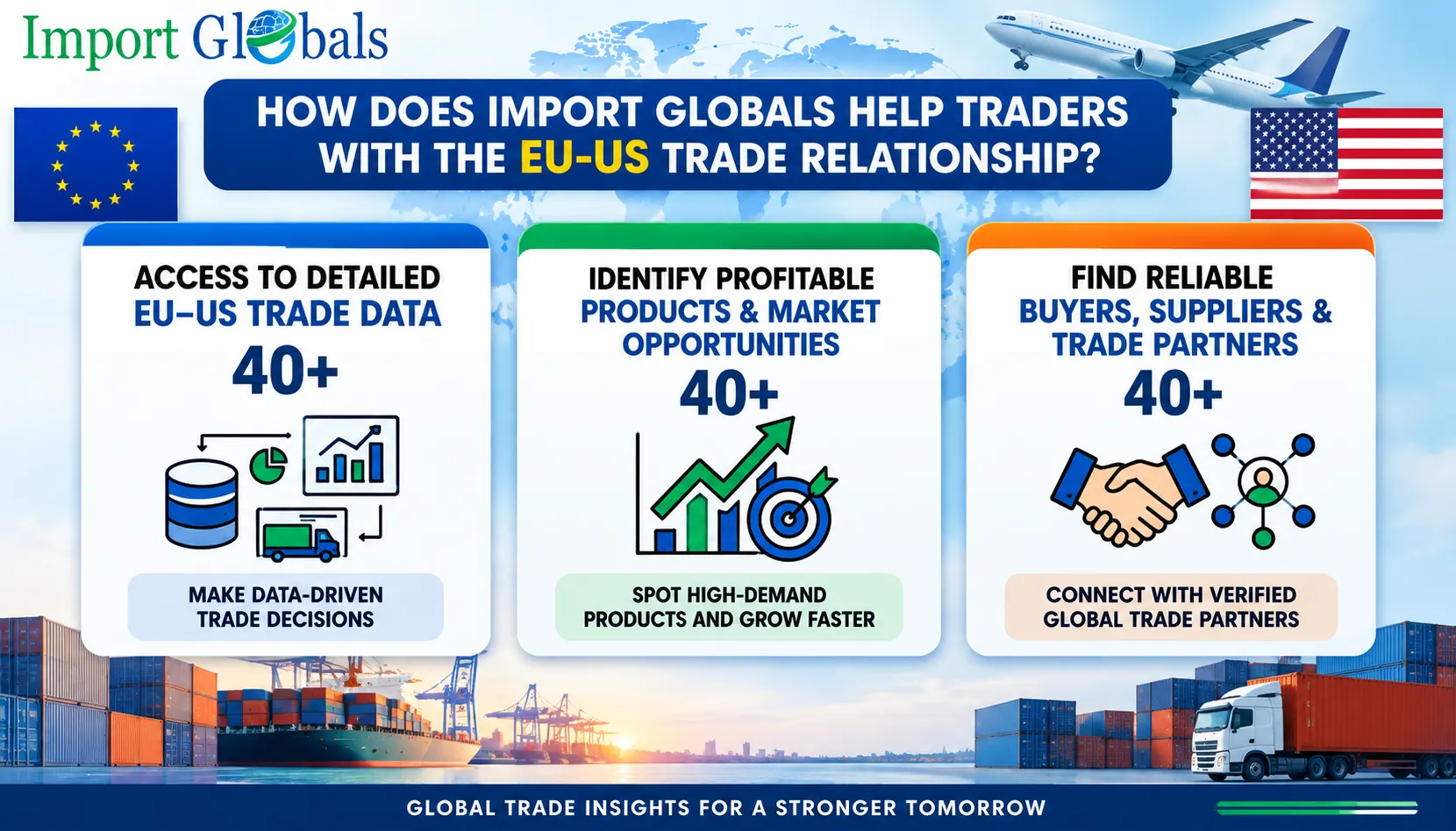
Import Globals works as a boon for businesses looking for the latest trade updates regarding the EU-US bilateral trade. The services involved properly highlight the top traded products between both economies. The HS code-based shipment-level analysis of specific products crafts the marketing entry strategies of different traders trying to emerge on a nationwide level.
Import Globals provides all the detailed information regarding the latest fluctuations of the tariff rates and the top continental role players of the European Union, facilitating the EU's integration with the nearby regions. The detailed trade information supports marketing growth while promoting an active understanding of the latest trade intelligence.
Future Trade Outlook of the EU-US Bilateral Trade Relationship
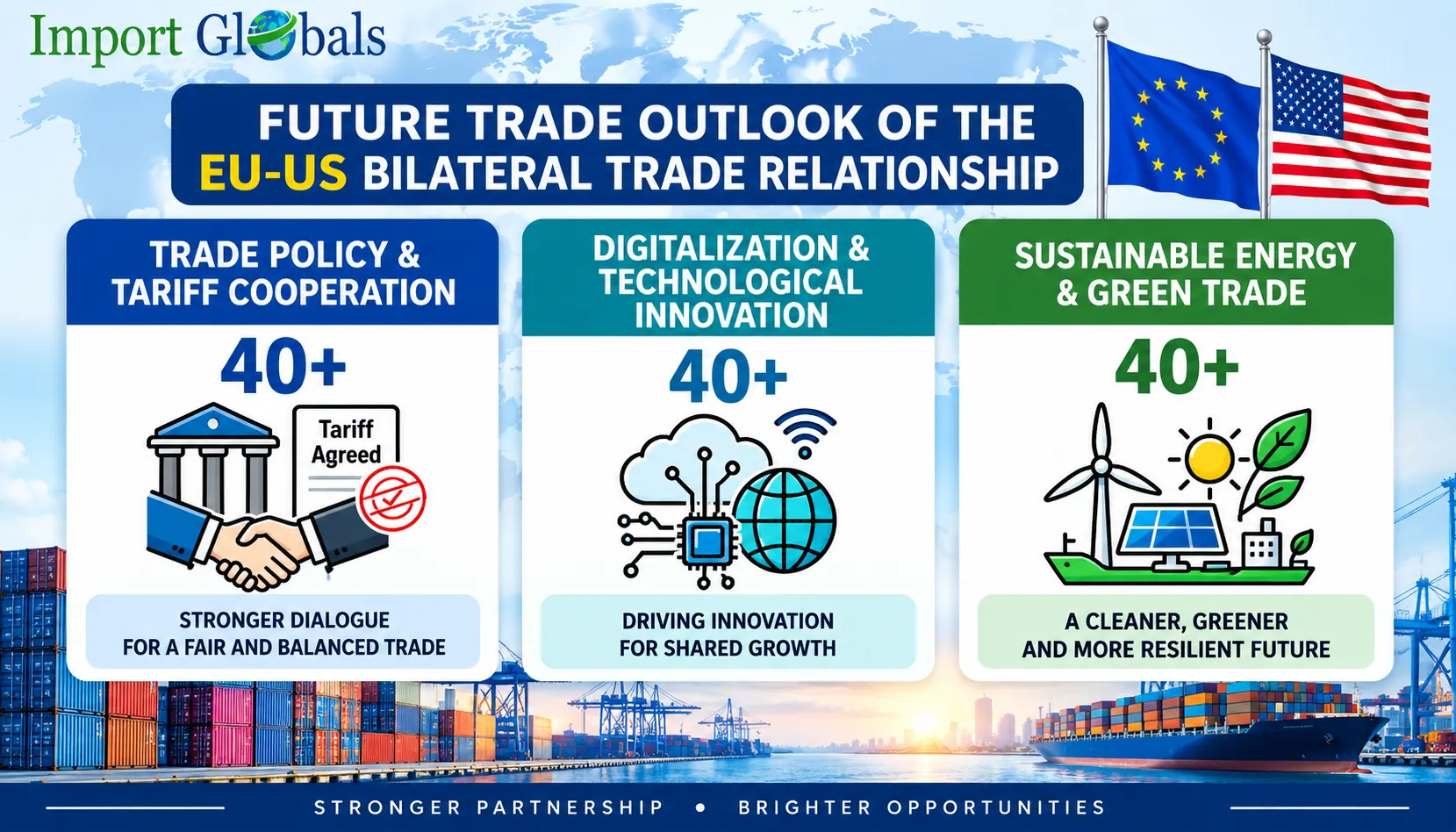
The future of the EU-US bilateral trade is expected to be strategically important because of the existing tariff, regulatory, technological, and geopolitical challenges. The markets have highly developed economies, sophisticated industries, and deeply interconnected supply chains. The growth in technology and digital trade is on the way to creating transatlantic commerce.
Artificial intelligence, semiconductors, cloud computing, cybersecurity, and digital services will be the primary areas for cooperation on digital standards, reported US Customs Shipments Data. The expansion of clean energy and green technologies will generate new trade opportunities in renewable energy equipment, with heavy investment in sustainable technologies. The stronger pharmaceutical and healthcare trade will expand the trade portfolio of both regions with continuous investment in biotechnology and innovative medicines.
Conclusion
The EU-US trade relationship is one of the most influential commercial relationships in the global marketplace. The trade in pharmaceuticals, automobiles, machinery, electrical equipment, and energy products will connect businesses and supply chains across both regions. The tariff regulatory differences, digital policies, and geopolitical developments will promote uncertainty and present challenges.
The depth of economic integration is on the way to create substantial opportunities for continuous operation. Businesses looking for close monitoring of market movements can better understand changing demand, along with identifying reliable trading partners and developing effective international expansion strategies. Companies seeking detailed trade insights can access information on transatlantic commerce. Europe Trade Data and Europe Customs Data provide relevant information about the products, buyers, and suppliers involved in trade values and market trends.
CTA
Looking for identification of US buyers, European suppliers, emerging products, and new transatlantic trade opportunities? Then you have come to the right platform. Import Globals is an expert in providing shipment-level trade intelligence to help businesses understand international markets. The use of European trade data and US customs data helps the authorities discover active buyers and suppliers. Subscribe to www.importglobals.com or drop an email at info@importglobals.com for detailed analysis of the EU and the US to drive your international business growth, along with the evaluation of pricing trends and identification of high-potential markets.
FAQs
Que. Why is the EU-US trade important?
Ans. The EU-US trade is important because of the connectivity between the world's largest and most advanced economic markets.
Que. What are the top products traded between the EU and the US?
Ans. Pharmaceuticals, automobiles, and machinery are the top products traded between the EU and the US.
Que. Name the industries driving the EU-US bilateral trade.
Ans. Pharmaceuticals and automotive are the top industries driving the EU-US bilateral trade.
Que. Name the biggest challenge affecting the EU-US trade.
Ans. Tariffs and trade policy disputes are among the biggest challenges affecting EU-US trade.
Que. How do tariffs affect the EU-US trade?
Ans. Tariffs affect EU-US trade by increasing the cost of imported products and reducing price competitiveness.
Que. What is the role of technology in EU-US trade?
Ans. Technology is becoming increasingly important because of the trade in semiconductors, artificial intelligence, and digital services.
Que. How does EU-US import-export data support business growth?
Ans. Import Globals EU-US import-export data support business growth via proper identification of buyers, supplier analysis of market demand, and development of effective market expansion strategies.
Que. What information is available in EU-US trade data?
Ans. EU-US trade data covers Importer names, Exporter names, Shipment date, HS Code, Product Details, quantity, values, pricing information, origin country, importing country & port details.
Que. How frequently is the EU-US trade data updated?
Ans. EU-US trade data is updated on a monthly basis.
Que. Where can one get detailed information on the EU-US trade?
Ans. Visit www.importglobals.com or drop an email at info@importglobals.com for detailed updates on the EU-US bilateral trade.
You Can Also Visit :-