Automobiles, Food Products, and Global Markets are All Part of Spain's Export Economy
- Jan 24, 2026
Automobiles, Food Products, and Global Markets are All Part of Spain's Export Economy
Spain has one of the most open manufacturing and agri-food industries in Europe. Domestic demand is important, but Spain's development and competitiveness are closely tied to how well it exports, especially in cars and car parts, food and drinks, and agricultural products.
As per Spain Import Data by Import Globals, Spain's trade identity is built on two main pillars: on one side, industrial scale and supply-chain integration; on the other side, farming, processing, and brands that are known across the world. Together, they help Spain make more money from exports, create jobs in different parts of the nation, and strengthen the country's place in European and global value chains.
1) The larger picture: what Spain sells to other countries
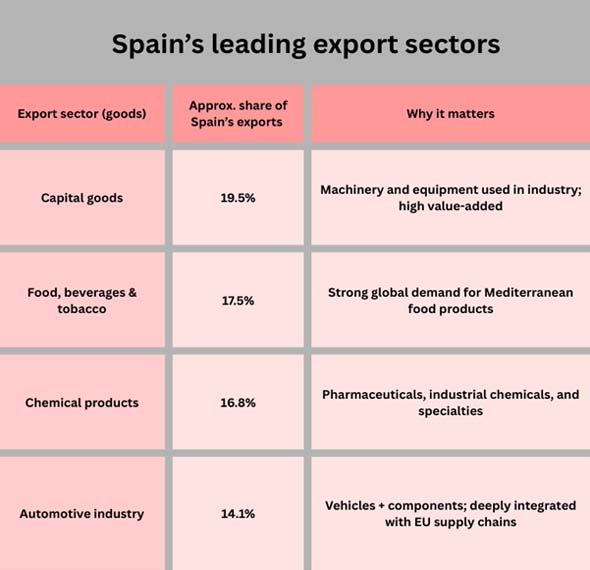
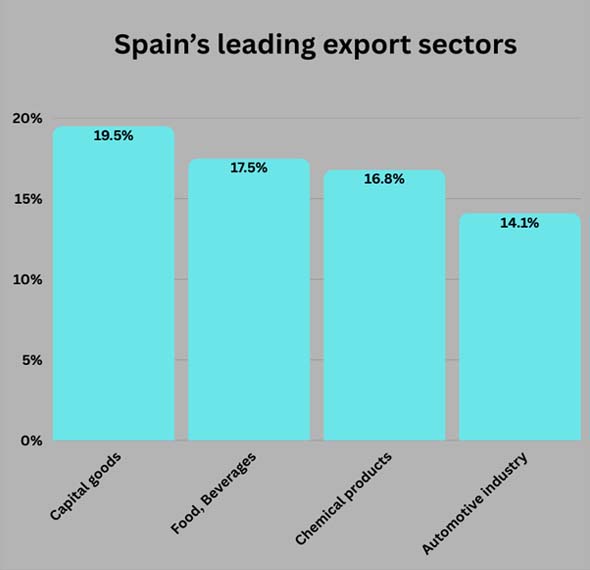
As per Spain Export Data by Import Globals, Spain exports a wide range of goods, but a few categories always come out on top. Spain's main exports include capital goods, chemicals, food and drinks, and cars. Spain's location gives its exporters an edge because it is close to important EU markets, has strong ports and logistical corridors, and has a lot of suppliers. This helps them compete on delivery speed, quality, and size.
These shares are important because they show that Spain's export engine is "balanced," meaning it doesn't depend on just one type of commodity cycle. When one sector slows down, like autos when demand goes down, other sectors, like food exports, can keep the overall export base stable.
2) Cars: Spain's Most Important Manufacturing Export
A Company That Sells Cars All Around Europe
According to Spain Import Export Trade Data by Import Globals, Spain is one of the biggest places in Europe for making cars. It makes a lot of them and sends most of them to other countries. Spain has sent more than 2.1 million cars to other countries in a single year in the past few years. Most of these cars went to European countries, which shows how well assembly factories and suppliers are connected to EU consumer markets. Europe is still the main market, but Spain also sends cars and parts to other non-EU nations that are close to Spain and have good trade relations.
Parts and Suppliers: the "Hidden" Strength
As per Spain Import Custom Data by Import Globals, Spain is a major provider of car parts, including electronics, powertrains, chassis parts, and interior systems, in addition to finished cars. Exporting parts is strategically essential because it can be more stable than exporting whole vehicles. This is because suppliers can work with more than one brand and assembly location, and they can switch between product lines more easily.A recent benchmark shows that Spain exports almost €25 billion worth of auto parts in a single year. As per Spain Import Trade Analysis by Import Globals, This shows that the country is a key supplier for Europe and is becoming more important outside of Europe as well. As the industry moves toward electrification, this supplier network becomes even more important. As per Spain Exporter Data by Import Globals, Even if EV platforms change the parts they use, they still need high-quality, scalable vendors.The change: electrification, rules, and competition
Three Things Are Now Affecting Spain's Tale on Car Exports:
Electrification and model mix: Spain's exports and production are shifting because of EV uptake and new rules. This has an effect on the portfolios and investment cycles of suppliers.Sensitivity to EU demand: Spain's auto exports are affected by EU consumer confidence, interest rates, and fleet replacement cycles because most of them go to Europe.
Countries in Europe are competing to host battery manufacturing, EV assembly lines, and next-generation component facilities. As per Spain Importer Data by Import Globals, Spain's industrial base is an advantage, but it needs to keep improving its skills, energy infrastructure, and research and development (R&D) intensity to stay ahead.
3) Food products: Spain's "everyday exports" that are sold all over the world
Cars show how big Spain's industry is, while agri-food exports show how competitive it is structurally. This is because of the climate, geography, farming know-how, and a strong food-processing industry. Spain sells a lot of fresh fruits and vegetables, processed goods, drinks, and animal products. This is made easier by well-established logistics networks and strong brand awareness in many areas.
What Happened to Make the Record Performance Happen
As per Spain Import Trade Statistics by Import Globals, Spain's exports of food and seafood have achieved all-time highs, thanks to better competitiveness and strong demand in European markets. Spain's long-term trend is based on high-quality production, advanced processing, and the ability to meet the needs of big retailers in the EU. Year-to-year changes can happen because of harvest circumstances and input costs.
What Spain Sells in Food and Why People Want It
Spain usually sends out the following foods:
- Fresh fruits and vegetables (typically sent swiftly to EU markets)
- As per Spain Exporter Data by Import Globals, Spain is known over the world for its olives and olive oil.
- Wine and drinks, with help from regional identity and quality levels
- Meat items (especially meat) and a wide range of processed meals
As per Spain Import Shipment Data by Import Globals, Food exports are often "sticky," which means that once suppliers achieve quality, safety, and delivery standards, they can work with importers and retailers for years. That makes things stable and demand predictable, even when the prices of goods go up and down.
Risk Perspective: Animal Health and Access to Markets
Food trade can also be affected by shocks that don't include tariffs. For instance, outbreaks of animal diseases might lead to limitations or extra certification requirements in marketplaces when goods are sent abroad. Meat is a big export category, so any problems can have a big effect on some regions and exporters, even if the overall agri-food basket is strong.
4) What Spain sells: Europe first, then the rest of the world
As per Spain Import Export Trade Analysis by Import Globals, the European Union is Spain's biggest export market. This isn't a bad thing; being close to the EU lowers shipping costs, makes deliveries more reliable, and makes it easier to coordinate the supply chain. But Spain also benefits from branching out into countries outside the EU when demand changes or when some sectors expand more quickly outside.
When it comes to cars, it's apparent that most of Spain's car exports go to Europe. The EU is also important for food items, although non-EU destinations can also be important, notably for high-end products, branded categories, and meat exports where market access is good.
Diversifying trade is important for resilience. When one big market slows down, exporters that have built up their skills in many areas can adjust their volumes and keep their profits.
5) What Spain's export model does well and what to look out for next
Pros
- Deep integration with European supply chains, notably for industrial and automotive goods
- Strong processing and logistics for large-scale agri-food operations
- Ports and connections that help both EU distribution and shipping around the world
- Balanced balance of sectors that makes the company less reliant on one product cycle
- Watchlist over the next few years: pace of EV transition and investment: how fast Spain can ramp up production and parts connected to EVs
- Exporters are more and more competing on carbon footprint and energy efficiency when it comes to energy costs and sustainability.
- Climate change, water stress, and sanitary rules can all alter the amount of food that can be traded and how easily it can be accessed.
Global Demand Fragmentation: As per Spain Export Import Global Trade Data by Import Globals, trade tensions and the need to localize supply chains might change what partners want.
Final Thoughts
The best way to understand Spain's export economy is as a two-engine system. Cars and parts make it possible to make things on a large scale, at a high value, and with strong ties to Europe's main markets. Food products bring in consistent, varied income based on the benefits of the climate, the complexity of the processing, and the significant demand for Mediterranean goods. Spain is strong because of these two things: when one sector slows down, the other can often help. The next chapter will rely on how well Spain prepares for EV-era manufacturing and how well it handles climatic and regulatory constraints in the agri-food sector, all while continuing to grow beyond its European base into global growth markets. Import Globals is a leading data provider of Spain Import Export Trade Data.
FAQs
Que. Why do cars play such a big role in Spain's exports?
Ans. Because Spain sends a lot of cars and parts to other countries, and the sector makes high-value goods that are linked to EU supply chains.
Que. What are Spain's best food exports?
Ans. Fresh fruits and vegetables, processed meals, olive oil, drinks, and animal products, all backed by solid logistical and market partnerships.
Que. Does Spain usually sell things to Europe?
Ans. Yes. Spain sends most of its exports to the EU, mainly cars, but it also sells to markets beyond the EU.
Que. What may stop Spain from exporting food?
Ans. Changes in the weather, the cost of inputs, and health and trade restrictions (particularly for animal goods) can all cause sudden problems.
Que. Where to get detailed Spain Import Export Global Data?
Ans. Visit www.importglobals.com.