Coal, Nickel, and Mineral Exports: Indonesia's Extensive Trade Outlook of 2026
- Jul 01, 2026
Coal, Nickel, and Mineral Exports: Indonesia's Extensive Trade Outlook of 2026
Indonesia, the country between the Indian and Pacific Oceans, is considered one of the top exporters of minerals. Coal, nickel, copper, bauxite, timber, and other mineral products are the top categories traded from the nation.
Indonesia Shipment Data reported the expansion of smelters, mineral processing facilities, and the battery manufacturing investment system as the main promoting factors of the export authority.
Indonesia Trade Data listed countries like China, South Korea, Japan, Europe, and the United States as the top export partners. The shipment level intelligence allows exporters, traders, mining companies, investors, and manufacturers to properly identify international trade activities. Subscribe to Import Globals, the leading Indonesia import export trade provider, to stay updated with the latest information on shipments with the Indonesia Trade Data.
The Comprehensive Overview of Indonesia's Coal, Nickel, and Mineral Export Market
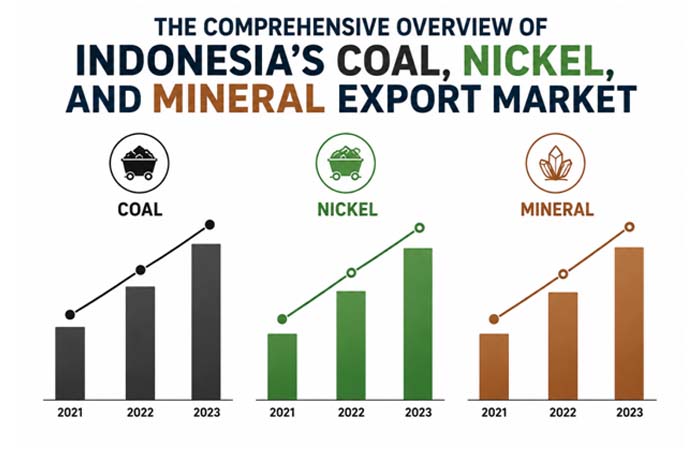
The established role play of the country as one of the influential commodity traders regarding abundant natural resources has maintained the competitive trade ranking. The mining sector is one of the strongest pillars of the Indonesian economy, with a significant contribution to industrial development, employment generation, export revenue, and foreign investment. The coal exports will maintain the major power generation industry's activity for the foreign exchange earnings. Indonesia is a top trader of the fastest-growing export commodities backed up by the rapid expansion of the global electric vehicle industry.
The country will be a thriving trader of ferro-nickel, bauxite, and processed mineral products in order to maintain compliance with the global trade standards. Top export categories, including thermal coal, metallurgical coal, ferro-nickel, nickel, matte, refined tin, copper concentrates, alumina, bauxite products, stainless steel, and processed industrial minerals. The continuous infrastructure expansion will maintain the thriving trade rank while reinforcing the leadership of the country as a role player in the global commodity market.
Why is Indonesia a Reliable and Top Global Leader of Coal, Nickel, and Mineral Exports?
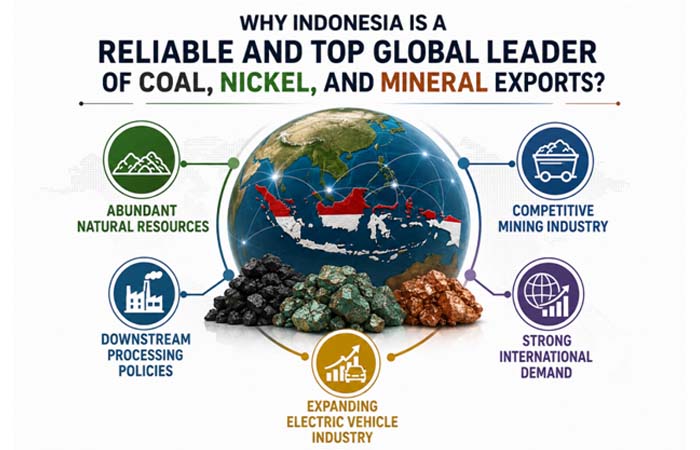
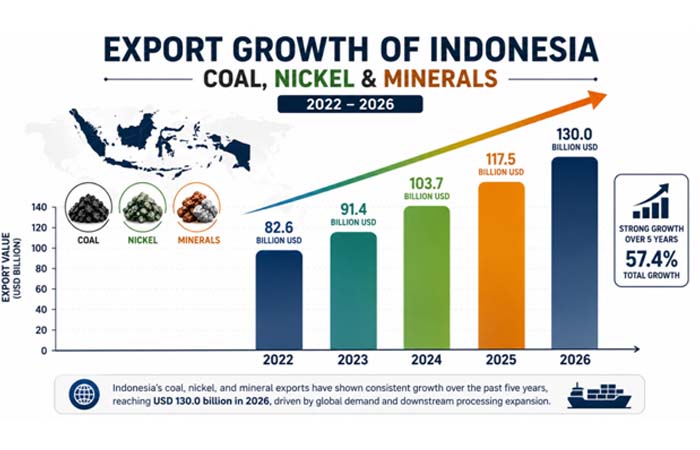
The image of Indonesia as a global leader of coal, nickel, and mineral exports is far more important than the normal tracking of the shipment activities. The competitive mining cost, strategic geographic location, and strong government support have crafted the overall trade of the coal, nickel, and mineral exports of the nation. The total coal, nickel, and mineral exports of the country have stood at a staggering rate of 130 billion US dollars in 2026, with a dominating share of Indonesia's merchandise exports. The top factors supporting Indonesia's leadership in the global commodity exports are discussed below.
1. Abundant Natural Resources - The country, possessing an abundance of natural resources in its large area, consists of coal, nickel, bauxite, tin, copper, and other valuable minerals. The natural resources and the enhancement of mining activities have maintained the trade continuity.
2. Downstream Processing Policies - The shift of the government authorities towards regulations encouraging domestic processing has accelerated the investment in smelters, refineries, stainless steel production, and battery manufacturing facilities. It has overall increased the export values while maintaining bilateral trade.
3. Expanding Electric Vehicle Industry - The proper hike in the global electric vehicle manufacturing is maintained to properly promote the compliance standards as per the globally increasing demand rate.
4. Competitive Mining Industry - The Indonesian authorities have reported that the Indonesia Import Data is benefiting from the skilled labor, expanding logistics infrastructure, modern mining equipment, and strong international investment. The country, possessing one of the most cost-efficient commodity suppliers, has solidified its overall role.
5. Strong International Demand - The growing industrialization, renewable energy projects, urbanization, and infrastructure development have positioned the country as a significant trader of coal, nickel, and iron ore. The hike in the demand rate from Asia, Europe, and North America will continue to drive the trade for Indonesian coal and mineral exports.
The Top Variants of Coal, Nickel, and Minerals Exported From Indonesia
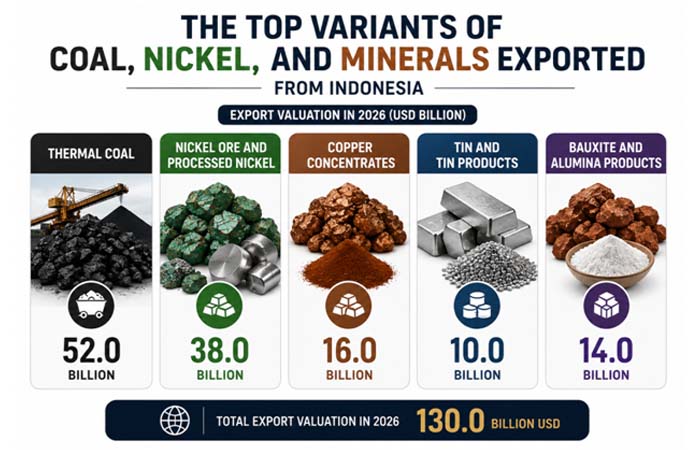
The variants of coal, nickel, and minerals export and their derivatives are dependent on the globally increasing demand rate. As represented by the Indonesia trade data, the topmost traded variants include
- Thermal Coal - Thermal coal is one of the leading sectors in Indonesia's trade. The country is considered one of the leading suppliers of coal and electricity generation essentials, with major export destinations like China, India, Japan, and South Korea. The hike in the energy requirements has maintained the developmental trade growth.
- Nickel Ore and Processed Nickel - Nickel ore and processed nickel are the top exported categories because of the growing global demand rate. Ferro-nickel, nickel matte, mixed hydroxide precipitate, nickel pig iron, and refined petroleum products are the top traded categories.
- Copper Concentrates - Copper concentrates are among the leading Indonesian mineral exports because of the certain investments made by the government authorities in energy systems, electrical infrastructure, electric vehicles, and telecommunications.
- Tin and Tin Products - Indonesia's continuous thriving trade ranking is facilitated by the tin and tin products trade. The country is ranked as one of the largest exporters of refined tin because of the industrial engineering driving export demand and the electronics manufacturing skills in the specific sector.
- Bauxite and Alumina Products - Processed bauxite and alumina exports are the top variants of coal, nickel, and minerals exported by Indonesia. The global aluminum manufacturing, automotive production, aerospace industries, and construction activities' overall productivity has maintained the specific trade continuity.
The Top Importing Destinations of Indonesia's Coal, Nickel, and Mineral Export: Overview of the Top Export Partners
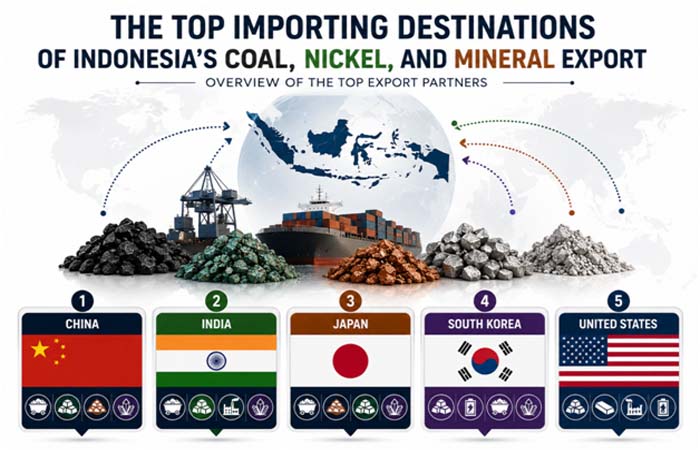
The commodity exports of Indonesia are backed up by the growing demand rate from specific regions. As listed by the Indonesia Export Data, the topmost authorities maintaining Indonesia's coal, nickel, and mineral exports in 2026 are,
- China - China Import Data reported the country as a dominant player in Indonesia's coal, nickel, and mineral export market. Coal, ferro-nickel, nickel products, copper concentrates, and industrial minerals are traded the most within this economy.
- India - India is also the largest importer of Indonesian thermal coal. The extensive supply of power generation plants, cement manufacturers, steel industries, and heavy industrial operations has promoted the bilateral integrity of both nations' activities over a specific trade.
- Japan - Japan Import Data reported, Indonesian coal, copper concentrates, nickel products, and refined mineral commodities as the main factors tying up the trade balance within both economies. The proper support through advanced manufacturing, automotive production, and renewable energy infrastructures has facilitated the regularization of trade.
- South Korea - South Korea Import Data reported that the country is responsible for the import of Indonesian nickel products, battery materials, ferro-nickel, and industrial minerals. The rapid expansion of electric vehicle batteries has maintained the export rate hike.
- United States - Wrapping up the list of the topmost export partners of Indonesia, the United States stands as the fifth top one. The proper trade of processed mineral products, refined metals, industrial raw materials, and battery supply chains has supported the clean energy investments and advanced manufacturing industries' fulfillment of the supply requirement, says US Import Data.
Top Industries Promoting Indonesia's Commodity Exports
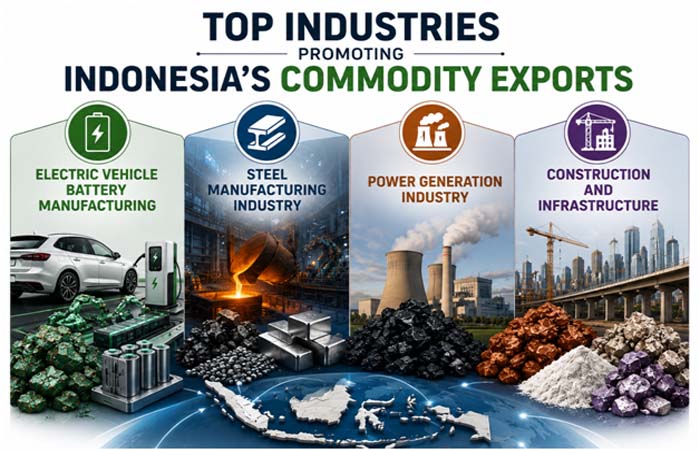
- Electric Vehicle Battery Manufacturing - As presented by the Indonesia Shipment Trade Data, the electric vehicle battery manufacturing industry is a significant contributor to the country's commodity exports. The proper hike in the investments made by the government authorities and international battery manufacturers has accelerated the productivity rate for the processed nickel products.
- Steel Manufacturing Industry - Steel manufacturing holds a significant share of the overall export market growth of the country. The global stainless steel manufacturer has been mainly responsible for the import of ferro-nickel, nickel pig iron, iron ore derivatives, and metallurgical minerals from Indonesia.
- Power Generation Industry - Coal remains the top influential factor of the power generation industry and its contribution to the global economic growth rate. The rapid urbanization and industrialization of the sectors have supported the international demand for the thermal coal trade.
- Construction and Infrastructure - Copper, bauxite, alumina, and industrial minerals are the top traded categories within the industry. The transportation projects, copper industrial construction, and residential developments are promoting the contribution of the construction and infrastructure industry.
The Latest Opportunities for Indonesia's Coal, Nickel, and Mineral Exports
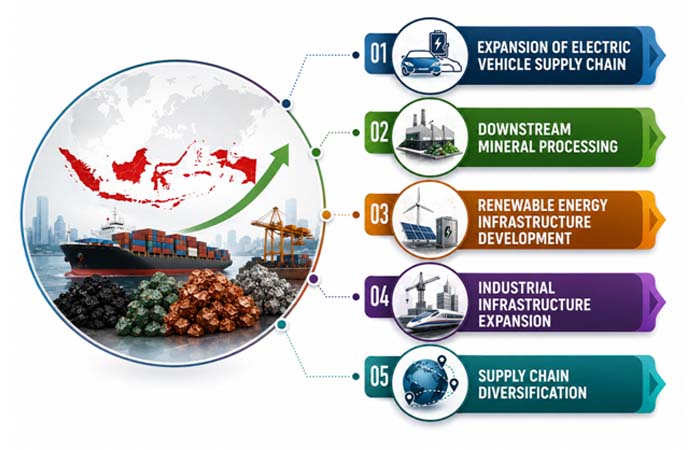
- Expansion of Electric Vehicle Supply Chain - The proper expansion of the electric vehicle supply chain is one of the latest market opportunities for Indonesia's coal, nickel, and mineral exports. The transition of the global authorities toward electric mobility has maintained the significant export opportunities for Indonesian nickel battery materials and copper products.
- Downstream Mineral Processing - The encouragement of domestic mineral processing via the government authorities has significantly increased the exports of higher-value products like ferro-nickel, refined petroleum, and alumina.
- Renewable Energy Infrastructure Development - The worldwide investments in renewable energy projects have continuously promoted the strong demand for industrial minerals, electrical metals, and battery raw materials. Indonesia Trade Data reported that it has overall maintained the integrity of the top traded categories, with the supply rate of Indonesia.
- Industrial Infrastructure Expansion - The investments made by the government authorities in manufacturing, urban infrastructure, transportation, and industrial construction have continuously increased the international demand for Indonesian manufactured commodities. It has overall increased the image of trade in the worldwide marketplace.
- Supply Chain Diversification - The global manufacturers' active diversification of the supply chain image regarding Indonesia's trade has improved the overall resilience. The abundant mineral reserves present in the country and the expansion of the processing capabilities have promoted the long-term supplier availability.
The Comprehensive Role of Indonesia Export Data in the Mineral Export Market
Indonesia Export Trade Data is considered a valuable tool for the business authorities in helping the mining companies, commodity traders, exporters, and procurement agencies to understand the evolution of the global commodity market. The shipment-level trade intelligence available in the Indonesia Export Statistics of Import Globals helps businesses to make informed commercial decisions with proper identification of profitable and international opportunities. Indonesia Customs Shipment Data includes all the detailed information regarding export volumes, product descriptions, HS code, exporter names, importer names, shipment values, pricing trends, destination countries, transportation modes, and shipment frequencies.
The international demand for coal, nickel, copper, bauxite, ferro-nickel, refined tin, and battery minerals will increase the importance of Indonesia's shipment-level trade intelligence. Import Globals “Indonesia Trade Statistics” will promote the businesses' ability to reduce operational risk while strengthening their competitive positioning in the rapidly evolving global marketplace.
Exclusive Challenges Associated With Indonesia's Coal, Nickel, and Mineral Export Industry
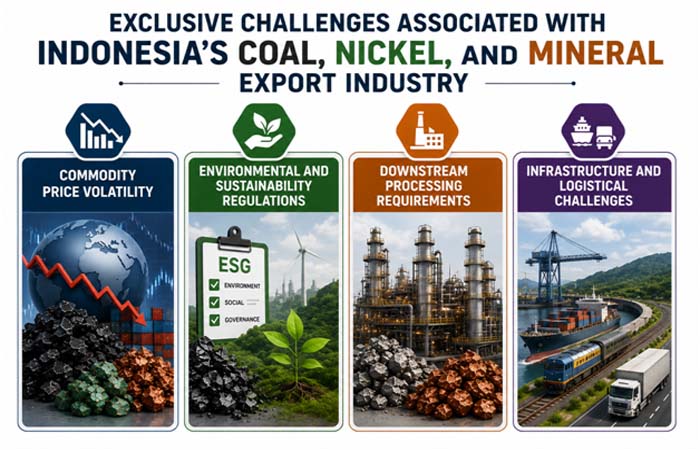
- Commodity Price Volatility - The fluctuation of international commodity prices because of geopolitical developments, economic slowdowns, energy demand, and global supply chains has influenced export revenues.
- Environmental and Sustainability Regulations - The global buyers increasingly require compliance with the environmental standards, which have maintained the mining practices, ESG policies, carbon reduction initiatives, and sustainable mineral sourcing.
- Downstream Processing Requirements - The requirement of downstream processing is also a significant challenge for the trade authorities. The regulations of Indonesia's encouraging domestic mineral processing have increased the investments in heavily upgraded smelters, refineries, and processing facilities.
- Infrastructure and Logistical Challenges - Mining operations in remote regions have demanded continuous investment in transportation networks, ports, railway connectivity, and storage facilities for the regularization of trade.
Future Trade Outlook of Indonesia's Coal, Nickel, and Mineral Export Market
The coal, nickel, and mineral export industry of Indonesia will be one of the influential sectors promoting the thriving export ranking of the nation. The rising investments in electric vehicle manufacturing, renewable energy infrastructure, industrial automation, battery production, and stainless steel will continue to support the international demand. The government authorities' continuous emphasis on downstream industrialization, value-added mineral processing, export diversification, and sustainable mining practices will maintain the thriving trade rank of the nation as a reliable trader in the upcoming times, too.
The additional investments in the industrial parks, mineral refineries, battery manufacturing facilities, and advanced logistics infrastructure will enhance export performance. Indonesia Customs Shipment Data will continue to provide valuable shipment-level intelligence to help exporters identify profitable export markets with the evaluation of buyer demand and monitoring of competitor activities.
Conclusion
Indonesia's coal, nickel, and mineral export industry is one of the strongest pillars of the economic growth of the country. The abundant natural resources, strategic government initiatives, and expansion of the downstream industries will maintain the stronger positioning of the nation as a thriving trader. The increasing international demand for thermal coal products, nickel, ferro-nickel, and copper concentrates will maintain Indonesia's export expansion in the upcoming years.
The commitment of the government authorities towards the promotion of domestic mineral processing will maintain sustainable mining practices. Indonesia Trade Data represents the growing investments of the manufacturing authorities in electric vehicles, renewable energy infrastructure, industrial automation, and advanced manufacturing technologies. The shipment-level trade intelligence will enable exporters, mining companies, and investors to properly identify effective buyers and optimize pricing strategies.
CTA
Looking for an expansion in your commodity trading business with Indonesia? Import Globals is here to help. The shipment-level intelligence is available for resolving all your complexities of trade regarding mineral export activities of the country. Subscribe to www.importglobals.com or email at info@importglobals.com to gain detailed access to Indonesia's coal, nickel, and mineral export trade intelligence to accelerate your global business growth.
FAQs
Que. Why is Indonesia considered one of the leading commodity exporters?
Ans. Indonesia is one of the leading commodity exporters because of the abundant reserves of coal, nickel, copper, and other strategic minerals within its land area.
Que. Name the top exported commodities of Indonesia in 2026.
Ans. Thermal coal, nickel, ore, ferro-nickel, nickel matte, copper concentrates, and refined tin bauxite are the top exported commodities of Indonesia in 2026.
Que. Name the top export partners of Indonesia's coal and mineral trade in 2025.
Ans. China, India, Japan, South Korea, and the United States are the top export partners of Indonesia's coal and mineral trade in 2026.
Que. How does Indonesia export data support business growth?
Ans. Indonesia export data support business growth via proper identification of buyers, supply analysis of market demand, and development of effective market expansion strategies.
Que. What information is available in Indonesia trade data?
Ans. Indonesia trade data covers importer names, exporter names, shipment date, HS code, product details, quantity, values, pricing information, origin country, importing country, and port details.
Que. Which industries are the topmost drivers of Indonesia's commodity exports?
Ans. Electric vehicle manufacturing industries, stainless steel production units, and renewable energy infrastructures are the topmost drivers of Indonesia's commodity exports.
Que. Name the latest opportunities in Indonesia's commodity export market.
Ans. Expansion of the electric vehicle supply chain and downstream mineral processing are the biggest opportunities in Indonesia's commodity export market.
Que. What challenges are associated with Indonesia's coal and mineral export industry?
Ans. Commodity price volatility, environmental regulations, and downstream processing requirements are some of the top challenges associated with Indonesia's coal and mineral export industry.
Que. How frequently is the Indonesia trade data updated?
Ans. Indonesia trade data is updated on a monthly basis.
Que. Where to get detailed information on Indonesia trade data?
Ans. Visit www.importglobals.com or email at info@importglobals.com for detailed updates on Indonesia mineral fuels trade data.
You Can Also Visit :-