Germany’s Import-Export Market: Key Opportunities for International Businesses

- Sep 04, 2026
Germany’s Import-Export Market: Key Opportunities for International Businesses
Germany, the leading trading economy of the European Union, is one of the most populous member states of the entire continent. The country, with its geographical location in Central Europe, is bordered by Denmark to the north and Poland and the Czech Republic to the east.
Germany Shipments Data reported the country as a representative trader in the globalmarketplace mainly because of the strong connectivity with major European markets and the proper support for international maritime trade. The country has maintained its position as one of the major merchandise trading nations mainly because of the highly developed industrial base, advanced manufacturing capabilities, and the supply chain relationships with economies across Europe, Asia, and North America.
The exports of the German authorities are valued at 1.77 trillion U.S. dollars, while the imports are at a staggering rate of 1.55 trillion U.S. dollars. The overall merchandise trade of the nation is at a rate of 3.32 trillion U.S. dollars in 2025. The trade activities, as reported by the Germany Customs Data, are mainly linked with the automotive, machinery, electrical and electronic equipment, pharmaceuticals, chemicals, and other high-value manufacturing sectors. The German statistics reported nominal merchandise export growth of 0.9% and imports of 4.3% from the previous year. China, the United States, and the Netherlands are the top trading partners. The country demonstrates continuous importance as a manufacturing and distribution hub, along with extensive commercial relationships.
The Significance of Germany in the Global Marketplace
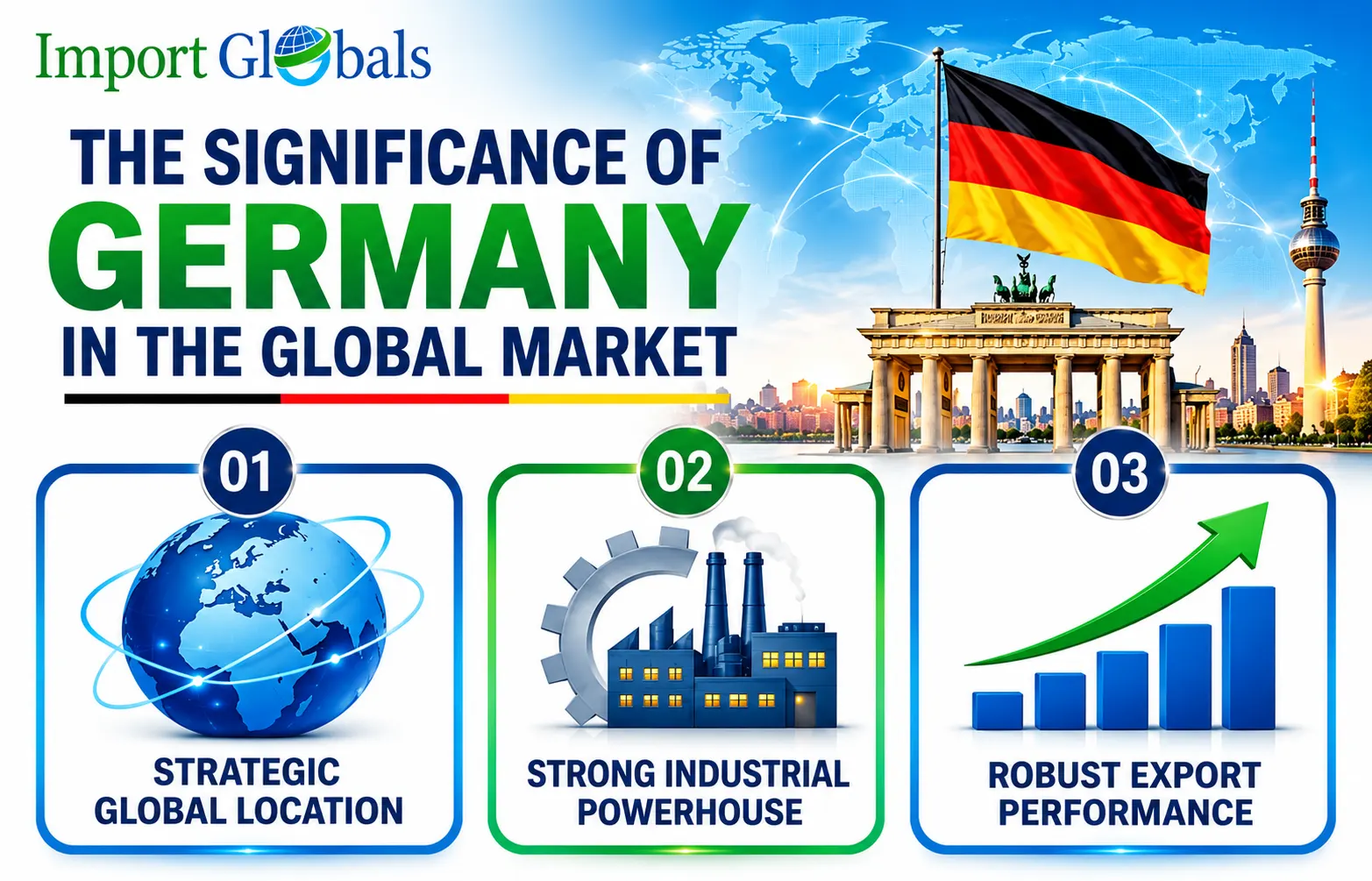
Germany is a highly significant player in the global marketplace, mainly because of its leading trading and industrial economies. The strategic location in Central Europe has provided the economy with direct access to major European markets, enabling businesses with efficient connectivity through neighbouring economies. The largest economy in the European Union is right now Germany, playing an important role in regional trade. The economic strength is supported by a diversified industrial base, advanced manufacturing capabilities, and a skilled workforce, according to Germany Customs Shipment Data.
The country is particularly influential in global industries like automobiles, machinery, electronic equipment, pharmaceuticals, medical technology, and industrial products. The international recognition for the automotive sector has maintained the establishment of strong trade relationships across Europe, North America, and Asia. The machinery and engineering industries are maintaining an effective supply chain of sophisticated equipment to manufacturers worldwide.
The pharmaceutical and chemical industry is maintaining its contribution to international trade by supplying high-value products to numerous global markets. The importance is strengthened due to the deep integration with the European Union single market. The maintenance is mainly extensive for commercial relationships with major economies including China, the United States, France, the Netherlands, and Italy. The broad network supports the movement of raw materials, intermediate goods, technology, and capital across international markets, says Germany Trade Data. The country serves as an important distribution and logistics hub mainly for the European Union supply chain. The combination of industrial expertise, technological innovation, and export capabilities has maintained connectivity with the crucial participants in the global marketplace.
Top Exported Variants of Germany
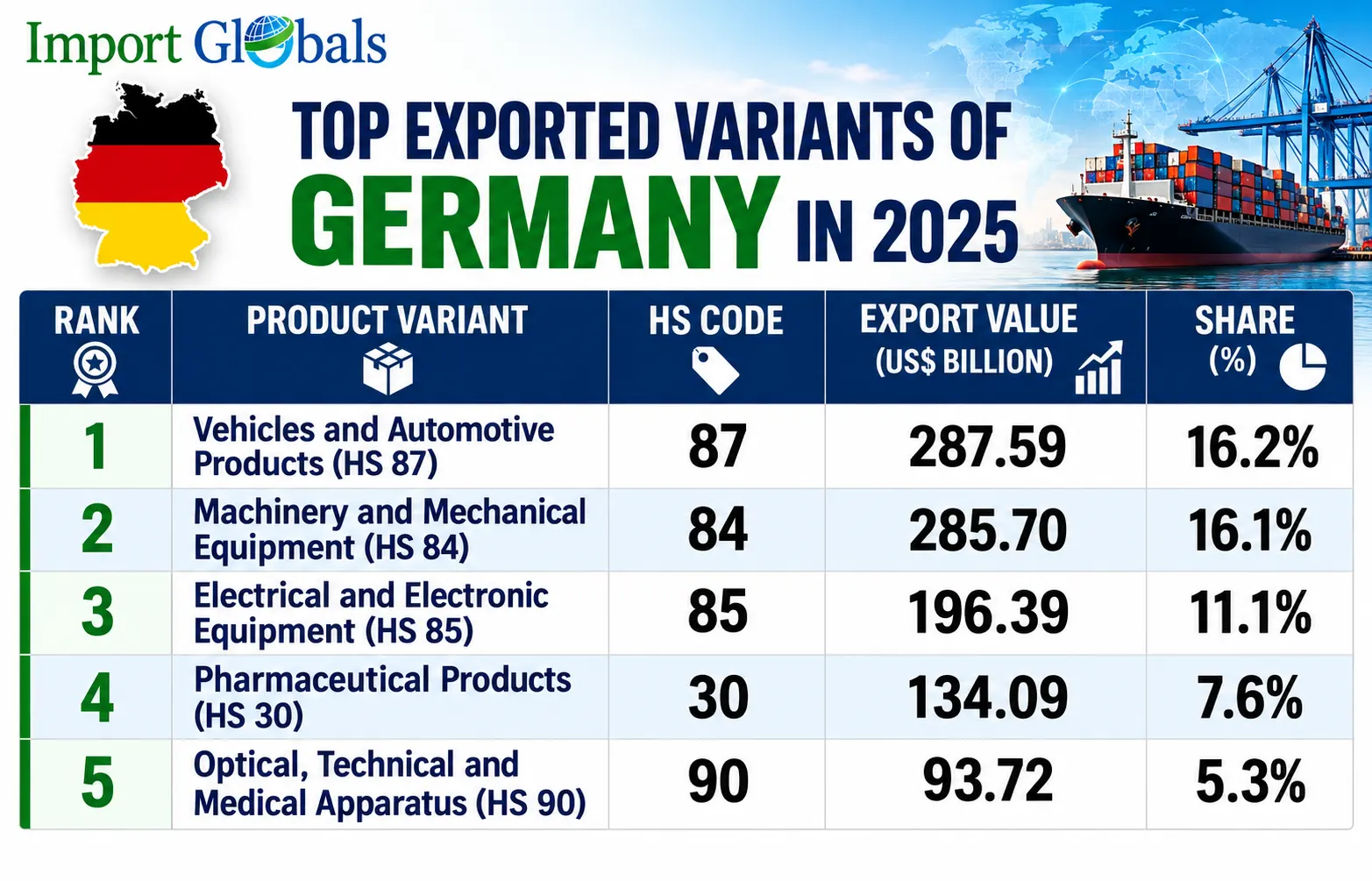
1. Vehicles and Automotive Products (HS 87) — US$287.59 Billion — 16.2% - Vehicles and automotive products, as reported by the Germany Export Trade Data, are one of the top traded categories exported from the nation. The global competition mainly includes passenger cars, commercial vehicles, automotive components, engines, and other transportation products. The sector mainly supports advanced engineering, high manufacturing standards, establishment of automotive brands, and extensive supplier networks. The vehicles are mainly traded across Europe, North America, Asia and other international markets. The industry's extensive global production strengthens the position as a major exporter.
2. Machinery and Mechanical Equipment (HS 84) — US$285.70 Billion — 16.1% - Machinery and mechanical equipment report 16.1% share of Germany's overall export portfolio. The category mainly includes industrial machinery, mechanical appliances, engines, production equipment, and specialized manufacturing systems. The engineering expertise and research capabilities have made machinery products highly competitive in international markets. The proper supply of equipment to industries, including automotive production and energy, has maintained the effective growth rate. An extensive international customer base makes it an important contributor to the export-oriented economy.
3. Electrical and Electronic Equipment (HS 85) — US$196.39 Billion — 11.1% - Electrical and electronic equipment are also the top exported variants of Germany, with a proper accountability of 11.1%. The country's exports of a broad range of electrical machinery, electronic equipment, and control systems have maintained an effective growth rate. The sector mainly benefits from advanced engineering capabilities and strong industrial technology. The demand rate is expanding due to manufacturing, automotive, telecommunication, energy, automation, and technology-intensive industries.
4. Pharmaceutical Products (HS 30) — US$134.09 Billion — 7.6% - Pharmaceutical products report a 7.6% share of Germany's export portfolio. The highly developed pharmaceutical and life sciences industry is mainly supported by research capabilities, advanced production, skilled professionals, and strong international demand. Pharmaceutical preparations and other healthcare-related products are maintaining connectivity with major markets in Europe, North America and Asia.
5. Optical, Technical and Medical Apparatus (HS 90) — US$93.72 Billion — 5.3% - Wrapping up the list of the topmost exported variants of Germany, optical, technical and medical apparatus are the latest ones. The accountability of this specific product is 5.3% of the total exports. The category mainly includes medical instruments, measuring and testing equipment, optical devices, precision instruments, and specialized technical apparatus. The strong reputation for precision engineering has maintained the support for these products across global markets.
Top Imported Variants of Germany
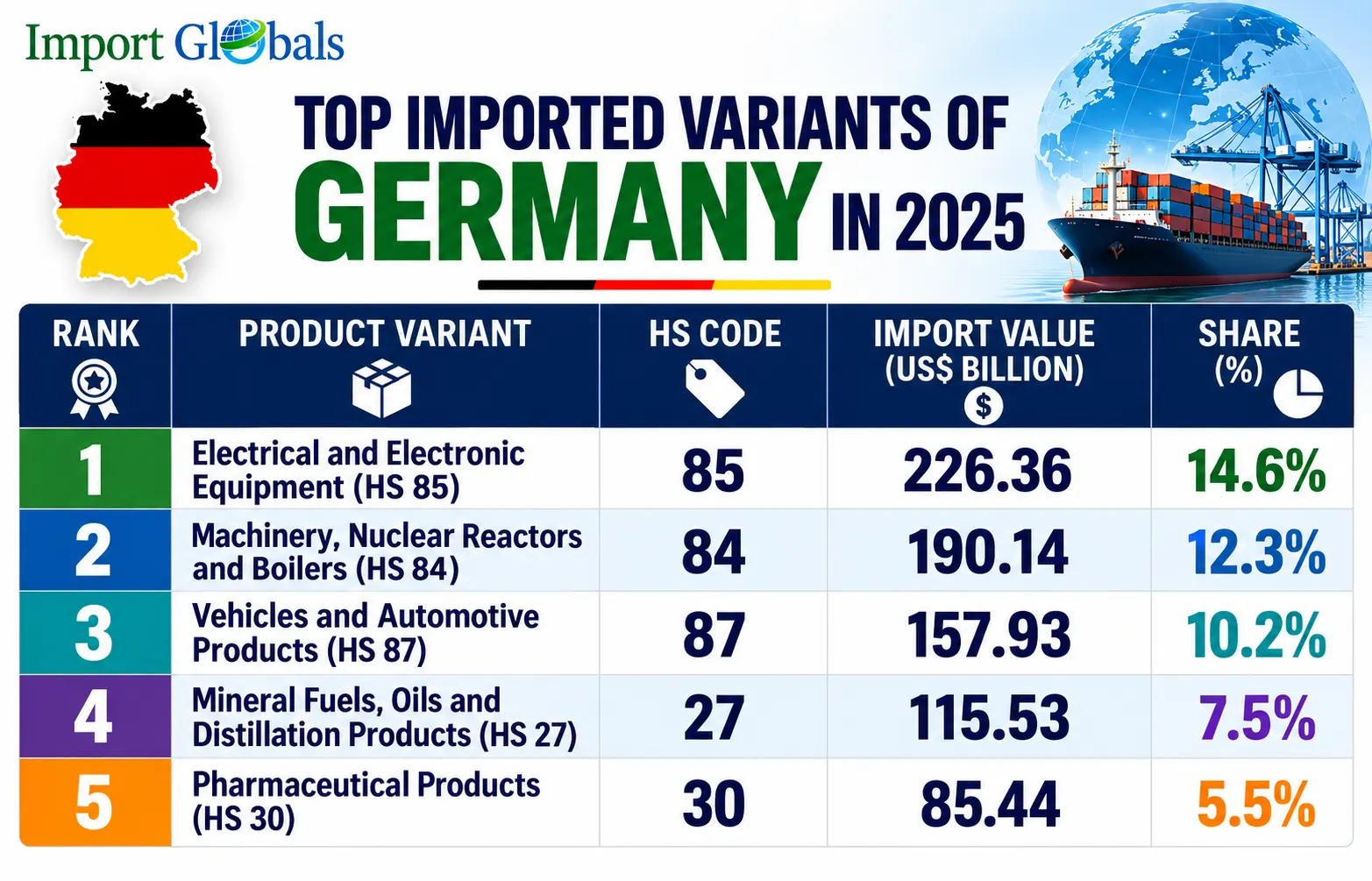
1. Electrical and Electronic Equipment (HS Code 85) — US$226.36 Billion — 14.6% - Germany Customs Data listed electrical and electronic equipment as the top imported variant of the nation, with an accountability of 14.6% of the overall import share. The category mainly encompasses electrical machinery, electronic components, telecommunication equipment, integrated circuit transformers, and other technology-related products. The strong manufacturing ecosystem is responsible for creating substantial demand for imported electronic components and industrial electrical equipment. The imports of this specific essential are mainly initiated to support automotive production, industrial automation, and telecommunications.
2. Machinery, Nuclear Reactors and Boilers (HS Code 84) — US$190.14 Billion — 12.3% - Machinery, nuclear reactors, and boilers are also the top imported categories of Germany. The category covers industrial machinery, mechanical appliances, production equipment, computers, compressors, and other specialized systems. The advanced manufacturing sector is mainly reliant on imported machinery and components for production capacity in an effective manner.
3. Vehicles and Automotive Products (HS Code 87) — US$157.93 Billion — 10.2% - Vehicles and automotive parts hold an accountability of 10.2% of the overall import portfolio of Germany. The category encompasses passenger vehicles, commercial vehicles, automotive components, and road transportation products. The high reliance on the automotive industry is mainly dependent on international suppliers for vehicles, parts, components, and specialized systems. The complementation of domestic manufacturing has supported the extensive automotive supply chain.
4. Mineral Fuels, Oils and Distillation Products (HS Code 27) — US$115.53 Billion — 7.5% - Mineral fuels, oils, and distillation products hold a 7.5% share of Germany's import portfolio. The category encompasses petroleum products, mineral oils, refined fuels, and other energy-related commodities. The large industrial base and extensive transportation network have generated substantial demand for energy resources. The category also highlights the dependence on international energy supply chains.
5. Pharmaceutical Products (HS Code 30) — US$85.44 Billion — 5.5% - Pharmaceutical products have ranked as the top imported variants of Germany, with an import valuation of 85 billion U.S. dollars. The category encompasses medicines, pharmaceutical preparations, vaccines, biological products, and other healthcare-related goods. The country has maintained a highly developed pharmaceutical and healthcare industry with reliance on international suppliers for specialized medications.
Industries Promoting Germany's Trade Ranking
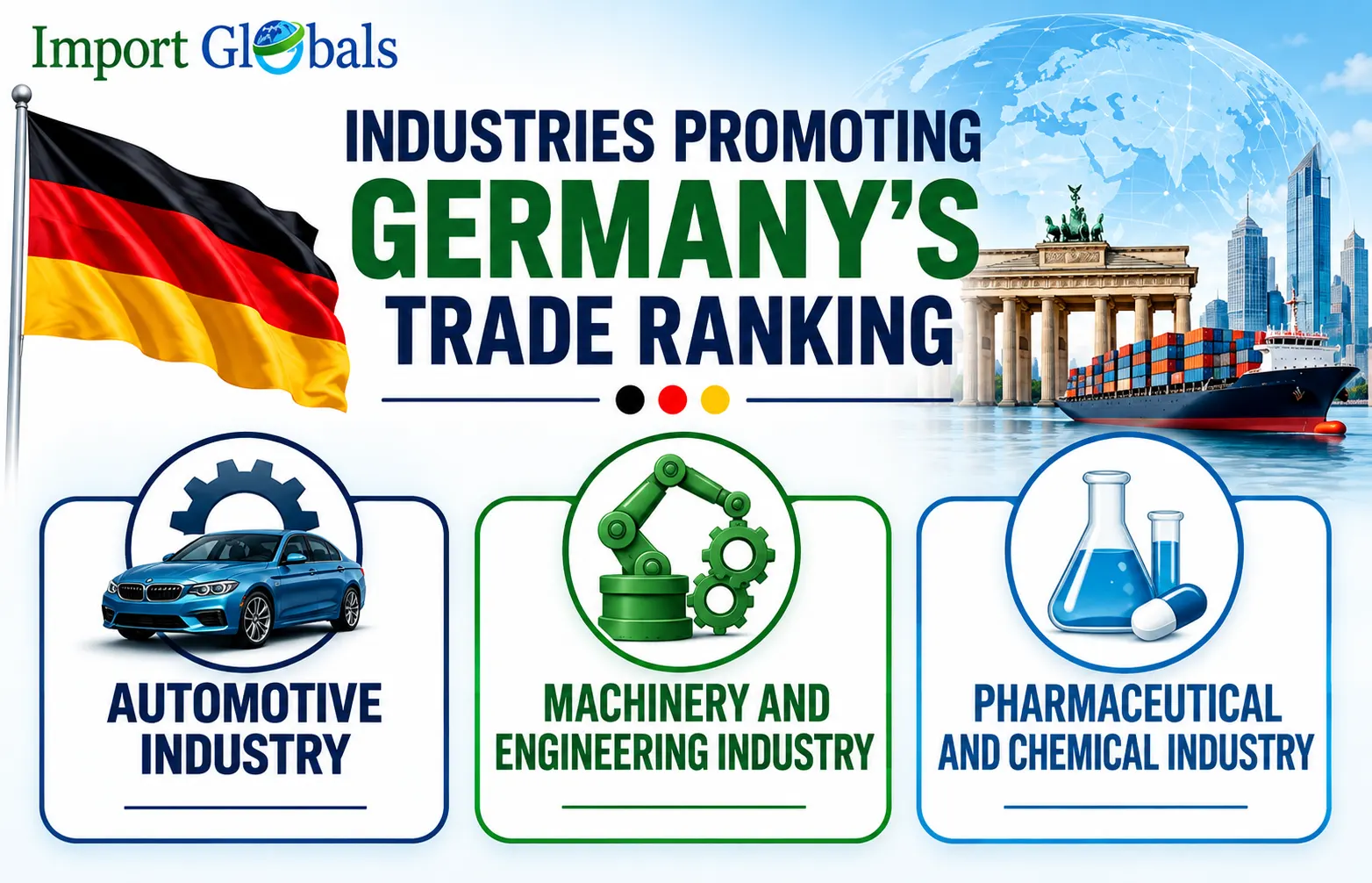
- Automotive Industry - Germany Import Export Data reported; the automotive industry is one of the top facilitating factors of the overall trade growth. The global competition mainly covers passenger vehicles, commercial vehicles, batteries, and automotive components. The international supply chain's connectivity with German manufacturers has maintained effective trade across Europe, North America, and Asia. The strong research and development capabilities have maintained expertise, with the establishment of manufacturing infrastructure supporting both exports and imports.
- Machinery and Engineering Industry - The machinery and engineering industry is also a massive contributor to the international trade performance. German manufacturers are mainly recognized for the high-quality industrial machinery supplied, mechanical equipment, production systems, and specialized engineering solutions. The sector is responsible for effective supply to automotive, energy, construction, manufacturing, and industrial processing industries. The strong research and development capabilities have supported the skilled workforce while increasing the competitiveness of its machinery exports.
- Pharmaceutical and Chemical Industry - The pharmaceutical and chemical industry plays a significant role in the trade growth. The sophisticated pharmaceutical ecosystem is supported by research institutions, advanced manufacturing, and strong technological capabilities. The export of medicines, pharmaceutical preparations, and high-value products has maintained effective trade across Europe, North America, Asia, and beyond.
Top Trade Partners of Germany
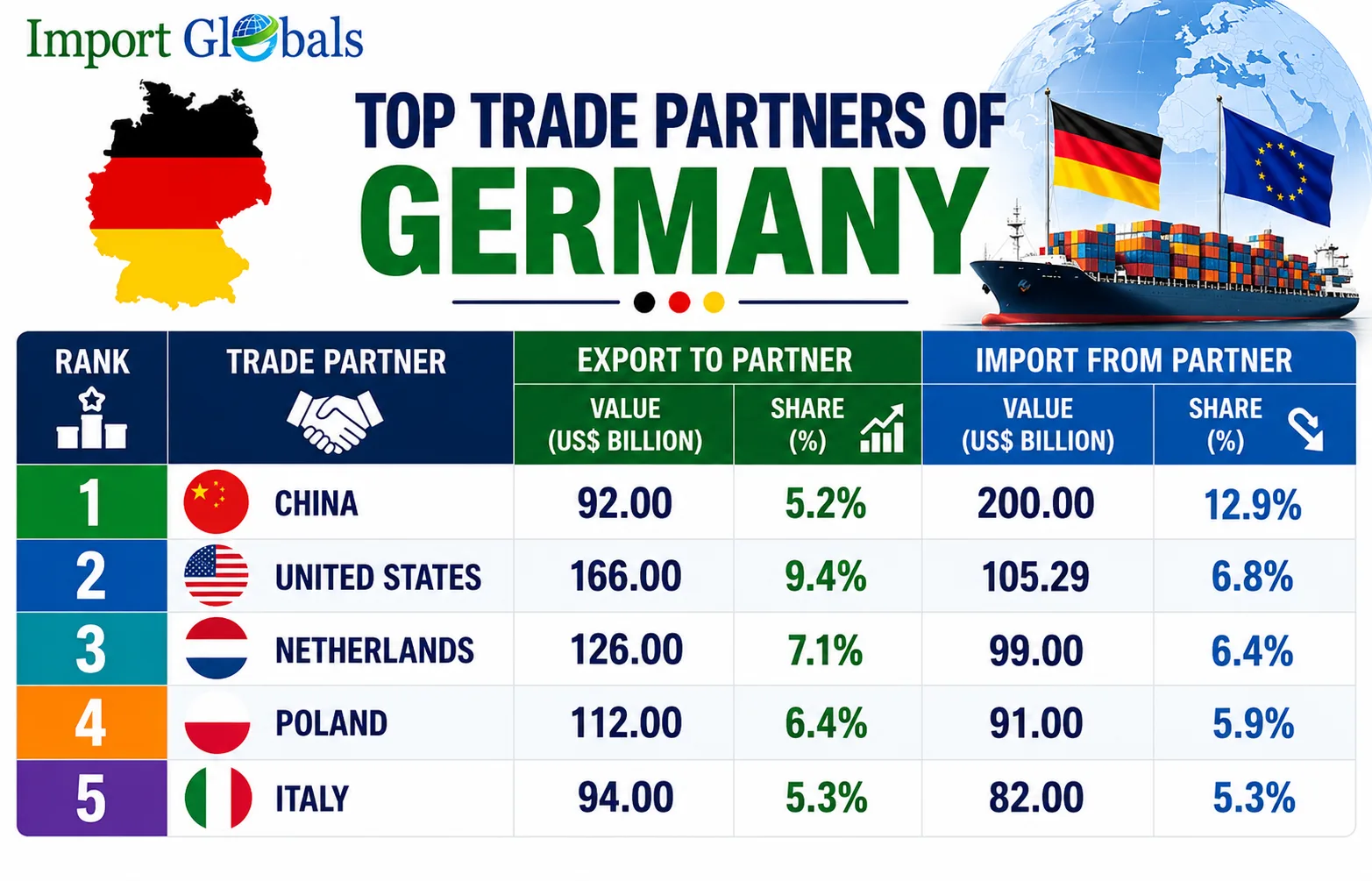
1. China — Export Share: 5.2% | Import Share: 12.9% - China Trade Data reported the country as one of the top trade partners of Germany, with a bilateral proximity of trade, as reported by the German statistics. The German authorities have exported products worth 92 billion U.S. dollars to China, representing 5.2% of the total export accountability, while the imports from the same were at a staggering rate of 200 billion U.S. dollars, accounting for 12.9% of the total imports. The bilateral integrity of both economies is backed up by electronic and data processing equipment, electrical equipment, machinery, and other manufactured products, with the regularization of trade.
2. United States — Export Share: 9.4% | Import Share: 6.8% - The United States holds an export accountability of 9.4% and import accountability of 6.8% in Germany's trade portfolio. The overall import from the U.S. is at a rate of 105.29 billion U.S. dollars, while the export is at a staggering rate of 166 billion U.S. dollars. Automobiles, automotive components, pharmaceuticals, machinery, and other high-value manufactured products are supporting the effective trade of Germany with the United States.
3. Netherlands — Export Share: 7.1% | Import Share: 6.4% - The Netherlands Trade Data lists the country as one of the strong commercial and logistical integration holders with Germany, with expansion of categories. The export value to the country is at a staggering rate of 126 billion U.S. dollars, while the imports are at a rate of 99 billion U.S. dollars. The Netherlands has been playing an important role in European logistics while supporting the movement of energy products, industrial goods, and machinery.
4. Poland — Export Share: 6.4% | Import Share: 5.9% - Poland reports 6.7% of the export accountability of Germany and 5% of the import accountability. The German authorities export to Poland at a staggering rate of 112 billion U.S. dollars, while Poland imports are at a rate of 91 billion U.S. dollars. The expanding manufacturing base and the role as a major industrial economy have created extensive cross-border supply chain connections.
5. Italy — Export Share: 5.3% | Import Share: 5.3% - Wrapping up the list of the top trade partners of Italy, Germany is also the fifth one, demonstrating the strong commercial relationship between two major European industrial economies. The exports from Germany to Italy are at a rate of 94 billion U.S. dollars, while the imports are at a valuation of 82 billion U.S. dollars. The bilateral trade is supported by automotive products, machinery, pharmaceuticals, chemicals, and electrical equipment. The countries are deeply integrated into the European Union single market, while allowing businesses to properly benefit from established logistics.
How Does Import Globals Germany Import-export Trade Data Support Business Growth?
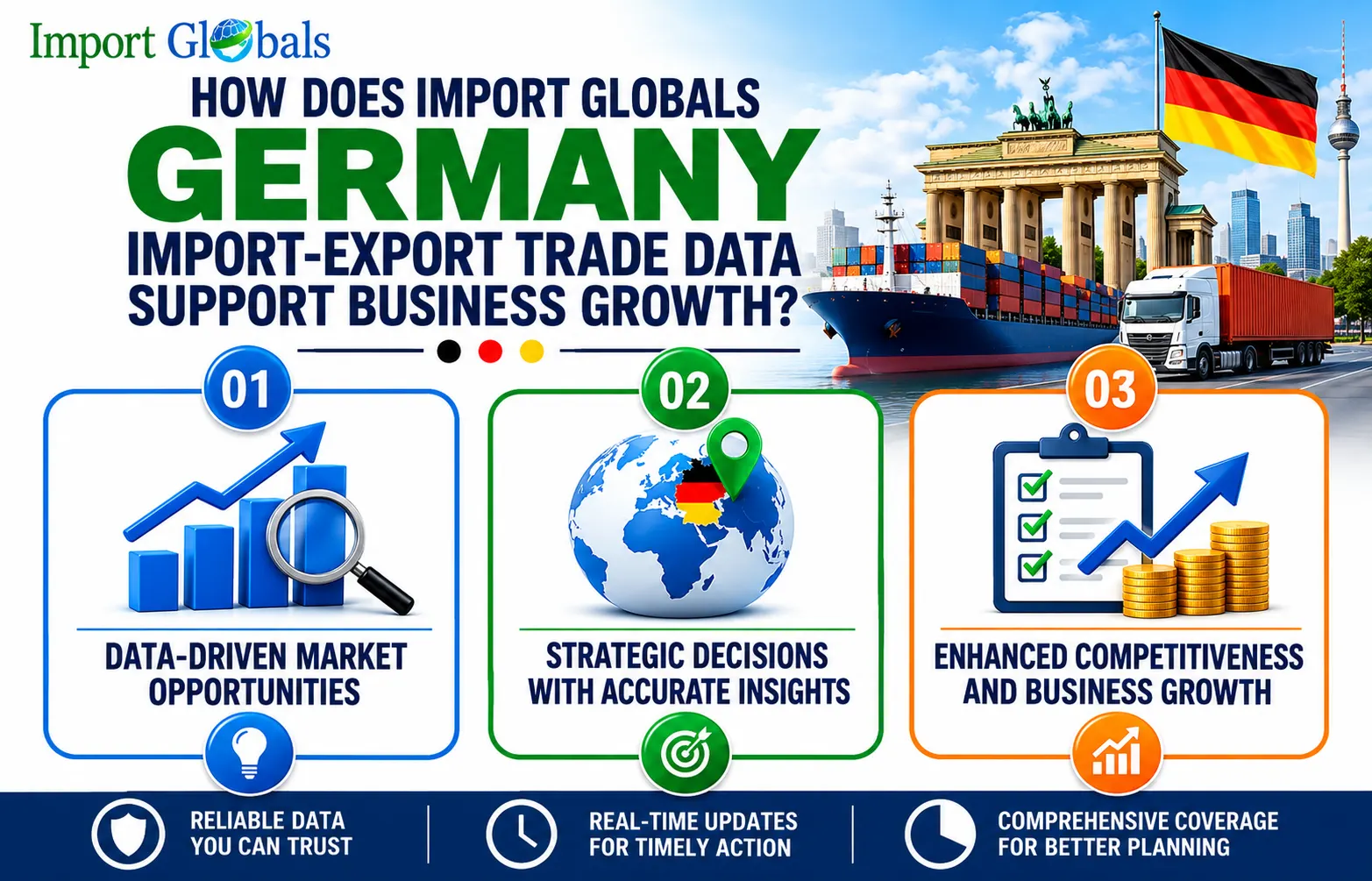
Import Globals Germany Import Export Trade Data is considered a beneficial tool for progressive traders because it gives a clear visualization to the trading authorities regarding the latest market updates. With the preference for Germany Trade Statistics, progressive traders can get the latest evaluation of the top traded essentials from the nation. The acknowledgement of the imported and exported products gives a proper global market outlook to progressive traders regarding which products they should go with for having a positive trade outcome. The importance of bilateral integrity is basically highlighted by Germany's trade portfolio.
The ranking is demonstrated as per the consumer demand rates and productivity of manufacturing industries. The bilateral trade is overall supported by the productivity of the manufacturing units, which the business holders should understand for maintaining competitiveness in their production strategies to promote global compliance. Traders can go with Germany Import Data and Germany Export Data for proper visualization of the latest resource essentials and the overall productivity of the nation for mapping their own way of market entry to stay competitive.
Future Trade Outlook of Germany
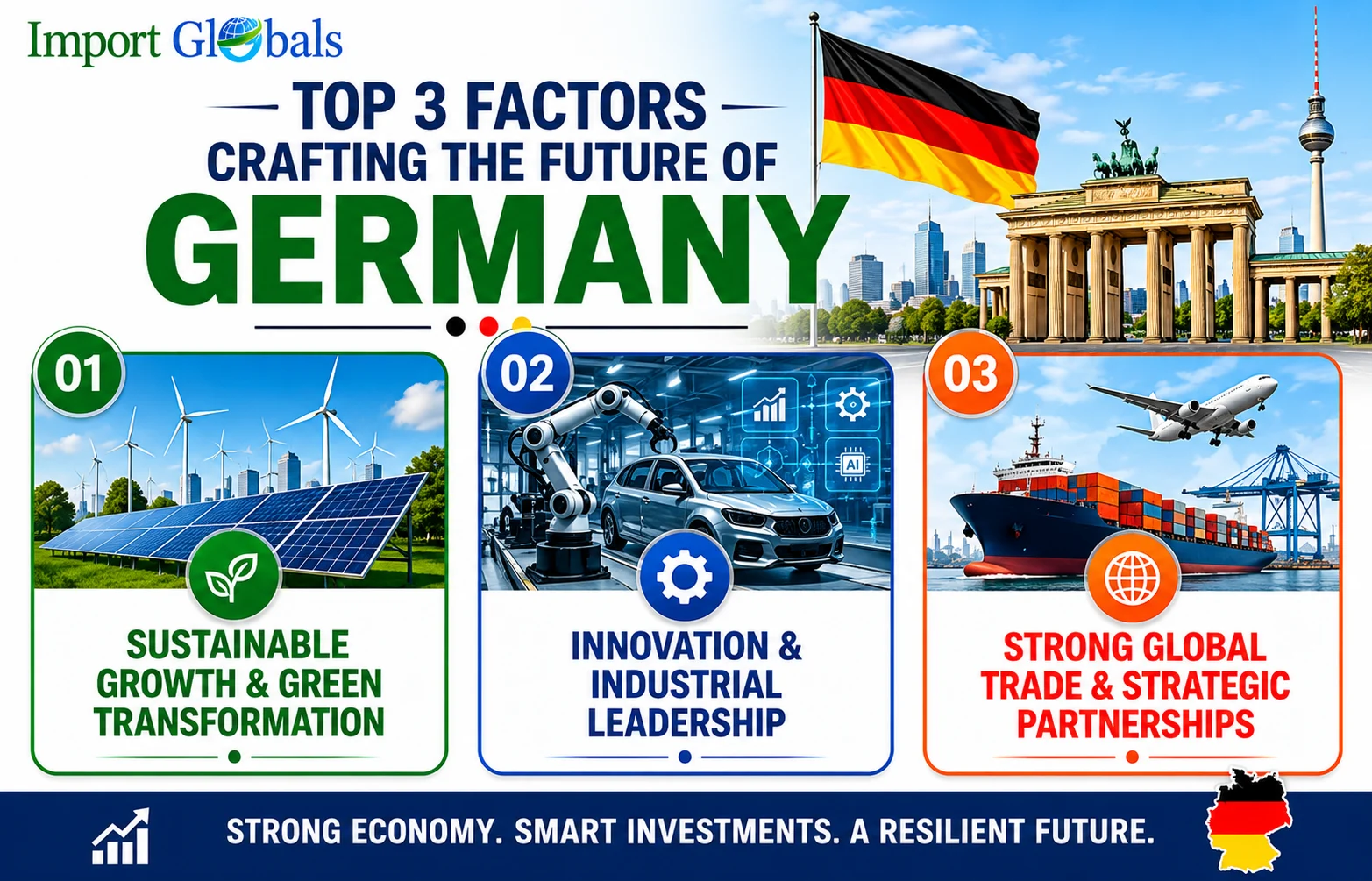
The future trade of Germany will remain impacted by industrial challenges, international trade uncertainty, and strong manufacturing capabilities. The German economy will experience recent fluctuations with prolonged weakness of trade across industrial production and export-oriented sectors. Exports will experience a slight decline. The overall outlook will change mainly because of the U.S. tariff policies, weaker external demand, and the growing international competition. The challenges will be the long-term trade facilitator of the diversified industrial base and the strong positioning in automobiles.
The industries will be important contributors to Germany's international trade, particularly in response to global demand and the extensive integration with the European supply chain. The major opportunities for Germany's future trade will be the recovery of global demand and international merchandise trade. The recovery of the nation from the fluctuations will be gradual because of structural competitiveness and challenges.
Key Takeaways:
- Germany is the leading industrial economy at present, with strong integrity in the global supply chain.
- Germany has exported products worth 1.77 trillion US dollars and imported products worth 1.55 trillion US dollars in 2025.
- Vehicles and automotive products are the top exported variants of Germany.
- Germany's overall merchandise trade in 2025 is 3.32 trillion US dollars.
- China, the United States, and the Netherlands are the top bilateral trade partners.
Conclusion
Germany will play an important role in the global marketplace and is a strong trading authority because of advanced manufacturing capability, technological expertise, and extensive international trade relationships. The major export and import categories demonstrate the deep involvement in automotive machinery and electronics.
The commercial relationships with major economies across Europe and Asia further strengthen the role in the global supply chain. The future trade growth maintains the exposure of the country to international trade policies and geopolitical uncertainty. Businesses are closely monitoring Germany Import Export Data to gain valuable insights into changing demand rates, product movements, and trade partners.
CTA
If you are trying to have an expansion in Germany's latest import-export opportunities, you have landed at the right platform here. Import Globals holds the proper expertise in providing detailed information on the latest trade acknowledgments of Germany. Subscribe to www.importglobals.com or drop an email at info@importglobals.com for detailed updates on Germany Trade Data to expand your global business growth.
FAQ's
Que. What is the total trade value of Germany in 2025?
Ans. Germany's total trade value in 2025 is 3.32 trillion US dollars.
Que. What are the top exported products of Germany in 2025?
Ans. Vehicles and automotive products, machinery, and electrical and electronic equipment are the top exported products of Germany in 2025.
Que. What are the top imported products of Germany in 2025?
Ans. Electrical and electronic equipment, machinery, and vehicles are the top imported products of Germany in 2025.
Que. Who are the top trade partners of Germany?
Ans. China and the United States are the top trade partners of Germany in 2025.
Que. Why is Germany important for the global marketplace?
Ans. Germany is important for the global marketplace because of advanced manufacturing capabilities and a strong industrial base.
Que. Name the top industries facilitating Germany's export ranking.
Ans. The automotive industry is one of the top contributors to Germany's export ranking.
Que. How does Germany import-export data support business growth?
Ans. Germany import-export data supports business growth via proper identification of buyers, supplier analysis, market demand, and development of effective market expansion strategies.
Que. What information is available in Germany trade data?
Ans. Germany trade data covers Importer names, Exporter names, Shipment date, HS Code, Product Details, quantity, values, pricing information, origin country, importing country & port details.
Que. How frequently is Germany trade data updated?
Ans. Germany trade data is updated on a monthly basis.
Que. Where can you obtain detailed information on Germany trade data?
Ans. Visit www.importglobals.com or drop an email at info@importglobals.com for detailed updates on Germany trade data.
You Can Also Visit :-