HS Codes as a Tool for Trade Research Development in the Philippines
- Sep 09, 2026
HS Codes as a Tool for Trade Research Development in the Philippines
International commerce is dependent on trade that involves huge numbers of different items crossing the borders every single day. It is important that businesses and researchers involved in the study of products imported and exported learn about different goods that are being traded, their quantity, and what countries are involved in the transaction.
Philippines Export Data reported, it is difficult to analyse international trade because different goods may have different names in different markets at the same time. In the Philippines, HS Codes help to standardize the classification process of imported and exported goods. They are useful when it comes to identifying goods, analysing their trade value, making comparisons across markets, studying competition, and evaluating the opportunities for sourcing.
Philippines Customs Data reported that the nation engages in active participation in global trade and has developed strong trade ties with countries in Asia, North America, Europe, and other parts of the world. The country exports various products, including electronics, electrical machines, machinery, mineral products, agricultural products, chemicals, plastics, transportation equipment, and processed foods. In light of this diverse trade scenario, the researcher is likely to face challenges in conducting the research accurately based on the high-level product classification alone. HS Codes, on the other hand, allow the trade researcher to move from the broad level of knowledge of the trade to highly detailed research of products.
What is the Definition of HS Codes?
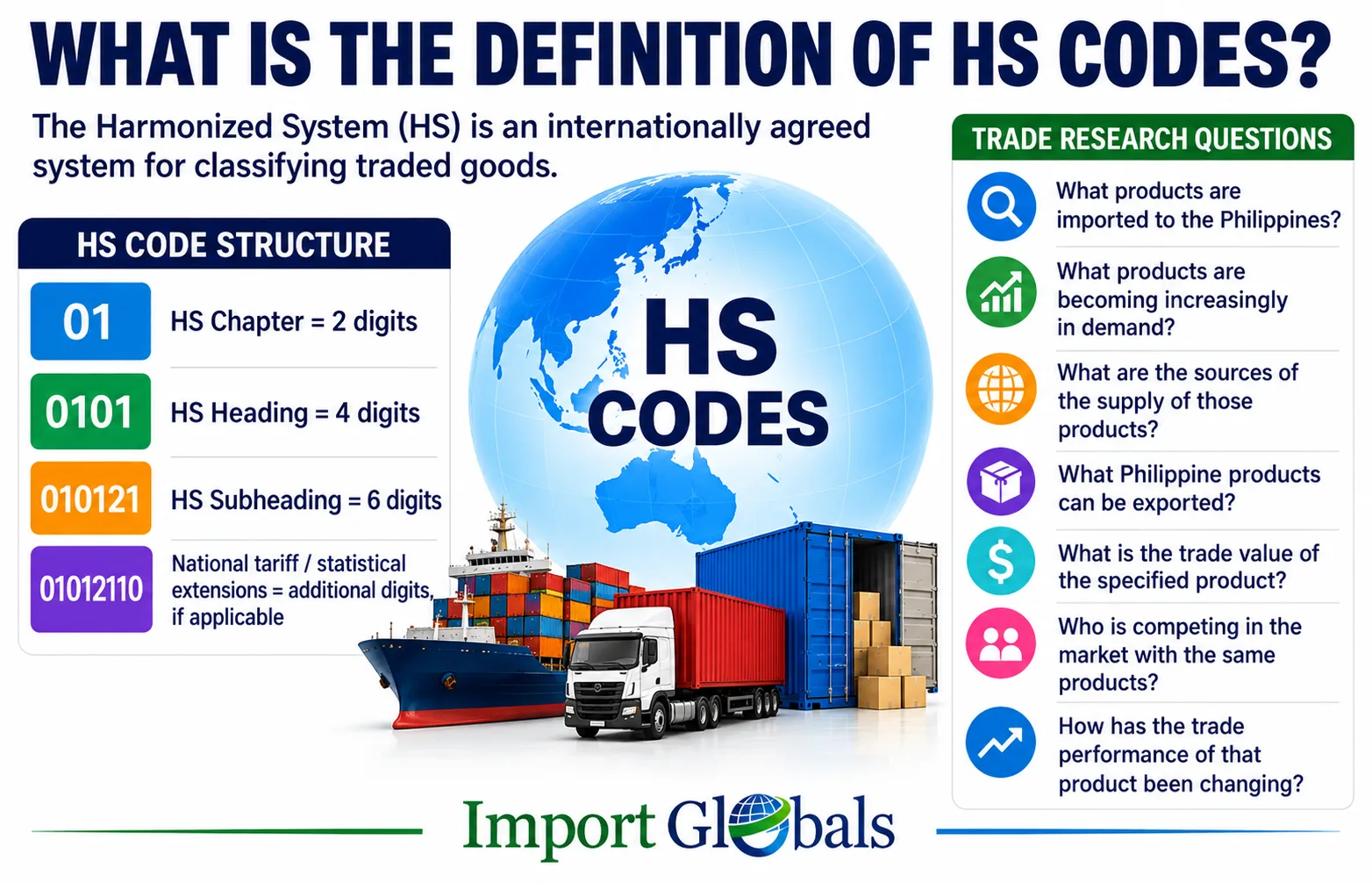
The Harmonized System (HS) is an internationally agreed system for classifying traded goods. HS Codes typically consist of six digits worldwide, although some countries may have their own extensions for domestic customs and statistical purposes, says Philippines Trade Data.
The classification is done hierarchically, where:
- HS Chapter = 2 digits
- HS Heading = 4 digits
- HS Subheading = 6 digits
- National tariff/statistical extensions = additional digits, if applicable.
For instance, in the case of the Philippines, a researcher interested in the electronics trade can classify the various types of electrical and electronic goods in order to differentiate the various aspects of the electronics sector, rather than treat the electronics sector as a single whole.
This differentiation is very useful, seeing that trade research often deals with the following questions:
- What products are imported to the Philippines?
- What products are becoming increasingly in demand?
- What are the sources of the supply of those products?
- What Philippine products can be exported?
- What is the trade value of the specified product?
- Who is competing in the market with the same products?
- How has the trade performance of that product been changing?
The Importance of Hs Codes in Trade Research in the Philippines
Trade in the Philippines is characterized by great diversity and growing sophistication. General trade figures can tell if the figures for imports or exports are increasing, but they do not always clarify the main reason behind this growth.
Philippines Shipment Data reported that HS Codes help overcome this problem by enabling researchers to examine trade at different degrees of product detail.
One can investigate, for example, instead of simply “Philippines exports,” by doing some research along these lines, such as:
Philippines – Electronics – HS category – country of destination – annual trade figures
This would allow one to obtain a much clearer picture of the market situation. HS Codes help improve trade research in the Philippines in several important aspects.
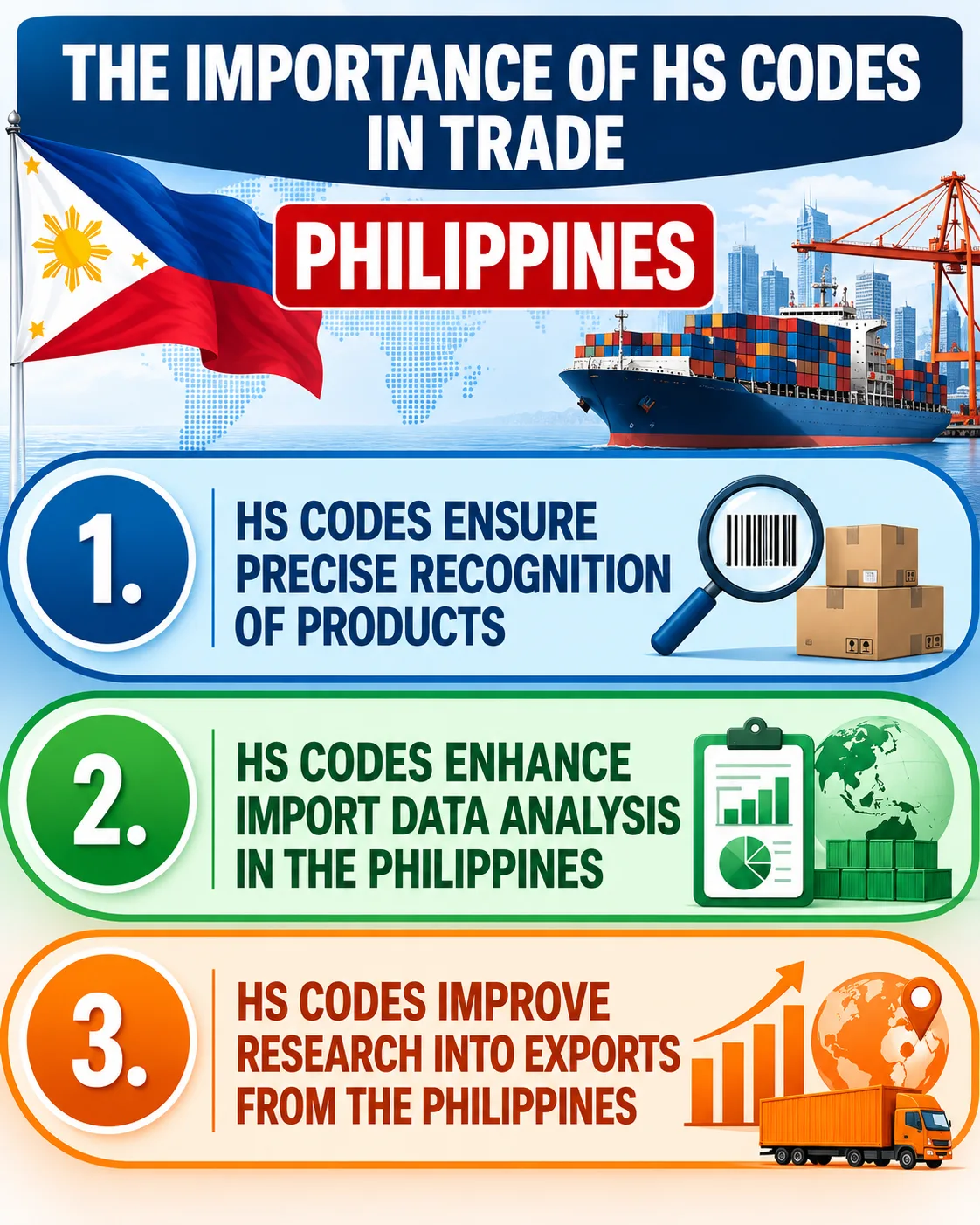
1. HS Codes Ensure Precise Recognition of Products
One of the key benefits of HS Codes is having a unified way for product identification. Product descriptions may differ among different commercial parties. For a manufacturer, the same product can have one name; for the importer — another one, and in a customs declaration paper it may get a different title.
Thus, if a researcher performs a search in trade databases based only on the title of the product, the result might be divergent. HS Codes provide a common classification system, says Philippines Import Data.
For the analysis of imports and exports of the Philippines, this means that an analyst can work with the customs-coded products rather than relying on the commercial names. It is especially important for business sectors having hundreds of products that are very similar.
For instance, the term "machinery" does not refer to a specific product. If a person is interested in machinery being imported into the Philippines, he/she will have to make a distinction between industrial machinery, agricultural machinery, process machinery, electrical machinery, and special-purpose machinery. With the help of HS Codes, this issue can be resolved.
2. HS Codes Enhance Import Data Analysis in the Philippines
Information on imports in different countries can provide valuable information about domestic consumption, production of goods, and manufacturing needs. Nonetheless, research in the field of imports becomes more effective if the products in question are grouped according to their HS Codes. An importer will be able to utilize HS Codes to know the following:
- Types of imported items
- Prices of imports
- Import volumes
- Countries supplying them
- Changes in import data in different years
- Demand for the relevant goods
- Main competitors in imports
- Newly emerging supply markets
For instance, if a company researches imports in the Philippines in order to start selling an industrial product in this country, it may find that there are hardly any significant conclusions that can be made based on total import figures. Philippines Customs Data reported, if the relevant HS Code is searched, it will become possible to know the total import value of the selected product in the Philippines, the list of countries exporting it, and whether or not its demand has increased.
3. HS codes improve research into exports from the Philippines
HS codes are equally crucial to the analysis of Philippine exports. The Philippines exports a variety of items, including manufactured items, electronics, agricultural products, semi-processed goods, mineral products, chemicals, and other products.
The exporter can use HS codes to establish:
- Which Philippine products have a considerable international demand?
- Which countries purchase these products?
- What is the size of yearly exports?
- Are there any fluctuations in demand?
- Which countries are the nearest competitors?
- Which countries have the potential for more exports?
A Philippine business exporting a specific agricultural product does not have to conduct market research on agricultural exports as a whole. The company can identify a specific HS code and analyse the performance of its exports.With its help, markets that would otherwise be hidden from the general picture can be revealed reported Philippines Shipments Trade Data.
How Businesses Can Use Hs Codes for Philippines Trade Research?
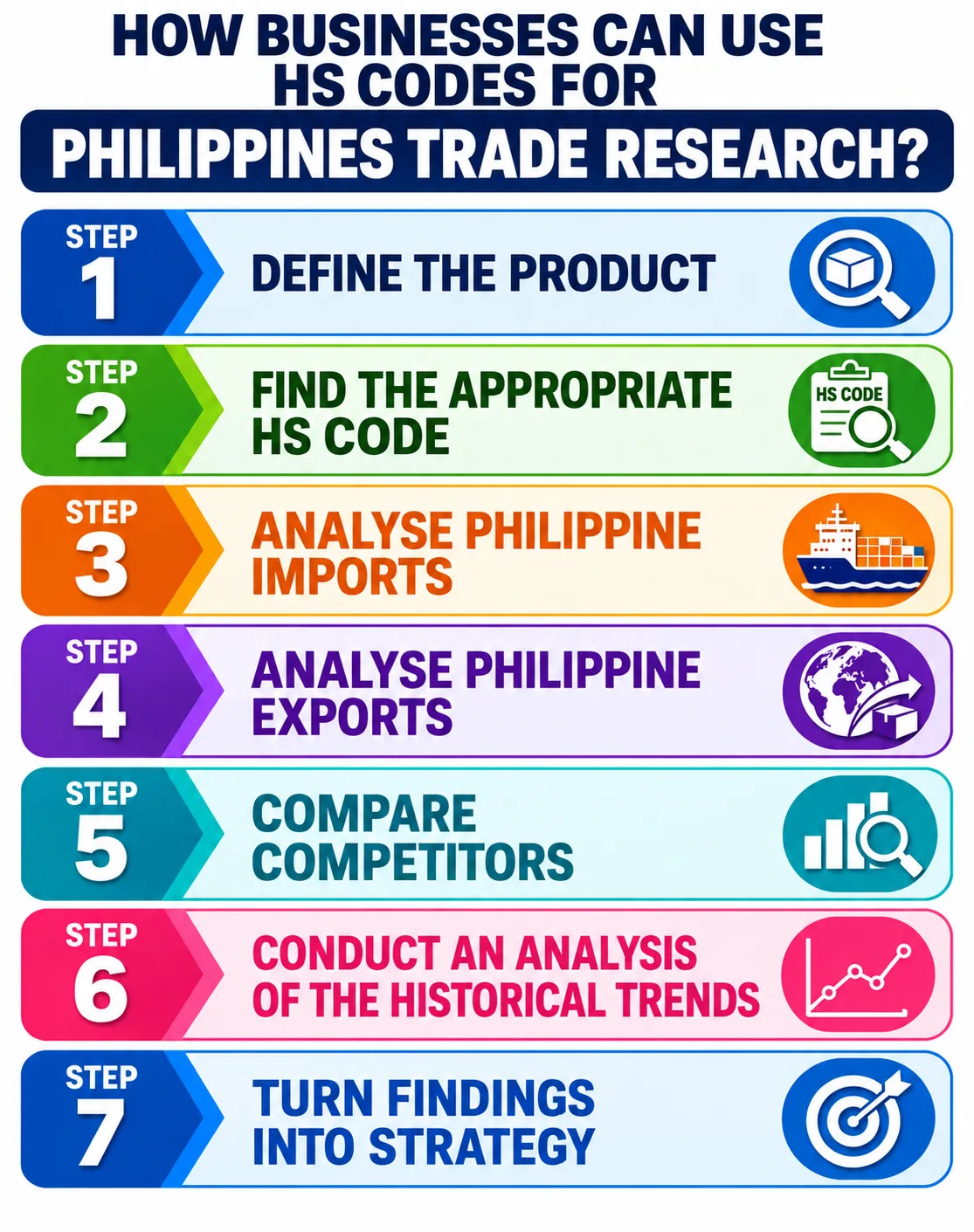
There are seven steps to a practical research methodology.
- Step 1: Define the Product.
- It is important to clearly identify the product that is being researched.
- Step 2: Find the Appropriate HS Code.
- The next step, though, involves determining the appropriate HS classification.
- Step 3: Analyse Philippine Imports.
- Then the researcher should examine Philippine imports in terms of the value, quantity, growth, and source countries.
- Step 4: Analyse Philippine Exports.
- Prior to continuing, it is vital to look at the key destinations and trends in exports.
- Step 5: Compare Competitors.
- The next step entails looking at the other countries that are involved in the same kinds of exports.
- Step 6: Conduct an Analysis of the Historical Trends.
- The researcher needs to analyse the data across several years to determine if the market is on the rise or declining.
- Step 7: Turn Findings into Strategy.
- Use the findings of the research to create strategies regarding sourcing, pricing, market entry, supplier diversification, and exporting.
Key Factors That Impact the Application of Hs Codes in Trade Research in the Philippines
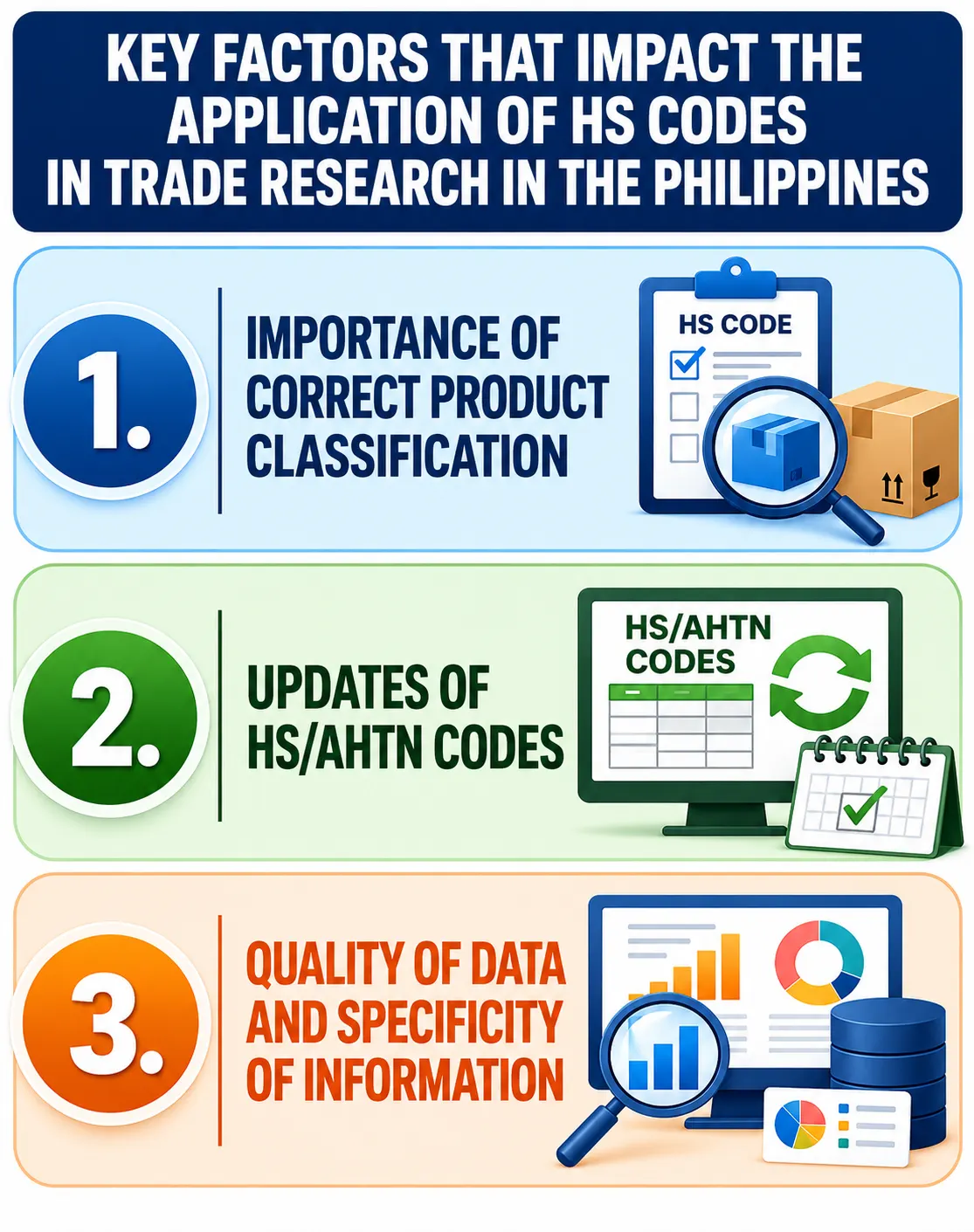
1. Importance of Correct Product Classification
The correct classification of HS/AHTN is very important for proper and credible research into trade in the Philippines. Even similar products can fall under different classifications based on their ingredients, function, material, or intended purpose. If the classification is incorrect, the country’s import-export statistics might be inaccurate, resulting in poor analysis of the market. The Philippines Export Trade Data reported that the country employs the 8-digit ASEAN Harmonized Tariff Nomenclature (AHTN), which goes beyond the internationally used 6-digit HS code.
2. Updates of HS/AHTN Codes
HS classifications change over time, and the Philippines and ASEAN apply revisions of the AHTN that affect the codes’ product classifications. Researchers need to bear these modifications in mind, as otherwise they may make wrong conclusions about products and trade; for instance, they might consider that the trade increased or decreased, while in reality it is simply a change in its classification. The Philippine Tariff Commission also helps researchers cope with this issue by providing them with data about correlations of different versions of the AHTN.
3. Quality of Data and Specificity of Information
The significance of HS Codes is closely connected with the quality and specificity of customs and Philippines Trade Data. Because Philippine trade statistics are based on AHTN classifications that derive from a declaration of customs information, analysis of product descriptions, codes, reporting periods, quantity, and value of trade before making conclusions is essential. More detailed classification leads to better precision of research, but it implies advanced knowledge of the customs classification system.
HS Codes in Contemporary Philippines Trade Intelligence
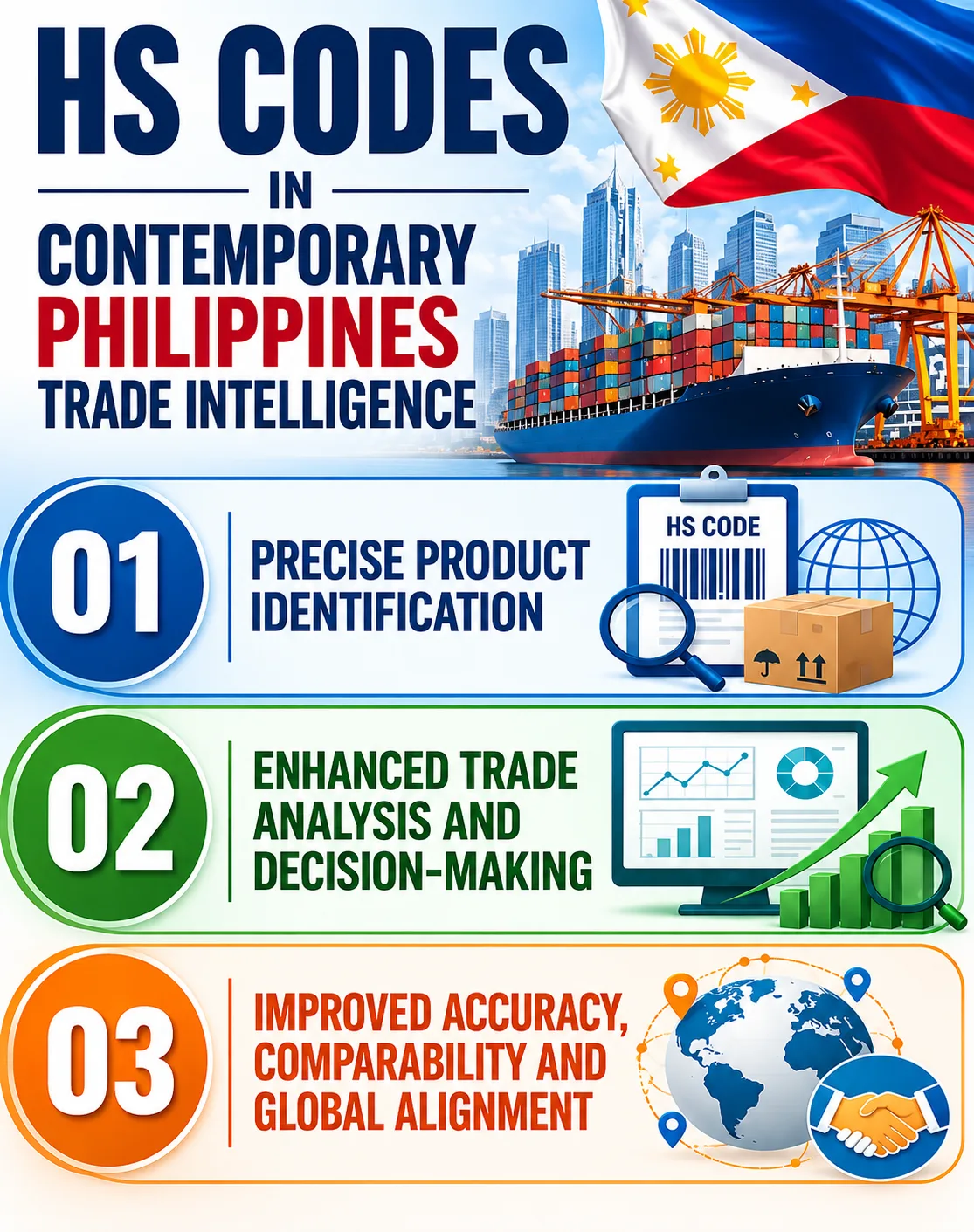
The increasing accessibility of digital trading and customs databases has made product research quite easy.Companies can combine HS codes with other information to gain sufficient trade intelligence.
For Instance:
HS Code + Importer + Exporter + Country + Port + Shipment Date + Value + Quantity
This can produce an extremely detailed overview of a product's transit through international supply systems.
For Philippine companies, it can help with the following:
- Finding customers
- Finding suppliers
- Monitoring competitors
- Expanding to new markets
- Researching the product
- Formulating sourcing strategy
- Planning exports
- Analyzing supply chains
This is particularly helpful for companies planning to tap into new markets.
Future Trade Prospects of HS Codes in Trade Research in the Philippines
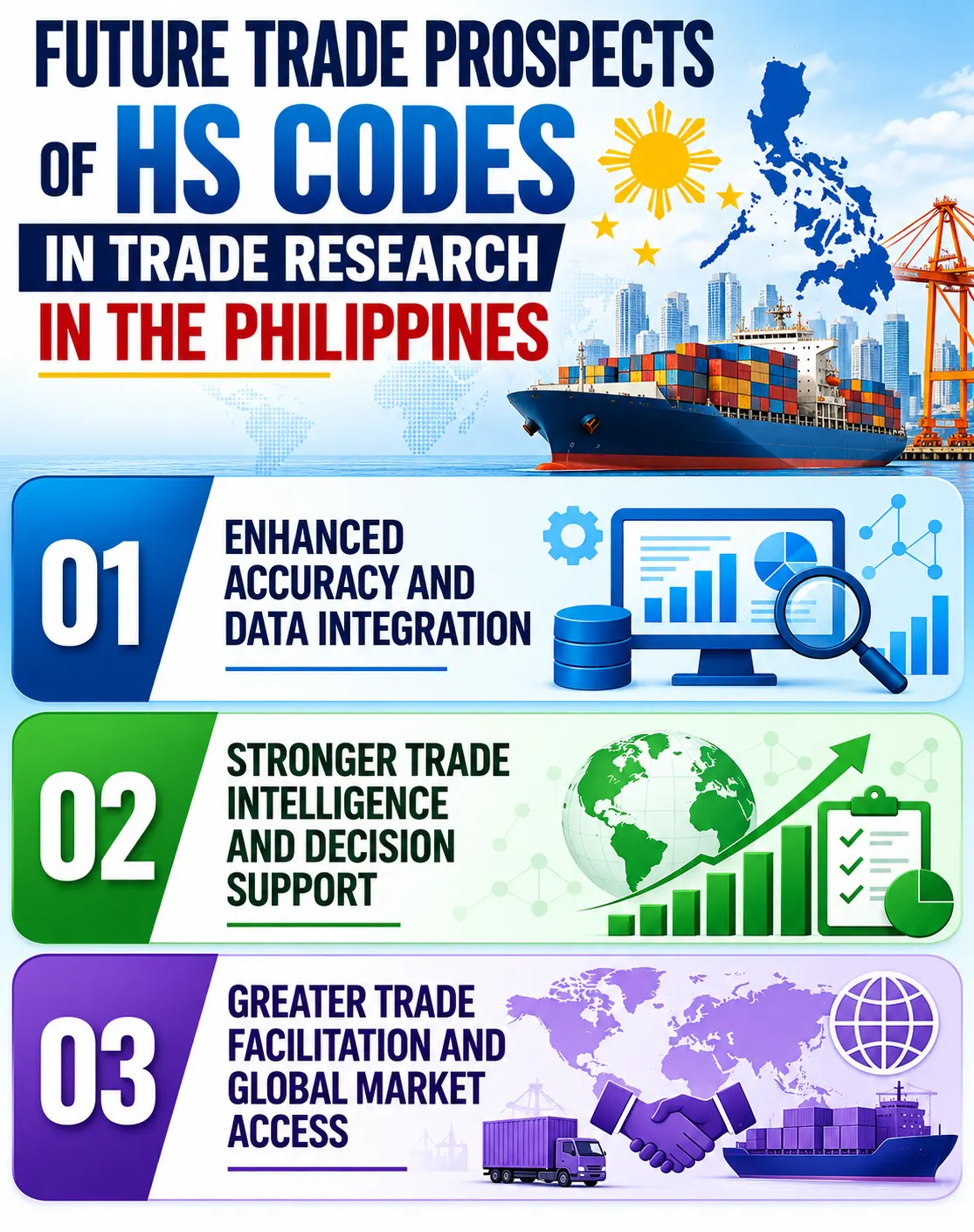
The future usage of HS Codes in trade research in the Philippines will witness substantial growth as trade data continues to become more advanced, more detailed, and more technology-based. HS codes will continue to provide a standardized system of product classification.
In the near future, HS Code data will most likely be integrated into various applications of artificial intelligence, electronic customs systems, shipment databases, and automated trade research systems, says Philippines Customs Data.
HS codes will contribute to significant improvements in market forecasting and supply-chain planning by providing means for monitoring trade trends on a product level, comparing trade countries for any given product, determining tariff benefits, and discovering new ways of sourcing or exporting products.
Philippines Export Statistics reported, researchers will need to ensure that historical HS code data correctly corresponds when comparing different years due to possible classification changes.
For companies, this benefit is more than just knowing the numbers on trade. HS codes can give information about the demand, the countries that supply products to this market, the market for some particular products, and the existence of new business opportunities.
Whatever businesses may need is to combine HS analysis with the information about the importers and exporters, shipment trends, figures on countries, prices, tariffs, and economic indicators.
Conclusion
The HS Codes are one of the vital elements for performing proper and structured research related to trade in the Philippines. The HS codes provide a standard means for identifying products, which enables researchers, traders, politicians, and analysts to move from the general data on trade to the information related to specific products.
Thanks to HS codes, a researcher can analyse trade data on costs and revenues generated by exports, imports, customs operations carried out by customs officials, shipment data, supplier market information, destination market data, tariff data, and competitor and historical statistics.
CTA
If you are a business owner looking for upgrades in your business, then you have finally landed on the right platform here. Import Globals has proper expertise in providing detailed information regarding the Latest traded products from the Philippines with accurate HS code classification. Subscribe to www.importglobals.com or drop an email at info@importglobals.com for detailed updates on Philippines trade data to drive your overall business growth.
FAQ’s
Que. What are HS codes and how do they help?
Ans. HS codes are standardized product classification codes that help users get detailed classification of the latest traded variants.
Que. What is the importance of HS Codes in the Philippines trade research?
Ans. The importance of HS codes in Philippine trade research is that they provide detailed analysis of import, export, customs, and trade data.
Que. Name the basic HS classification system used by the Philippines.
Ans. ASEAN Harmonized Tariff Nomenclature (AHTN) is mainly used in the Philippines.
Que. How do HS codes improve Philippines trade research?
Ans. HS codes improve the Philippines' trade research by promoting the examination of specific imported products, including supplier countries and trade values.
Que. How do HS codes help the Philippines exporters?
Ans. HS codes help Philippine exporters by providing them with a detailed classification of specific imported products and supplier countries.
Que. Do HS codes help with precise tariff research?
Ans. Yes, with classified information, HS codes ease proper tariff research.
Que. How does Philippines import export data support business growth?
Ans. Philippines import export data supports business growth via proper identification of buyers, suppliers analysis of market demand and development of effective market expansion strategies.
Que. What information does Philippines trade data cover?
Ans. Philippines trade data coversImporter names, Exporter names, Shipment date, HS Code, Product Details, quantity, values, pricing information, origin country, importing country & port details.
Que. How frequently is the Philippines trade data updated?
Ans. Philippines trade data is updated on a monthly basis.
Que. Where to get detailed information regarding Philippines import export data?
Ans. Visit www.importglobals.com or drop an email at info@importglobals.com for detailed updates on Philippines import/export data.
You Can Also Visit :-
- Philippines Import Data 2026: The Latest Trade Statistics and Market Insights
- Fastest-growing Export Industries of the Philippines in 2026: The Latest Exported Products and Business Opportunities
- Philippines Import Top Importing Products of 2023
- Philippines-Japan Trade Relationship Outlook for 2025: The Import-Export Analysis, Trade Statistics, and the Business Opportunities
- Philippines Import Data