Philippines-Japan Trade Relationship Outlook for 2025: The Import-Export Analysis, Trade Statistics, and the Business Opportunities
- Jul 17, 2026
- 240 Views
Philippines-Japan Trade Relationship Outlook for 2025: The Import-Export Analysis, Trade Statistics, and the Business Opportunities
The Philippines economy and the Japanese authorities have been maintaining their collaboration for so long to maintain the stable bilateral trade partnerships in the Asia-Pacific region.
The trade of both the economies was backed up by decades of diplomatic cooperation, comprehensive economic agreements, and a hike in foreign direct investment. Japan is one of the top trading partners of the Philippines because of its leading role as a foreign investor in the country. The Philippines is also an important manufacturing, electronics, and services hub for the Japanese authorities, as the country is looking for diversification in its product imports. The long-standing economic partnership of the region is backed up by the stronger investments in electronics manufacturing, automotive production, semiconductors, industrial machinery, renewable energy, and healthcare equipment.
Philippines Import Data reported the Japanese multinational corporations as the main factors promoting the proper expansion of the authorities regarding manufacturing facilities, research centres, and industrial parks across the country. The Philippines ' exports are diversified due to the trade with Japan, with specific essentials like electronic components, semiconductors, machinery, parts, bananas, pineapples, and other agricultural essentials. Japan is also dependent on the Philippines for its exports of machinery, automobiles, automotive components, steel, industrial equipment, and chemicals.
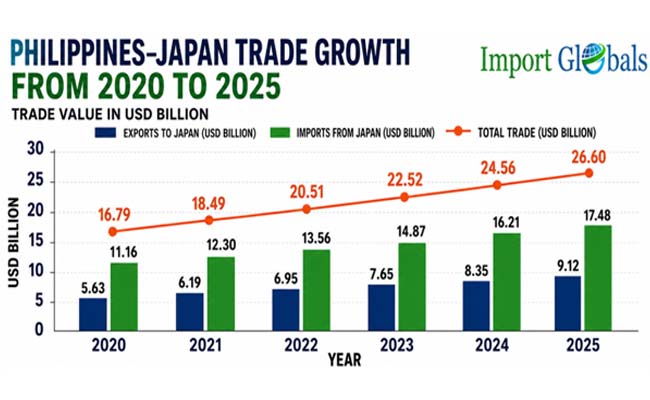
Philippines-Japan Economic Partnership Agreement, the Regional Comprehensive Economic Partnership, and the ASEAN-Japan Economic Cooperation have been significantly reducing the tariff barriers. The simplified customs procedures and the encouraged investment have overall facilitated the cross-border trade. Philippine Export Data reported that the bilateral trade between the Philippines and Japan has reached a total valuation of 22 billion US dollars in 2025, fostered by electronic semiconductor products, machinery, transportation equipment, industrial materials, agricultural products, and consumer goods. The shipment-level intelligence on Philippines-Japan trade helps businesses with the identification of reliable importers, HS code shipment values, buyer-supplier networks, and other data-driven and traditional trade decisions.
The Comprehensive Outlook of the Philippines-Japan Trade
The diplomatic relations between the Philippines and Japan are maintained because of the several decades of involvement of both regions in the Asia strategic partnerships. Japan is consistently ranked as one of the largest export markets and a major source of foreign investment, says Japan Trade Data. The proper establishment of the Japanese manufacturers has promoted the production facilities of their trade across industrial zones like Cavite and other manufacturing hubs.
The Philippines Shipments Data reported the country as the region offering competitive labour costs and favourable investment policies, which influences its image as one of the attractive production bases. The technological expertise of the Japanese authorities and industrial automation has improved the Philippine manufacturing capabilities while supporting export competitiveness.
Latest Trade Statistics of the Philippines and Japan
- The bilateral trade between the Philippines and Japan attained a valuation of 22 billion US dollars in 2025.
- Japan is one of the largest export destinations of the Philippines.
- The Philippines is mostly investing in its semiconductor trade with Japan.
- The Japanese investment in the manufacturing authority of the Philippines is increasing over time.
- The import of industrial machinery from Japan is supporting the manufacturing expansion of the Philippines.
Why is the Philippines-Japan Trade Partnership Attaining Growth at Present?
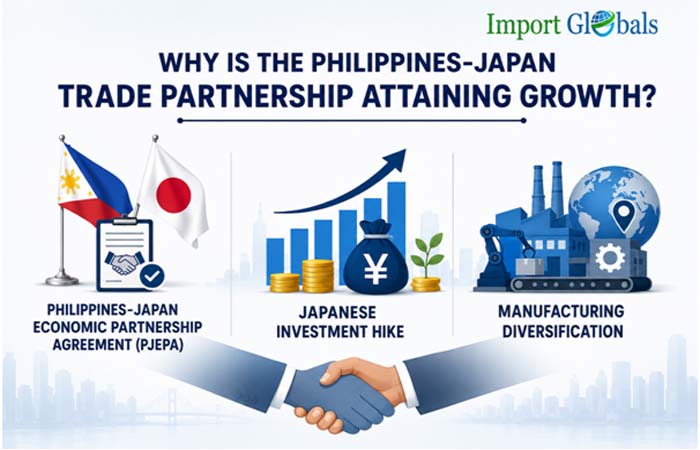
- Philippines-Japan Economic Partnership Agreement - (PJEPA) is one of the influential agreements that supports the bilateral trade relationship between the Philippines and Japan. The agreement between the government authorities of both the regions is focused on the aim of reducing tariffs, simplifying customs procedures, and strengthening investment protection, as per Japan Customs Data. The main motive of the initiative was to enhance cooperation in manufacturing.
- Japanese Investment Hike - The continuous hike in the investment of Japan's authorities worth billions of dollars across the Philippines has maintained the steady trade of semiconductor assembly, electronics production, logistics, renewable energy, healthcare, and infrastructure development. This has overall generated employment opportunities in the region.
- Manufacturing Diversification - The Japanese authorities are continuously diversifying their production outside traditional manufacturing regions. The Philippines is an attractive destination for trade for the Japanese authorities, mainly because of the skilled workforce, expanding industrial ecosystem, and logistics infrastructure.
The Latest Traded Products Between the Philippines and Japan
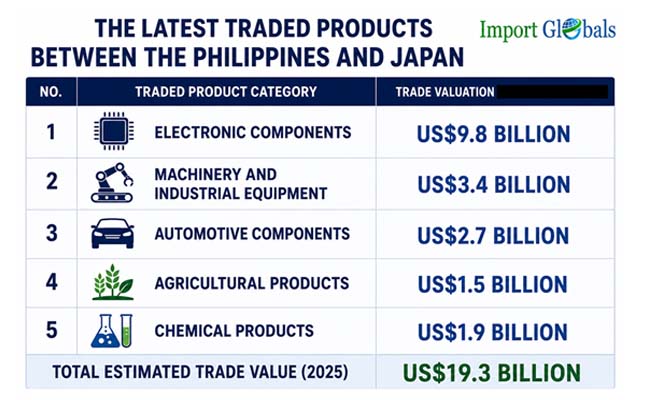
- Electronic Components - Philippines Export Trade Data represented electronic components as one of the top traded categories between the Philippines and Japan. Semiconductors, integrated circuits, and storage devices are the latest variants exported within the regions.
- Machinery and Industrial Equipment - Japan is continuously exporting industrial machinery, robotics, factory automation, and compressors. It has overall improved industrial productivity while maintaining trade across the Philippines.
- Automotive Components - Vehicle engines, transmissions, and electrical wiring systems are in the most demand in different regions worldwide for the continuous automation upgrade. Philippines and Japan are mostly trading this equipment for the fastest evolution of their automotive trade.
- Agricultural Products - The shift of the global consumer base towards a nutritious, rich diet for maintaining the protein intake in their products has facilitated the trade of agro-essentials. The Philippines is exporting agro products to Japan for its superior quality standards, says Japan Import Data.
- Chemical Products - Wrapping up the list of the topmost traded categories of the Philippines and Japan, chemical products are also a significant one. Specialty chemicals, industrial chemicals, plastics, synthetic resins, and cosmetic materials are contributing to the bilateral trade.
The Latest Industries Facilitating the Philippines-Japan Trade
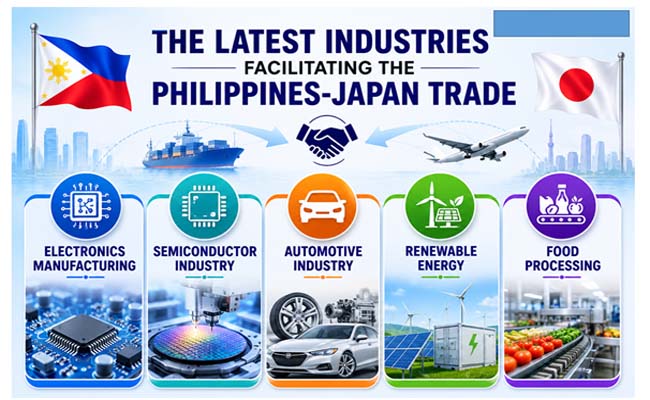
- Electronics Manufacturing - Electronics manufacturing is considered one of the backbones of bilateral trade, with Japanese companies continuously investing in semiconductor packaging because of its ability to produce integrated circuits, precision electronics, and consumer electronic components.
- Semiconductor Industry - The semiconductor industry is also a facilitator of the Philippines-Japan trade, says Philippines Import Customs Data. The hike in the global demand for chips used in artificial intelligence, electric vehicles, and telecommunications has supported the bilateral trade growth.
- Automotive Industry - Japanese automobile manufacturers are expanding their production facilities on a stronger note to maintain the supply rate across the Philippines. Japan Export Data reported that the increasing demand for vehicle components, electric vehicles, and technologies was the main reason behind the upgrade of this industry.
- Renewable Energy - Both the Philippines government and the Japanese government are investing their finances in solar energy, wind energy, battery storage, and smart grids. It has maintained an energy-efficient infrastructure with proper trade output.
- Food Processing - Food manufacturing has been continuously benefiting the Japan-Philippines trade with investments in packaging, cold chain logistics, food safety technologies, and export-oriented processing facilities.
Latest Business Opportunities Associated With Philippines-Japan Trade
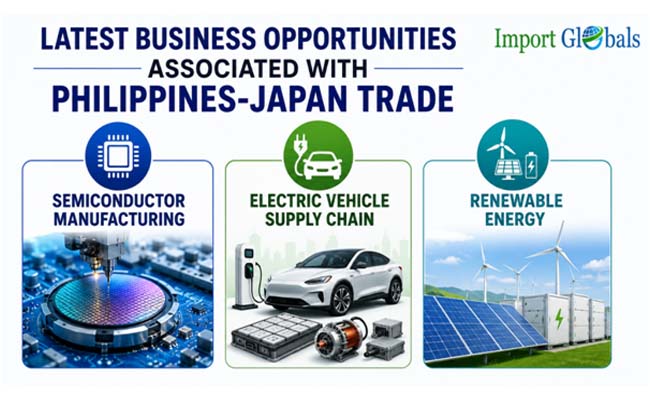
- Semiconductor Manufacturing - The Philippines is one of the preferred semiconductor manufacturing destinations. The Japanese companies are continuously investing in semiconductor testing because of their electronic component manufacturing rate to meet the growing demand of the worldwide population.
- Electric Vehicle Supply Chain - Different opportunities for component manufacturers supplying batteries and electric motors are represented by the electric vehicle production. All this has maintained the steady trade of batteries, electric motors, and charging equipment on a stronger scale.
- Renewable Energy - Renewable energy is also the latest business opportunity associated with the Philippines and Japan trade. The continuous expansion of investment by government authorities in renewable energy technologies has supported the trade of solar panels, wind turbines, battery storage systems, and hydrogen infrastructure.
The Beneficial Role of Philippines-Japan Import-Export Data
Philippines-Japan shipment level trade information is considered one of the most valuable assets that gives a basic idea to the business authorities regarding what kind of product ranges are preferred more by the global consumer base at present. Philippine Shipment Trade Data reported that the Japan-Philippines import-export data gives detailed information regarding the product demand rates in both regions, along with the shipment frequency monitoring strategy.
The detailed insights into the shipment information enable businesses to compare pricing trends, evaluate profitable markets, identify competitive performances, and reduce operational risk. Import Globals is one of the skilled data set providers in this specific category, as it helps the business authorities with the understanding of shipment-level Philippines-Japan trade. The optimization of shipment dates, port, producer description, HS codes, and country of origin information helps the authorities with proper improvement of inventory planning, strengthening of procurement strategies, and identification of market opportunities.
Challenges Associated With Philippines-Japan Trade
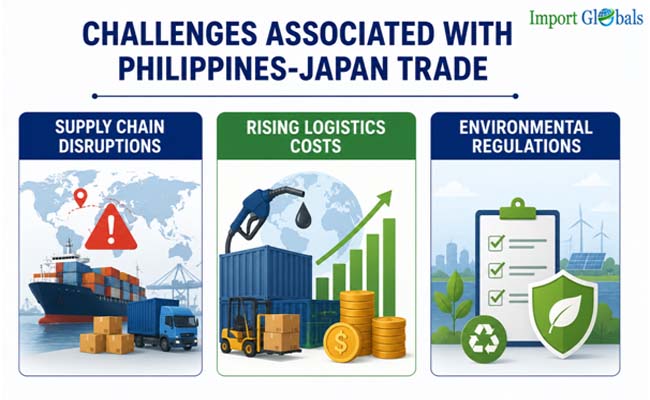
- Supply Chain Disruptions - The latest challenge associated with the Japan and Filipino trade is the irregularity in the supply chain. The shipping delays, geopolitical uncertainties, and port congestions are affecting the bilateral trade of the two economies.
- Rising Logistics Costs - The hike in the freight charges, fuel prices, and insurance costs is causing an impact on the profitability and stability of trade within the economies. It has maintained logistic planning for its essential role.
- Environmental Regulations - Both the government authorities are continuously implementing different sustainability regulations and environmental compliance standards for maintaining the environment-friendly trade closures. The increasing investment in cleaner production and sustainable supply chains is upgrading the trade portfolio.
Future Outlook of Philippines-Japan Trade Relations
The Philippines-Japan trade relationship will be continuously expanding over time because of the stronger diplomatic cooperation and the growing foreign investment. The continuous investment in semiconductor electronics, renewable energy, and healthcare vehicles will generate employment opportunities while strengthening export competitiveness.
The Industry 4.0 technologies, automation, robotics, Internet of Things, and digital manufacturing will improve industrial productivity. The proper implementation of PJEPA, RCEP, and ASEAN-Japan trade initiatives will simplify the customs procedures while effectively reducing the trade barriers to foster the bilateral agreements.
Conclusions
Philippines Customs Data reported the trade partnership of the nation with Japan as one of the successful and important economic relationships of the entire Asian continent. The diplomatic ties of the Philippines and Japan, favourable trade agreements, and the expanding investments are resulting in a successful representation of the important economic relationships. Electronic semiconductors, automotive components, renewable energy, and digital technologies are considered the fastest-growing sectors promoting bilateral trade. The businesses looking for international expansion are leveraging the Philippines-Japan Import-Export Data regarding the identification of buyers, suppliers, pricing trends, shipment patterns, and emerging business opportunities. The reliable shipment-level trade intelligence enables companies to make informed business decisions, strengthen supply chains, and achieve long-term growth.
CTA
Looking for an expansion in your business in the Philippines-Japan market? Import Globals is here to help. The platform is skilled in providing detailed intelligence regarding the exporter information, HS code, shipment values, and product description. Subscribe to www.importglobals.com or drop an email at info@importglobals.com to get comprehensive access to the Philippines-Japan trade data to accelerate your business growth.
FAQs
Que. What is the role of the Philippines-Japan trade partnership in the global market?
Ans. Philippines-Japan trade partnership holds major significance in the global market because it supports sustainable economic growth.
Que. Name the commonly traded product between the Philippines and Japan.
Ans. Electronics are one of the most commonly traded products between the Philippines and Japan.
Que. Name the latest exported categories from Japan to the Philippines in 2025.
Ans. Industrial machinery is one of the top exported categories from Japan to the Philippines in 2025.
Que. Name the latest Philippines exports to Japan in 2025.
Ans. Semiconductor devices are the latest Philippine export to Japan in 2025.
Que. List the top industries offering the best business opportunities in 2025.
Ans. Semiconductor manufacturing and electric vehicles are the top industries offering the best business opportunities in 2025.
Que. Name the major challenges affecting the Philippines-Japan bilateral trade.
Ans. Supply chain disruptions and increasing logistics costs are some of the top challenges affecting the Philippines-Japan bilateral trade.
Que. How does Philippines-Japan import-export data support business growth?
Ans. Philippines-Japan import-export data support business growth via proper identification of buyers, suppliers, analysis of market demand, and development of effective market expansion strategies.
Que. What information is available in Philippines-Japan trade data?
Ans. Philippines-Japan trade data covers Importer names, Exporter names, Shipment date, HS Code, Product Details, quantity, values, pricing information, origin country, importing country & port details.
Que. How frequently is Philippines-Japan trade data updated?
Ans. Philippines-Japan trade data is updated on a monthly basis.
Que. Where can businesses obtain detailed information regarding Philippines-Japan trade data?
Ans. Visit www.importglobals.com or email info@importglobals.com for detailed shipment-level analysis of Philippines-Japan import-export data.
You Can Also Visit :-
Philippines: All Relevant Import and Export Statistics
What the New U.S.- Japan Trade Accord Means for Technology and Auto Sectors
Vietnam - Japan Trade Partnership of 2025: The Latest Market Opportunities and Trends