
Impact of US Midterm Election Results on Global Tariffs and Trade Relations
- Nov 04, 2026
- 78 Views
Impact of US Midterm Election Results on Global Tariffs and Trade Relations
The 2026 US Midterms are an important political process for business organizations involved in international trading operations. The midterms are set for November 3, 2026, and would determine the members of Congress, including both the House of Representatives and some of the members of the Senate.
1. Influence on US Trade Policies
The Congress enacts laws that govern trade, endorses trade agreements and formulates economic policies. Any changes in the makeup of Congress could impact any discussion on import tariffs, export controls and domestic manufacturing.
2. Impact on Global Tariffs
Any policies that emerge on the elections could impact tariff talks with countries like China, India, Canada, Mexico and Europe. Businesses should watch out for policies that will impact the prices of their goods.
3. Changes in International Trade Relations
Note that political objectives will influence trade talks, trade agreements and sourcing strategy. Organizations could also investigate alternative sources to obtain their products.
4. Opportunities for Global Importers and Exporters
Trade policies can open up new opportunities for companies that manufacture, source and export goods. Global Trade Data Monitoring This service allows companies to monitor the movement of their shipments, their trading partners and the emerging markets.
5. Importance of Reliable Trade Intelligence
Global Import Data helps companies to know demand of products and trends in international sourcing activities and sourcing. Similarly, US Import Export Data reveals the US trading partners, shipment movements and the competition.
Import Globals is an import-export trade data company that helps businesses with market research, trade movement analysis and international sourcing opportunities.
How Midterm Election Results Could Influence US Tariff Policies
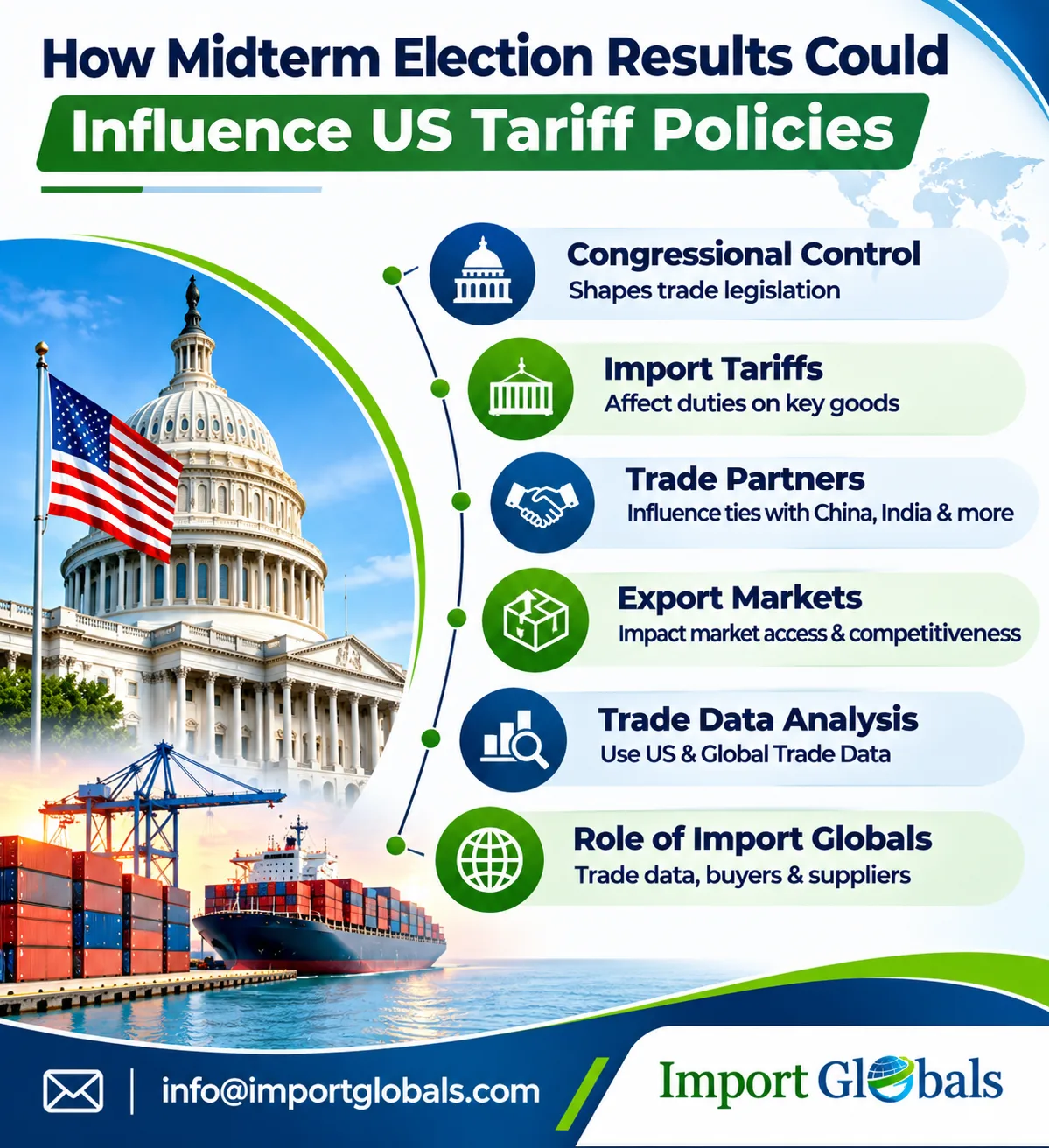
Midterm elections can be important in shaping the trade policy of the United States and its relationship with other economies. Midterm elections don’t install a new president, but do elect members of Congress whose actions affect legislation, trade regulation and tariffs. Thus, the result of the 2026 election will be an important factor in determining the future trade policy of the United States.
1. Changes in Congressional Control
If the majority party in the House of Representatives or Senate changes , that can also impact the process of introducing and ratifying trade legislation.
2. Changes in Import Tariffs
Tariffs are a critical part of America’s trade policy. Congressional pressure and political considerations could influence discussions on duties on imported steel, aluminum, automobiles, electronics, and other goods. “Businesses need to look at government policy statements rather than waiting for elections to see if tariff rates are going to be changed,” he said.
3. Impact on International Trade Partners
These policy changes could impact trade policies with countries such as China, India, Canada, Mexico and Europe. The changes in tariffs may lead importers to re-evaluate their supplier networks and alternative sources of supply for their goods.
4. Effects on Export Markets
The new tariffs would also have an impact on US exports as trading partners might retaliate based on the new tariffs either through negotiations or through some other measures.
5. Importance of Trade Data Analysis
It is very important for companies to get good information to know what changes are going on in the market. US Import Export Customs Data helps in identifying trading partners, shipping trends and Global Trade Statistics is used to compare international markets and suppliers.
6. Role of Import Globals
Import Globals offers import-export trade data services that will help businesses to analyze trade trends, find potential customers and suppliers as well as search for new sources of supply.
Impact of Congressional Power Shifts on Import Duties and Export Regulations
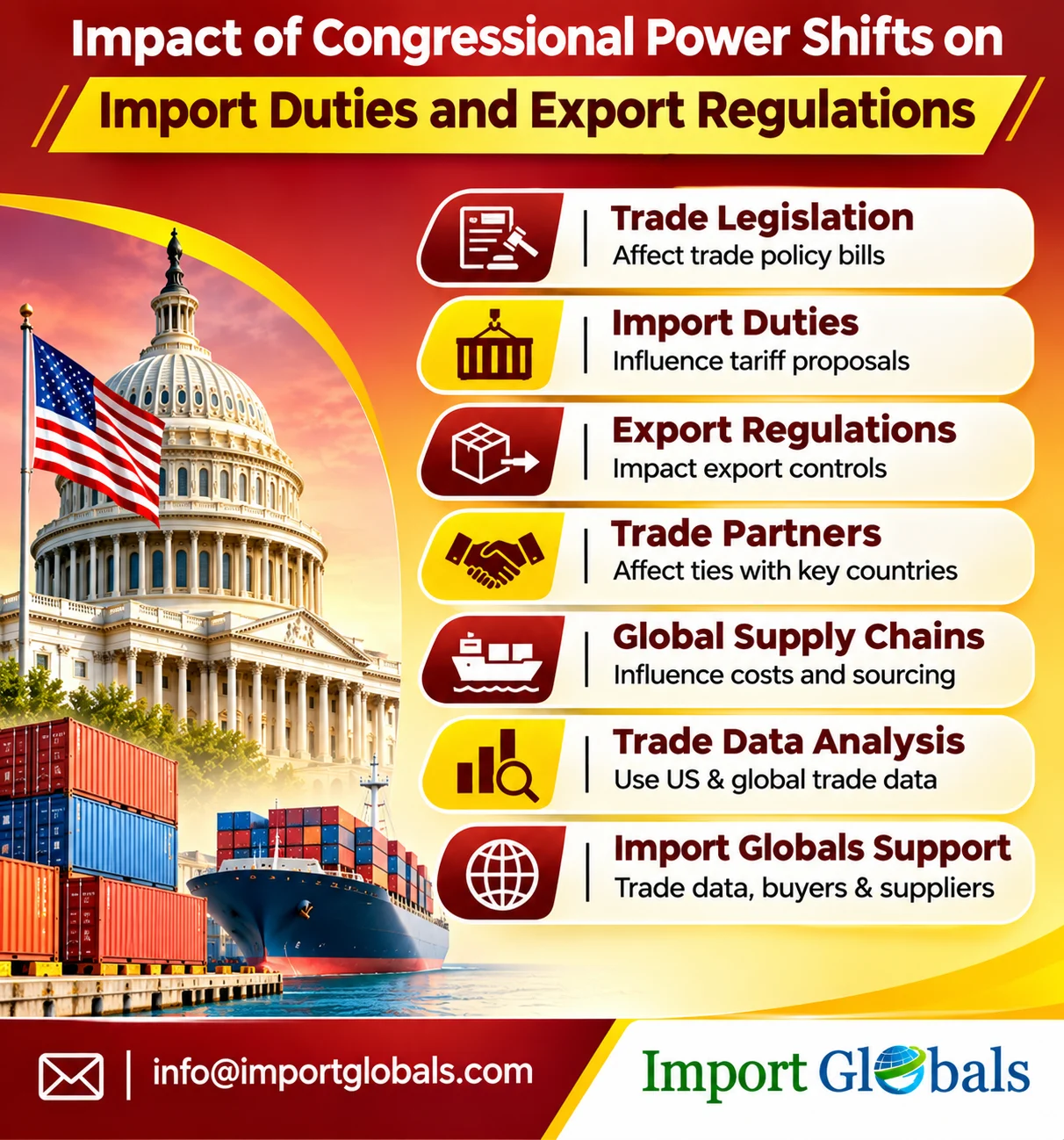
The political dynamics unfolding after the midterm elections may impact the trade directions of the US. The U.S. Congress is one of the institutions which play a significant role in the development of trade laws, economic decisions and debates on issues concerning import tariffs and export regulations.
1. Changes in Trade Legislation
Changes in the party balance could affect the introduction , debate , and passage of bills dealing with international trade.
2. Impact on Import Duties
US companies buying goods abroad should consider import tariffs. Congressional discussions on the protection of the domestic industry may impact the proposal of import tariffs on steel, aluminum, cars, electronics and agricultural products. However, some legal process will be needed for any change to the present tariffs.
3. Changes in Export Regulations
Congress may influence export control measures, particularly on sensitive technologies, industrial machinery, and strategic commodities.
4. Influence on International Trade Partners
Shifting priorities of Congress could affect discussions about China, India, Canada, Mexico and their European counterparts. Companies should be thinking of policies changing in the future and be ready for other procurement/export scenarios.
5. Effects on Global Supply Chains
Tariffs or export limits imposed by the government will affect costs, supply and logistics. In some cases, companies may seek out other suppliers while others may look into other international markets.
6. Importance of Trade Data Analysis
The US Customs Data is a helpful tool to analyze the cargo movements, trading partners and product demands. Information on global trade data may also be useful.
7. How Import Globals Supports Businesses
Import Globals provides import-export trade data analysis services to companies to analyze global trade patterns and identify new trading partners.
Changes in US-China Trade Relations and International Tariff Agreements
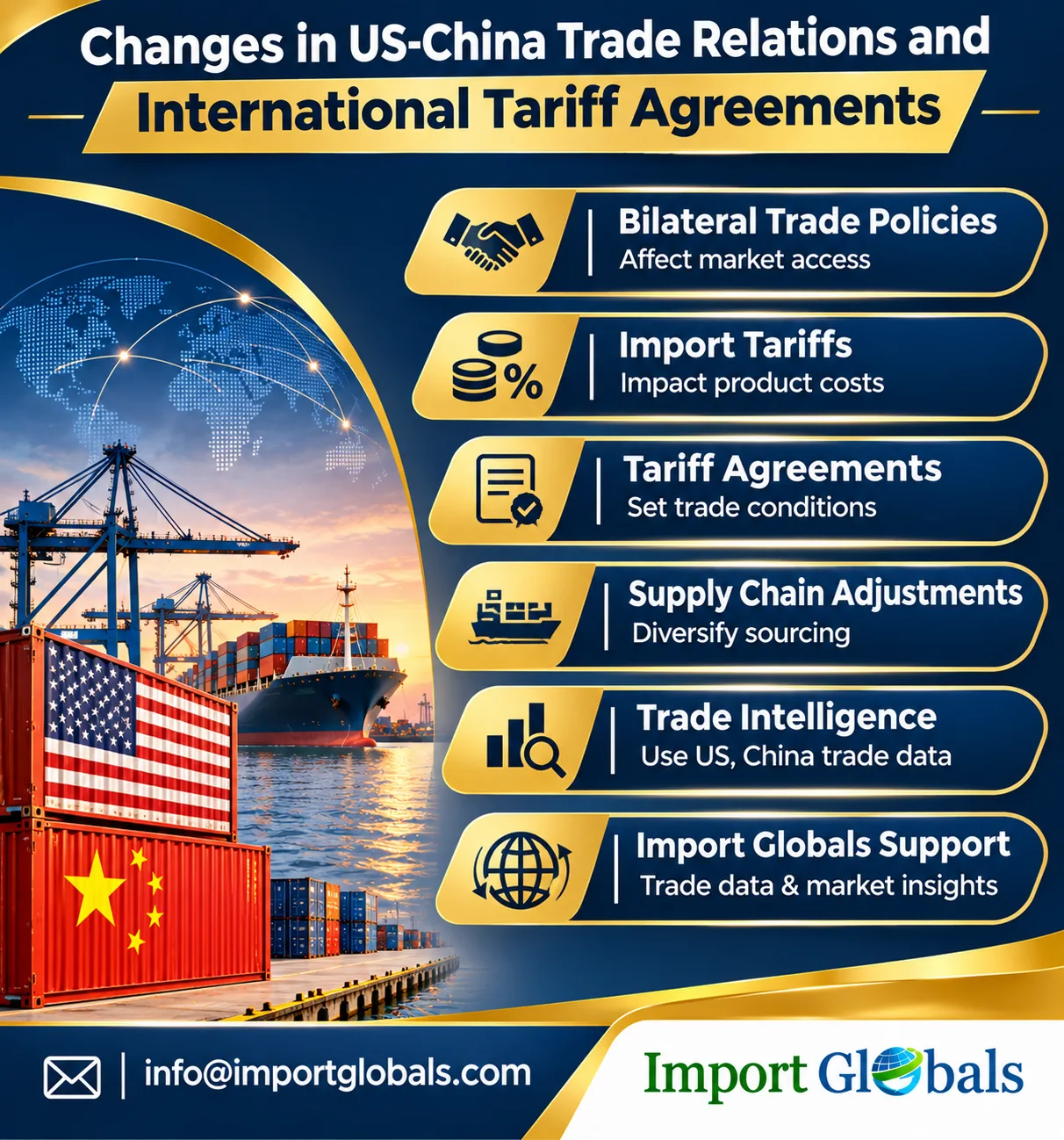
US and China trade relations are of great importance to world trade. The US and China play a major role in international manufacturing, international exports and imports. Changes in government priorities, tariffs, or trade negotiations can influence product pricing and opportunities in international business.
1. Changes in Bilateral Trade Policies
Government decisions, economic priorities and trade negotiations shape trade relations between the U.S. and China. These factors can affect international business and international trade opportunities.
2. Impact of Import Tariffs
Tariffs on certain products, if any, will be an additional cost of importation. Changes in trade policy or tariffs may cause business industries such as electronic, steel, aluminum, machinery and consumer goods to change their sources of supply.
3. International Tariff Agreements
The nature of the trade is affected by any negotiation process and tariff agreements. Any change in the relations between the two nations could have an impact on customs tariffs, product competitiveness and international trade.
4. Global Supply Chain Adjustments
Companies heavily dependent on US-China trade will need to consider other options for their sourcing of goods. Companies looking for other sources might have to look toward countries like India, Vietnam, Mexico and other Asian countries.
5. Importance of Trade Intelligence
The accurate data on the US Import will help to know the trends in imports to the US, the products in demand and sources of supply. US Export Data will help to understand export destinations and products.
How US Midterm Elections Could Affect India-US Trade Partnerships
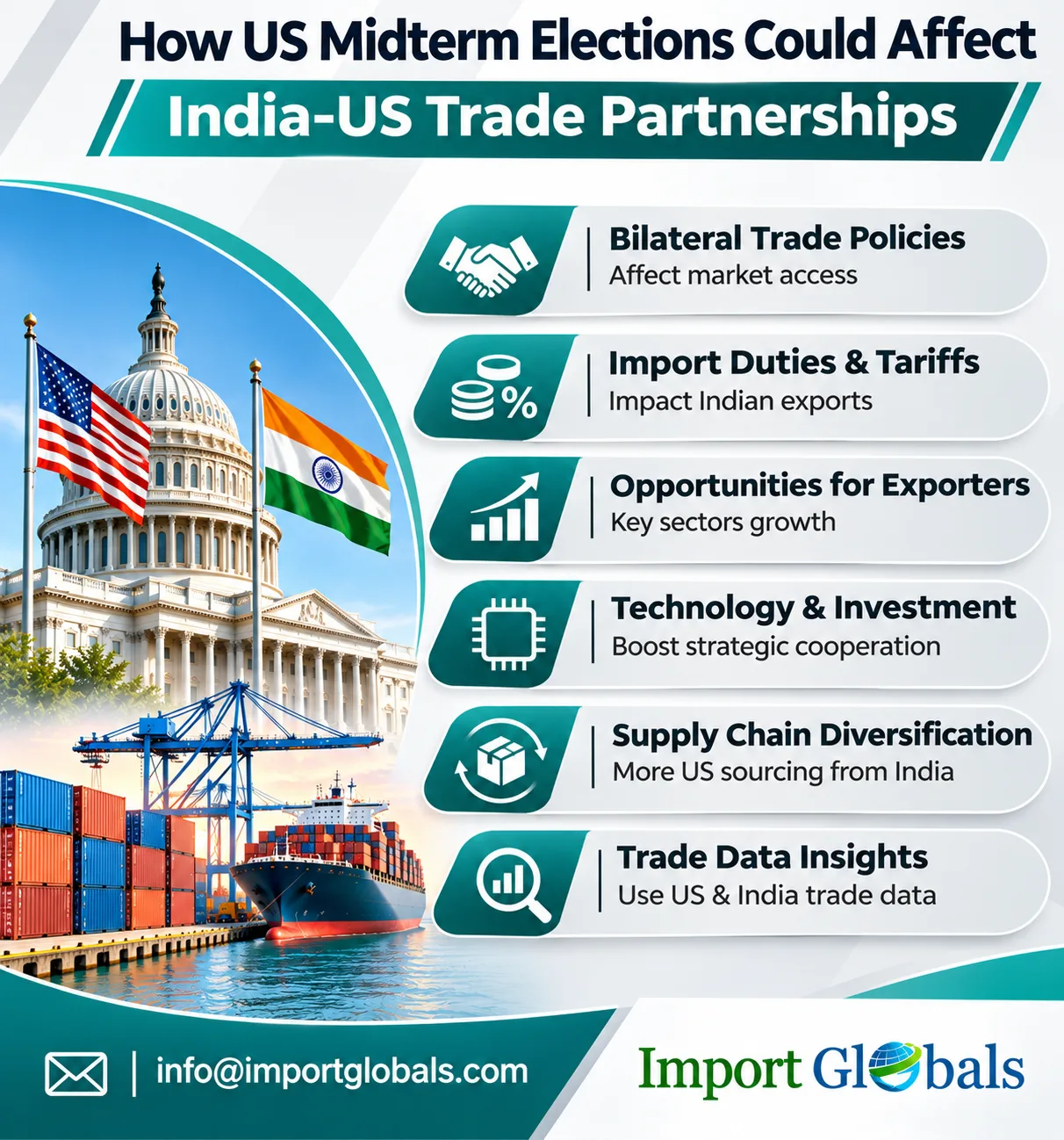
US Midterm Elections will influence future course of India-US trade relations through congressional priorities, debates and oversight on economic policies. Companies involved in bilateral trade will care about politics in Washington. The two countries have strong business ties in technology, pharmaceuticals, textiles, engineering items and agricultural goods.
1. Changes in Bilateral Trade Policies
Any change in the representation in Congress will affect the discussion on market access, tariffs, exports and economic cooperation. And companies should watch for policy changes that could affect trade with India and the U.S. and India.
2. Impact on Import Duties and Tariffs
Changes and modification of U.S. tariffs could affect exports like steel, aluminum, textiles, engineering goods and pharmaceutical products. The tariff changes will affect the competitiveness and prices of U.S. importers.
3. Opportunities for Indian Exporters
There is scope for India in areas where US companies are seeking diversified sources of supply. These areas can be pharma, electronic, textile, engineering goods, automobile parts etc. based on market requirements and regulations.
4. Technology and Investment Partnerships
The political agenda could have implications for collaboration in semiconductors, renewable energy, defense manufacturing and information technology. Stability in business policy could attract investment to these areas.
5. Supply Chain Diversification
US companies would also turn to other areas as sources of supply to reduce geopolitical risk and also to avoid tariffs. Competitive pricing and reliable delivery would be an advantage for Indian manufacturers.
6. Importance of Trade Data
U.S. Trade Analysis Data and India allows companies to identify the demand for their products, their trade partners and shipping trends. Looking at trade flows between two countries can be useful for decision making.
Effects of US Tariff Changes on Global Supply Chains and Import Costs
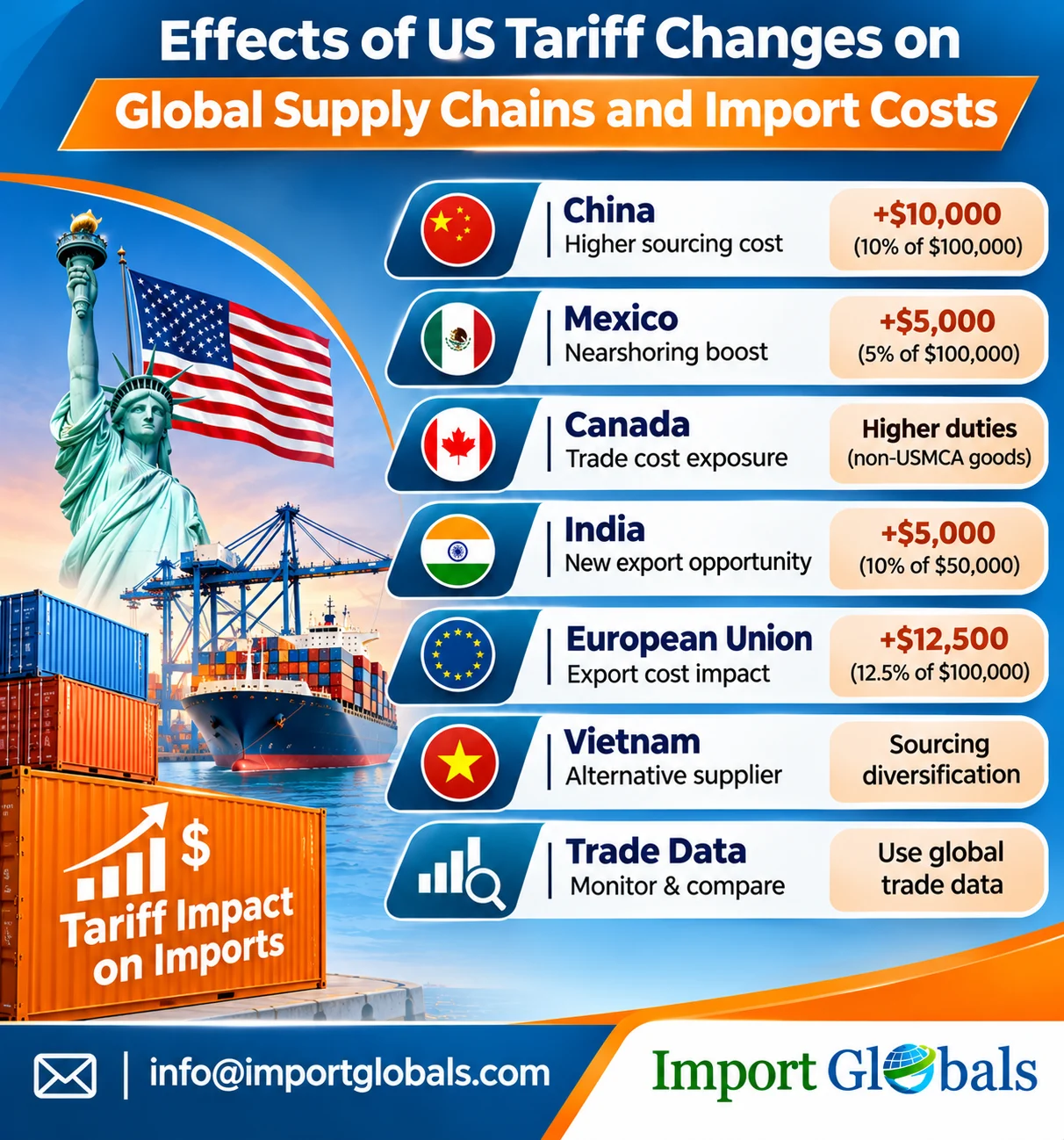
The changes in tariff policy of USA can impact on international supply chain operations and cost of imports. Higher tariffs raise the landed cost and US companies turn to other countries for goods. The impact will depend on the nature of the importing country, the type of goods, trade agreements and exemptions.
1. China – Higher Sourcing Costs
US-China tariff row drives companies to look for alternatives to China Industries particularly affected include electronics, machinery, furniture and industrial goods. Say you add 10 % tariffs. Hypothetically , a $100,000 shipment might have $10,000 in duties.
2. Mexico – Nearshoring Opportunities
Mexico may benefit when US companies shift manufacturing closer to their domestic market. USMCA-compliant products can receive preferential tariff treatment. A $100,000 shipment subject to an illustrative 5% duty would incur $5,000 in additional costs.
3. Canada – Cross-Border Trade Exposure
Canada's automotive, steel, aluminum and energy sectors have highly integrated supply chains with the US. Goods not entitled to preferential treatment under the USMCA may be subject to duties.
4. India – Export Diversification
Indian exporters of pharmaceuticals, textiles, engineering goods and machinery may find opportunities as US buyers look for alternative suppliers. A $50,000 shipment would be subject to a $5,000 duty.
5. European Union – Manufacturing and Export Impact
Tariff costs may change for European automotive, machinery, chemical and metal industries. A hypothetical 12.5% duty on a shipment worth $100,000 would cost $12,500.
6. Vietnam – Alternative Supplier Opportunities
Electronics, furniture, apparel may move production to Vietnam.
Opportunities and Challenges for International Exporters in the US Market
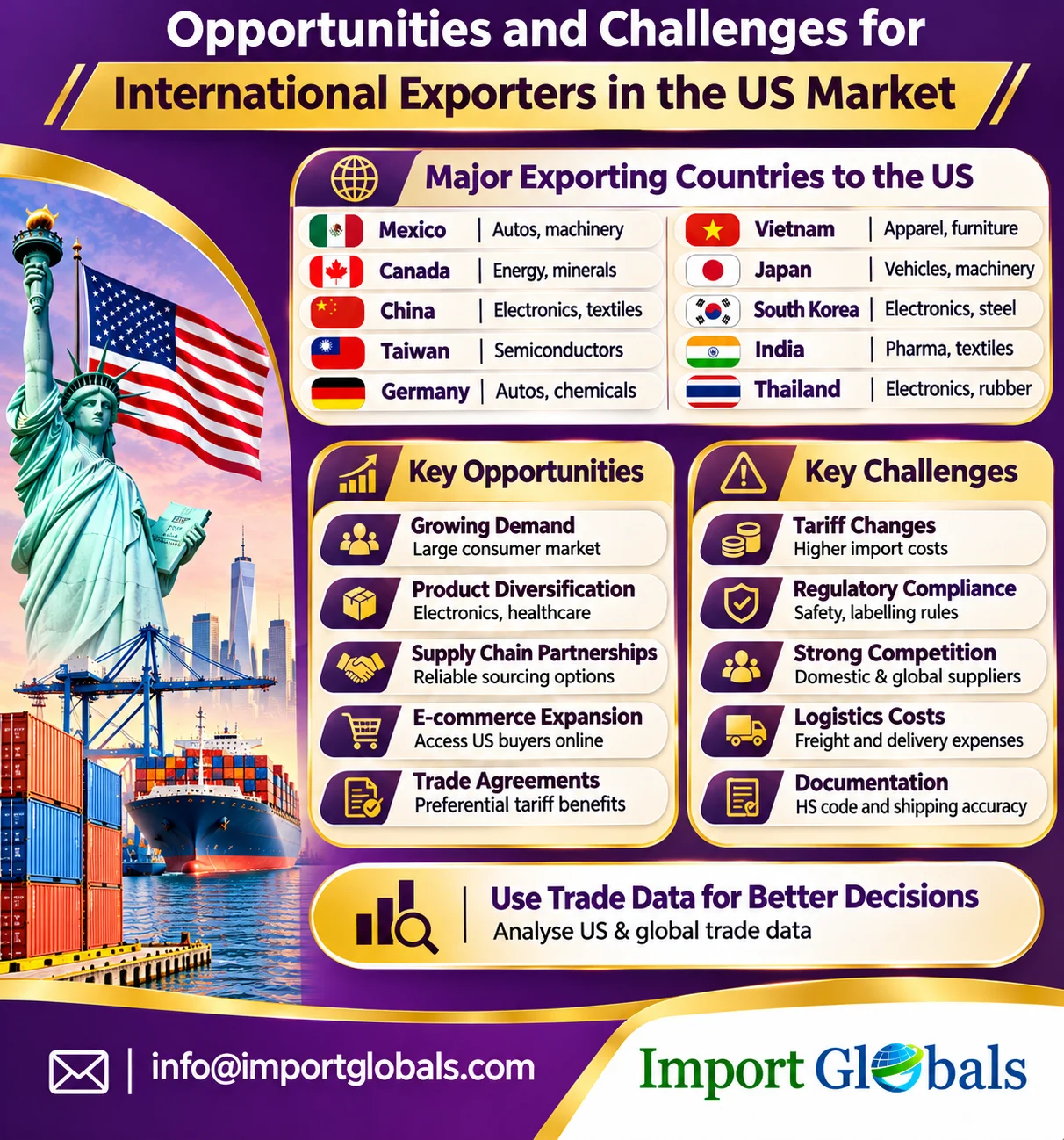
The US is one of the largest importers in the world and offers ample scope for foreign exporters in Electronics, Machinery, Automobiles, Textile, Pharmaceutical, Food Items and Industrial goods. But exporters have to plan carefully as tariffs can fluctuate and there are tough product requirements and competition.
1. Major Countries Exporting to the US
Important Supplier Countries Include:
Mexico: Automobiles, machinery, electrical equipment and agricultural products.
Canada: Energy, minerals, vehicles, timber and industrial materials.
China: Electronics, machinery, furniture, textiles and consumer goods.
Taiwan: Semiconductors, electronic components and technology products.
Germany: Automobiles, industrial machinery, chemicals and medical equipment.
Vietnam: Furniture, footwear, garments and electronics.
Japan: Vehicles, machinery, precision instruments and electronics.
South Korea: Semiconductors, automobiles, batteries and steel.
India: Pharmaceuticals, textiles, engineering goods, chemicals and jewellery.
Thailand: Electronics, machinery, rubber products and automotive components.
The countries listed above are significant suppliers of imports to the US, but their positions change each year and depending on the type of product.
2. Major Opportunities for Exporters
Growing Market Demand: Access to millions of consumers and business buyers.
Product Diversification: Opportunities in electronics, health care products, apparel and renewable energy equipment.
Supply Chain Partnerships: U.S. companies want reliable suppliers and other places to make their products.
E-commerce Expansion: Websites enable foreign companies to reach U.S. consumers.
Trade Agreements: Where the product qualifies, the applicable agreement may provide for a special rate of duty.
3. Key Challenges in the US Market
Tariff Changes: Other tasks may increase landed costs and reduce competitiveness.
Regulatory Compliance: The goods shall meet the applicable safety, labeling and quality regulations in the US.
Strong Competition: The exporters compete both with domestic manufacturers and with foreign producers.
Logistics Costs: The costs of freight, insurance, warehousing and delivery impact the profitability.
Documentation: Misdeclaring HS codes, country of origin or transportation documentation may cause delays.
4. Use Trade Data for Better Decisions
Import Globals provides import/export trade data services to assist companies in buyer/supplier research, market analysis and competitive intelligence. It is possible to analyze US import data and global trade data.
Role of US Import Export Data and Global Trade Data in Monitoring Policy Changes
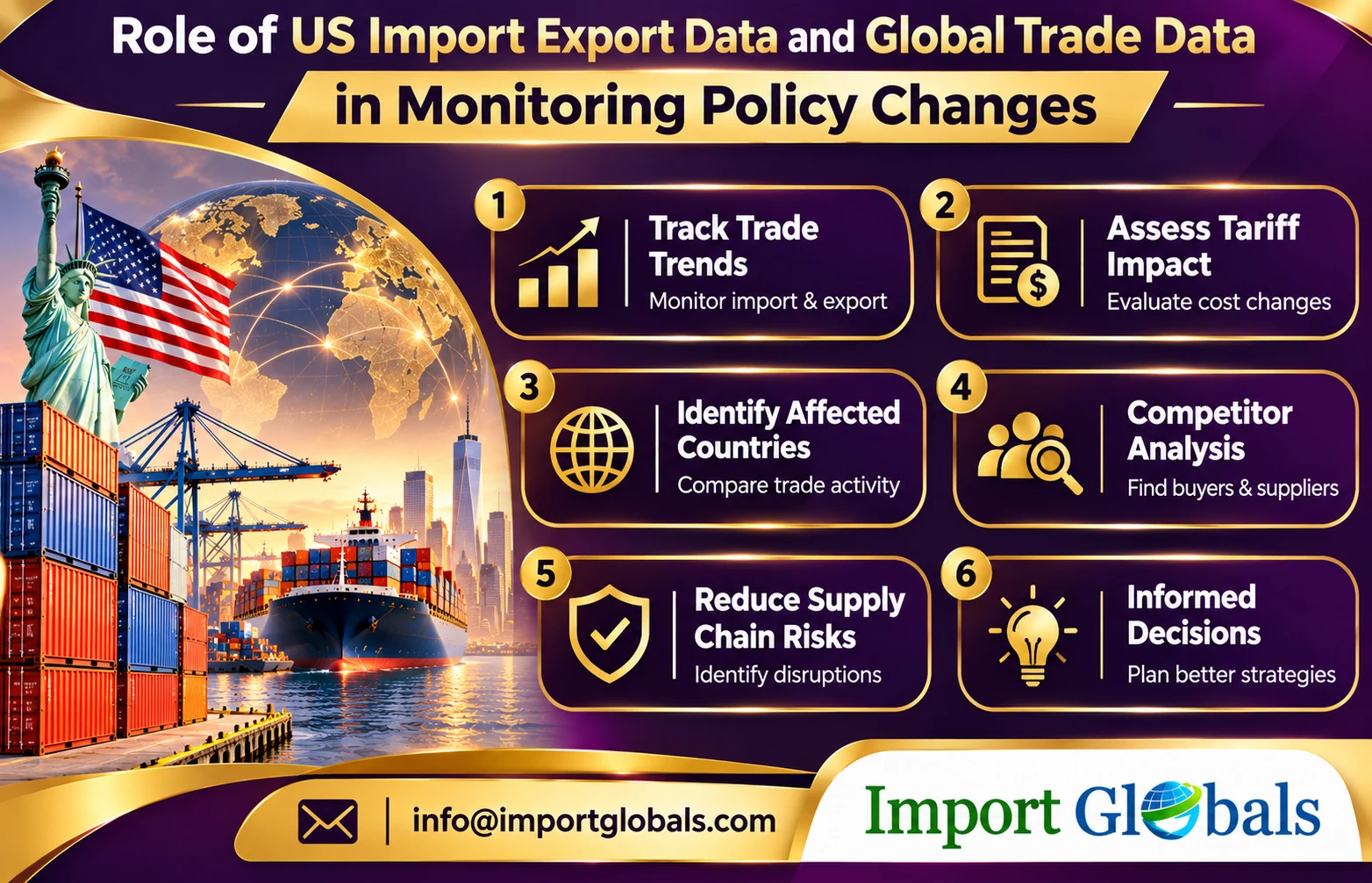
Tariffs, trade agreements, sanctions, customs, etc. changes can lead to rapid changes in international trade policies. Exporters, importers and manufacturers need to keep an eye on such changes in an effort to reduce costs and risks and to identify new opportunities. World Trade and U.S. Import Export Shipments Data provides an important tool for firms to understand the impacts of policy changes on international trade.
1. Track Changes in Import and Export Trends
Firms can use trade data to track the volume of products, their value and the countries they come from. New tariffs, restrictions or a change in supply chain strategy might lead to a sharp fall in imports from a country.
2. Monitor Tariff and Duty Impact
The fluctuation of US customs duty is known to have a direct impact on the prices and profit margin of products. Businesses can learn about the cost risks and the potential sourcing options by analyzing shipment value, product type and origin. Current tariff rates should be verified for accuracy based on the current U.S. customs regulations.
3. Identify Affected Countries and Industries
Global Trade Data allows businesses to compare their trade practices with other businesses in other countries and industries. That’s because changes in US-China trade policies could spur companies to look for suppliers in India, Vietnam and Mexico.
4. Support Market Research and Competitor Analysis
Import and export data helps companies to know their buyer, seller, product type, shipment information etc. This data can help companies to measure their rivalry and organize their exporting practice.
5. Reduce Supply Chain Risks
Trade flow analysis will help the organizations to understand concentration of the suppliers, change in the sourcing destination and any risks associated with it. This will enable the organization to plan for contingencies in case of changes or new restrictions imposed on the business.
6. Make Informed Business Decisions
Import Globals provides trade intelligence data services for organizations seeking to analyze global shipment activity, identify buyers and monitor market trends. This data along with the current policies gives the organizations an upper hand to make informed decisions.
Future Outlook: Preparing Businesses for Post-Election Trade and Tariff Changes
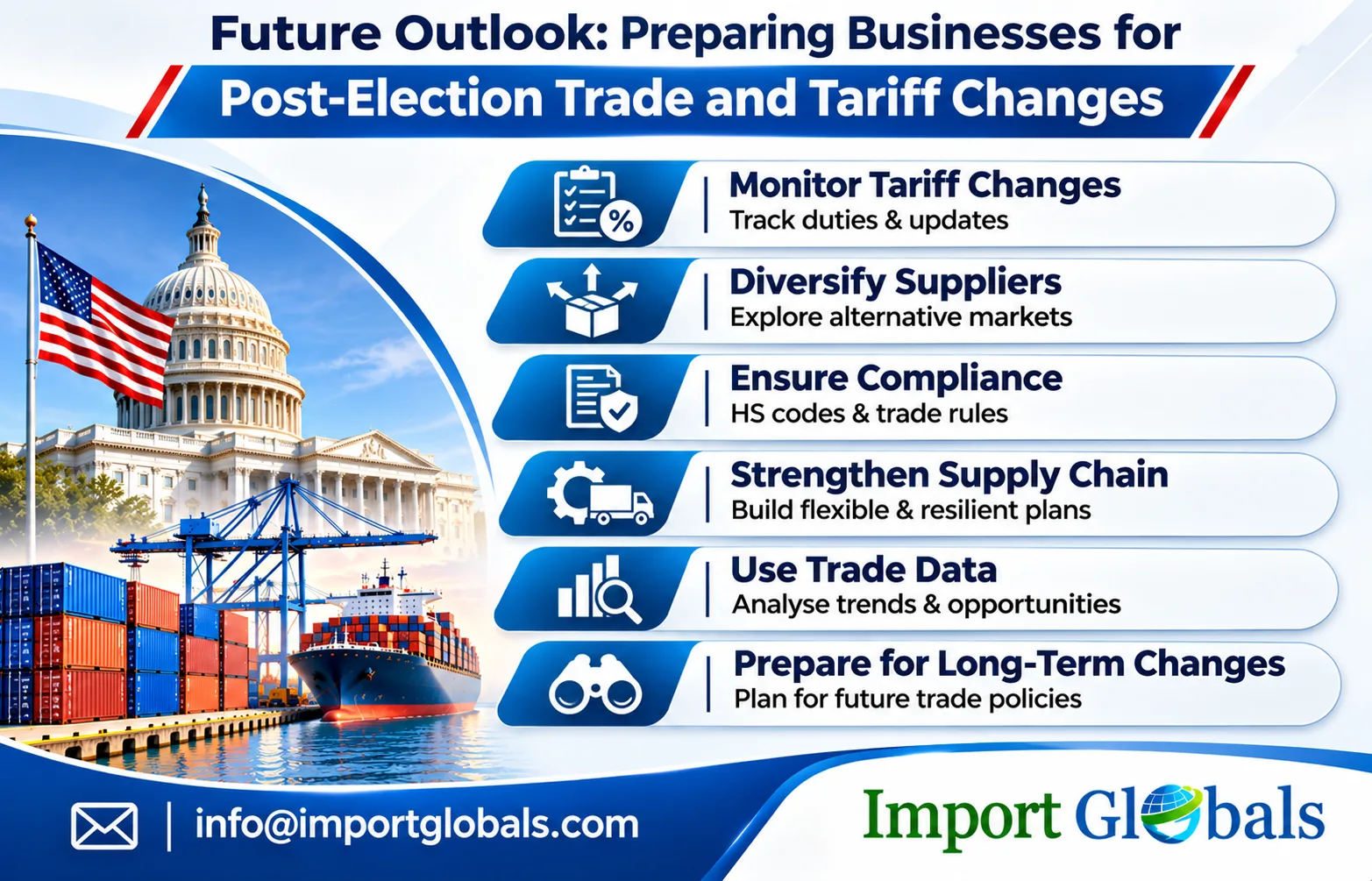
The results of the midterm elections of November 2026 can affect the trade agenda of the United States, tariff negotiations and its foreign business relations. As the Democrats take control of both houses of Congress, companies need to prepare for a renewed legislative focus on the country’s trade policy. But even a change of majority in Congress does not guaranty the abolition of tariffs.
1. Monitor Upcoming Tariff Policy Changes
Regularly review import tariffs, trade restrictions and exemptions for changes as this could affect landing costs, pricing and margins. A review of exposure should be carried out before entering into long-term procurement agreements.
2. Diversify International Suppliers
Relying on a single supplier is dangerous for business. US importers can look to alternatives in India, Vietnam, Mexico, Canada, Japan and South Korea. "Exporters will have to improve on quality, pricing and shipments to attract new customers."
3. Review Customs and Regulatory Compliance
Companies must ensure that they have the right HS Codes and country of origin statements in place. Companies also have to watch the relevant trade agreements and tariff notices.
4. Strengthen Supply Chain Planning
Companies need to have flexible buying policies, alternative supply chains and logistics cost analysis. Scenario analysis could permit firms to react to an unexpected increase in tariffs, trade sanctions or geopolitical events.
5. Use Trade Data for Market Intelligence
Analysis of US Import Data, US Export Data and World Trade Data helps firms to understand changing shipment trends, active buyers, supplier trends and new market opportunities.
6. Prepare for Long-Term Trade Developments
Import Globals is an import/export trade data service that can assist businesses with business research, analyzing trade trends and identifying potential business partners.
Conclusion
The impact of US midterm election results on global tariffs and trade relations will depend on future policy decisions, congressional priorities and international negotiations. Changes in political leadership may influence discussions on import duties, trade agreements and economic partnerships, creating both opportunities and challenges for international businesses. Exporters and importers should monitor tariff announcements, review sourcing strategies and maintain compliance with changing trade regulations. Analysing US Import Export Trade Data can help businesses identify market shifts, evaluate competitors and discover new trading opportunities. With reliable trade intelligence and flexible planning, companies can strengthen their global position and prepare for changes in the evolving international trade environment.
CTA
Prepare your business for changing global trade policies with reliable market intelligence from Import Globals. Explore import-export data, discover buyers and identify new opportunities. Visit www.importglobals.com or email [email protected] today!
FAQs
Que. How can results of midterm elections of the USA impact global trade?
Ans. The result of the election will shape US trade policy priorities and trade tariffs.
Que. Is there a possibility of change in US trade tariffs following the mid-term elections?
Ans. US trade tariffs have the possibility to be reviewed and changed in future actions of the government.
Que. What countries will be impacted by any changes in the US trade tariffs?
Ans. USA’s major trading partners include China, Mexico, Canada, India, Vietnam, Japan and Germany.
Que. How do any changes in US trade tariffs impact international exporters?
Ans. Change in trade tariffs may increase cost of exports and their competiveness.
Que. How can business prepare itself for any changes in the US trade policies?
Ans. Business needs to consider diversification of supplies and review custom clearance regulations.
Que. Why is the US Import/Export Data essential?
Ans. To find out about shipment patterns, trading partners, buyers and demands.
Que. What is the significance of the Global Trade Data for exporters?
Ans. Market research, competitor research, sourcing and international business development.
Que. How can Import Globals assist international businesses?
Ans. Provides import/export trade data solutions for market research and identifying trade opportunities.
Que. How frequently is US import-export trade data updated?
Ans. US import-export trade data is generally updated monthly, depending on the data source and reporting schedule.
Que. Where can you obtain detailed US import-export and global trade data?
Ans. Visit www.importglobals.com or email at [email protected] for detailed information and updates on international import-export trade data.
You Can Also Visit :-
