Malaysia's Top Trading Partners in 2025: The Market Trends and Statistics
- Sep 03, 2026
- 177 Views
Malaysia's Top Trading Partners in 2025: The Market Trends and Statistics
Malaysia, located in Southeast Asia, is a rapidly emerging economy with its commercial trade upgrades. The country bordering Thailand, Indonesia, and Singapore has maintained its solidifying trade rank. The positioning of the nation along the Strait of Malacca is one of the busiest maritime trade routes, providing the country with an important gateway between the Indian Ocean and the Pacific region.
The strategic location, supported by developed ports, manufacturing capabilities, and efficient logistic infrastructure, has promoted participation in regional trade agreements. Malaysia Trade Data reported the country as the strongest trade performer, with total merchandise trade of 610 billion U.S. dollars in 2025. The exports of the nation have increased by 6.5%, that is around 362 billion U.S. dollars, while the imports are at a staggering rate of 328 billion U.S. dollars, with a trade surplus of 34 billion U.S. dollars.
China is the largest import and export trade partner of Malaysia, backed up by the substantial flows of electronics, machinery, and intermediate goods. The United States is also a major marketing contributor to the Malaysian authorities. Singapore has continued to be a crucial regional partner, says Malaysia Customs Shipments Data. Thailand and Vietnam overall have strengthened trade integration within Asia. Important partners mainly include Japan, Taiwan, South Korea, the European Union, and Indonesia. The record of the country's export and import performance has highlighted its growing importance in the global supply chain. The maintenance of economic integrity is mainly because of the aim of the government authorities to run the export and import portfolio in accordance with global compliance.
The Significance of Malaysia in the Global Trade Market
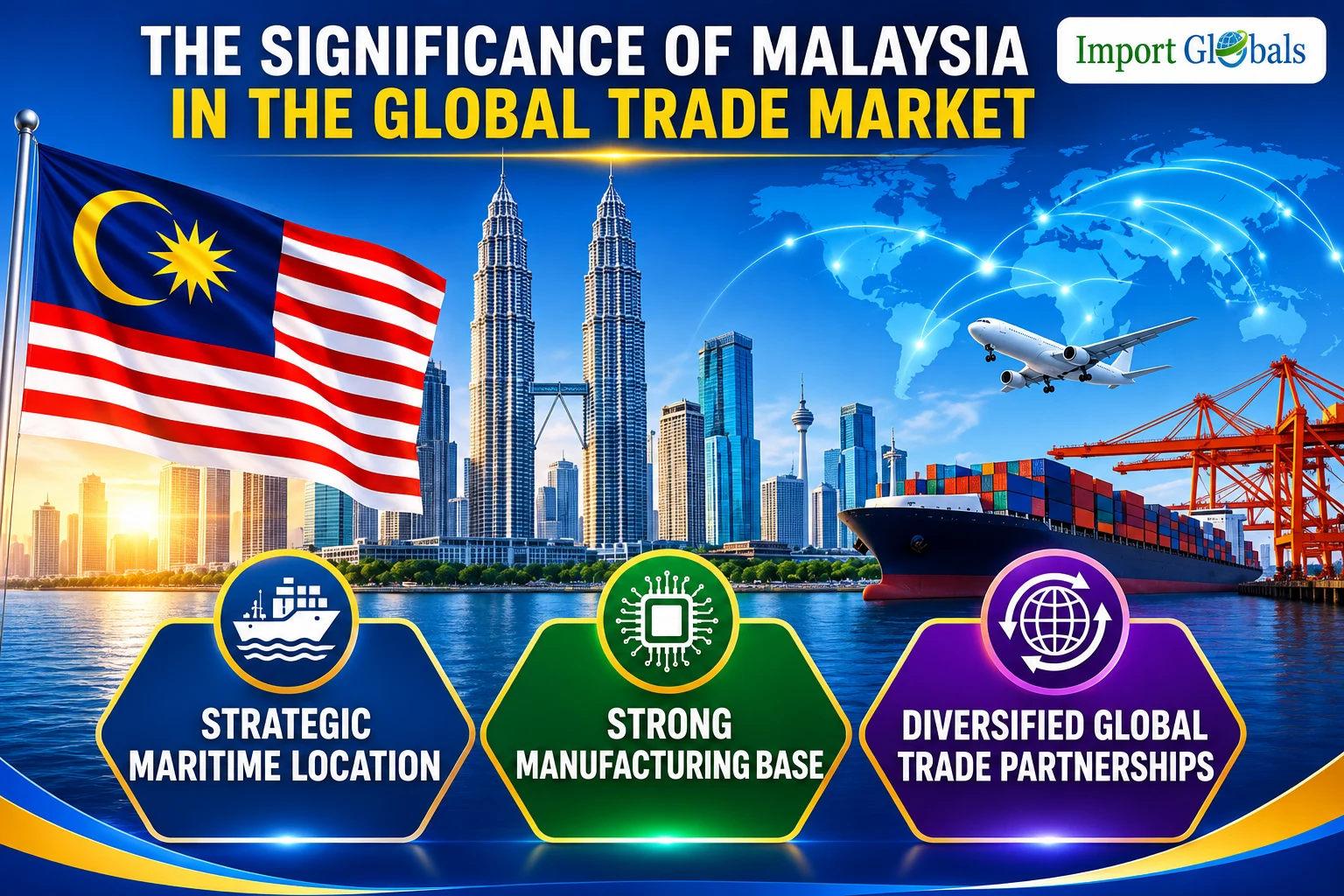
Malaysia holds a significant position in the global trade market mainly because of its strategic location, diversified industrial base, and its integrity with international supply chains. The positioning of the country along the Strait of Malacca, as reported by the Malaysia Customs Data, has provided the country with important maritime connectivity between major Asian markets and the Indian Ocean and Pacific regions. The advanced ports and logistics infrastructure have supported the efficient movement of goods across international markets.
Malaysia is mainly important in the global electronics industry because of the electrical equipment supply chain. Malaysia Shipments Data reported that the development of strong manufacturing capabilities in semiconductors, electronic components, machinery, and electrical products has made it an important production and export hub. Petroleum products, palm oil, chemicals, rubber-based products, and machinery are further contributing to the international trade portfolio.
The country benefits from strong commercial relationships with China, the United States, Singapore, Japan, South Korea, Thailand, and Indonesia, and the European Union. Participation in ASEAN and other regional trade agreements has expanded market access while strengthening bilateral and multilateral trade relationships. The growing trade volumes and the diversified export base have maintained the integrity of the global manufacturing networks while making the region an important contributor towards international commerce. The role of the Malaysian authorities as a manufacturing centre and strategic logistics hub has provided opportunities to strengthen its importance in the global supply chains.
Top Trade Partners of Malaysia in 2025
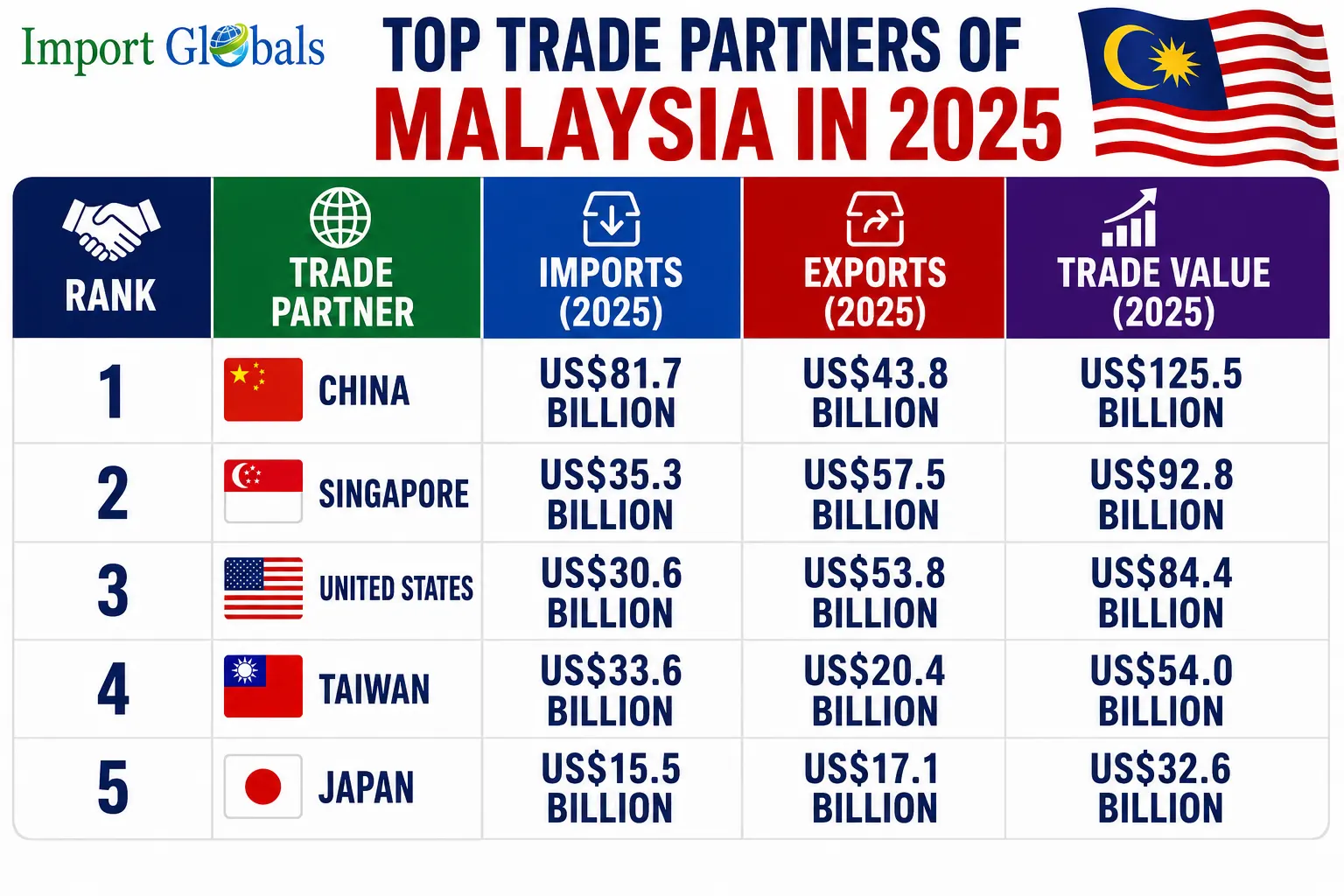
1. China — Imports: US$81.7 Billion | Exports: US$43.8 Billion - China, as reported by the Malaysia Import Data, is one of the top trade partners of Malaysia. The country has imported products worth 81 billion U.S. dollars from China and has exported products worth a valuation of 43 billion U.S. dollars to the same. The trade relationship is mainly supported by electronics, electrical components, machinery, intermediate goods, chemicals, and manufactured products. The positioning of China within Malaysia's supply chain has maintained the bilateral integrity of both regions.
2. Singapore — Imports: US$35.3 Billion | Exports: US$57.5 Billion - Singapore is also a top trade partner of Malaysia with an import accountability of 35 billion U.S. dollars and export accountability of 57 billion U.S. dollars. The transport links, integrated supply chain, and strong investment connections have maintained the relationship between the regions. Apart from geographical proximity, electrical and electronic products, petroleum products, and machinery products are reported as the top traded essentials within both the regions, says Malaysia Import Export Data.
3. United States — Imports: US$30.6 Billion | Exports: US$53.8 Billion - The United States mainly promotes the exchange of electrical and electronic products, machinery, scientific equipment, and manufactured goods with Malaysia. US Customs Data reported that the imports and exports of the nation for Malaysia are valued at 30 billion U.S. dollars and 53 billion U.S. dollars in 2025. The exports to the United States have reported a strong growth rate with a 17.2% hike.
4. Taiwan — Imports: US$33.6 Billion | Exports: US$20.4 Billion - Taiwan reported import accountability of 33 billion U.S. dollars and export accountability of 20 billion U.S. dollars. Both imports and exports are closely related to each other, as the most in-demand essentials are regularly traded by the authorities. Exports to Taiwan are particularly increasing, with a 31.2% increase in its overall revenue. The expanding bilateral relationship is highlighting increasing participation in high-value technology manufacturing.
5. Japan — Imports: US$15.5 Billion | Exports: US$17.1 Billion - Japan is also an important trade partner of Malaysia, with export accountability of 17 billion U.S. dollars and import accountability of 15 billion U.S. dollars. The bilateral trade is supported by the strong industrial and investment relationship, along with the development over several decades. Machinery, electrical and electronic products, chemicals, and automotive-related products are the top traded items. Japanese companies are maintaining substantial manufacturing and investment activities in Malaysia, says Malaysia Trade Data. The strengthening of industrial cooperation and the trade values were among the other factors supporting the bilateral relationship and the integrity of both regions.
Industries Promoting Malaysia's Trade in 2025
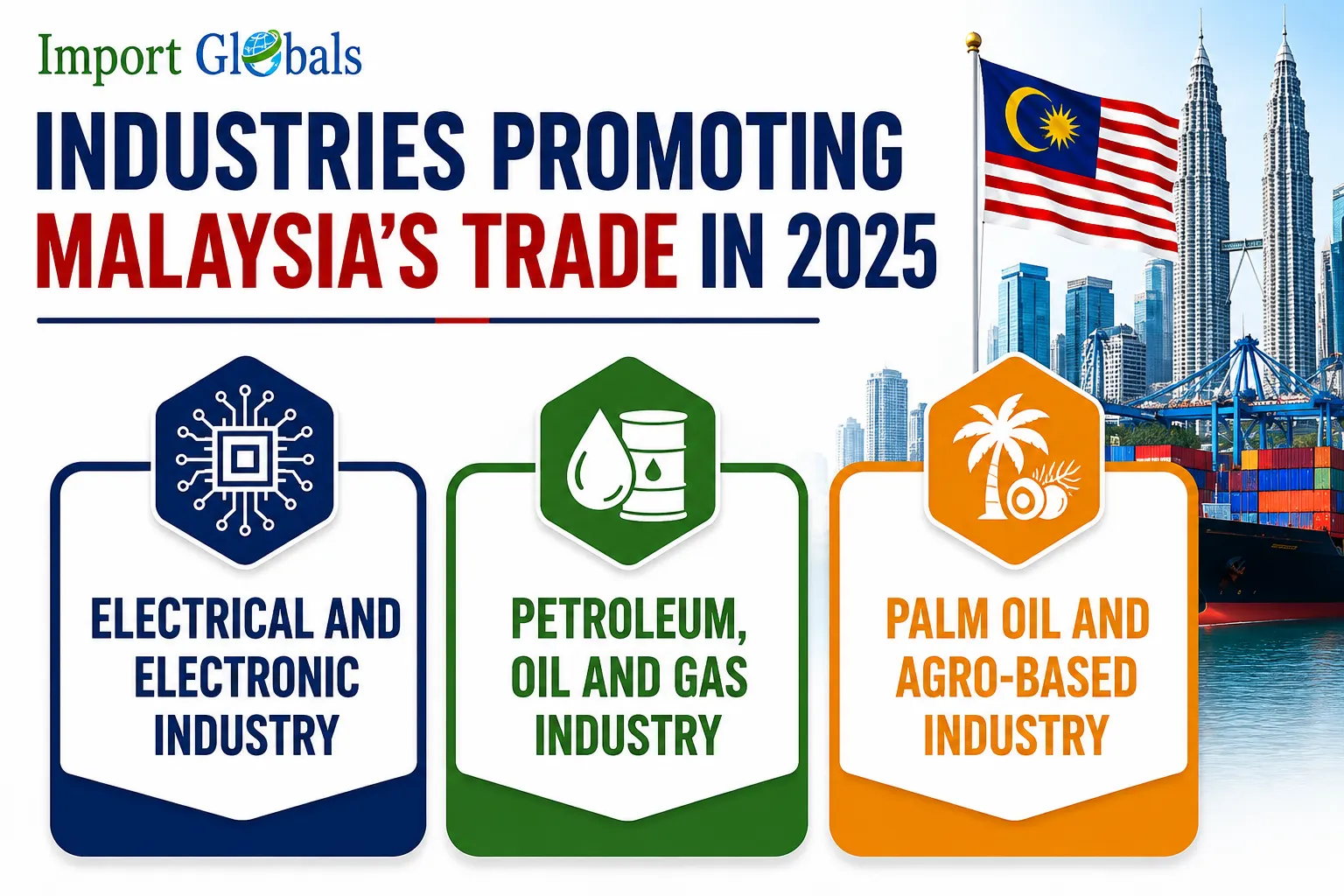
- Electrical and electronic industry - Malaysia Shipment Trade Data reported the electrical and electronic industry as a massive contributor towards the economic trade growth. The establishment of the country itself as a major regional hub is backed up by the regular trade of semiconductor assembly, testing, electronic components, integrated circuits, and electrical equipment. The stronger demand rate from the United States, China, Japan, Singapore and Taiwan has maintained the bilateral integrity of Malaysia with the top trading regions. The continuous investment in semiconductor manufacturing has strengthened the country's positioning.
- Petroleum, Oil and Gas Industry - The petroleum, oil and gas industry has played an important role in the trade performance. The exports of crude petroleum, refined petroleum, LNG and other related commodities are supporting major international market trade. The establishment of Malaysia's energy infrastructure, as reported by Malaysia Export Data, has supported the maritime location and the movement of petroleum products. The sector mainly contributes to industrial activity, foreign exchange earnings, and the broader trade portfolio.
- Palm Oil and Agro-Based Industry - It is the major pillar of international trade. Malaysia is one of the leading producers and exporters of palm oil. Asia, Europe and other regions are supporting the contribution to the export year earnings. Palm oil is widely used in cosmetics, personal care products, biofuels, and industrial applications.
Malaysia's Trade Growth Overview Till 2025
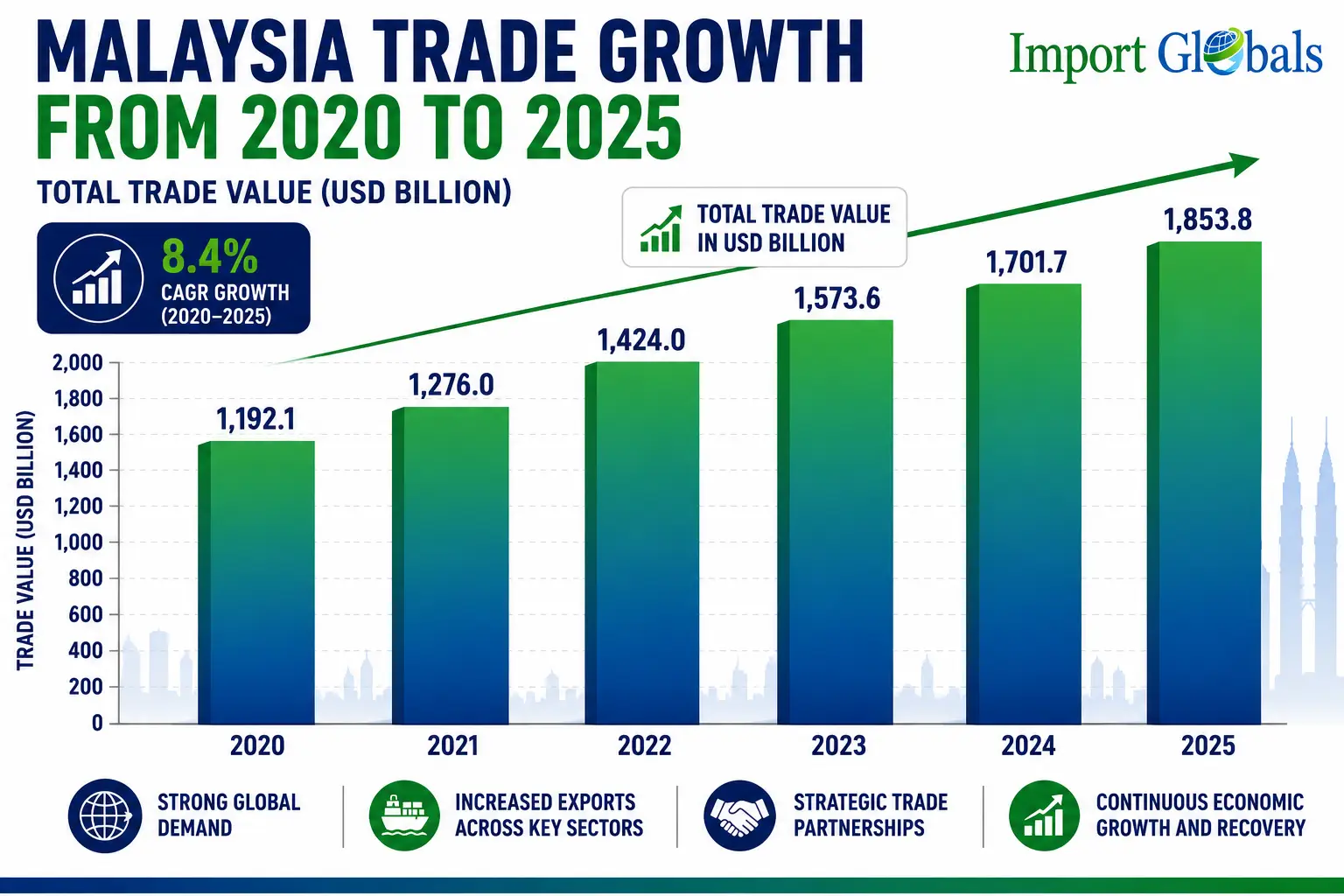
Malaysia's trade growth has strengthened over time. The strategic location along the Strait of Malacca has maintained the development of the port, sufficient logistics infrastructure, and strong international and regional connectivity. The country has achieved a historic merchandise trade performance with approximately 690 billion U.S. dollars of exports and imports, with individual trade of 362 billion U.S. dollars of exports and 328 billion U.S. dollars of imports. The diversified trade portfolio is a result of the factors promoting the country's growth rate. The electrical and electronic industry, including semiconductors and electric components, has maintained a contribution to the export growth rate.
Petroleum, oil and gas, palm oil, chemicals, machinery and other manufactured products have strengthened the export base, reported Malaysia Trade Statistics The strong commercial relationship with China, Singapore, the United States, Taiwan and Japan has expanded Malaysia's reliable access to international markets. Trade development has maintained the trend with an increase in integration with the global supply chain and regional production network. The continuous investment in advanced manufacturing and value-added industries has supported future trade competitiveness.
Challenges Impacting Malaysia's Trade in 2025
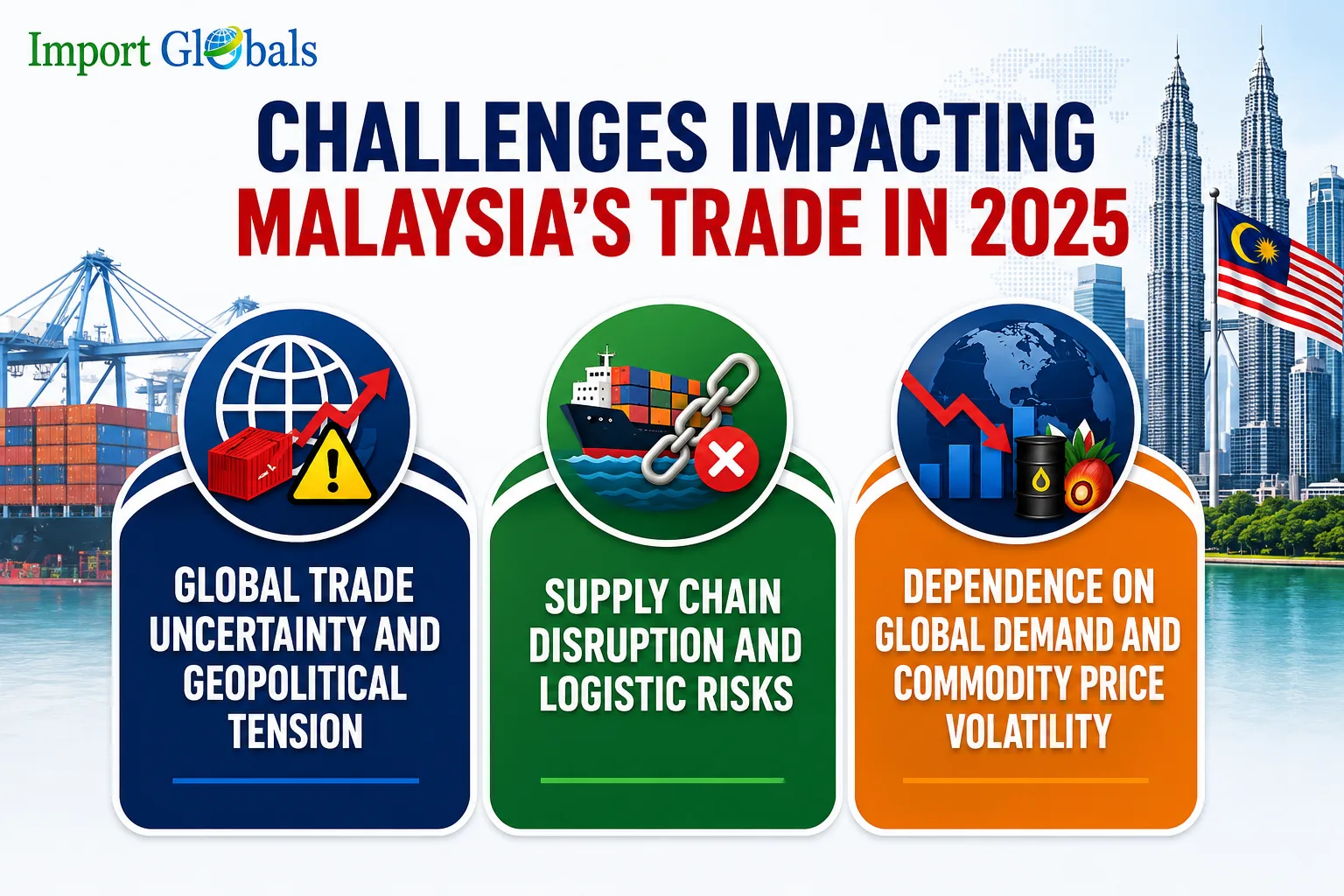
- Global Trade Uncertainty and Geopolitical Tension - Malaysia Statistical Data reported global trade uncertainty as a major factor contributing to fluctuations in the tariff and trade structures of Malaysia. The geopolitical tensions, trade restrictions, and disruptions have created uncertainty for exporters. The strong dependence on major markets like China, the United States, Singapore, Taiwan, and Japan has been influencing trade policies. The exports and imports, along with the rising protectionism, have maintained the shift of trade towards increasing operating costs.
- Supply Chain Disruption and Logistic Risks - Supply chain disruption presented a significant challenge to trade performance. The highly connected trading economy and the dependence of the Malaysian authorities on reliable maritime transportation have maintained the international supply networks. The disruptions caused by geopolitical conflicts and congestion have led to delays in deliveries and an increase in import and export expenses. The strategic positioning along the Strait of Malacca has affected businesses regularly.
- Dependence on Global Demand and Commodity Price Volatility - Malaysia Bill of Landing Data listed dependence on global demand as a significant factor causing fluctuations in global demand and commodity prices. The important export sectors mainly include petroleum, oil and gas, palm oil, chemicals, and other regions. The weaker demand from major trading partners affects the manufacturing and electronics exports. The dependence on the global market has been changing consumer demand with price volatility, influencing export earnings.
How Does Import Globals Malaysia Import-Export Data Support Business Growth?

Import Globals Malaysia Import Export Data provides a comprehensive trade overview to beginner traders who are looking for the latest trade updates. The detailed data sheets highlighted on the platform properly provide information regarding HS code, shipment quantity, shipment values, and the total valuation of products traded from the nation. The accountability of each and every product and the destination countries are also highlighted.
The acknowledgement of the Malaysian Customs Shipment Data on Import Globals works as a boon for the business authorities as it keeps the database accurate and well updated with the latest trade statistics. Importers and exporters can even craft their own way of statistical entry with the latest acknowledgement of the trade activities. Monitoring of the shipments and the competitors' tracking of activities can also be preferred for marketing growth.
Key Takeaways of Malaysia's Trade in 2025
- Malaysia has attained a historic trade performance of merchandise trade of 690 billion U.S. dollars in 2025.
- Its positioning along the Strait of Malacca has maintained the importance of the country for maritime commerce.
- China, Singapore, and the United States have topped the trade partners list of Malaysia.
- The electronics sector is a massive contributor to the export portfolio.
- Petroleum and gas, palm oil, along with chemicals, have maintained the diversity in Malaysia's trade.
Future Trade Outlook of Malaysia
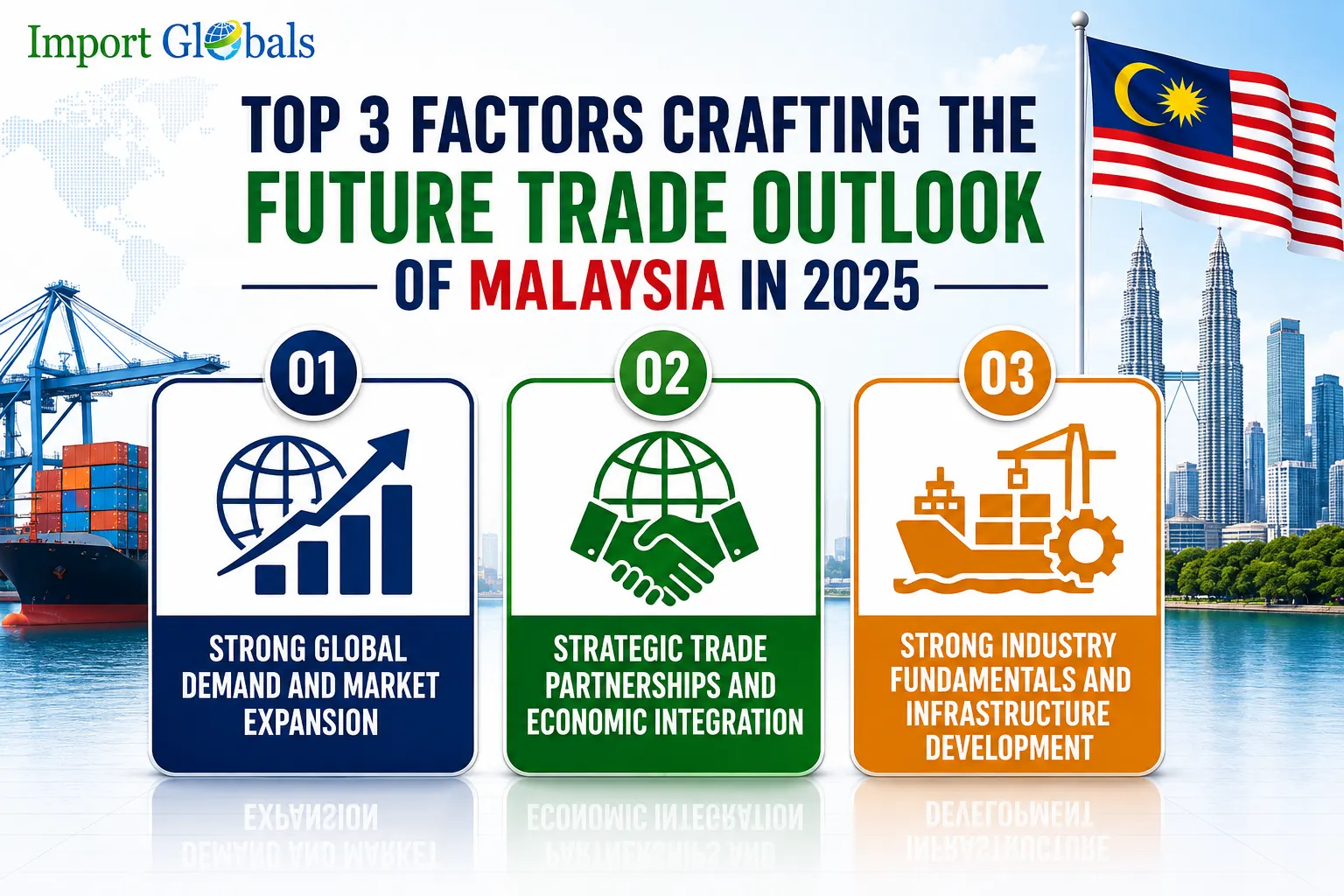
Malaysia's future trade outlook will be supported by its strategic geographic positioning, diversified manufacturing base, and developed logistics infrastructure. The continuous expansion of the semiconductor, electrical, and electronics sectors will mainly shape effective trade strategies. Malaysia will keep on benefiting from the increasing regional trade integrity through ASEAN and other international trade agreements.
The future performance of Malaysian trade as reported by the Malaysia Customs Data will support geopolitical developments, tariff changes, and commodity prices. The stronger domestic manufacturing capabilities will expand value-added production with diversification of the export destinations. The investment made by the government authorities in ports, logistics, digital infrastructure, and supply chain resilience will support competitiveness.
Conclusion
The trade performance of Malaysia properly demonstrates its growing importance in Southeast Asia. The strong manufacturing capabilities, diversified export portfolio, and extensive international partnerships will support substantial trade growth. Electronics and semiconductors will be the massive growth drivers, with petroleum products, palm oil, and chemicals, effective trade. The challenges from geopolitical tensions, supply chain disruptions, and trade policy will create a strong foundation for future expansion, says Malaysia Shipment Data. The continuous investment in advanced manufacturing and value-added industries will further strengthen the positioning within global supply chains.
CTA
If you are trying to have an expansion in new opportunities of Malaysia, you have landed at the right platform here. Import Globals holds special expertise in providing detailed information regarding the latest shipments from Malaysia. The platform provides detailed information regarding shipment volumes, trade values, buyers, suppliers, and international trading patterns. Subscribe to www.importglobals.com or drop an email at info@importglobals.com for detailed acknowledgement of Malaysia trade activity to support your international business growth.
FAQs
Que. What is the total trade value of Malaysia in 2025?
Ans. The total trade value of Malaysia in 2025 is 690 billion U.S. dollars.
Que. What is the overall export value of Malaysia in 2025?
Ans. The overall export value of Malaysia in 2025 is 362 billion U.S. dollars.
Que. What is the import trade value of Malaysia in 2025?
Ans. The import trade value of Malaysia in 2025 is 328 billion U.S. dollars.
Que. Who is the top trade partner of Malaysia in 2025?
Ans. China is the top trade partner of Malaysia in 2025.
Que. What is the top export industry of Malaysia in 2025?
Ans. Electrical and electronics industries are the top contributors to Malaysia's economic growth.
Que. Why is the Strait of Malacca significant for Malaysia's trade?
Ans. The Strait of Malacca provides the country with maritime trade route access, facilitating the regularity of shipments.
Que. How does Malaysia import-export data support business growth?
Ans. Malaysia import-export data supports business growth via proper identification of buyers, supplier analysis, analysis of market demand, and development of effective market expansion strategies.
Que. What information is available in Malaysia trade data?
Ans. Malaysia trade data covers Importer names, Exporter names, Shipment date, HS Code, Product Details, quantity, values, pricing information, origin country, importing country & port details.
Que. How frequently is the Malaysia trade data updated?
Ans. Malaysia trade data is updated on a monthly basis.
Que. Where can you obtain detailed information on Malaysia trade data?
Ans. Subscribe to www.importglobals.com or drop an email at info@importglobals.com for detailed updates on Malaysia trade data.
You Can Also Visit :-
- Malaysia-Singapore Trade: The Growing Opportunities and the Bilateral Integrity and the Import-export Analysis
- Malaysia's Role in the Regional Supply Chain in 2025-2026
- Malaysia Palm Oil Export Data: The Global Market Trends and Trade Analysis
- Electronic Machinery Dominates the Topmost Exports of Malaysia: The Latest Insights of the Fastest-growing Economy