U.S.-Iran Agreement Impact on Global Economic Growth
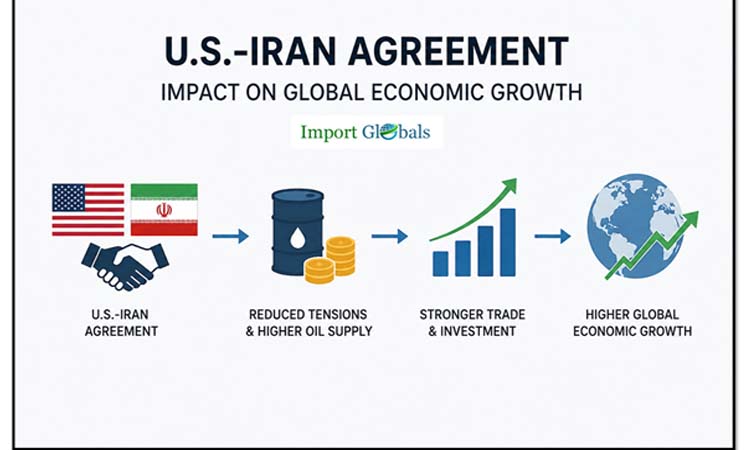
- Jun 22, 2026
U.S.-Iran Agreement Impact on Global Economic Growth
The efficacy of trade relationships between the United States and Iran will be one of the most essential factors affecting the global energy markets. The international trade flows and geopolitical stability will maintain worldwide attention on the Iran trade market and the U.S.-Iran agreement. The positioning of Iran in the Middle East and its vast crude oil and natural gas reserves has made it one of the most important energy shipping routes.
The developments surrounding the potential U.S.-Iran agreement have generated optimism among the government authorities, investors, manufacturers, shipping companies, and energy traders. The improved trade relations and greater regional stability due to the imposed U.S.-Iran agreement have raised several questions about the trade, as per US Trade Data.
Will the U.S.-Iran Agreement Boost Global Economic Growth?
The proper answer to this question depends on different interconnected factors—oil prices, trade expansion, inflation control, supply chain stability, and geopolitical cooperation. The challenges and the complexities of the trade will remain, but the potential ability of the countries to create positive economic effects across multiple industries will be affected.
The Economic Importance of the U.S.-Iran Agreement
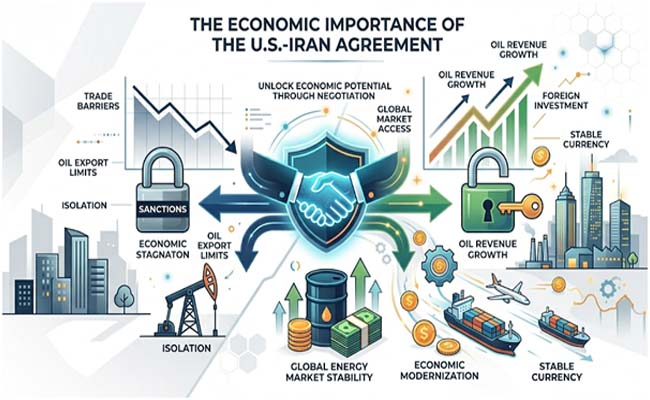
Some of the largest proven oil and natural gas reserves are present in Iran. The additional sanctions have limited the country's ability to participate actively in global energy markets. The reduction in exports, limited foreign investment, and constrained economic cooperation have maintained the collaboration of the Iranian authorities with the top trading nations.
The increasing Iranian oil exports and the improvement of the global energy supply chains, along with the stabilized oil prices, have been reflected in the trade agreement results. The sanctions relief was introduced in the trade agreement to increase exports and reconnect with the top marketing authorities.
How May the Increased Iranian Oil Exports Affect the Global Economy?
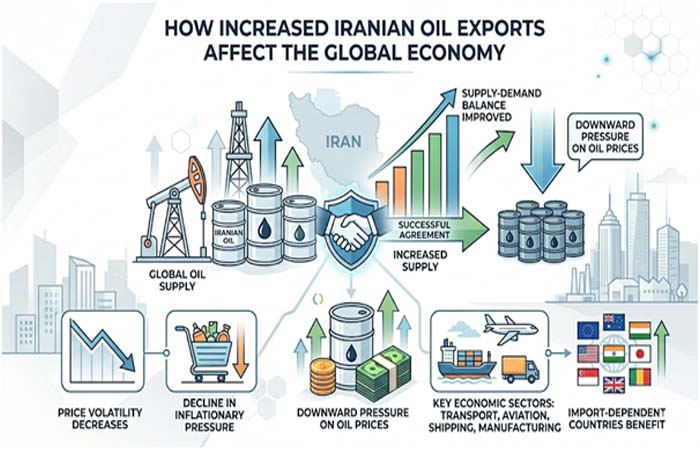
The intermediate result of a successful agreement is the increase in the global oil supply. Oil has been recorded as one of the most in-demand commodities in the worldwide marketplace, as per the Global Trade Data. Transportation, manufacturing, aviation, shipping, agriculture, and industrial production have been heavily dependent on the affordable energy trade. Now, if we take the assumption that Iranian oil enters the global markets in larger volumes, the price volatility decreases, says Iran Export Data. The import-dependent countries will benefit from the trade agreements, along with a decline in inflationary pressure.
The additional Iranian production of crude oil, as per the globally demanded compliance, will significantly improve the supply-demand balances in the global oil marketplace. The historical assessment of the Iranian trade of crude oil, as per the Iran Trade Data, will place downward pressure on oil prices. The recent market assessments on the overall trade of Iran will reopen trade routes while restoring the energy exports, contributing to the improvement in market stability.
Purpose of the USA Iran Agreement
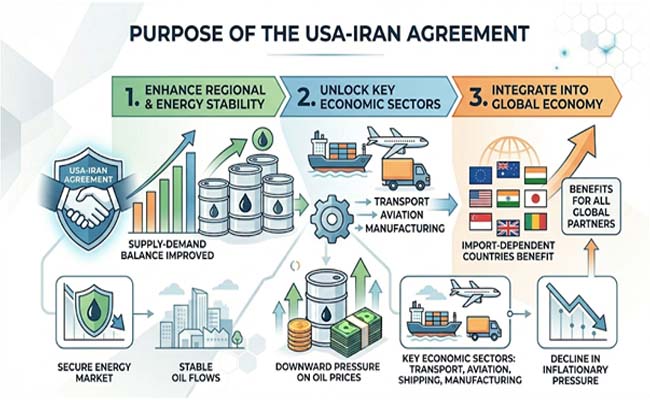
The USA-Iran Agreement was launched by the government authorities of both nations to reduce the geopolitical tensions. The stability in the global energy markets and the improvement of the economic cooperation between the two countries have resulted in a balance in the overall trade. The relationship between the United States and Iran has been strained for decades, mainly because of security concerns and this agreement over advanced nuclear activities.
The agreement was designed in order to manage the challenges while preventing further trade conflicts. The most important reason behind the agreement was international concern and to support the expansion of Iran's nuclear capabilities beyond peaceful civilian purposes.
The negotiations on the tariff rates are introduced by the United States, as per the US Export Data, in order to sort out limitations and monitoring mechanisms on the nuclear activities of the Iranian authorities. The significant objective of the US-Iran agreement was to restore stability in global energy markets.
The largest oil and natural gas reserves present in the Iranian region have reduced global energy supplies and have contributed to the price volatility. The easing of certain sections and the greater allowance of participation of Iran in international energy trade will improve the oil availability. The agreement was launched with an aim to create a framework for future economic engagement. The potential sanctions relief and the release of frozen assets will help the authorities reconnect with the global economy while creating opportunities for international businesses.
Strait of Hormuz's Importance in the US-Iran Agreement
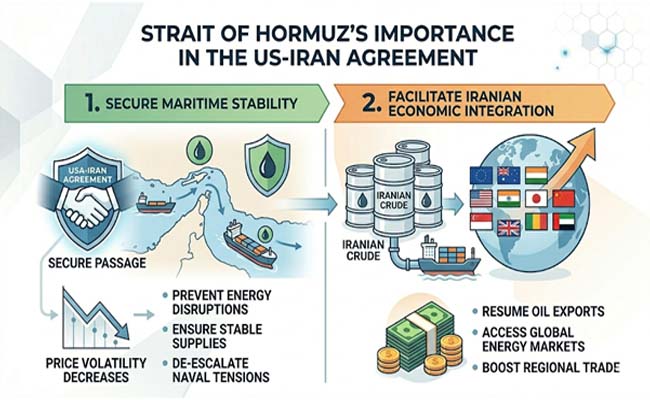
The Strait of Hormuz has been serving as one of the critical maritime routes in the world and plays a central role in the U.S.-Iran trade agreement. The transportation route between Iran and Oman has been serving as the only sea passage connecting the Persian Gulf to the Gulf of Oman in the Arabian Sea. Around 20% of the global oil and liquefied natural gas exports are transported through the Strait of Hormuz, which makes the transportation route a vital player for global energy security and economic stability. The importance of the Strait of Hormuz is mainly because of the efforts of the management authorities towards the improvement of relations between the United States and Iran. The conflict of military escalation or disruption in this region will immediately affect the global energy supplies.
The major oil-producing countries like Iran, Iraq, Kuwait, Qatar, and the United States will heavily rely on the trade route for exporting energy products while maintaining safe navigation through the strait. The significant objective of the U.S.-Iran agreement is to reduce tensions while threatening maritime security in the Strait of Hormuz. The improved diplomatic relations will lower the risk of disruptions. The stable shipping conditions will help the authorities maintain balanced energy supplies. The U.S.-Iran agreement will enhance confidence among investors as represented by US Customs Data. The level of access to the Strait of Hormuz from both economies will strengthen the supply chains while facilitating smoother trade flows between Asia, Europe, and North America.
Potential Beneficiary Economies of the Usa-iran Trade Agreement
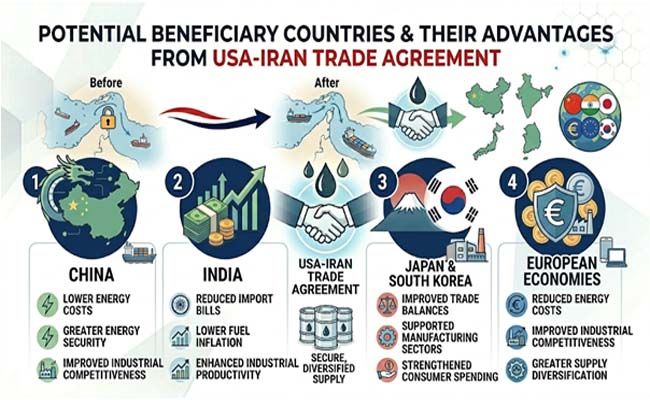
1. China - China Import Data represented itself as one of the largest energy importers. The US-Iran agreement will lead to lower global cost, greater energy security, and an improvement in the industrial competitiveness of the Chinese authorities in energy imports.
2. India - The growing economy is a substantial energy importer. The reduction in the import bills, lower fuel inflation, and the improvement in industrial productivity will be the significant benefits of the US-Iran trade agreement in the country.
3. Japan and South Korea - Both economies have been heavily dependent on imported energy for their energy requirements. The US-Iran agreement will introduce improvements in the trade balances, proper support of manufacturing sectors, and strengthening of consumer spending in the economic growth rate, as per Japan Import Data and South Korea Import Data.
4. European Economies - EU Trade Data represented the reduced energy cost, improved industrial competitiveness, and the greater supply diversification as the topmost benefits of the US-Iran trade agreement in its own energy-essential imports.
Investment Opportunities Under the Us-iran Agreement
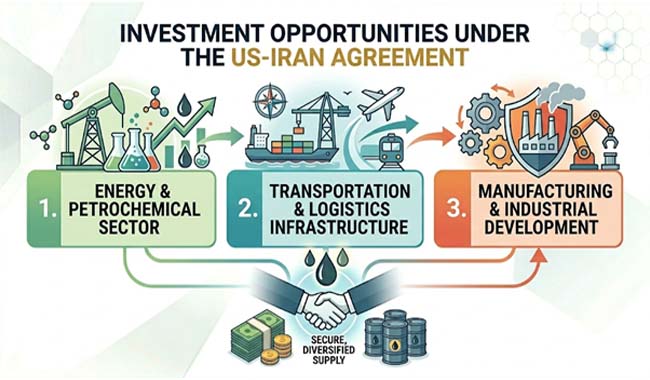
1. Energy and Petrochemical Sector - The energy sector was considered one of the largest beneficiaries of the U.S.-Iran trade agreements. The different sanctions relief and oil export waivers allow the Iranian authorities to expand crude oil production. The Iranian authorities will possess some of the largest fluctuations in the overall trade. The presence of the refineries has made the country an energy trade hub. The increased foreign investments and participation will support the exploration project.
2. Transportation and Logistics Infrastructure - The active reopening of the trade routes and the improvement in the reliable access of the country through the Strait of Hormuz will create significant opportunities. The investments made by the government authorities into ports, airports, shipping terminals, railways, and warehousing facilities will maintain the priority sectors while targeting the planned reconstruction and development fund.
3. Manufacturing and Industrial Development - The manufacturing and industrial development will benefit from the renewed access to international capital and technology. The proposed reconstruction and development fund will highlight manufacturing among the key target sectors. The opportunities for both domestic and international investors will look for a long-term growth rate in the industrial economy of Iran.
How Could Global Trade Expand Due to the Us-Iran Trade Agreement?
The diplomatic stability will encourage international business activities as a result of the US-Iran agreement signed. The significant agreement will promote greater market access with the proper expansion of export opportunities. The improvement of trade financing and stronger business confidence will make a significant turnaround in the export growth rate of the USA. The establishment of commercial ties to Iran will benefit from the increased trade volumes.
The historical analysis will represent the sanctions relief as the main factor that can lead to positivity in the expansion of global trade. The relative permeability of the trade growth chances will increase due to the lower cost of crude oil and other essentials signed under the agreement. The effectiveness of trade will keep on fluctuating as per the involvement of different economies worldwide.
Challenges Supposed to Limit the Economic Growth
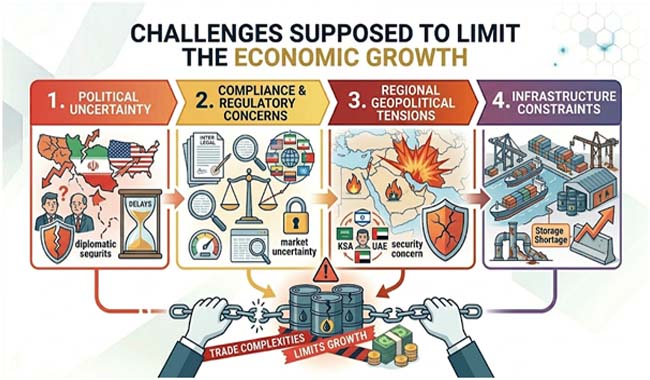
The implementation of the US-Iran trade agreement can limit the economic growth or even boost the overall global trade. Here are certain challenges that have the potential to limit the economic growth rate.
1. Political Uncertainty - The negotiations and the trade will remain complex despite the US-Iran agreement. The diplomatic discussions and the experienced delays and uncertainty in trade implementation will affect the long-term success of the bilateral relationship.
2. Compliance and Regulatory Concerns - The implementation of the US-Iran trade agreement will introduce regulatory transparency, verification mechanisms, and international cooperation. The disputes in any of the following procedures will create market uncertainty and can even affect the bilateral relationship between the two economies.
3. Regional Geopolitical Tensions - The image of the Middle Eastern region as one of the most geopolitically sensitive areas and the ongoing tensions between regional trade activators under the US-Iran agreement will affect the energy infrastructure investment confidence and trade growth. The analysts will keep on searching for the regional security concerns to remain significant despite the diplomatic progress.
4. Infrastructure Constraints - The increasing export of different categories under the US-Iran agreement will lead to port congestion, storage capacity shortages, and aging energy infrastructure. The investments are supposed to capitalize on increased trade opportunities in order to avoid trade complexities.
Future Outlook of the USA Iran Agreement for the Global Economic Growth
The future outlook of the U.S.-Iran agreement is quite positive for global economic growth. If both countries continue to implement the agreement, then the maintenance and diplomatic cooperation will strengthen the bilateral relationships. The potential of the agreement to strengthen global trade will stabilize the energy markets and improve investor confidence across major economies.
The significant benefit is the possibility of increased Iranian oil and natural gas exports. The greater energy supplies will help the business maintain stable oil prices to reduce the inflationary pressures. The lower production and transportation costs for businesses worldwide will improve the investor sentiment and lower the energy market volatility.
The improved maritime security will reduce the shipping costs in the near future, benefiting both the developed and emerging economies. The trade agreements will even create new opportunities for foreign direct investment in Iran's energy, transportation, logistics, manufacturing, and infrastructure sectors. Business activity and trade cooperation will significantly contribute to job creation, industrial growth, and stronger economic integration.
The agreement will continue to advance and will become a major catalyst for global economic growth in the near future. The risk rate will remain, whereas the long-term outlook will suggest the positive contribution of the agreement towards global economic stability.
Conclusion
The U.S.-Iran agreement is a significant trade agreement launched by the government authorities of the U.S. and the Iran to maintain the economic development stability and the effect of the global energy markets and international trade with utmost positivity. The increasing Iranian oil exports and the improvement in the energy security has been mainly contributing to the positivity of the agreement towards global economic growth.
The oil importing countries, manufacturers, airlines, logistics providers, and consumers will help the businesses control inflation along with the increase in purchasing power. The agreement is not free from risk. Political uncertainty, regulatory challenges, regional tensions, infrastructure limitations, and OPEC coordination issues are some of the top results of complexities under the agreement. The successful implementation and proper maintenance of the U.S.-Iran agreement will strengthen global trade while improving the energy market stability, says US Import Data.
CTA
Trying to have a proper trade expansion worldwide, you ended up at the right platform here. Import Globals gives detailed analysis of all the worldwide shipments in the trade agreement signed between authorities to cater to your latest data-driven acquisitions. Subscribe to www.importglobals.com or email at info@importglobals.com for detailed insights on the latest trade updates.
FAQ’s
Que. Why is the US-Iran agreement considered beneficial for the global economy?
Ans. The US-Iran agreement is considered beneficial for the global economy because it has the ability to improve the energy market stability, along with an increase in the global oil supply, while reducing the geopolitical tensions.
Que. How will the US-Iran agreement affect global oil prices?
Ans. The increase in Iranian oil exports will affect the global oil prices as it will stabilize the trade with the reduction in crude oil prices and the dependency on global demand and OPEC+ production policies.
Que. What are the top beneficiary regions of the US-Iran trade agreement?
Ans. As listed by the US Trade Data and the Iran Trade Data, China, India, Japan, South Korea, and several European countries are listed as the top beneficiary regions of the US-Iran trade agreement.
Que. Name the industries that are likely to benefit from the US-Iran trade agreement.
Ans. Aviation, logistics, shipping, transportation, petrochemical, and consumer goods industries are the top regions that are likely to benefit from the US-Iran trade agreement.
Que. Will the US-Iran agreement create new investment opportunities?
Ans. Yes, the sanction relief and the improvement in diplomatic relations will create foreign investment opportunities in the Iranian oil and gas sector.
Que. What trade challenges can limit the success of the U.S.-Iran agreement?
Ans. Political uncertainty, regulatory compliance requirements, regional geopolitical tensions, and infrastructure constraints could influence the effectiveness of the agreement.
Que. What information is available in the U.S trade data and the Iran trade data?
Ans. Our report on theU.S trade data and the Iran trade datacovers export and import shipment data, HS code, product details, quantity, value, pricing information, origin country, importing country, and port details.
Que. How frequently is the U.S. and Iran trade data updated?
Ans. U.S. and Iran Trade Data is updated as on monthly basis.
Que. What is the significant trade route of the US-Iran agreement?
Ans. The Strait of Hormuz a significant trade route of the US-Iran agreement?
Que. Where can I get the detailed information regarding the U.S.-Iran trade agreement on the global economy?
Ans. Visit www.importglobals.com or email info@importglobals.com for detailed updates on the impact of the U.S.-Iran trade agreement on the global economy.
You Can Also Visit :-