Philippines Food and Beverage Export Trends: The Key Products, Markets, and Opportunities
- Aug 24, 2026
Philippines Food and Beverage Export Trends: The Key Products, Markets, and Opportunities
The Philippines has established itself as an important food and beverage trader mainly because of its Southeast Asian collaboration towards rich agricultural resources, extensive coastline, food processing capabilities, and growing access. The export portfolio mainly includes coconut products, bananas, pineapples, tuna, seafood, processed beverages, cacao, coffee, and other agricultural commodities.
The strategic location in the Asia-Pacific region has provided the exporters with reliable access to major markets across East Asia, North America, the Middle East, and Europe. The beverage industry is benefiting from the Philippines' large agricultural base. The international demand for tropical fruits, coconut-based products, seafood, processed foods, and specialty agricultural commodities has created trade opportunities for Philippine suppliers. The Philippines Trade Data helps businesses identify the products with strong international demand, along with analysis of the competing suppliers.
Why Are Philippines Food and Beverage Exports Important?
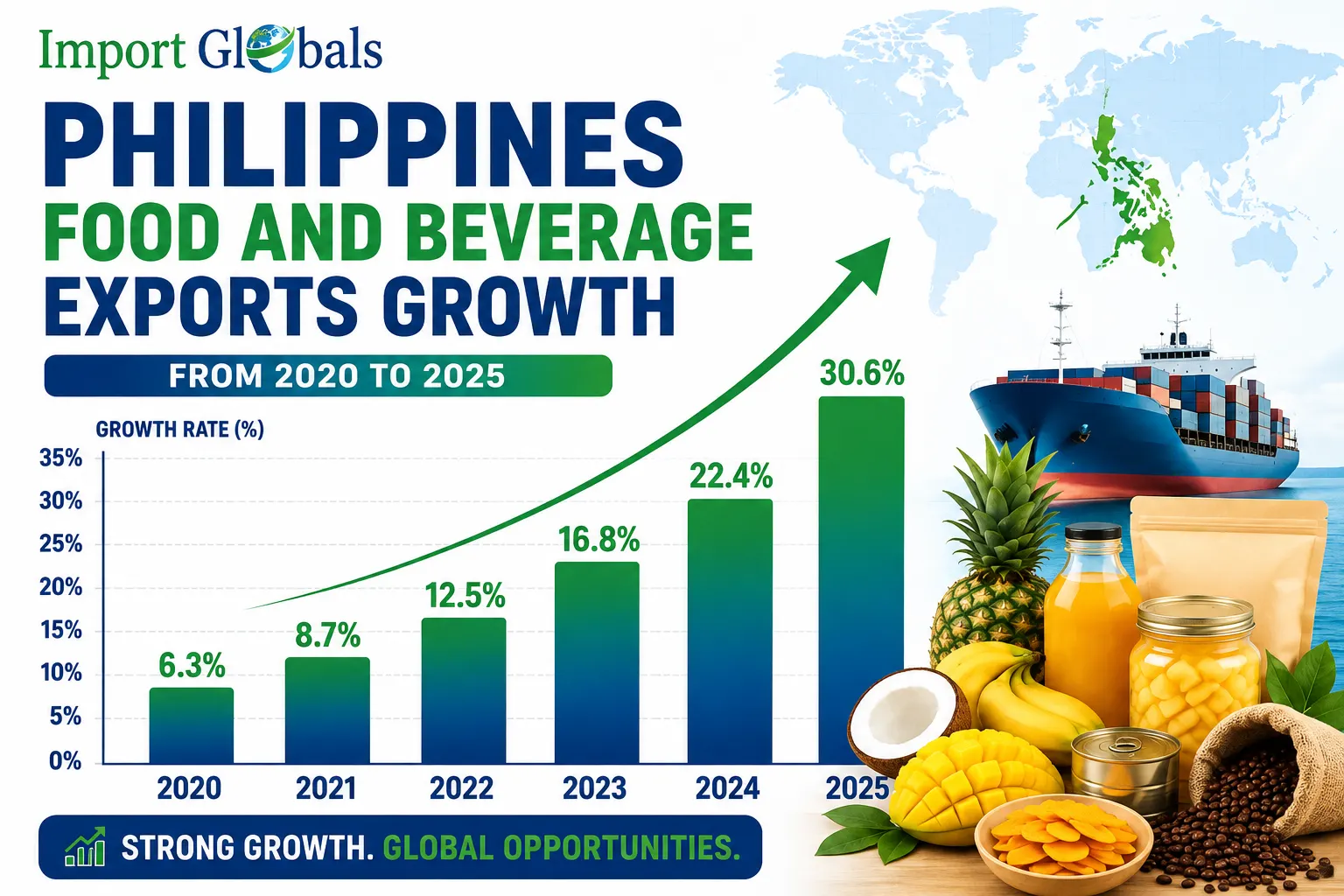
Philippines food and beverage exports are important because they promote connectivity with the country's agricultural and manufacturing industries. Agricultural supplies are mainly important because they support the trade of raw materials such as coconuts, bananas, pineapples, sugar, coffee, cacao, and fishery products. The food and beverage industry supports employment, rural economic activity, and packaging. The export growth, as reported by the Philippines Customs Shipments Data, provides opportunities for traders to expand beyond domestic demand rates.
The Philippines authorities have developed particular strength in coconut-based products. Coconut oil, desiccated coconut, copra, and other coconut-derived products are mainly supplied from the nation to support industrial markets' upgrade. The seafood is another important segment. The tuna, shrimp, prepared fish, and other marine products maintain effective trade to international markets where demand is mainly processed and packaged as per the requirements. The importers and exporters can get the proper information on Philippines Export Data for detailed visibility into supplier activity, product movement, and shipment quantities.
Philippines Food and Beverage Export Trends
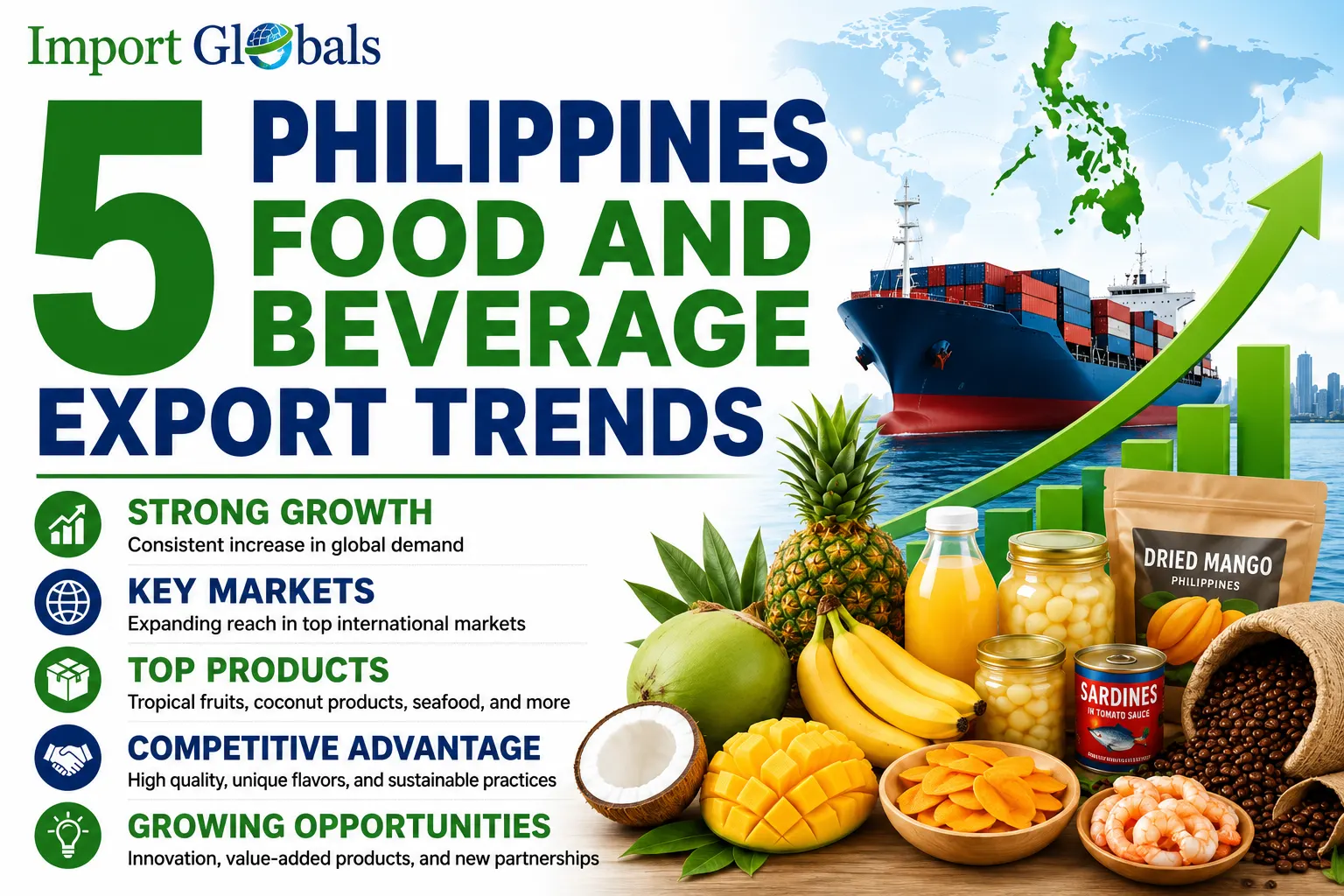
The food and beverage export trends of the Philippines are characterized by a combination of agricultural commodities. Tropical fruits and coconut products will be the most recognizable export categories, contributing significantly to the broader food exporting ecosystem. Bananas are an important agricultural export, the Philippines has established commercial production and distribution networks for effective supply of fresh bananas to Asian markets. Pineapple production mainly contributes to the agricultural export portfolio, says Philippines Customs Data. Fresh and processed pineapples are supplied to international markets.
The coconut products will be the most important factors crafting the trade opportunities for the broad international application of coconut-derived commodities. The coconut oil is used mainly for food processing and other industries. The fisheries industry will contribute to food exports. Tuna and canned seafood will be an important segment of the Philippines food processing industry. The beverages trade will support commodity export with greater value addition, longer shelf life, and specialized formulation.
Top Food and Beverage Export Products of the Philippines
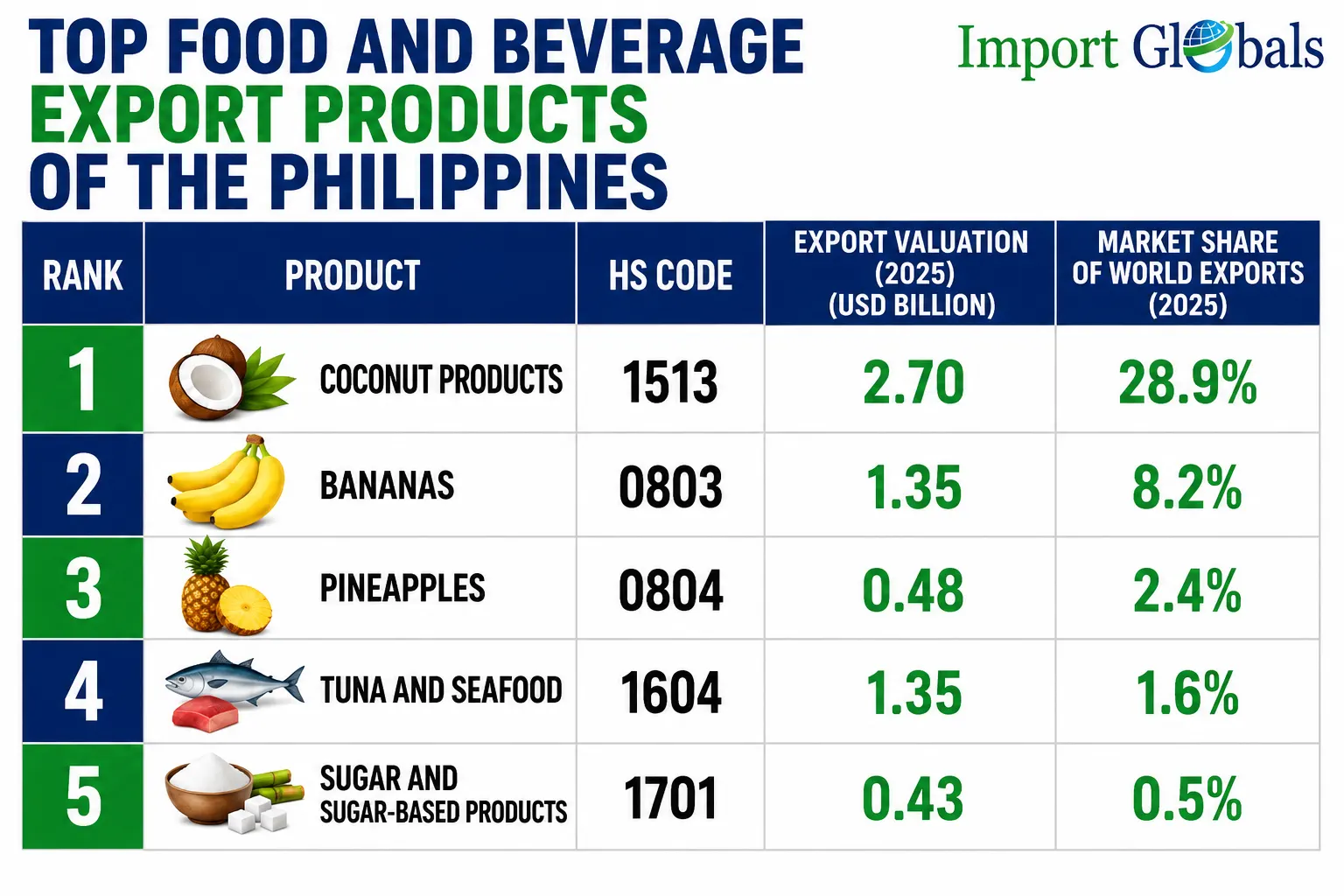
- Coconut Products, HS 1513 - Philippines Export Trade Data reported coconut products as the top exported categories of the nation. The tropical climate and extensive coconut cultivation have maintained effective trade from the region. The sector encompasses coconut oil, desiccated coconut, coconut water, copra, coconut milk, coconut cream, and other coconut-based ingredients. Coconut oil is mainly important because it serves food and industrial users. The water has also been increasingly popular for markets because of demand for plant-based beverages.
- Bananas,HS 0803 - Bananas are also a top exported product of the Philippines, according to the Philippines Import Data. The supply rate of fresh bananas to major Asian markets like Japan, China, and South Korea has historically shaped the trade destination. The establishment of the cultivation, harvesting, packing, and shipping infrastructure has provided the exporters with an advantage in serving international markets.
- Pineapples,HS 0804 - Pineapples are another important Philippine food export. The supply of both fresh and processed pineapple products has supported the overall trade. Pineapple products include canned pineapple, juice, concentrates, and other food ingredients. The processing industry enables exporters to serve customers beyond the fresh fruit market. The demand from Asia mainly creates opportunities for Philippine pineapple producers and processors.
- Tuna and Seafood, HS 1604 - The Philippines has a strong seafood processing industry. The importance is mainly due to the active demand rate for tuna on a global scale. The seafood products mainly include shrimp, fish fillets, prepared seafood, and frozen marine products. The sector benefits from the increasing demand for convenient protein products and processed seafood.
- Sugar and Sugar-Based Products, HS 1701 - Sugar and sugar-based products mainly contribute to the agricultural and food processing sector. The country produces sugar for domestic consumption with active participation in international trade. The changes in production, domestic consumption, and international prices will influence the export opportunities.
Major Destinations for Philippine Food Exports
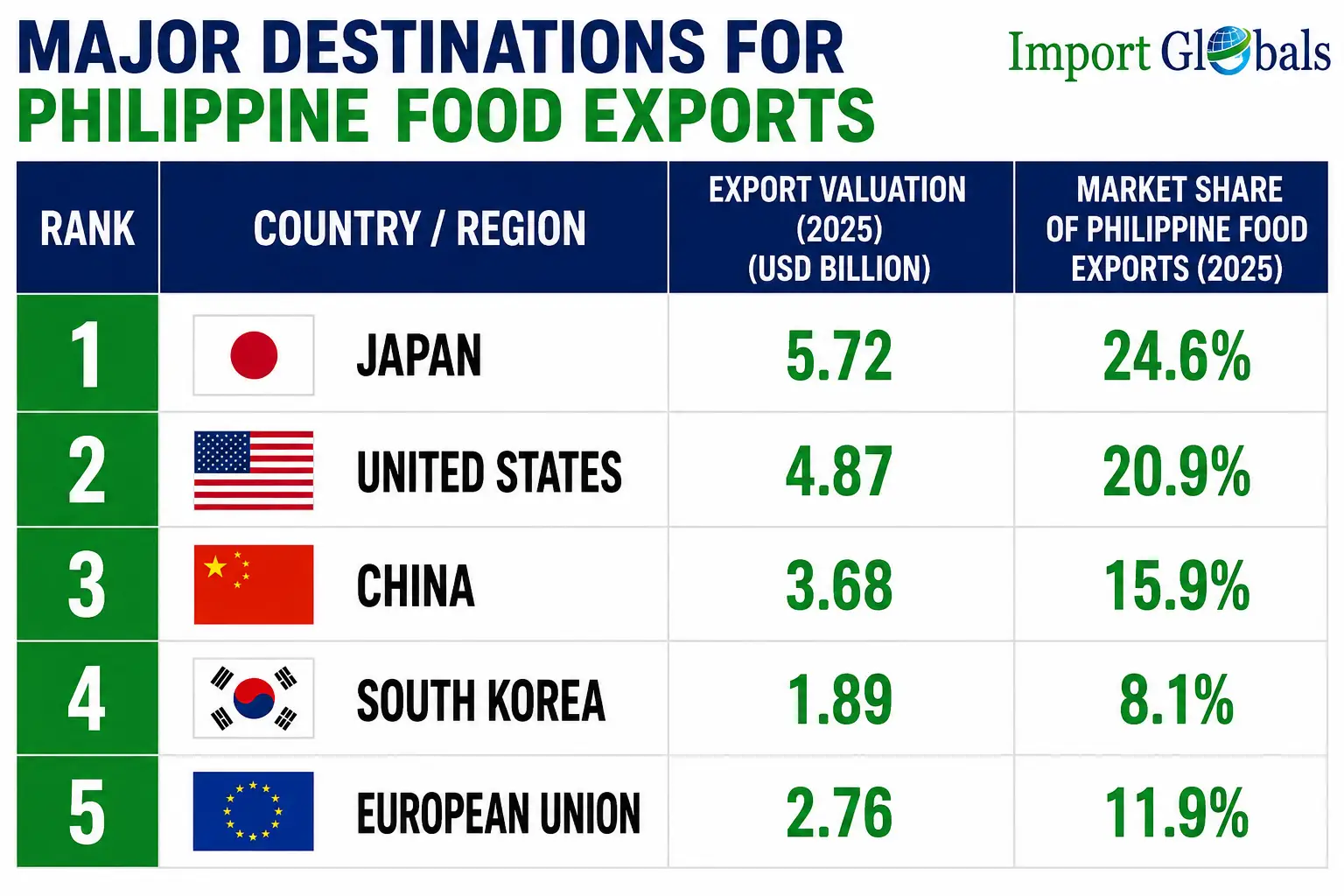
Japan - Japan Import Data reported itself as one of the top resourcing nations of the Philippines' food and agricultural essentials. Bananas, seafood, processed foods, and other agricultural commodities are the most traded variants.
United States - The US Import Data listed itself as one of the top importers of coconut products, seafood, processed foods, tropical fruits, and specialty food products from the Philippines. The large Filipino customer base will contribute to the demand for the Philippines' food products and brands on a global scale.
China - China Import Data lists it as an important trading partner. The tropical fruits, bananas, and other agricultural products have been benefiting the large consumer market with close monitoring of market access rules, quarantine requirements, tariffs, and food safety regulations.
South Korea - South Korea Import Data has been valuable because it supports trade acknowledgement with beverages, processed foods, and agricultural products. Consumer demand and premium imported foods create additional opportunities for Philippine suppliers.
European Union - The European Union is also a significant contributor to the Philippines' agricultural trade. The effective supply of coconut products, seafood, and processed foods has maintained bilateral integrity.
Key Industries Driving Philippines Food and Beverage Export
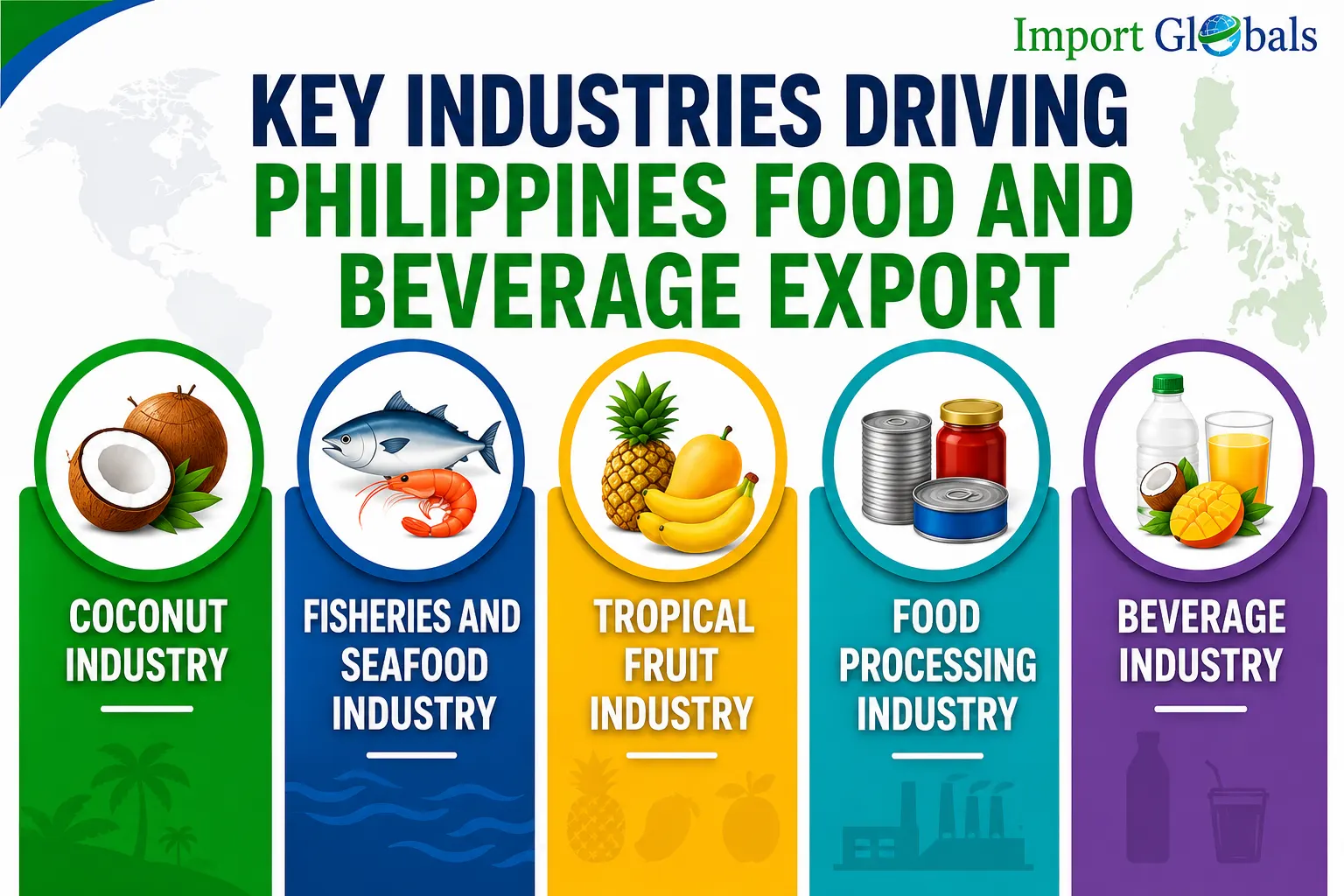
- Coconut Industry - The coconut industry is a main pillar of the Philippines' agricultural export. Coconut oil, desiccated coconut, and coconut water-like variants are in demand the most by the global consumer base regarding Philippines-produced essentials. It has solidified the country's positioning as a reliable trader.
- Fisheries and Seafood Industry - The fisheries and seafood industry crafts the seafood trade of the Philippines, and it contributes to the processed food exports too, says Philippines Import Export Data. The fisheries industry has been responsible for supporting the large fisheries and seafood processing ecosystem.
- Tropical Fruit Industry - Bananas, pineapples, mangoes, and other tropical fruits are responsible for creating opportunities across fresh and processed food markets. The improvement in packaging, refrigeration, and processing has increased their international competitiveness.
- Food Processing Industry - The food processing industry has maintained the Philippines' positioning as one of the top regions transforming agricultural commodities. Canned foods, sauces, snacks, juices, and frozen foods have provided the exporters with strong margins and wider market access.
- Beverage Industry - The beverage sector benefits from the international demand for coconut water, fruit beverages, and other tropical drinks. Product innovation helps the Philippines compete in premium beverage markets.
How Does Philippines Food Export Data Support Business Growth?
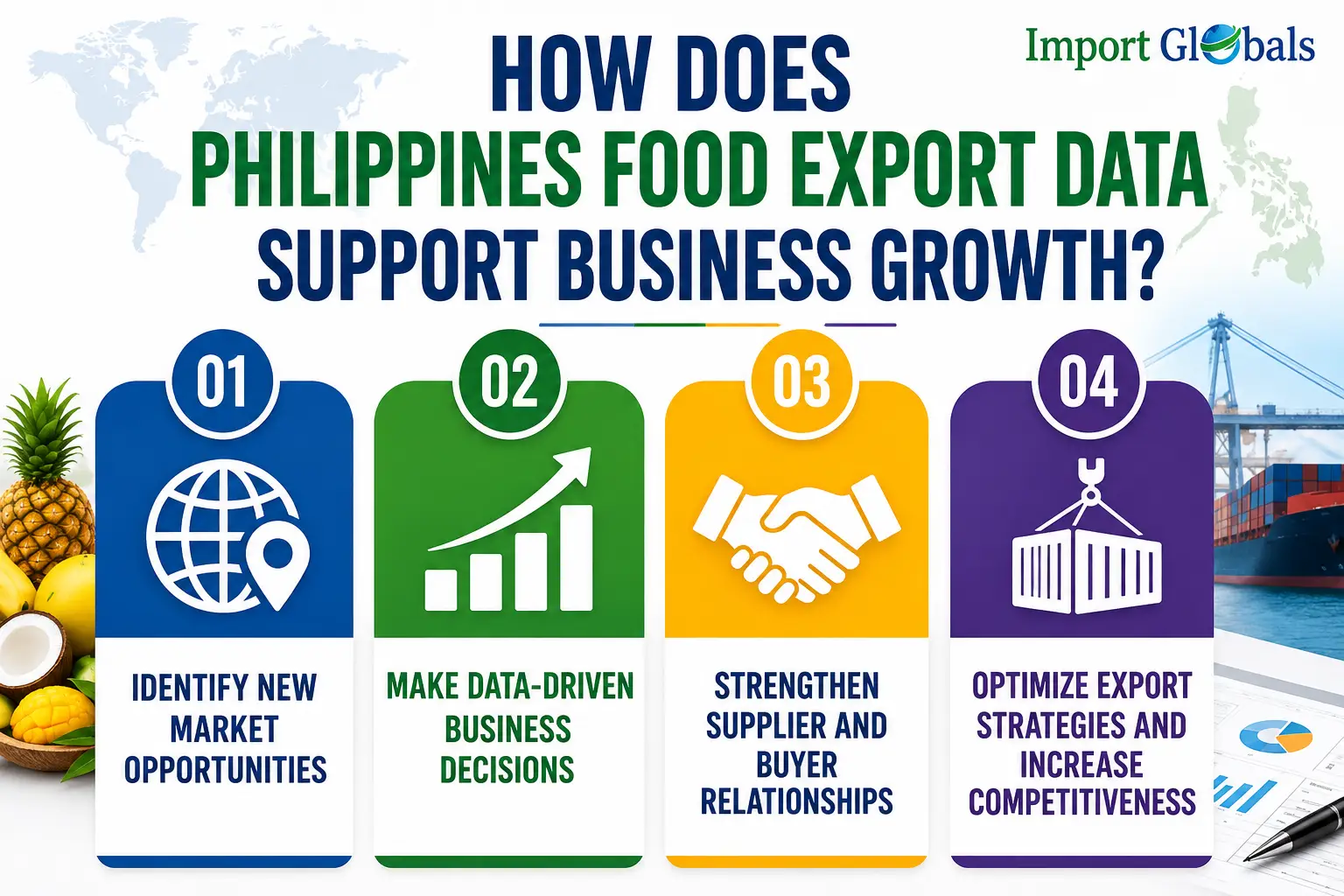
Philippines Food Export Data support business growth because they provide clarification to the authorities regarding the identification of commercial opportunities. The importers, exporters, and sourcing companies can analyse the product movement across different markets. The trade intelligence provides information such as HS code, shipment date, shipment quantities, origin, and destination countries.
Philippines Customs Trade Data gives a clear visualization to beginner traders for the use of trade data to identify international buyers and import coconut oil or desiccated coconut. The seafood exporters can analyse the markets and other processed seafood products. Businesses can examine the active suppliers and destination markets for identification of potential customers and development of market entry strategies.
Export Opportunities for the Food and Beverage Export of the Philippines
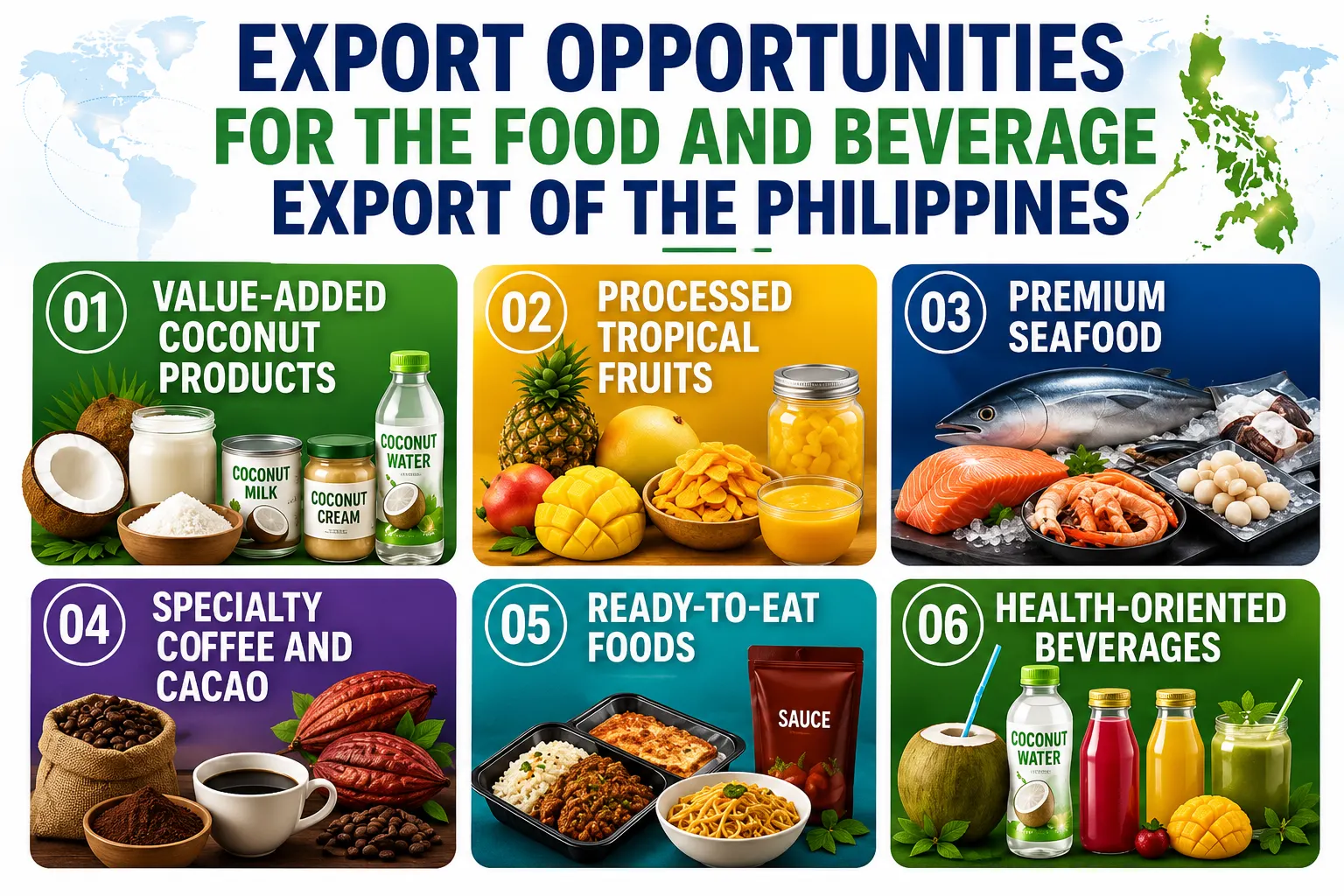
- Value-Added Coconut Products - Philippines Trade Data reported the value-added coconut products trade from the nation as the main region supporting the economic growth rate of the country. The focus on raw coconut commodities manufacturers helps the businesses expand into coconut water, coconut milk, and coconut cream as these are the top demanded categories at present.
- Processed Tropical Druits - Dried fruits, fruit concentrates, and purees are getting more in demand on a worldwide scale because of the nutritious contents they provide to consumers. The shift of the global consumer base towards a nutritious diet has created additional export value, driving revenue generation of different traders involved in it.
- Premium Seafood - Philippines Import Export Data reported premium seafood as one of the top business opportunities that drive the growth rate of different regions worldwide. Sustainable tuna, frozen seafood, and ready-to-cook products are increasingly in demand, and premium international consumers can get the latest acknowledgement of the top demanded categories.
- Specialty Coffee and Cacao - The improvement of processing and branding allows Philippine companies to compete in specialty markets. Coffee consumption is increasing over time to maintain caffeine intake, says Philippines Trade Statistics. The Philippines authorities are also increasing their productivity to meet the globally increasing demand standards.
- Ready-to-Eat Doods - Frozen foods are in top demand categories. Meals, sauces, snacks, and convenience foods are supporting the worldwide food market with international retail and food service sectors. The consumer preference towards ready-to-eat foods has made this a top traded commodity.
- Health-Oriented Beverages - Coconut water, fruit beverages, and plant-based drinks are mainly benefiting from the change in consumer preferences. The increasing consumer demand has made health-oriented beverages more powerful in global trade and for businesses looking for revenue upgrades.
Challenges Affecting Philippine Food Exports
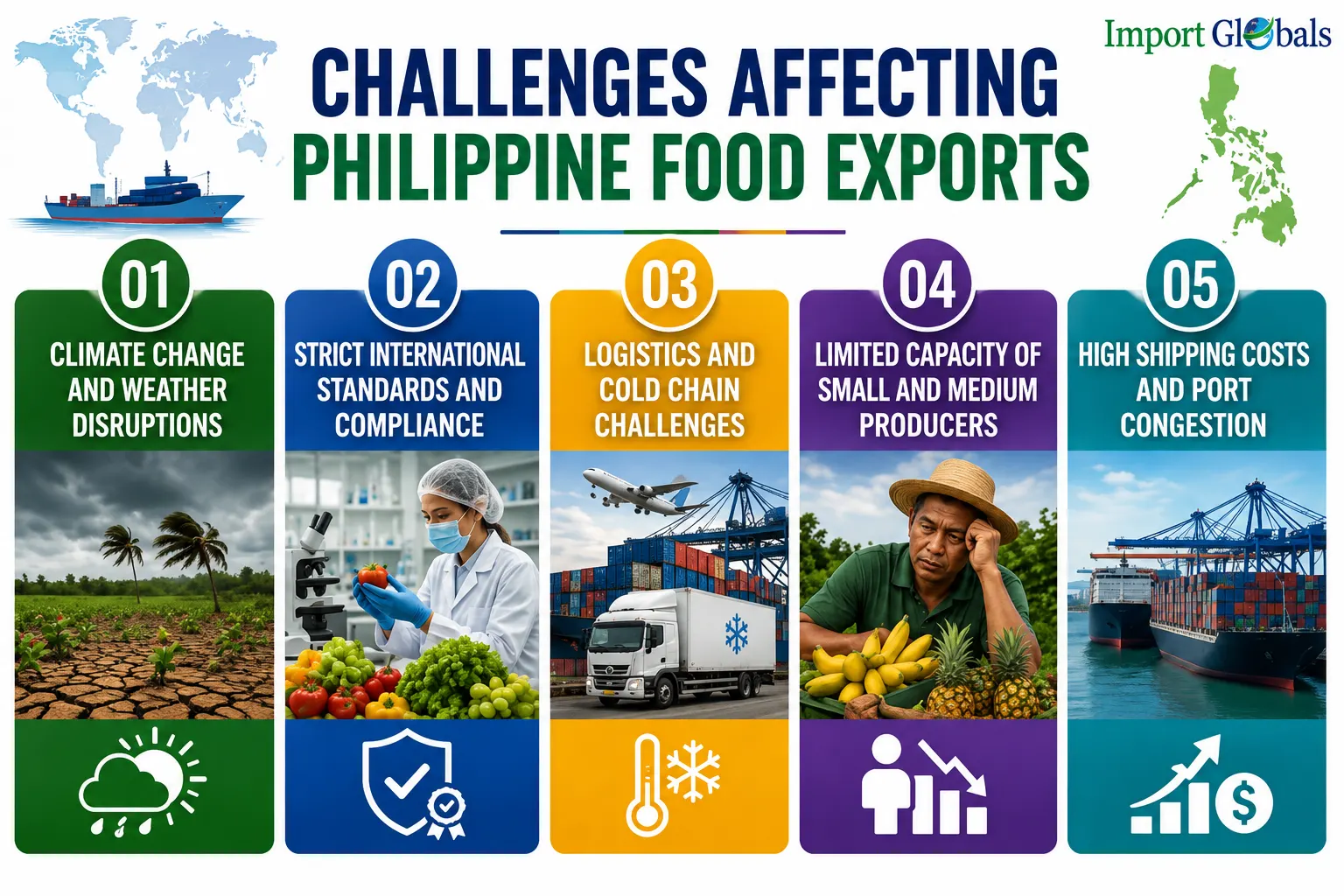
The Philippines economy is continuously facing challenges because of agricultural production and climate conditions. These factors influence the availability and price of export commodities. The international food markets help businesses with strict standards. The exporters may even face difficulties in complying with food safety requirements and implementing phytosanitary measures.
The logistics and cold chain systems support reliable transportation. Shipping costs and port congestion even affect trade competitiveness. The small and medium-sized agricultural producers are also facing challenges due to the lack of modern processing equipment, international certifications, technology, and overseas distribution networks.
Future Outlook of Philippines Food and Beverage Export
The future of the Philippines food and beverage exports is quite positive and is backed up by value-added processing, sustainable agriculture, and food technology. Philippines Trade Data reported coconut products as the main factors that are likely to remain important for global consumers, with continuous demand for plant-based ingredients and natural beverages.
The seafood sector will create additional opportunities through sustainable fishing, modern processing, and premium product development. The technology will improve the industry's competitiveness. The digital supply chain systems and improved packaging will help the authorities reach international customers. The country will increase the export value by developing a recognizable Philippine food brand and meeting the sustainability standard demand rates on a global scale.
Key Takeaways of Philippines Food and Beverage Exports
- The Philippines is the top agricultural and food processing exporter of Southeast Asia in 2025.
- Coconut products are one of the top traded variants of the Philippines agricultural essentials.
- Bananas and pineapples are some of the top tropical fruit export categories.
- Tuna and processed seafood support the international food trade.
- The United States, Japan, China, and European markets have provided important opportunities.
- Coconut water, processed fruits, and seafood are the top traded variants from the Philippines.
Conclusion
The Philippines food and beverage export industry is one of the important components of the international trade economy. The agricultural resources, tropical fruits, and coconut production have been a diversified foundation for global market participation. Bananas, pineapples, seafood, and other agricultural commodities are responsible for creating opportunities for exporters. The strongest future opportunities are most likely to benefit from value-added products, premium food products, and sustainable seafood. Businesses looking to enter or expand within the Philippines food and beverage export market can get the latest intelligence, says Philippines Shipments Data. The latest intelligence helps the authorities provide valuable visibility into buyers, suppliers, product HS codes, shipment quantities, and destination markets.
CTA
Looking for an expansion in your Philippines opportunities in food trade? You have landed at the right platform here. Import Globals holds a specialization in providing detailed information on the buyers, suppliers, and products related to the Philippines food products trade in 2025. Subscribe to www.importglobals.com or drop an email at info@importglobals.com for detailed updates on the Philippines food products trade to drive your global business growth.
FAQs
Que. What are the top food products exported from the Philippines?
Ans. Coconut products, bananas, seafood, and tuna are the top food products exported from the Philippines.
Que. What is the most important coconut export category of the Philippines in 2025?
Ans. Coconut oil is one of the most important exported products of the Philippines in 2025.
Que. Name the top importers of the Philippines food exports.
Ans. Japan, the United States, China, South Korea, and European markets are some of the top importers of Philippine food exports.
Que. Why are the bananas traded from the Philippines important for international trade?
Ans. Bananas traded from the Philippines are important for international trade because they promote the establishment of production, packaging, logistics, and distribution networks.
Que. What is the global export trade rank of the Philippines in 2025?
Ans. Philippines' global export trade rank is 40th.
Que. What is the export trade value of agricultural goods from the Philippines in 2025?
Ans. The agricultural goods export trade value of the Philippines in 2025 is 9.25 billion US dollars.
Que. How does Philippines import-export data support business growth?
Ans. Philippines Import-Export Data support business growth via proper identification of buyers, suppliers analysis of market demand and development of effective market expansion strategies.
Que. What information is available in Philippines trade data?
Ans. Philippines Trade Data covers Importer names, Exporter names, Shipment date, HS Code, Product Details, quantity, values, pricing information, origin country, importing country & port details.
Que. How frequently is Philippines trade data updated?
Ans. Philippines Trade Data is updated on a monthly basis.
Que. Where can you obtain detailed information on Philippines food export data?
Ans. Subscribe to www.importglobals.com or drop an email at info@importglobals.com for detailed updates on Philippines food products trade data.
You Can Also Visit :-
- Philippines Import Data 2026: The Latest Trade Statistics and Market Insights
- Fastest-growing Export Industries of the Philippines in 2026: The Latest Exported Products and Business Opportunities
- Philippines Import Top Importing Products of 2023
- Philippines Import Data
- Philippines-Japan Trade Relationship Outlook for 2025: The Import-Export Analysis, Trade Statistics, and the Business Opportunities