U.S. - South Korea Trade: The Key Imports and Exports
- Aug 22, 2026
U.S. - South Korea Trade: The Key Imports and Exports
The United States and South Korea have established their role as one of the important bilateral trading relationships, mainly in the Asia-Pacific region. The trade relationship is supported by advanced manufacturing, semiconductors, automobiles, electronics, and machinery.
The United States-Korea Free Trade Agreement entered into force in 2012, strengthening commercial integration and market access. The trade representative has reached a valuation of 194 billion U.S. dollars, with 68.8 billion U.S. dollars of exports. The United States has recorded a trade deficit of 56.4 billion in 2025, says US Customs Data. The total exports have reached a valuation of 709 billion U.S. dollars.
Why is U.S. - South Korea Trade Important?
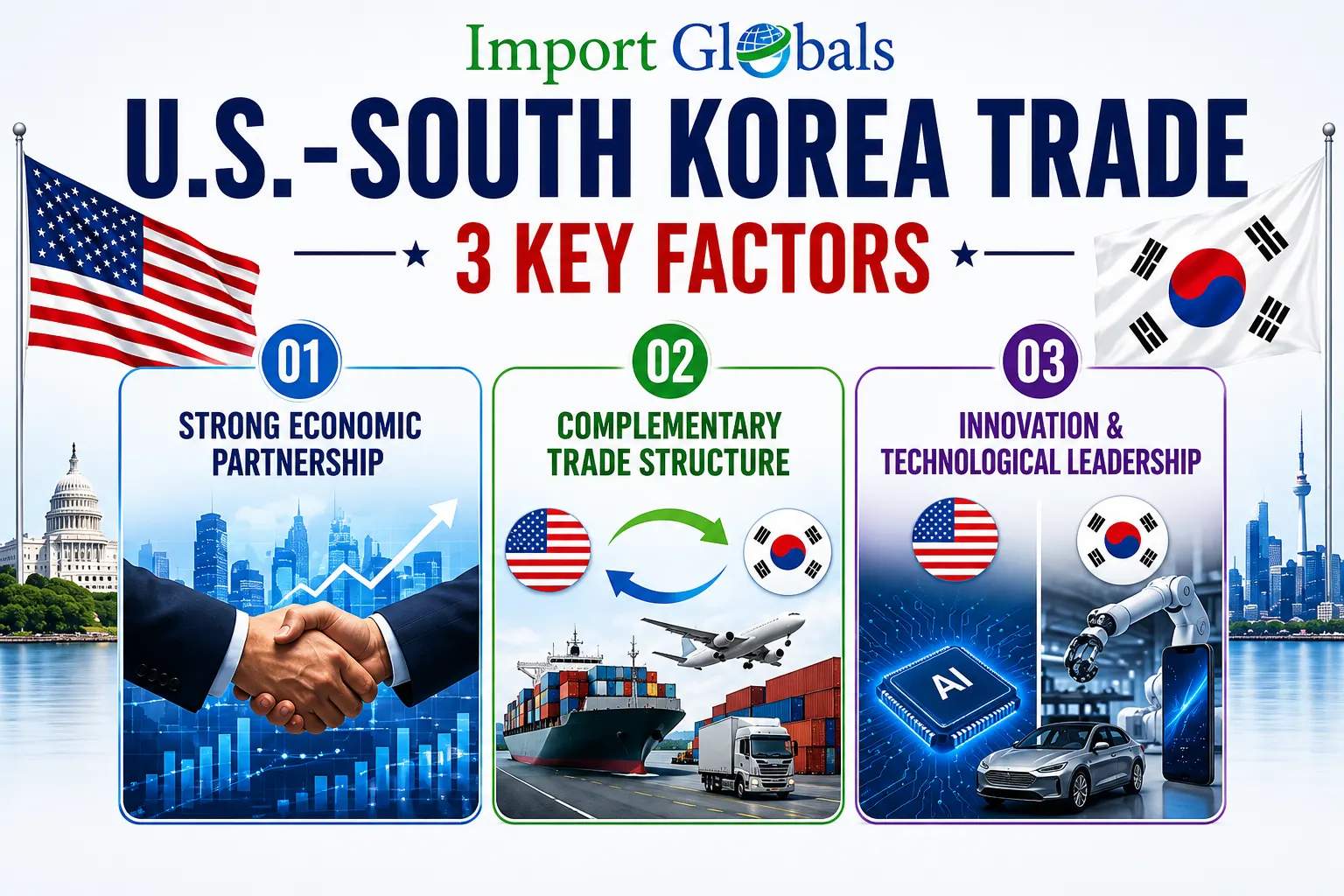
U.S. - South Korea trade is important because it helps businesses understand industrial strength. The United States has provided capabilities in energy, aerospace, agricultural commodities, and industrial products. South Korea has established its role as one of the top trading regions, mainly because of semiconductors, automobiles, electronics, batteries, machinery, and consumer technology.
The bilateral supply chain has been increasingly interconnected. South Korean manufacturers require energy resources, industrial equipment, and advanced technology. American companies source automobiles, electronics, machinery, and plastics, mainly from South Korea. The KORUS FTA has provided an important framework for bilateral trade. Businesses operating between the two markets can evaluate the tariff treatment, customs requirements, and product-specific regulations with South Korea Customs Data.
U.S. - South Korea Trade in 2025
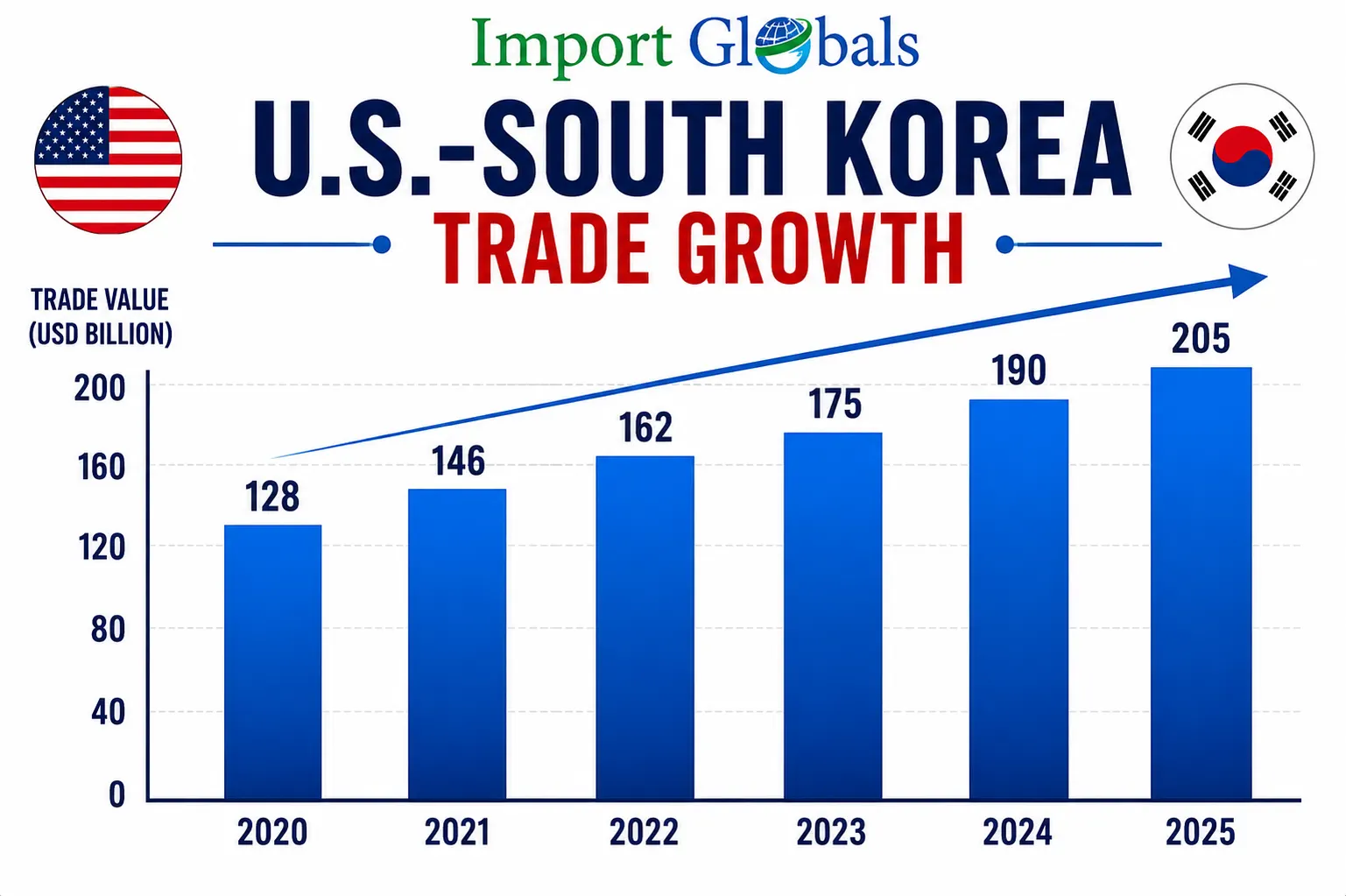
U.S. Trade Data reported that the country has recorded exports worth 169 billion U.S. dollars to South Korea and imports from South Korea worth 125 billion U.S. dollars. This led to a trade deficit of 56.48 billion U.S. dollars in 2025. South Korean exports to the United States were massively affected by the changes in U.S. trade and tariff policies. The Korean authorities have maintained a strong export position because of the semiconductor, automobile, and industrial manufacturing sectors.
The overall trade relationship has provided opportunities for manufacturers, exporters, and importers. The U.S. import economy is mainly connected to advanced manufacturing and technology-intensive products. The globally developed production ecosystem has made the country an important supplier of automobiles. The United States mainly benefits from the Korean manufacturing capabilities across several major supply chains. The automotive products are important for effective support from American manufacturing and technology industries.
Top Imported Variants of the USA From South Korea
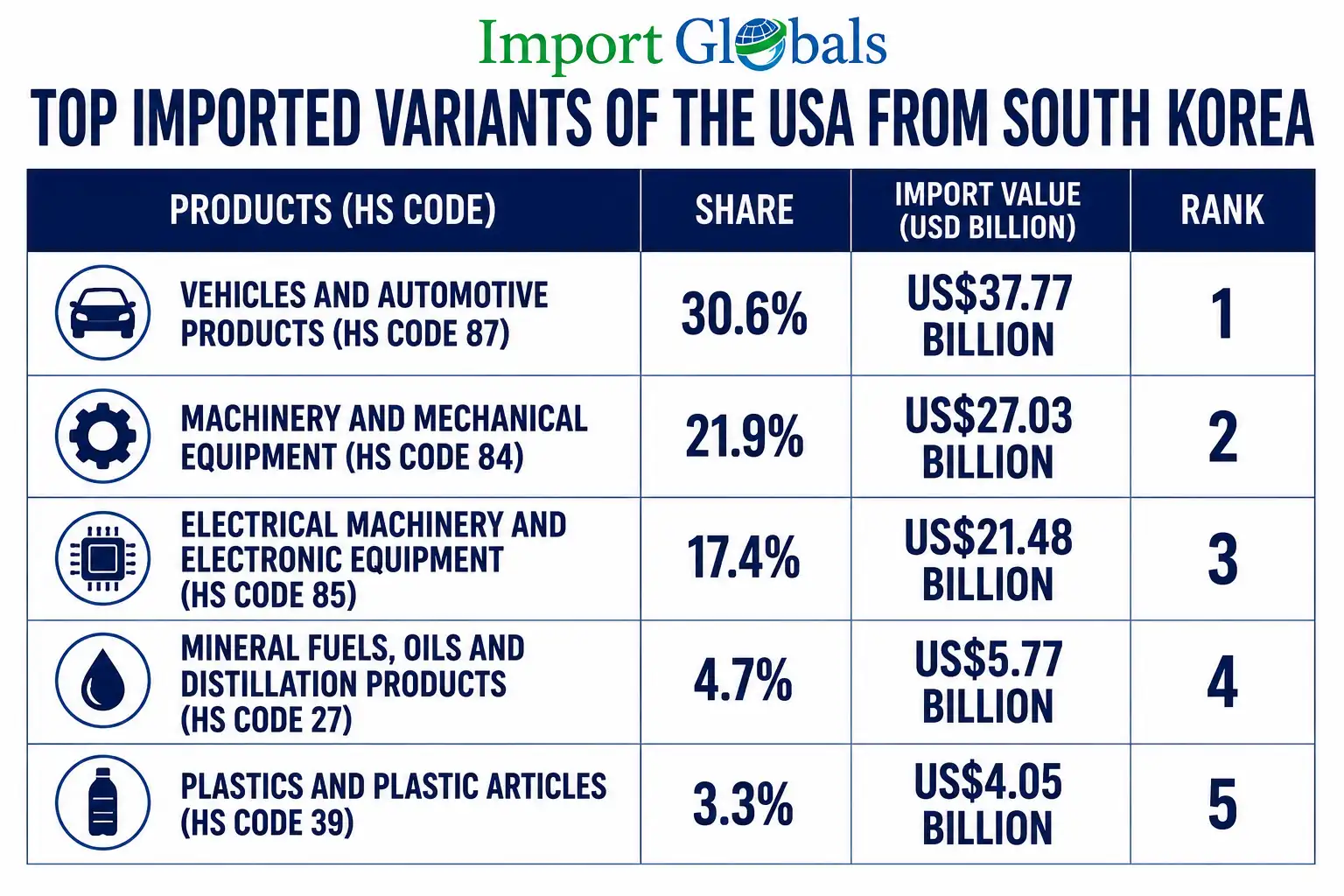
- Vehicles and Automotive Products (HS Code 87) — 30.6% Share | US$37.77 Billion - Vehicles and automotive products are the top essential resource of the USA as reported by the USA Import Data. The category mainly includes passenger vehicles, commercial vehicles, automotive components, and related products.
- Machinery and Mechanical Equipment (HS Code 84) — 21.9% Share | US$27.03 Billion - Machinery and mechanical equipment are also the top imported category of the USA from South Korea. The specific commodity holds an overall share of 21.9%. Industrial machinery, production equipment, engines, boilers, and mechanical appliances support manufacturing industries. The category demonstrates the integrity between Korean industrial production and the U.S. supply chain.
- Electrical Machinery and Electronic Equipment (HS Code 85) — 17.4% Share | US$21.48 Billion - Electrical machinery and electronic equipment account for 17.4% of the electrical machinery trade share. The specific variants include electrical equipment, electronic components, communication equipment, and other technology products. The strong semiconductor and electronic ecosystem has been a massive contributor.
- Mineral Fuels, Oils and Distillation Products (HS Code 27) — 4.7% Share | US$5.77 Billion - Mineral fuels, oils, and distillation products report 4.7% of the U.S. imports from South Korea. U.S. Customs Trade Data listed 5.77 billion U.S. dollars of imports from the nation. The sophisticated refining industry has promoted the petroleum-derived products trade.
- Plastics and Plastic Articles (HS Code 39) — 3.3% Share | US$4.05 Billion - Plastics and plastic articles report a 3.3% share of South Korea's traded variants to the USA. Korean chemical manufacturers and finished articles have reported American automotive electronics and manufacturing industries trade.
USA’s Export to South Korea in 2025
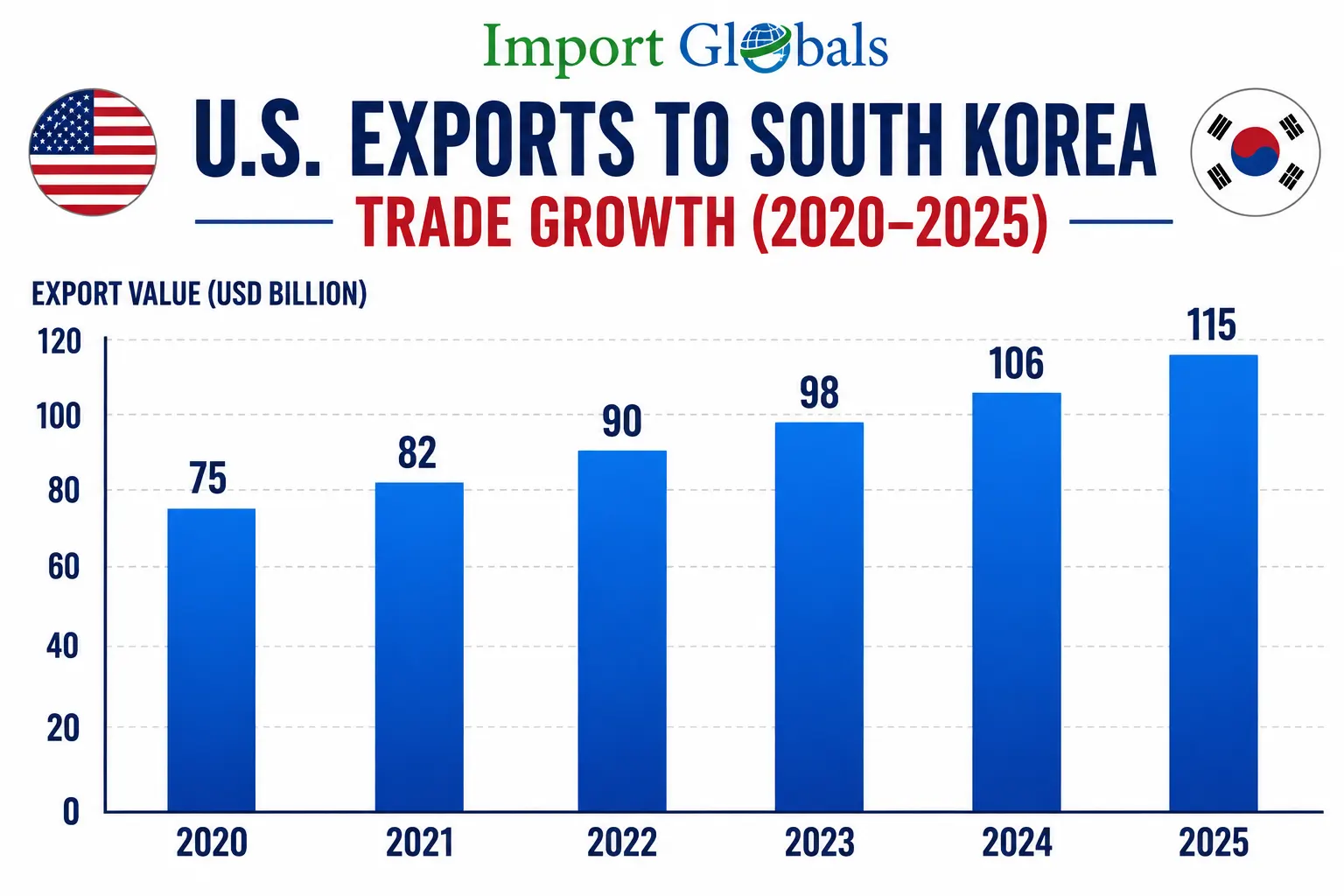
The United States has a diversified range of commodities and industrial product suppliers. Energy products, machinery, electrical equipment, and aircraft commodities are the main traded variants from the USA to South Korea. The energy relationship is particularly significant because of the substantial industrial and refining equipment, says US Trade Statistics.
The United States has increasingly supplied crude oil, mainly because of the energy commodities trade to the Korean market. The agricultural trade has been an important contributor to the significant growth rate. American suppliers benefit from Korean demand for meat, cereals, feed ingredients, and other agricultural products.
Top Exported Variants of the USA to South Korea in 2025
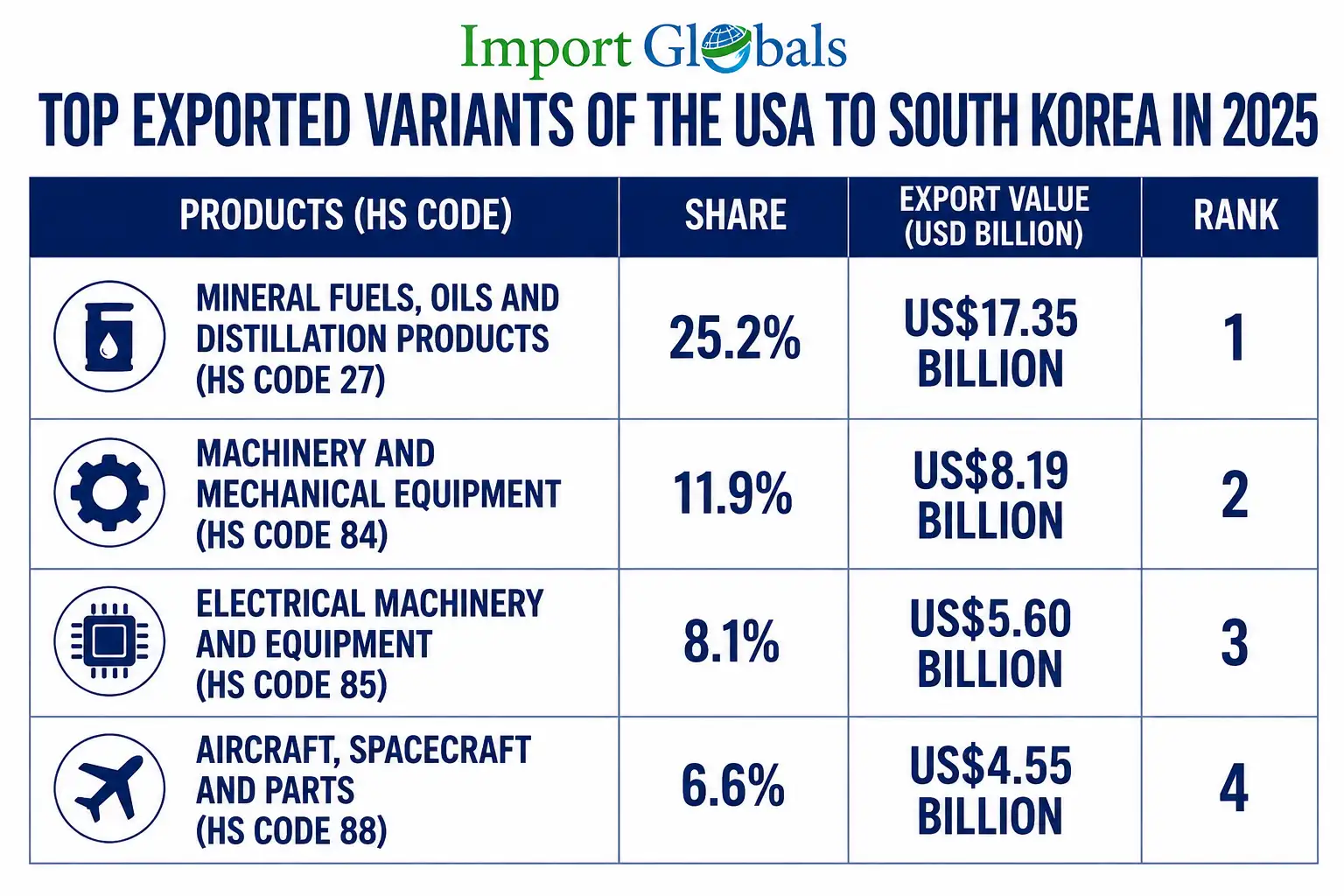
- Mineral Fuels, Oils and Distillation Products (HS Code 27) — 25.2% Share | US$17.35 Billion - Mineral fuels, oils, and distillation products are the top exported variants of the USA to South Korea, says South Korea Import Data. The petroleum products, petroleum gases, and related commodities contribute 17.35 billion U.S. dollars of exports.
- Machinery and Mechanical Equipment (HS Code 84) — 11.9% Share | US$8.19 Billion - Machinery and mechanical equipment account for 8.19 billion U.S. dollars of exports to South Korea. Industrial machinery production systems, mechanical appliances, and specialized equipment have supported the effective trade of manufacturing semiconductor and infrastructure industries.
- Electrical Machinery and Equipment (HS Code 85) — 8.1% Share | US$5.60 Billion - Electrical machinery and equipment report 8.1% share of the specialized equipment traded from the USA to South Korea. The overall export valuation is 5.60 billion U.S. dollars, says US Export Data.
- Aircraft, Spacecraft and Parts (HS Code 88) — 6.6% Share | US$4.55 Billion - Aircraft, spacecraft, and medical equipment are traded in large amounts from the United States to South Korea. The sector benefits from technological specialization and growing demand for advanced equipment.
Key Industries Driving U.S. - South Korea Trade
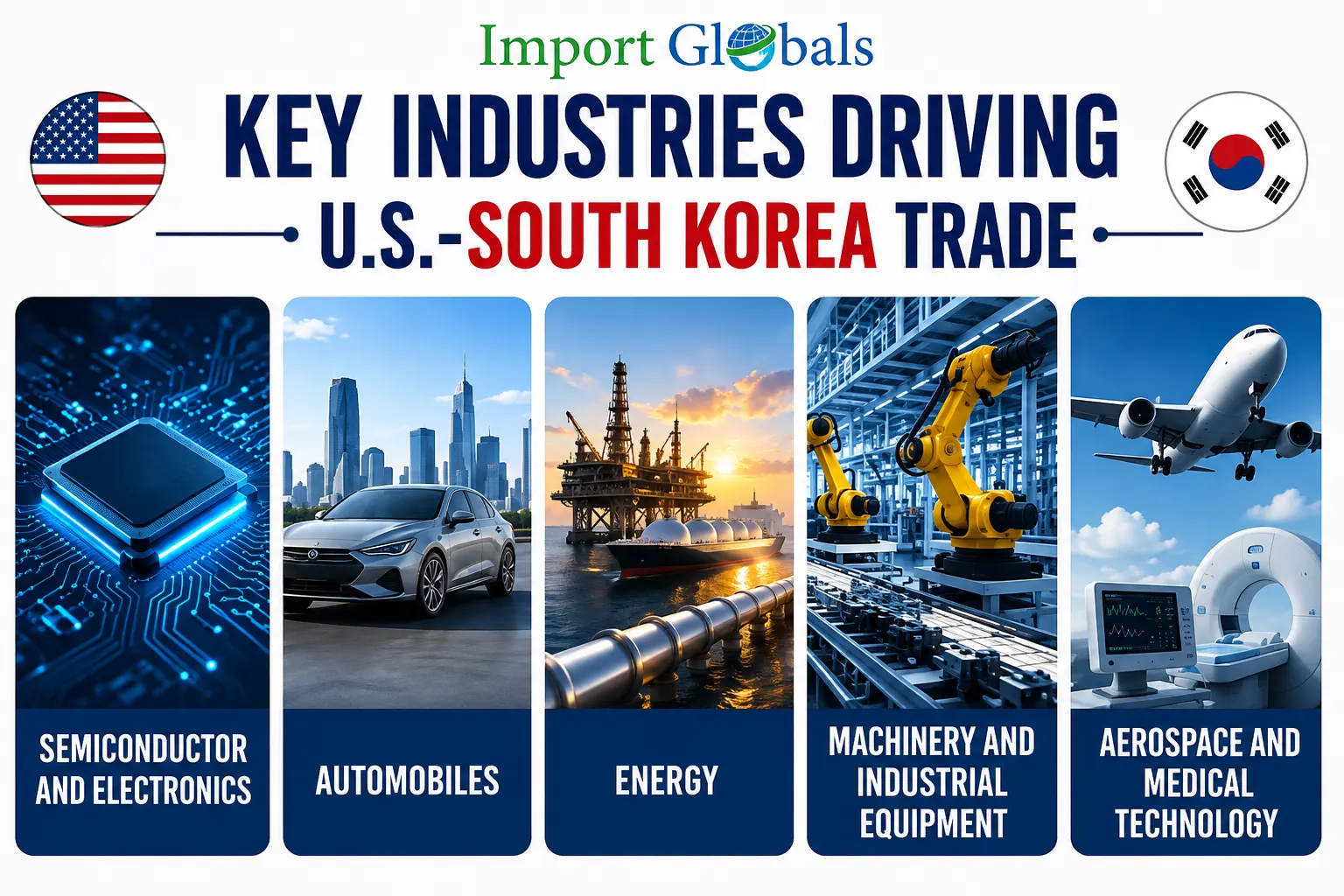
- Semiconductor and Electronics - Semiconductors are the top contributor towards the export industries of South Korea. Korean semiconductor exports have reached a valuation of 173 billion U.S. dollars, mainly because of the strong global demand for memory chips and artificial intelligence.
- Automobiles - It accounts for a massive share of Korean exports to the United States. The automobile industry has developed a strong manufacturing ecosystem with proper coverage of passenger vehicles, commercial vehicles, electric vehicles, and automotive products.
- Energy - Energy is an important component of the U.S. exports. Petroleum products and natural gas have supported Korean industrial production, refining, transportation, and the fulfilment of the overall authority.
- Machinery and Industrial Equipment - Machinery trade flows contribute to the U.S. industrial equipment with an effective supply rate from the nation. The bilateral integrity is supported by the manufacturing economies.
- Aerospace and Medical Technology - Aircraft, spacecraft, and medical equipment are traded in large amounts from the United States to South Korea. The sector benefits from technological specialization and growing demand for advanced equipment.
How Does the U.S. - South Korea Trade Data Support Business Growth?
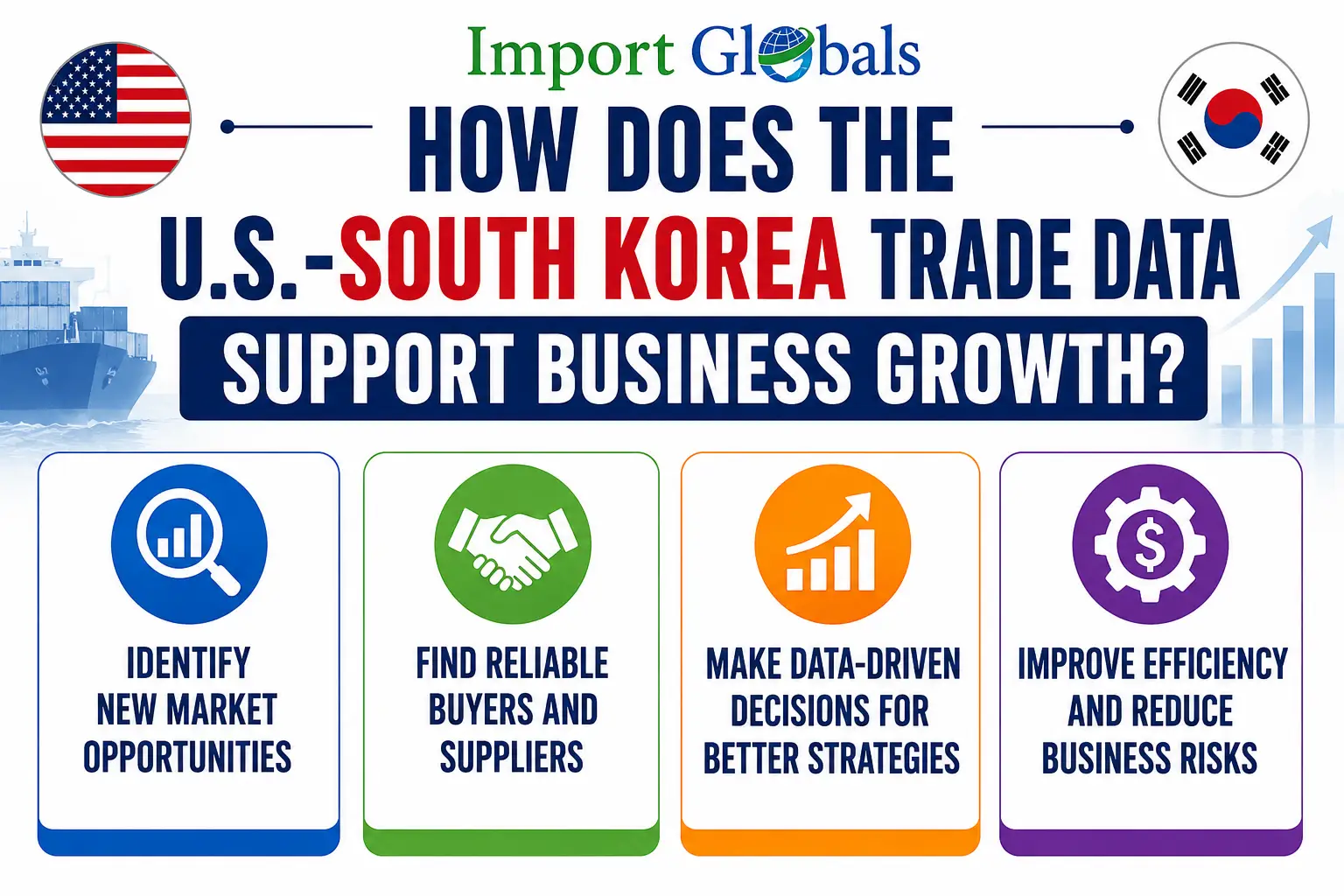
U.S. - South Korea Trade Data helps the authorities with valuable visibility into bilateral shipment activity. Importers, exporters, and manufacturers can access detailed information regarding product demand, supply activity, buyer networks, and shipment frequency. Businesses can examine the US trade data to understand importer and exporter shipment dates, quantities, shipment value, destination, and port information. It helps the organization identify potential customers and understand the movement of products.
The South Korea Import Statistics helps businesses identify purchasing machinery, energy products, agricultural commodities, and aerospace products. The companies promote sourcing from South Korea. U.S. Import Statistics reveals proper information regarding automobiles, electronics, and machinery resources from the nation. The trade intelligence supports competitor analysis. Businesses can study active exporters for identification of major buyers and comparison of shipment volumes.
Future Trade Outlook of U.S. - South Korea Trade
The future of the U.S.-South Korea trade is influenced by semiconductors, artificial intelligence, electric vehicles, and advanced manufacturing and aerospace. South Korea Export Data reported the strong positioning of the nation as the main factor promoting the major technology and semiconductor market integrity of both nations.
The automotive and battery supply chain has been really important for trade upgrades. Korean companies have mainly invested in automobile and battery production, including manufacturing activities in the United States.
Key Takeaways of U.S. - South Korea Trade
- U.S.-South Korea trade has reached a valuation of 194 billion U.S. dollars.
- U.S. goods exports to South Korea are valued at 68 billion U.S. dollars.
- The U.S. goods imports from South Korea are at 125.2 billion U.S. dollars.
- The trade deficit of the United States is at a rate of 56.4 billion U.S. dollars.
- South Korea's total exports are valued at 709.7 billion U.S. dollars.
- Vehicles, machinery, and electrical equipment are the latest South Korean exports to the United States.
Conclusion
The U.S.-South Korea trade has developed into a highly integrated commercial corridor mainly because of the growing trade requirements. The specific regulation of technology, energy, automobiles, and electronics has upgraded the trade portfolio. The approximate use of 194 billion U.S. dollars of trade within the economy has maintained the importance of both markets in the national supply chain.
The strength in semiconductors, automobiles, electronics, and machinery has complemented the capacities of energy, aerospace, agricultural commodities, and advanced machinery. The complementary structure creates opportunities for importers, exporters, manufacturers, and distributors. The future opportunities are mainly emerging from semiconductors, artificial intelligence, and electric vehicles.
CTA
Looking for expansion in your opportunities in the U.S.-South Korea trade market? You have landed at the right platform here. Import Globals helps businesses get detailed intelligence regarding buyers, suppliers, products, HS code, shipment values, quantities, and market activities. Subscribe to www.importglobals.com or drop an email at info@importglobals.com for detailed analysis on U.S.-South Korea trade to accelerate your global business growth.
FAQs
Que. What is the total U.S.-South Korea goods trade in 2025?
Ans. The total U.S.-South Korea goods trade in 2025 is 194 billion U.S. dollars.
Que. What is the top exported variant of the USA to South Korea in 2025?
Ans. Mineral fuels, machinery, and electrical equipment are the top exported variants of the USA to South Korea in 2025.
Que. What is the top South Korean export to the USA in 2025?
Ans. Vehicles, machinery, electrical, and electronic equipment are the top exported variants of South Korea to the USA in 2025.
Que. What is the largest U.S. export category to South Korea?
Ans. Mineral fuels are the largest exported category of the USA to South Korea in 2025.
Que. What is KORUS FTA?
Ans. KORUS FTA is the United States-Korea Free Trade Agreement signed on March 15, 2012.
Que. What is the global export trade rank of USA in 2025?
Ans . The global export trade rank of USA in 2025 is 2nd.
Que . How does the U.S.-South Korea import-export data support business growth?
Ans. U.S.-South Korea import-export data support business growth via proper identification of buyers, supplier analysis, analysis of market demand, and development of effective market expansion strategies.
Que. What information is available in U.S.-South Korea trade data?
Ans. U.S. - South Korea trade data covers Importer names, Exporter names, Shipment date, HS Code, Product Details, quantity, values, pricing information, origin country, importing country & port details.
Que. How frequently is the U.S.-South Korea trade data updated?
Ans. U.S. - South Korea trade data is updated on a monthly basis.
Que. Where can businesses get detailed information on U.S.-South Korea trade data?
Ans. Visit www.importglobals.com or drop an email at info@importglobals.com for detailed updates on the US – South Korea Trade Data to support business growth.
You Can Also Visit :-